PLAISANTERIE – pink park rose - Lens
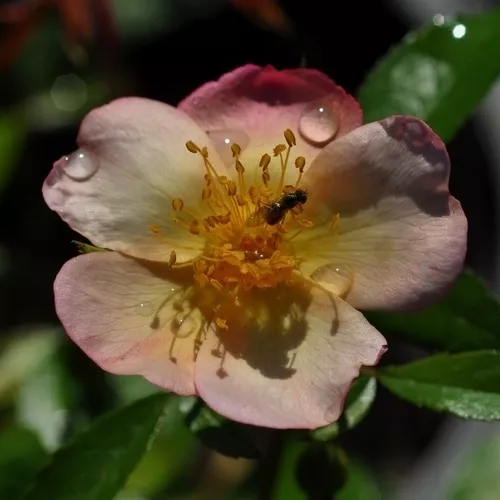
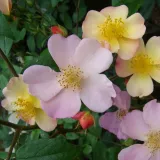
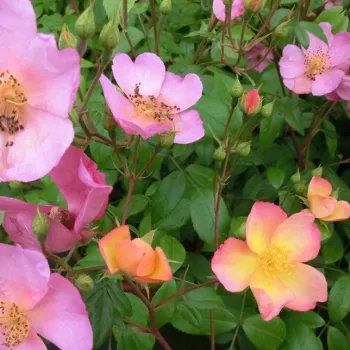
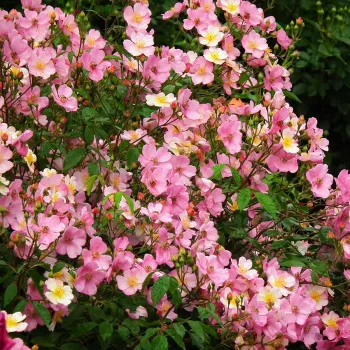
With its constantly changing colours and airy clusters of bloom, PLAISANTERIE brings a sense of romance and playful movement to the classic cottage garden, perfect beside a pergola or arch where you can sit for afternoon tea. This shrub rose’s naturally graceful climbing habit makes it easy to train over arbours and fences, giving quick height, soft screening and a storybook backdrop for family gardens. Once planted in improved soil with good drainage, it establishes reliably even where heavy ground can stay wet after rain and wind, and its own-root strength supports longevity and steady renewal of flowering wood. The clusters of small, single blooms are largely self-cleaning, so the plant still looks tidy even if you miss a round of deadheading in a busy week. In partial shade it continues to throw out light, fluttering flowers that move from warm yellow‑pink to richer purple‑pink, matching herbaceous borders and kitchen‑garden paths. Left to develop, it forms an informal, arching framework that can be pruned hard for control or lightly for a wilder, musk‑rose feel. Own‑root plants respond well to renewal cutting and keep their character over many years, and you will notice how in year one the roots knit in, year two brings stronger shoots, and by year three the rose has reached its full impact as a cottage‑style feature in your garden.
Usage options
| Target area |
Reasoning |
| Climbing over an arbour for afternoon tea |
The naturally climbing habit and long, flexible canes make this rose ideal for training over an arbour, where its colour‑changing flowers create a romantic canopy without needing precise pruning, suiting the relaxed tastes of the cottage-garden lover. |
| Soft screen on a boundary fence |
Its tall, arching growth and moderately dense foliage provide gentle screening without forming a rigid hedge, offering privacy with a light cottage feel rather than a hard barrier, appealing to the family-home owner. |
| Feature shrub near a terrace or seating area |
Planted as a specimen near a terrace, its continuously changing flower tones add interest throughout the season, while the tidy, self‑cleaning blooms reduce spent‑flower mess around seating, which is reassuring for the busy-garden user. |
| Country-style border with perennials |
The single clusters sit beautifully among perennials such as phlox and loosestrife, giving a light, informal structure that complements rather than overwhelms neighbouring plants, a combination that suits the romantic-border planner. |
| Rural kitchen garden enclosure |
Trained along posts and wires, its arching canes outline vegetable or herb beds with a playful, colour‑shifting edge, while own‑root stamina keeps the framework reliable for many years, ideal for the kitchen-garden enthusiast. |
| Partially shaded side path |
Tolerating partial shade, it can brighten less‑sunny side paths or the north‑east aspect of a garden, bringing movement and bloom where some roses might sulk, which is particularly useful for the townhouse-garden owner. |
| Large container on a patio |
In a 40–50 litre container with good compost and drainage, it can be trained up a small obelisk or trellis, giving vertical colour close to the house and allowing easier management of soil conditions, attractive for the balcony-or-patio gardener. |
| Coastal or exposed family plot |
Once established with improved drainage, its flexible, shrubby frame copes well with blustery, rain‑laden weather without snapping, and own‑root growth helps it recover from wind damage, offering reassurance to the coastal-plot owner. |
Styling ideas
- Arbour-draped tea corner – Train PLAISANTERIE over a wooden arbour with a small bistro set beneath, underplanting with soft pink phlox for a layered, romantic look – for those who treasure slow weekend tea in the garden.
- Kitchen-garden frame – Run it along rustic posts and galvanised wires to edge vegetable beds, letting its pastel clusters mix with herbs and runner beans – for cottage-style growers who like flowers among their crops.
- Perennial tapestry – Place it at the back of a mixed border with Lychnis and Lythrum so its airy, self-cleaning blooms weave between taller perennials – for gardeners who prefer an informal, gently shifting palette.
- Patio feature pot – Grow it in a 50 litre terracotta container with a slim obelisk, combining trailing thyme and violas at the base for a soft, lived‑in feel – for small-space owners wanting vertical romance without ground digging.
- Storybook boundary – Loosely fan-train it along a wire fence, integrating a hawthorn hedge behind and lavender in front for scent and movement – for families seeking a traditional, countryside-style edge to their plot.
Technical cultivar profile
| Parameter |
Data |
| Name and registration |
PLAISANTERIE – pink park rose - Lens; shrub, Hybrid Musk park rose; registered as LENtrimera; ARS exhibition name Plaisanterie; show shrub rose within the Park - shrub rose collection. |
| Origin and breeding |
Bred by Louis Lens in Belgium from ‘Trier’ × Rosa chinensis ‘Mutabilis’; breeding completed 1988; introduced and registered 1996 by Lens Roses NV / Louis Lens N.V. for garden and show use. |
| Awards and recognition |
Recognised as a Classic shrub rose at the Mother Lode Rose Society show in 2001, reflecting its ornamental appeal and suitability for exhibition in the shrub category. |
| Growth and structural characteristics |
Climbing, shrub-like habit with arching canes; height around 150–210 cm, spread 170–230 cm; moderately dense, slightly glossy green-bronze foliage; moderately thorny, suited to training on supports. |
| Flower morphology |
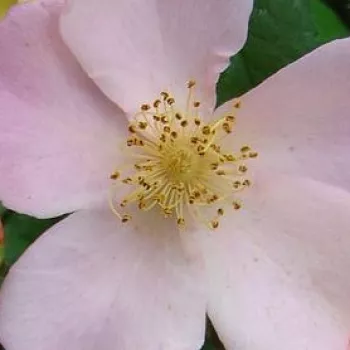
Small, single to lightly petalled clusters with 5–12 petals; flat, cluster-flowered heads; remontant with a notably abundant second flush; self-cleaning character reduces deadheading needs significantly. |
| Colour data and phenology |
Colour shifts from vibrant orange buds through yellowish-pink to pink and purple-pink tones; RHS 54A–54B, ARS PB; colour retention modest, contributing to a multi-toned effect across each flowering truss. |
| Fragrance and aroma |
No noticeable fragrance; grown primarily for its changing colour display and light, airy flower form rather than scent; modest pollinator interest due to semi-open flower structure and partially concealed stamens. |
| Hip characteristics |
Forms moderate quantities of small, bottle-shaped hips about 8–12 mm across; orange-red at maturity, adding late-season interest and a gentle wildlife food source without overwhelming the plant. |
| Resistance and winter hardiness |
Hardy to about -21 to -18 °C (RHS H7, USDA 6b, Swedish Zone 3); disease-prone, especially to powdery mildew and rust, so benefits from thoughtful siting, airflow and regular, preventive plant protection. |
| Horticultural recommendations |
Best used as a specimen, pergola or fence rose, or in borders and cutting; space 120–220 cm depending on use; needs good care and regular protection, ideally in sunny, ventilated sites with improved soil. |
PLAISANTERIE offers romantic climbing structure, self-cleaning, colour-shifting blooms and long-lived own-root reliability, making it a thoughtful choice for those planning a relaxed, cottage-style family garden.