PINK PARADISE – pink hybrid tea rose – Delbard
Plant PINK PARADISE and bring a touch of cabaret romance to a small family garden: large, exhibition-style blooms, a strong sweet‑spicy perfume and glossy foliage combine to create a storybook corner that needs surprisingly little effort. This premium, own‑root shrub grows on its own roots for a long‑lived, regenerating framework that settles well even where soil is heavy, provided you improve drainage and avoid waterlogging. With compact, upright habit and outstanding health, it tolerates flexible pruning and is equally at home in a traditional border or a generous 40–50 litre container on a terrace. Over time, well‑watered, well‑fed plants reward you with reliable flowering, strong fragrance and a maturing structure that fits naturally into an English‑style, cottage garden.
Usage options
| Target area | Reasoning |
|---|
| Feature rose near a seating area or arbour |
The large, high‑centred blooms and intense perfume make PINK PARADISE ideal beside a bench or pergola, where you can enjoy afternoon tea enveloped in scent and colour, suiting those who love a romantic, storybook atmosphere for family gardens. |
| Low‑maintenance focal point in a mixed border |
With its compact, upright growth and excellent disease resistance, this rose forms a neat, glossy shrub that anchors cottage‑style planting without demanding complex care or spraying regimes, ideal for time‑poor but enthusiastic hobby‑gardeners. |
| Cutting patch for home‑grown bouquets |
The hybrid tea flower form, long stems and repeat blooming let you cut elegant, long‑lasting flowers through the season without stripping the plant, perfect for those who enjoy arranging scented roses indoors as creative, seasonal home‑decorators. |
| Patio or terrace rose in a large container |
In a 40–50 litre pot with quality compost, its tidy framework and remontant flowers give months of colour and perfume close to the house, suiting balcony and patio owners wanting maximum impact from a single, well‑chosen container‑gardener. |
| Small hedge or repeated rhythm in front of a border |
Planted 50–60 cm apart, it forms a low, fragrant line of pink that frames paths or lawns, its repeat flowering and glossy foliage keeping structure even between flushes, attractive to those planning simple, traditional layouts as practical garden‑planners. |
| Cottage garden planting with herbs and perennials |
The strong perfume and romantic colouring pair beautifully with thyme, dwarf heuchera and low sedums, while its robust foliage copes well in breezier districts where roses face frequent wind and rain from exposed positions, ideal for coastal‑inspired country‑gardeners. |
| Long‑term “investment” rose for an established family garden |
Being grown on its own roots, the plant builds a durable framework that can regenerate from the base after harsh winters or pruning, maturing steadily from rooting to full ornamental presence over the first three seasons, reassuring for cautious, future‑minded home‑owners. |
| Easy‑care rose for environmentally conscious gardens |
Its recognised health, including ADR and Gold Standard awards, means strong resistance to black spot, mildew and rust, reducing the need for chemical treatments and suiting gardeners who prefer resilient varieties as part of a lower‑input, sustainable rose‑collector. |
Styling ideas
- Arbour elegance – Place PINK PARADISE near a simple wooden seat, underplanted with creeping thyme, to create a scented nook for afternoon tea – ideal for romantic couples and quiet readers.
- Cottage border – Repeat three plants along a mixed border, interweaving dwarf heuchera and catmint for soft texture and long colour – perfect for lovers of traditional English cottage gardens.
- Patio statement – Grow a single rose in a 40–50 litre terracotta pot by the back door so perfume greets you each time you step outside – suited to busy urban families with limited space.
- Cutting row – Line a sunny vegetable or cutting patch with a short row of PINK PARADISE for reliable, scented stems alongside kitchen crops – for home cooks who enjoy arranging their own flowers.
- Fragrant entrance – Flank a path or driveway with evenly spaced plants to form a low, pink, perfumed avenue – appealing to homeowners who want a welcoming, classical front garden.
Technical cultivar profile
| Parameter | Data |
|---|
| Name and registration |
Hybrid tea rose, registered as DELfluros, traded as PINK PARADISE – Grands Parfums; ARS exhibition name ‘Julie Andrews’; part of the Grands Parfums collection. |
| Origin and breeding |
Bred by Georges Delbard, France (2004); introduced 2011 by Delbard/Georges Delbard SA and partners in several continents; selected for strong fragrance and exhibition‑quality blooms. |
| Awards and recognition |
Highly decorated: Baden‑Baden and Geneva Gold medals (2010), Barcelona Silver (2010), Lyon “Plus belle rose de France” (2011), ADR certification (2011) and UK Gold Standard (2012). |
| Growth and structural characteristics |
Compact, upright shrub about 80–100 cm tall and 50–70 cm wide, with dense, dark glossy foliage and moderate prickles; best effect at recommended spacings in sunny, open positions. |
| Flower morphology |
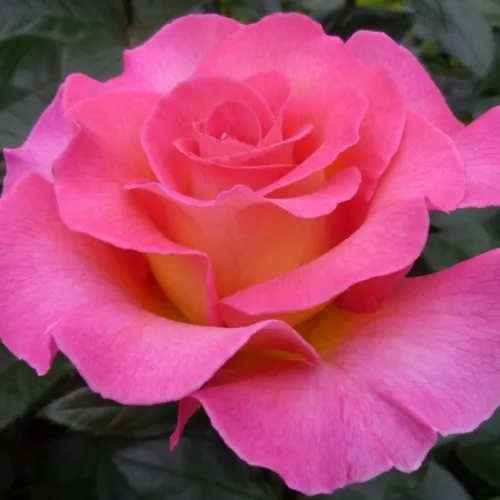
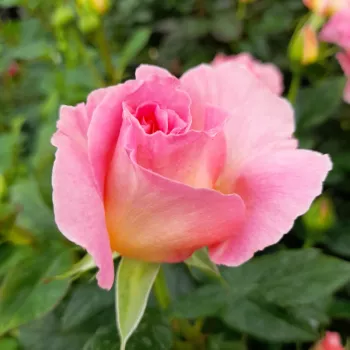
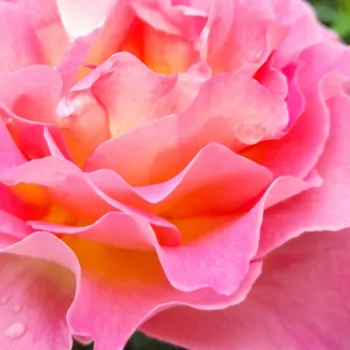
Large, double, high‑centred hybrid tea blooms with 26–39 petals, generally borne singly on stems; pointed buds and good stem length make it well suited to cutting and exhibition use. |
| Colour data and phenology |
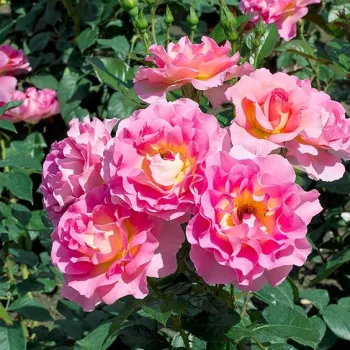
Vivid fuchsia‑pink with golden‑yellow base when opening, fading through mid‑pink to pastel cream‑pink; repeat‑flowers reliably with a particularly generous second flush in favourable seasons. |
| Fragrance and aroma |
Strong, long‑lasting perfume combining sweet and spicy notes, designed for the Grands Parfums collection; very double form may limit pollinator access compared with simpler flowered roses. |
| Hip characteristics |
Fruit set is generally sparse due to very double flowers; occasional small, spherical, bright red hips around 10–14 mm in diameter may develop, adding modest late‑season interest. |
| Resistance and winter hardiness |
Good resistance to black spot, powdery mildew and rust; winter hardy to about −21 to −18 °C (RHS H7, USDA 6b); moderate heat and drought tolerance, preferring regular watering in dry spells. |
| Horticultural recommendations |
Best in full sun with fertile, well‑drained soil; avoid prolonged drought and waterlogging, deadhead spent blooms for tidiness, and prune flexibly according to desired height and flowering balance. |
PINK PARADISE offers sumptuous, fragrant blooms on a healthy, compact shrub that thrives for years on its own roots, an inviting choice for turning an everyday family garden into a gently perfumed retreat.