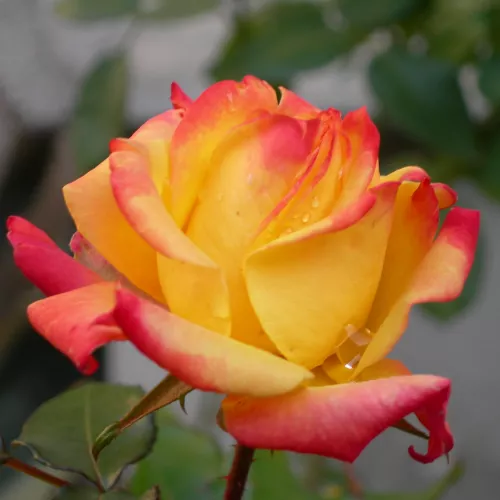
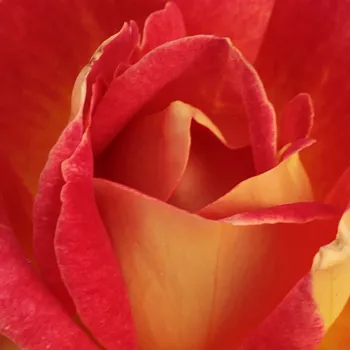
PICCADILLY – yellow-red hybrid tea rose - McGredy
Imagine afternoon tea among roses as PICCADILLY settles into your garden, its bicolour blooms bringing effortless romance to borders and patios. This compact, upright hybrid tea is easy to site and simple to live with, needing only basic care yet rewarding you with reliable flowering from early summer onwards. On its own roots it is naturally long-lived, rebuilding itself from the base after tougher seasons for enduring stability in a family setting. Over time it anchors well even where gardens are exposed to brisk coastal breezes and changeable weather. Plan for an uncomplicated development arc – first the roots, then the framework of shoots, then the full ornamental value – so your planting matures gracefully without fuss. Its medium maintenance needs fit busy lives, while the abundant high-centred buds offer classic cutting elegance for indoor vases. In a 40–50 litre or larger container it becomes a portable focal point of cottage-style cosiness, while in beds it holds a neat outline that is simple to prune and refresh each spring, suiting beginners who want structure without stress and experienced gardeners designing long-term impact.
Usage options
| Target area |
Reasoning |
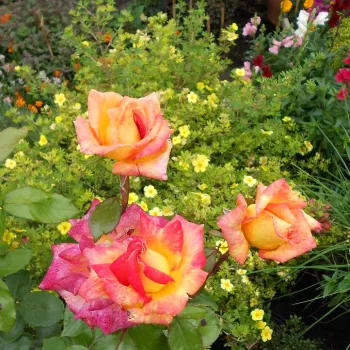
| Feature rose near a seating area or terrace |
The high-centred, yellow-and-red flowers appear in generous flushes, giving a dependable, romantic focal point close to where you sit with family or guests, yet with only moderate maintenance demands, ideal for those who prefer charm without complex routines for the busy gardener. |
| Small to medium mixed flower bed in a family garden |
Its bushy, upright growth to around 80–110 cm and 60–85 cm spread creates a well-shaped shrub that holds its place in a border, filling gaps without overwhelming other plants and forming a long-term framework suited to average-sized gardens for the homeowner. |
| Cutting patch for home-grown vase flowers |
With large, high-centred, pointed buds on strong stems and repeat flowering, this hybrid tea brings classic florist-style blooms to a cottage cutting patch, allowing regular harvesting for the house over the season for the rose-lover. |
| Sunny front-garden display with tidy structure |
Dense, dark green, glossy foliage and moderate self-cleaning mean the plant keeps a presentable look between light deadheading sessions, supporting a neat front garden that still feels soft and welcoming for the kerb-appeal buyer. |
| Long-term planting in traditional cottage-style borders |
The own-root form supports a long lifespan, as the plant can regenerate from the base after hard pruning or weather damage, maintaining its ornamental contribution in a cottage border over many years for the long-term planner. |
| Family garden in exposed or breezy situations |
The bushy, well-branched structure and good anchoring allow it to cope with changeable, wind-swept conditions when planted in well-prepared soil, offering colour and form where some roses struggle for the coastal gardener. |
| Large container or half-barrel on patio or balcony |
In a 40–50 litre or larger container with good drainage, this compact yet upright rose becomes a moveable feature, easy to water, prune and enjoy up close, ideal where ground space is limited for the urban gardener. |
| Garden where basic disease management is acceptable |
With resistance to black spot and moderate tolerance of other common problems, it suits gardeners happy to combine simple hygiene and the occasional treatment to keep foliage and blooms performing well through the season for the practical beginner. |
Styling ideas
- Tea-on-the-terrace – Place PICCADILLY by a bistro set, underplanted with dwarf heuchera for foliage contrast – for couples creating a small, romantic seating nook.
- Kitchen-border – Mix with herbs and cottage perennials in a sunny bed, letting the yellow-red blooms echo copper pots and brickwork – for home cooks who love garden-to-table ambience.
- Elegant-hedging – Plant in a loose row at 40–50 cm spacing, interspersed with box or low lavender to frame paths – for families wanting a traditional yet manageable boundary.
- Patio-centrepiece – Grow one plant in a 50 litre half-barrel, surrounded by trailing thyme and lobelia for season-round softness – for balcony and courtyard owners needing vertical colour.
- Cottage-showcase – Combine with ceanothus and persicaria for layered blues and reds, allowing PICCADILLY to provide the classic rose form – for enthusiasts building an English country garden feel.
Technical cultivar profile
| Parameter |
Data |
| Name and registration |
Hybrid tea rose, registered as MACar, marketed as PICCADILLY – yellow-red hybrid tea rose - McGredy; ARS exhibition name ‘Piccadilly’, in the Hybrid Tea commercial group. |
| Origin and breeding |
Bred by Samuel Darragh McGredy IV (Samuel McGredy & Son, Nurserymen) from ‘McGredy’s Yellow’ × ‘Karl Herbst’; introduced in 1959, own-root form propagated for garden use. |
| Awards and recognition |
Recognised with RNRS Certificate of Merit in 1959 and Gold Medals in Madrid (1960) and Rome (1960), confirming its lasting ornamental and garden-display value. |
| Growth and structural characteristics |
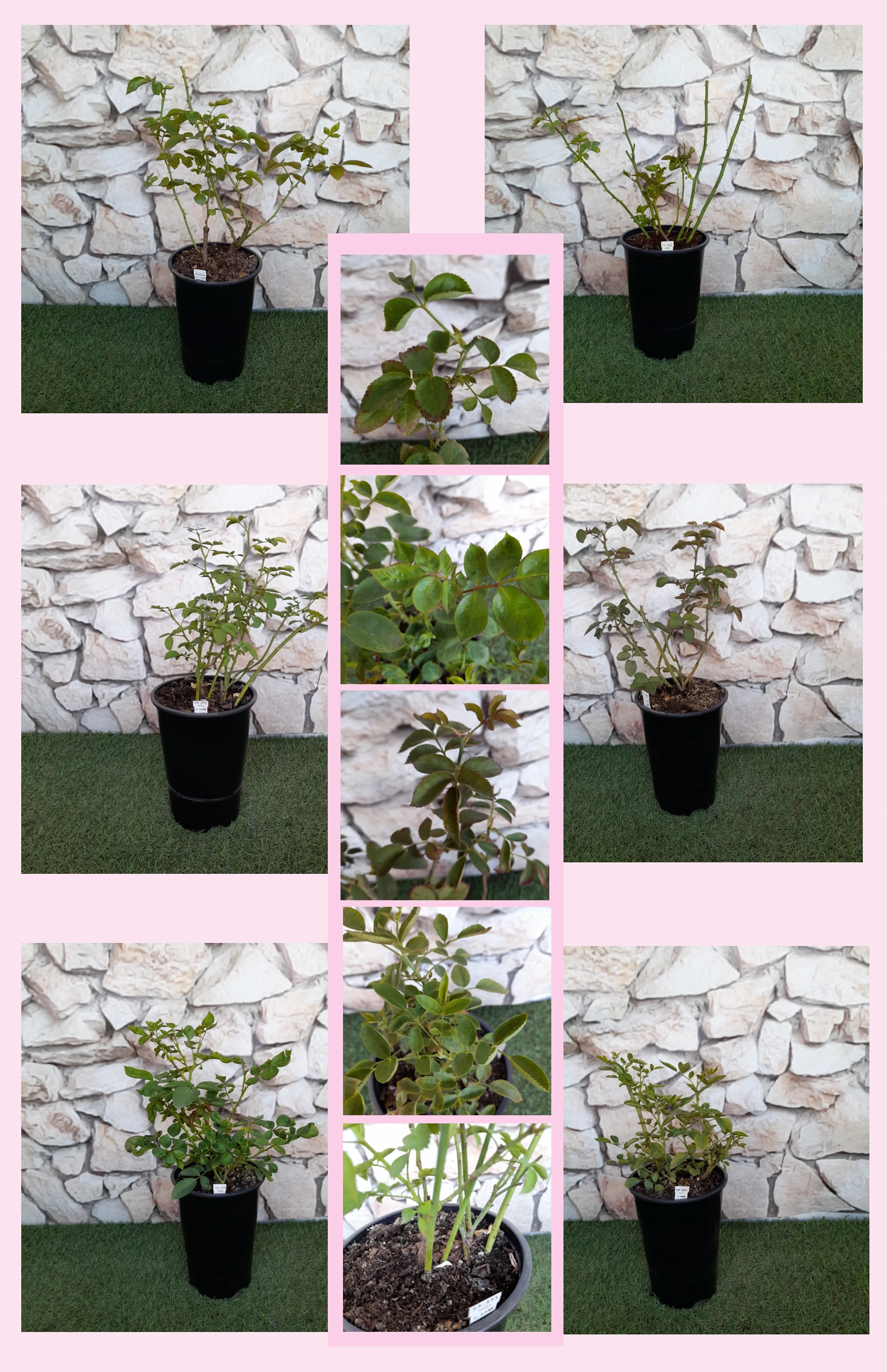
Bushy, upright shrub approximately 80–110 cm high and 60–85 cm wide, with dense, dark green, glossy foliage and moderate prickliness, forming a well-filled yet manageable garden plant. |
| Flower morphology |
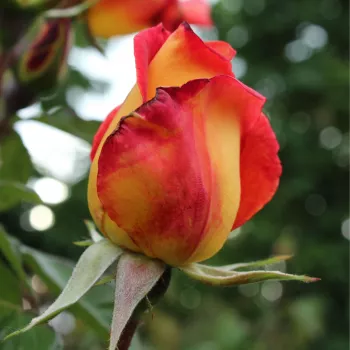
Large, double, high-centred, pointed-budded blooms with 26–30 petals, typically borne singly on stems; repeat-flowering habit with a particularly abundant second flush in suitable conditions. |
| Colour data and phenology |
Bright yellow base with vivid red shading, ARS YR; RHS 13B outer, 45A inner; bicolour effect strongest in cooler weather, softening to cream and pink tones as blooms age and in strong sun. |
| Fragrance and aroma |
Mild fruity character, noticeable at close range without overwhelming nearby seating; suitable for family gardens where a gentle, refined scent is preferred over very strong perfume. |
| Hip characteristics |
Produces a moderate number of small, spherical, bright red hips 6–10 mm across; hips may give late-season ornamental interest and support a naturalistic, cottage-style planting. |
| Resistance and winter hardiness |
Hardy to approximately −21 to −18 °C (RHS H7, USDA 6b); medium overall disease resistance, with good black spot resistance and moderate susceptibility to powdery mildew and rust. |
| Horticultural recommendations |
Best in sunny positions with fertile, well-drained soil; water during dry spells, especially on lighter soils; medium maintenance with occasional pruning, deadheading and basic disease checks. |
PICCADILLY – yellow-red hybrid tea rose - McGredy offers reliable repeat flowering, a compact, well-shaped habit and long-lived own-root resilience, making it a thoughtful choice for relaxed, romantic gardens.