Climbing and rambling roses

52-456-1
52-456-2

Paul's Himalayan Musk Rambler

Climbing rose

- – George Paul Jr.

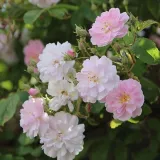
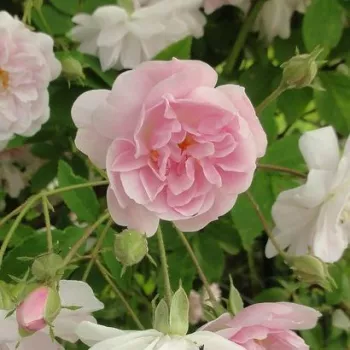
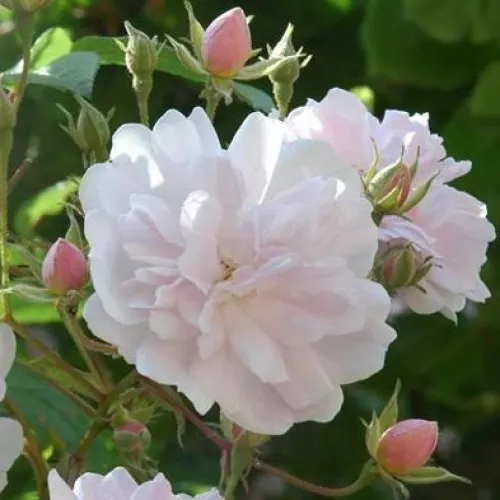
Delicately veiled pale pink with the bases of the petals showing a slightly richer tone. - rambler, climbing rose - very strongly scented, fragrance noticeable from a distance rose - musk-scented

– Clouds of soft pale‑pink, double clusters
– Very strong musk fragrance carries far
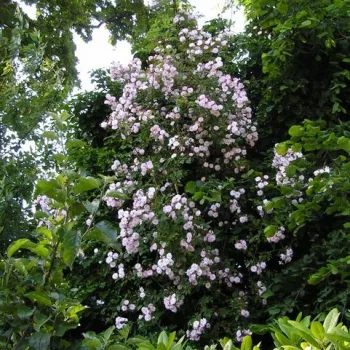
– Vigorous rambler, ideal for trees and pergolas
– Excellent winter hardiness to RHS H7
– RHS Award of Garden Merit winner
Special feature: Once‑a‑year bloom, but in spectacular profusion.
Thinking about your garden’s future – Open to feedback
Paul's Himalayan Musk Rambler
darinaROSE® ORIGINAL 2-litre own-root potted rose
23,00 £
Unfortunately, we are currently unable to ship to the United Kingdom; we only deliver to countries within the European Union. For more information, please contact us!
5 (9312)
facebook   twitter

PAUL'S HIMALAYAN MUSK RAMBLER – pale pink rambler climbing rose - Paul

Bring a touch of storybook romance to your garden with this legendary rambler, clothing arches, arbours and old trees in clouds of blossom and powerful musk fragrance. Once its roots are settled, the own‑root form gives reassuring longevity, quietly rebuilding after rough pruning and maturing into a long‑lived garden character. In one glorious summer flush, it covers itself in pastel, pale‑pink clusters that age to near‑white, creating a soft, nostalgic veil of colour. Over time you will naturally see year‑one roots, year‑two shoots and by year three the rose revealing its full ornamental presence. Its vigorous growth will handle exposed spots, while, with well‑prepared soil, it copes reliably even where heavy, wet ground benefits from improved drainage. Despite its impressive size, day‑to‑day care remains pleasantly manageable for the average family garden.


Usage options

Target area Reasoning
Arbour or pergola for afternoon tea seating Ideal where you want one spectacular summer display above a seating area, filling the air with strong musk scent while the dense foliage creates a romantic, shady canopy in high summer – a natural choice for lovers of cottage‑garden ambience
Training into a mature tree in a family garden Its very vigorous growth and long canes allow you to weave it through an established tree, so flowers appear as if floating among the branches and, with own‑root resilience, it becomes a long‑lived garden feature – perfect for homeowners planning for the future
Large boundary wall or outbuilding facade Covers a wide area economically, needing fewer plants thanks to its exceptional height and spread, while the good self‑cleaning habit means fewer spent blooms to deadhead – practical for busy family and urban gardeners
Romantic cottage‑style mixed border backdrop At the back of a deep border it provides vertical structure and a once‑a‑year curtain of pale pink, then recedes into a neat, leafy background for perennials and kitchen‑garden planting – well suited to fans of traditional country style
Partially shaded corner with afternoon light Tolerates partial shade, so it can brighten awkward corners that receive only a few hours of sun, with the pale flowers and strong fragrance still performing well – reassuring for gardeners with less‑than‑perfect positions
Exposed site where anchoring and cover are needed The robust, climbing habit and dense foliage help it anchor securely onto sturdy supports and, with well‑prepared soil to shed excess water, it copes reliably even in windswept, rain‑prone gardens – valuable for coastal and open‑plot owners
Low‑maintenance, once‑flowering feature planting As a non‑remontant rambler it concentrates its energy into one sumptuous summer display, then mainly needs occasional pruning and basic protection, with own‑root growth ensuring it can regenerate from lower buds – ideal for beginners wanting impact without fuss
Spacious large container near the house In a 40–50 litre or larger container, its roots remain contained while still building a durable framework; own‑root vigour supports recovery after harder pruning to keep it in scale – a flexible option for patio‑focused rose enthusiasts

Styling ideas

  • Woodland‑edge arbour – Train over a rustic timber arch, underplant with blue Carex flacca ‘Blue Zinger’ and white foxgloves for a dappled, woodland feel – for romantic shade‑garden owners.
  • Storybook tree‑rose – Thread canes through an old apple or pear tree, adding cow parsley and Bupleurum ‘Garibaldi’ beneath to echo its airy flower clouds – for lovers of nostalgic orchard scenes.
  • Cottage tea‑terrace – Let it drape a pergola above a gravel terrace, paired with scented herbs and potted geraniums to frame summer tea times – for families who entertain outdoors.
  • Pastel boundary veil – Cover a long fence or outbuilding, fronted by Liatris spicata ‘Alba’ and scented phlox for a layered, soft‑pink and white tapestry – for fans of coordinated, gentle colour schemes.
  • Kitchen‑garden backdrop – Use as a tall screen at the back of raised vegetable beds, with its once‑a‑year flush adding romance while leaving space and light for crops – for practical cottage‑style growers.

Technical cultivar profile
Characteristic Data
Name and registration Paul's Himalayan Musk Rambler, commercial rambler climbing rose; ARS exhibition name Paul’s Himalayan Musk; unregistered cultivar used under long‑established trade designation.
Origin and breeding Bred by George Paul Jr., W. Paul & Son Nursery, England; Rosa brunonii × Rosa brunonii hybrid; introduced in the United Kingdom in 1916 and still widely cultivated.
Awards and recognition Holds the Royal Horticultural Society Award of Garden Merit, indicating proven garden performance, reliability and ornamental value under typical UK conditions over many years.
Growth and structural characteristics Very vigorous climber to about 8–11 m high and 4.5–8 m spread, with dense, slightly glossy sea‑green foliage and moderately thorny canes; best on strong supports or into mature trees.
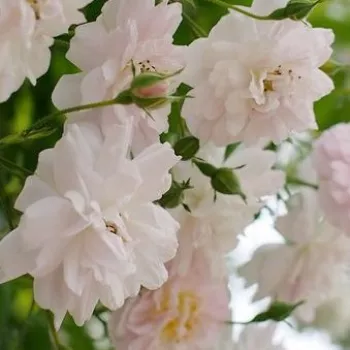
Flower morphology Double, flat, small flowers in very large, hanging clusters; each bloom around 0.5–1.5 in, carrying 26–39 petals; once‑flowering rambler giving a single, abundant seasonal display.
Colour data and phenology Pale pink (RHS 65C outer, 65D inner), opening soft pastel then fading to near‑white; a translucent pink veil often remains, the centre retaining slightly deeper tone at full bloom.
Fragrance and aroma Very strong, far‑carried musk fragrance, reminiscent of classic musk roses; notable for evening garden scent around arbours, pergolas or trees when in its main flowering period.
Hip characteristics Produces small numbers of decorative, ovoid red hips, about 5–7 mm in diameter; hips are occasional seasonal accents rather than a dominant feature of the plant.
Resistance and winter hardiness Hardy to about −32 to −29 °C (RHS H7, USDA 4b, Swedish zone 5); black spot generally resistant, powdery mildew and rust moderate; appreciates watering in extended hot, dry spells.
Horticultural recommendations Suited to pergolas, walls, large arbours, tree training and park use; plant 4.3–4.4 m apart or 7.5 m as specimens; medium maintenance with occasional pruning and protection as needed.

PAUL'S HIMALAYAN MUSK RAMBLER offers one breathtakingly fragrant summer curtain, vigorous long‑term cover and resilient own‑root growth, making it a thoughtful choice for those planning a romantic garden feature.
Detailed product attributes

Product Identification Data

Product Name: PAUL'S HIMALAYAN MUSK RAMBLER – pale pink rambler climbing rose - Paul
Product Type: darinaROSE® ORIGINAL - 2-litre own-root potted rose
Cultivar Authenticity: Verified:25.10.2025
Cultivar Quality Rating: premium silver
Item Number: [532] 52-456 (14.02.2026) darinarose.co.uk

Name and Registration

Meaning of Cultivar Name: The name honours the breeder’s family name, Paul, while 'Himalayan Musk' refers to musk‑scented species from the Himalayan region and to the strong fragrance.
Cultivar Synonym: Paul’s Himalayica Double Pink; Paul’s Tree Climber
Original Trade Name: Paul’s Himalayan Musk
Current Trade Name: Paul's Himalayan Musk Rambler Climbing rose Paul
Rose Group: Rambler
Commercial Type: rambler, climbing rose
Commercial Group: Climbing rose
Exhibition Category: garden-, landscape-use rambler; pergola- and tree-climbing special variety
Collection: Climbing rose

Origin and Breeding

Initial Distributor: W. Paul & Son Nursery (United Kingdom, 1916)
Registration Year: unregistered cultivar
Breeder: George Paul Jr.
Breeding Company / Institution: W Paul & Son Nursery
Breeding Year: England, 1916
Parentage: Rosa brunonii × Rosa brunonii hybrid

Awards and Honours

Horticultural Ratings and Recommendations: RHS Award of Garden Merit
Competition and Show Awards: Royal Horticultural Society – Award of Garden Merit

Growth and Structural Characteristics

Height: 26.2-36.1ft (800-1100 cm)
Spread: 14.8-26.2ft (450-800 cm)
Growth Habit: climbing
Foliage: The variety's foliage is dense, and the leaves have a slightly glossy surface with a sea-green shade.
Prickliness: moderately thorny
Self-Cleaning Description: The petals of spent blooms generally fall off on their own.
Self-Cleaning Intensity: self-cleaning: good

Flower Morphology

Petal Count: 26-39
Flower Fullness: double flowered
Flower Shape: flat
Flower Size: S (0,5-1,5 in)
Inflorescence Type: cluster-flowered, large-sized
Colour Code: ARS code: lp RHS code: 65C (outer), 65D (inner)
Repeat Flowering: Not remontant; blooms once.

Colour Data and Phenology

Colour: pale-pink
Flower Colour Description: Delicately veiled pale pink with the bases of the petals showing a slightly richer tone.
Closed Bud: Pale pearly-pink surface with silvery veining.
Newly Opened Flower: Soft pastel pink outer petals, subtly deeper shade at the centre.
Full Bloom: The outer edge fades to nearly white, while the central petals retain a light pink.
Before Fading: A nearly white, translucent pink veil remains on the petals.
Colour Fading Description: In strong sunlight the colour fades rapidly, in some cases becoming almost white.

Fragrance and Aroma

Fragrance Strength: very strongly scented, fragrance noticeable from a distance rose
Fragrance Character: musk-scented
Pollinator Attraction: Variety descriptions indicate it attracts bees and butterflies, with single or semi‑double blooms and readily accessible stamens being particularly attractive to pollinators, while fully double flowers that hide the stamens reduce access and thus attracti
Pollinator-Friendly Rating: Double-flowered variety that attracts bees and butterflies moderately, so it is primarily ornamental and, at best, partially pollinator-friendly.

Hip Characteristics

Hip Shape: egg-shaped
Hip Colour: red
Hip Comment: Produced in small quantities, a 5–7 mm-diameter, ovoid red rose hip.

Resistance and Hardiness

Hardiness (°C): -32–-29 °C
Heat and Drought Tolerance Description: Thrives in warm conditions, but requires watering during prolonged dry periods.
Disease Resistance: moderate
  • powdery mildew – moderate
  • black spot – resistant
  • rust – moderate

Horticultural Recommendations

Recommended Planting Distance: for mass planting 440 cm, for hedging 430 cm, as a specimen 750 cm
Planting Density: square planting 0,1 plants/m², hexagonal arrangement 0,1 plants/m²
Partial Shade Tolerance: suitable for partial shade
Maintenance Requirement: Maintenance requirement medium; average disease resistance, requires occasional plant protection.
Primary Uses: pergola, wall, arbour, tree training, park, solitary specimen

Comments

Strengths: Thinking about your garden’s future – Open to feedback
Companion Plants: Liatris spicata 'Alba' - Blazing star Carex flacca 'Blue Zinger' - Glaucous sedge Bupleurum rotundifolium 'Garibaldi' - Round-leaved bupleurum
Comment: -
PAUL'S HIMALAYAN MUSK RAMBLER – pale pink rambler climbing rose - Paul
Delicately veiled pale pink with the bases of the petals showing a slightly richer tone. - rambler, climbing rose - very strongly scented, fragrance noticeable from a distance rose - musk-scented
Rose Shopping Online - rambler, climbing rose - Paul's Himalayan Musk Rambler - pale-pink - (26.2-36.1ft (800-1100 cm))
Inflorescence: cluster-flowered, large-sized Height: 26.2-36.1ft (800-1100 cm) Flower shape: flat Winter hardiness: 5b pale-pink - W. Paul & Son Nursery (United Kingdom, 1916) rambler, climbing rose - Flower size: S (0,5-1,5 in) Flower size: S (0,5-1,5 in) - Height: 26.2-36.1ft (800-1100 cm) Height: 26.2-36.1ft (800-1100 cm) - Flower fullness: double flowered Paul's Himalayan Musk Rambler - Roses in the garden | darinaROSE® Original - premium silver George Paul Jr.

We showcase the external appearance of the roses available for online purchase from our webshop.


Which product type is right for you?


Information

In what condition do we send the rose from our online webshop?

Let us ask ourselves the question: What do I want to use the rose for?
Flower? - Location? - Cover? - Fragrance? - Height? - Breeder? - Rose hips?

Rose purchase information
Methods of payment - Delivery charges - Delivery - Complaints handling

Care guide

Our product is a rose grown with pharmaROSA®’s unique cultivation technology!

2-litre, own-root, potted rose.
With a shoot system appropriate to the season.
With a root system that thoroughly permeates the growing medium.
Quality compliant with the requirements of the E.N.A. (European Nurserystock Association).
Supplied in unique packaging that prevents damage.
Can be planted during frost-free periods.
True-to-variety rose bush with a unique identifier.

The pharmaROSA® own-root potted rose is a well-rooted plant that supports reliable establishment when planted and cared for properly, so it can be planted whenever the soil is not frozen.


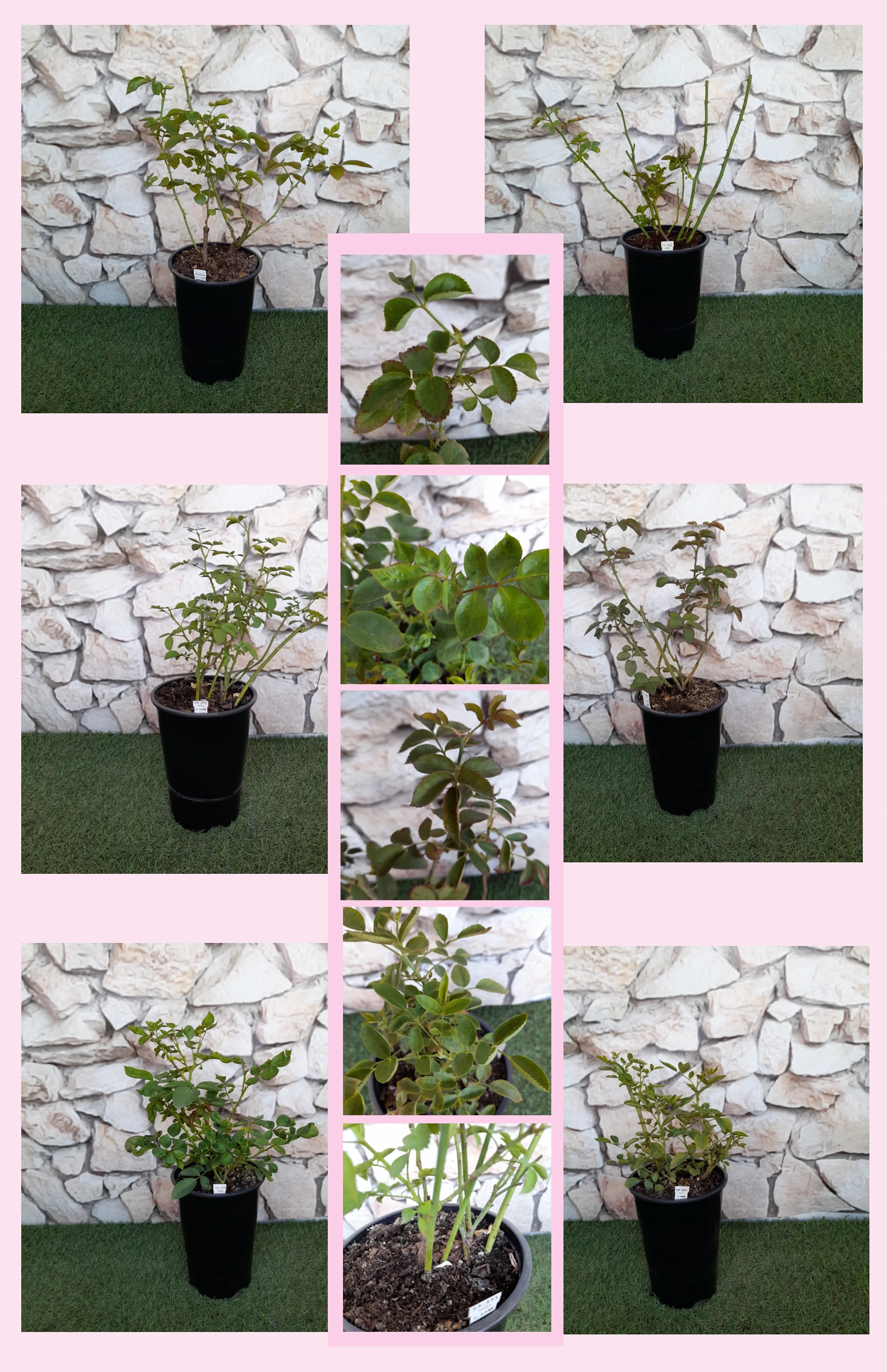
Crop overview: several varieties and growth stages in a short crop section.
Shoot system: intensive growth of fresh basal shoots on a young plant.
Root system: demonstration of a vigorous root system permeating the growing medium, by removing the pot.
Balance: mature plant with root system and shoots in harmony with each other.

Information about the videos
The video series is not a “seasonal showcase”; it illustrates the essence of pharmaROSA® own-root cultivation in a tangible way: how the plant is built up, what the root system is like and how the shoot system regenerates. The recordings were therefore made at different times and with plants at various stages of development, so mixed foliage levels and differing stages of growth may appear in the videos. They are not a ‘sample’ of the batch dispatched, but a visual explanation of how the technology works. The current condition of the rose available to order — typical for the given period and similar to what you can expect to receive in the parcel — is shown in the upper part of the product page.

pharmarosa.compharmarosa.skpharmarosa.ropharmarosa.depharmarosa.co.ukpharmarosa.sipharmarosa.czpharmarosa.atpharmarosa.hrpharmarosa.frpharmarosa.plpharmarosa.espharmarosa.bepharmarosa.nlpharmarosa.lupharmarosa.iepharmarosa.grpharmarosa.bgpharmarosa.lvpharmarosa.ltpharmarosa.itpharmarosa.sepharmarosa.eepharmarosa.fipharmarosa.rupharmarosa.dkpharmarosa.pt

Product types

Pages for private customers
Garden roses for the family garden, with minimal care  → ORIGINAL®
Premium garden roses – instant impact, a truly showpiece garden  → EXTRA®
Pages for professionals and private customers
Roses for public spaces – large areas, sustainable maintenance  → NATURAL®
Roses for projects – hedge and row planting, fast implementation  → RAPID®
For professional partners only
Production – propagation material for garden roses, wholesale  → NEONATAL®

Company details

PharmaRosa Ltd.
Company registration number: 01-09-717479
VAT number: 13075314-2-43
Plant health registration no.: HU130721
Bank account (IBAN):
HU85117631891388688400000000
BIC (SWIFT): OTPVHUHB
Bank name: OTP Bank Nyrt.