Climbing and rambling roses

90-043-1
90-043-2

Paul Noël

Climbing rose

- – Rémi Tanne

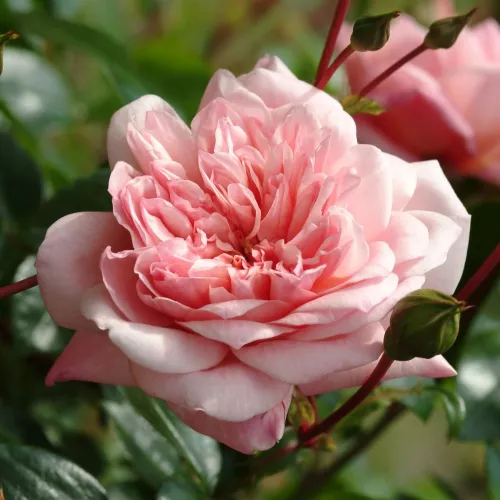
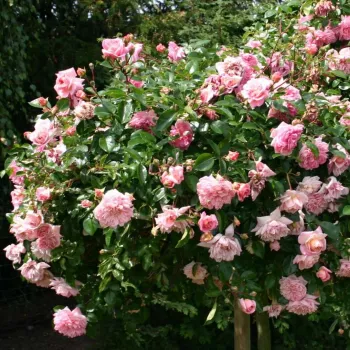
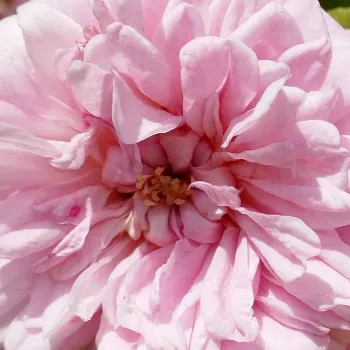
Warm salmon-pink petals with a delicate yellowish tinge. - rambler, climbing rose - strong, clearly noticeable scented rose - fresh, fruity character

– Romantic salmon-pink rosettes in large trusses.
– Strong, fresh fruity fragrance in bloom.
– Vigorous rambler for arches, walls, pergolas.
– Reliable hardiness to around −25 °C.
– RHS Award of Garden Merit for garden value.
Special feature: Flowers soften from bright salmon to pastel pink, creating subtle colour gradients over time.
Dream garden-focused decision – Chemical-sparing
Paul Noël
darinaROSE® ORIGINAL 2-litre own-root potted rose
23,00 £
Unfortunately, we are currently unable to ship to the United Kingdom; we only deliver to countries within the European Union. For more information, please contact us!
3 (4650)
facebook   twitter

PAUL NOËL – salmon-pink rambler climbing rose – Tanne

Let Paul Noël drape your garden in soft salmon-pink, romantic clusters, ideal for creating a storybook arch or pergola that feels made for afternoon tea. This vigorous rambler quickly clothes walls and fences in glossy, mid-green foliage and fragrant rosettes, yet remains straightforward to manage with flexible pruning options and only medium maintenance needs. Own-root growth brings reassuring longevity, helping the plant recover from harsh pruning or winter damage and maintain stable ornamental value for many years. The first seasons focus on root strength and framework, before a generous build-up of flowering shoots and, by year three, a fully woven, cottage-style presence. Its remontant nature offers waves of bloom through summer, and it copes reliably with blustery, damp British weather and coastal breezes, provided the soil drains reasonably well. Awarded the RHS merit for dependable garden performance, this rambler suits busy gardeners seeking ease, romance and enduring charm without complicated regimes.


Usage options

Target area Reasoning
Arbour or pergola over a seating area The long, supple canes and dense, mid-green foliage make this rambler ideal for clothing an arbour above a bench or a pergola framing a patio, giving dappled shade and enveloping the space in scented, salmon-pink rosettes during summer. Its own-root vigour and forgiving growth habit mean you can prune lightly for a looser veil or more firmly to keep walkways clear, without jeopardising long-term structure. A gentle development from strong roots to a full romantic canopy over several seasons suits those planning a cosy, afternoon-tea corner in a family garden, especially beginners.
Climbing rose for fences and boundaries With a height up to around 5 m and a generous spread, this variety can be trained along wires or mesh on standard garden fences to create a soft, flower-laden boundary. Its repeat flowering habit means that, after the main flush, further clusters appear to keep the fence looking alive through the season, with the salmon-pink gradually fading to pastel tones that sit well against brick, timber or hedge backdrops. Own-root resilience gives confidence when tying in or renovating older sections, as the plant responds by sending out fresh, replacement shoots that fill gaps and preserve privacy for the long term, suiting homeowners.
Clothing house walls and garages The combination of strong growth and medium maintenance needs makes it a practical climber for softening outbuildings, garage walls or the side of a house, provided basic supports are in place. It handles warmth and reflected heat reasonably well if given regular watering in prolonged dry spells, and its colour holds attractively in sun, fading gently to paler pinks rather than scorching. Being on its own roots, it can be pruned back harder near windows, gutters or doors when required, then steadily rebuilds its framework without the risk of suckering from a different rootstock, reassuring busy families.
Romantic cottage-style arch in a kitchen garden For those who enjoy a traditional kitchen garden, this rambler can be trained over a metal or wooden arch to mark the entrance between productive beds and ornamental borders. The warm salmon-pink tones blend beautifully with herbs and vegetables, especially when underplanted with soft perennials such as lady’s mantle or creeping baby’s-breath for that relaxed, “girly” cottage character. Its ability to repeat flower, though less abundantly later on, still sprinkles colour through the season without constant deadheading. The dependable performance and moderate disease resistance keep workloads sensible for hobby-gardeners.
Part-shade corners and north–east aspects This cultivar tolerates partial shade, making it suitable for aspects that see morning sun and afternoon shade, or bright shade beside taller shrubs and hedging. In these conditions, the flowers still open well, and the strong, fruity fragrance carries on still days, adding atmosphere where other climbers might struggle. The glossy foliage helps maintain an attractive backdrop even when the rose is not in full flush, and the own-root system ensures that, once settled, it remains a long-lived feature rather than a short-term planting. This suits time-pressed urbanites.
Coastal and wind-exposed family gardens The flexible, rambling growth and dense leaf cover help this rose cope well in gardens where wind can be an issue, particularly near the coast or on open plots, so long as the soil is not waterlogged. Secured to sturdy supports, it weaves into a sheltered green wall that diffuses gusts without snapping, while moderate disease resistance is an advantage in more humid, salt-laden air. Its capacity to form a strong own-root base makes it slow to topple and able to regenerate from lower buds after storm damage, giving practical reassurance in blustery sites for cautious buyers.
Large containers and movable terrace features Where border space is limited, this climber can be grown in a substantial container of at least 40–50 litres, paired with a trellis or obelisk to frame a small terrace or balcony. In a pot, its medium maintenance needs translate into simple routines: regular watering, a top-up feed, and periodic tying in of new canes. The own-root habit is helpful here, as the plant responds well to occasional root-pruning and repotting, remaining stable and ornamental over the years rather than declining quickly. This flexibility makes it appealing to space-conscious renters.
Long-term structural rose for traditional mixed borders Planted at the back of a mixed cottage border, this rambler provides a permanent vertical framework that anchors seasonal planting, from spring bulbs to late-summer perennials. Over time it becomes a reliable backdrop of foliage and scented bloom, reducing the need to replant tall supports every year. Its award recognition for garden performance underlines its suitability as a long-term structural choice in typical British conditions, including sites with cool, damp spells where other climbers can struggle with foliage quality and health, particularly valued by detail-oriented planners.

Styling ideas

  • Tea-arbour – Train over a wooden pergola with a simple bench beneath, underplanting with lady’s mantle and soft grasses for a frothy, informal skirt – ideal for relaxed afternoon-tea lovers.
  • Cottage-gate – Let it arch over a picket gate, partnered with creeping baby’s-breath and old-fashioned foxgloves to create a welcoming, pastel-toned entrance – perfect for romantic cottage-style admirers.
  • Kitchenwalk – Run along an archway leading to raised vegetable beds, mixing with herbs and runner beans for a productive yet pretty tunnel – suited to practical kitchen-garden keepers.
  • Patio-screen – Grow in a large container with a trellis to divide a terrace into “dining” and “play” zones, using pots of lavender for fragrance at ground level – useful for family patio planners.
  • Wall-tapestry – Combine on a sunny wall with cherry laurel and early clematis for a layered tapestry of green and pastel pinks that softens brickwork – appealing to classic garden traditionalists.

Technical cultivar profile
Parameter Data
Name and registration Rambler climbing rose marketed as PAUL NOËL – salmon-pink rambler climbing rose – Tanne; unregistered cultivar with American Rose Society exhibition name Paul Noel used at shows.
Origin and breeding Bred by Rémi Tanne in France around 1910 from Rosa wichuraiana × ‘Monsieur Tillier’; introduced commercially in 1912 by Rémi Tanne; lineage reflects classic Wichurana rambler character.
Awards and recognition Holds the Royal Horticultural Society Award of Garden Merit, indicating proven reliability, ornamental value and cultivation ease in UK garden conditions under average care and maintenance.
Growth and structural characteristics Strong climbing habit reaching about 320–520 cm high with a 280–450 cm spread; dense, mid-green glossy foliage; moderately thorny canes typical of ramblers; growth suited to training on supports.
Flower morphology Medium-sized, double rosette blooms with approximately 26–39 petals; flowers are borne in corymbose clusters, giving abundant, cascading displays on established plants; remontant with lighter later flushes.
Colour data and phenology Warm salmon-pink flowers with yellowish tinge; buds medium-deep salmon; colour lightens to pastel pink and creamy shades as blooms age, yet holds well even in strong sunlight without unattractive scorching.
Fragrance and aroma Strong, clearly noticeable scent with a fresh, fruity character; fragrance is appreciable around arbours and seating areas in still weather, enhancing its role as a romantic feature for family gardens.
Hip characteristics Occasionally forms small, ovoid orange-red hips approximately 6–10 mm in diameter; hips add a discreet seasonal accent but are not a dominant ornamental feature of this rambler rose.
Resistance and winter hardiness Hardy to about −26 to −23 °C (RHS H7, Swedish Zone 4, USDA 5b); moderate resistance to powdery mildew, black spot and rust; prefers irrigation in prolonged drought and basic preventative care.
Horticultural recommendations Best on pergolas, arches, walls and fences; plant roughly 210–385 cm apart depending on use; tolerates partial shade; medium maintenance with occasional pruning and disease monitoring for best results.

PAUL NOËL offers romantic, fragrant salmon-pink bloom, vigorous yet manageable climbing structure and long-lived own-root reliability, making it a cultured choice for those shaping a traditional family garden retreat.

Detailed product attributes

Product Identification Data

Product Name: PAUL NOËL – salmon-pink rambler climbing rose - Tanne
Product Type: darinaROSE® ORIGINAL - 2-litre own-root potted rose
Cultivar Authenticity: Verified:02.05.2025
Cultivar Quality Rating: premium silver
Item Number: [788] 90-043 (14.02.2026) darinarose.co.uk

Name and Registration

Meaning of Cultivar Name: The name is a male given name.
Cultivar Synonym: Paul Transon
Original Trade Name: Paul Noël
Current Trade Name: Paul Noël Climbing rose Tanne
Rose Group: Rambler
Commercial Type: rambler, climbing rose
Commercial Group: Climbing rose
Exhibition Category: exhibition climbing rose
Collection: Climbing rose

Origin and Breeding

Initial Distributor: Rémi Tanne (France)
Registration Year: unregistered variety
Breeder: Rémi Tanne
Breeding Company / Institution: unknown / no data
Breeding Year: France, 1910
Parentage: Rosa wichuraiana × ‘Monsieur Tillier’

Awards and Honours

Horticultural Ratings and Recommendations: RHS Award of Garden Merit
Competition and Show Awards: Royal Horticultural Society – Award of Garden Merit (AGM)

Growth and Structural Characteristics

Height: 10.5-17.1ft (320-520 cm)
Spread: 9.2-14.8ft (280-450 cm)
Growth Habit: climbing
Foliage: The variety has dense foliage; its leaves are glossy and mid-green in shade.
Prickliness: moderately thorny
Self-Cleaning Description: No data on self-cleaning.
Self-Cleaning Intensity: No data on self-cleaning strength.

Flower Morphology

Petal Count: 26-39
Flower Fullness: double-flowered
Flower Shape: rosette
Flower Size: M (1,5-2,75 in)
Inflorescence Type: corymbose
Colour Code: ARS code: pb RHS code: 36D (outer), 36B (inner)
Repeat Flowering: Remontant; the second flowering is not as abundant.

Colour Data and Phenology

Colour: salmon-pink
Flower Colour Description: Warm salmon-pink petals with a delicate yellowish tinge.
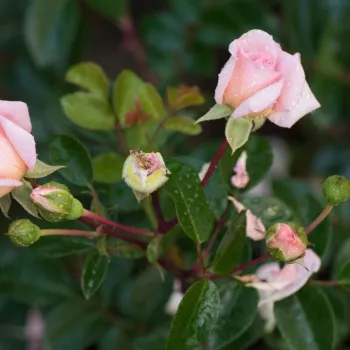
Closed Bud: Medium-deep salmon pink with a subtle yellowish undertone.
Newly Opened Flower: Bright salmon and pale peach‑pink tones, with a pale yellow at the base.
Full Bloom: Soft, uniform salmon-pink, with a pale yellow eye at the base of the petals.
Before Fading: Fades to a pastel pink, delicately blended with creamy tones.
Colour Fading Description: Its salmon-pink flowers gradually fade to a pale pink over time, even in strong sunlight.

Fragrance and Aroma

Fragrance Strength: strong, clearly noticeable scented rose
Fragrance Character: fresh, fruity character
Pollinator Attraction: As a heavily double, cup‑shaped flower with largely concealed stamens, it is less attractive to pollinators.
Pollinator-Friendly Rating: Its double, cup-shaped flowers mostly cover the stamens, so it has limited pollinator-friendliness and is more of an ornamental variety.

Hip Characteristics

Hip Shape: egg-shaped
Hip Colour: orange-red
Hip Comment: Occasionally forming, 6–10 mm in diameter, ovoid, orange-red rose hip.

Resistance and Hardiness

Hardiness (°C): -26–-23 °C
Heat and Drought Tolerance Description: Performs well in warm conditions and requires irrigation during prolonged drought.
Disease Resistance: moderate
  • powdery mildew – moderate
  • black spot – moderate
  • rust – moderate

Horticultural Recommendations

Recommended Planting Distance: for mass planting 245 cm, for hedging 210 cm, as a specimen 385 cm
Planting Density: square planting 0,17 plants/m², hexagonal arrangement 0,19 plants/m²
Partial Shade Tolerance: suitable for partial shade
Maintenance Requirement: Maintenance requirement medium; occasionally requires pest and disease control.
Primary Uses: pergola, arch, wall, fence

Comments

Strengths: Dream garden-focused decision – Chemical-sparing
Companion Plants: Gypsophila repens 'Knuddel' - creeping baby's-breath Prunus laurocerasus 'Miki' - cherry laurel Alchemilla mollis - lady's mantle
Comment: -
PAUL NOËL – salmon-pink rambler climbing rose - Tanne
Warm salmon-pink petals with a delicate yellowish tinge. - rambler, climbing rose - strong, clearly noticeable scented rose - fresh, fruity character
Online rose purchase - rambler, climbing rose - Paul Noël - salmon-pink - (10.5-17.1ft (320-520 cm))
Inflorescence: corymbose Height: 10.5-17.1ft (320-520 cm) Flower shape: rosette Winter hardiness: 5b salmon-pink - Rémi Tanne (France) rambler, climbing rose - Flower size: M (1,5-2,75 in) Flower size: M (1,5-2,75 in) - Height: 10.5-17.1ft (320-520 cm) Height: 10.5-17.1ft (320-520 cm) - Flower fullness: double-flowered Paul Noël - Roses in the garden | darinaROSE® Original - premium silver Rémi Tanne

We showcase the external appearance of the roses available for online purchase from our webshop.


Which product type is right for you?


Information

In what condition do we send the rose from our online webshop?

Let us ask ourselves the question: What do I want to use the rose for?
Flower? - Location? - Cover? - Fragrance? - Height? - Breeder? - Rose hips?

Rose purchase information
Methods of payment - Delivery charges - Delivery - Complaints handling

Care guide

Our product is a rose grown with pharmaROSA®’s unique cultivation technology!

2-litre, own-root, potted rose.
With a shoot system appropriate to the season.
With a root system that thoroughly permeates the growing medium.
Quality compliant with the requirements of the E.N.A. (European Nurserystock Association).
Supplied in unique packaging that prevents damage.
Can be planted during frost-free periods.
True-to-variety rose bush with a unique identifier.

The pharmaROSA® own-root potted rose is a well-rooted plant that supports reliable establishment when planted and cared for properly, so it can be planted whenever the soil is not frozen.


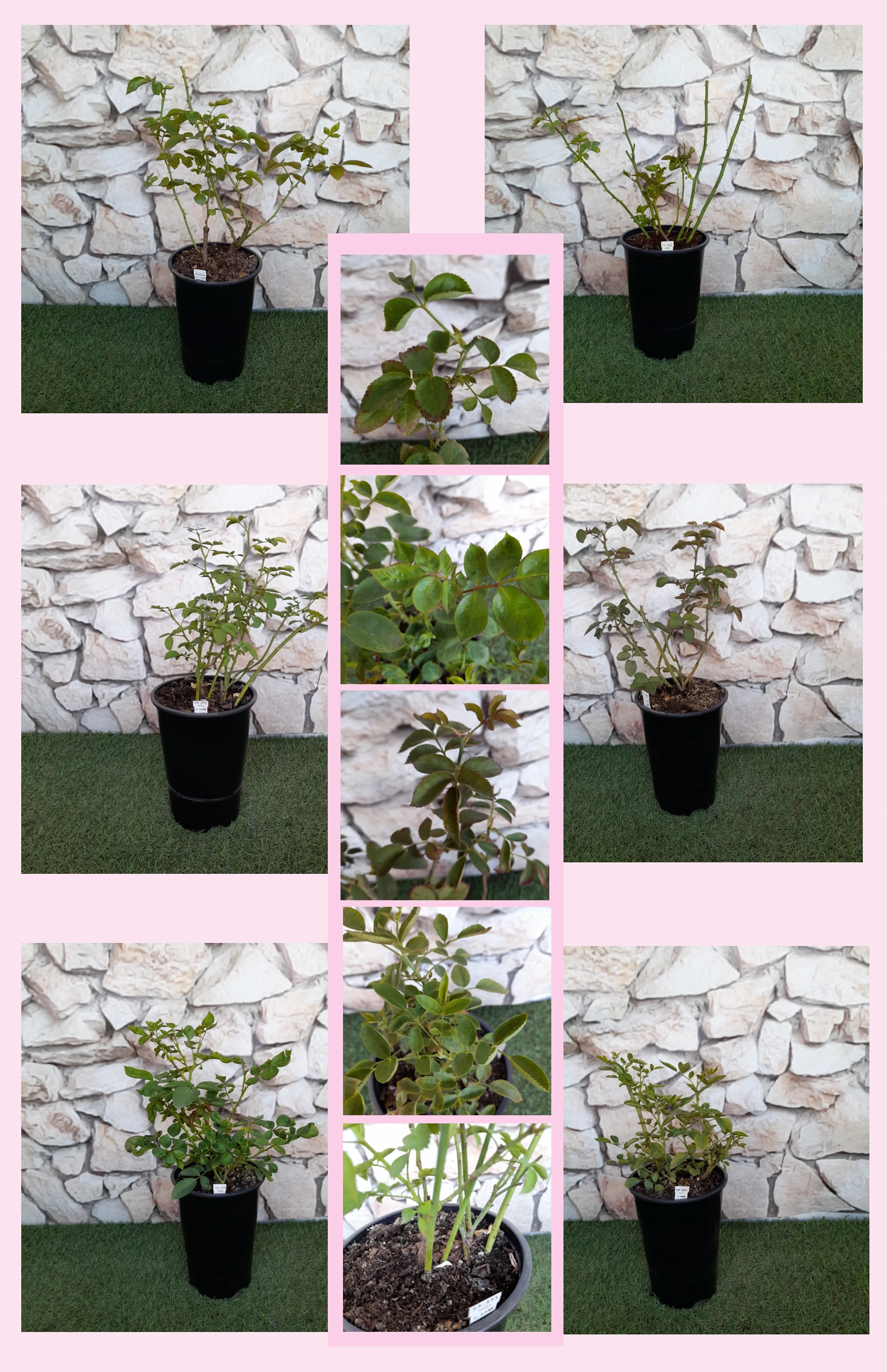
Crop overview: several varieties and growth stages in a short crop section.
Shoot system: intensive growth of fresh basal shoots on a young plant.
Root system: demonstration of a vigorous root system permeating the growing medium, by removing the pot.
Balance: mature plant with root system and shoots in harmony with each other.

Information about the videos
The video series is not a “seasonal showcase”; it illustrates the essence of pharmaROSA® own-root cultivation in a tangible way: how the plant is built up, what the root system is like and how the shoot system regenerates. The recordings were therefore made at different times and with plants at various stages of development, so mixed foliage levels and differing stages of growth may appear in the videos. They are not a ‘sample’ of the batch dispatched, but a visual explanation of how the technology works. The current condition of the rose available to order — typical for the given period and similar to what you can expect to receive in the parcel — is shown in the upper part of the product page.

pharmarosa.lupharmarosa.bgpharmarosa.compharmarosa.skpharmarosa.atpharmarosa.co.ukpharmarosa.czpharmarosa.depharmarosa.ropharmarosa.sipharmarosa.hrpharmarosa.itpharmarosa.frpharmarosa.grpharmarosa.dkpharmarosa.nlpharmarosa.iepharmarosa.espharmarosa.plpharmarosa.bepharmarosa.ptpharmarosa.ltpharmarosa.sepharmarosa.lvpharmarosa.eepharmarosa.fipharmarosa.ru

Product types

Pages for private customers
Garden roses for the family garden, with minimal care  → ORIGINAL®
Premium garden roses – instant impact, a truly showpiece garden  → EXTRA®
Pages for professionals and private customers
Roses for public spaces – large areas, sustainable maintenance  → NATURAL®
Roses for projects – hedge and row planting, fast implementation  → RAPID®
For professional partners only
Production – propagation material for garden roses, wholesale  → NEONATAL®

Company details

PharmaRosa Ltd.
Company registration number: 01-09-717479
VAT number: 13075314-2-43
Plant health registration no.: HU130721
Bank account (IBAN):
HU85117631891388688400000000
BIC (SWIFT): OTPVHUHB
Bank name: OTP Bank Nyrt.