| Arbour or pergola over a seating area |
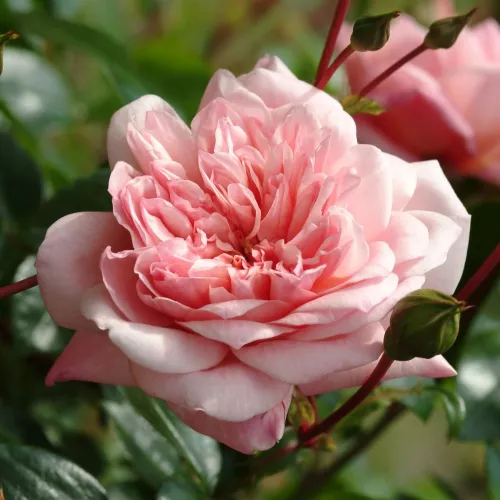
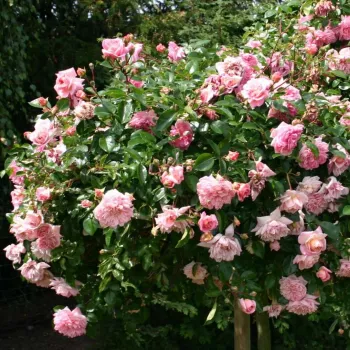
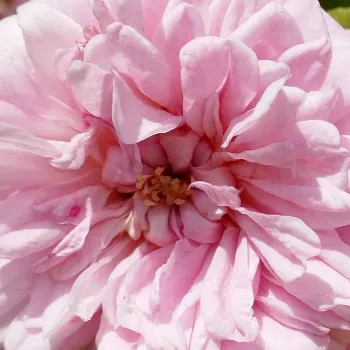
The long, supple canes and dense, mid-green foliage make this rambler ideal for clothing an arbour above a bench or a pergola framing a patio, giving dappled shade and enveloping the space in scented, salmon-pink rosettes during summer. Its own-root vigour and forgiving growth habit mean you can prune lightly for a looser veil or more firmly to keep walkways clear, without jeopardising long-term structure. A gentle development from strong roots to a full romantic canopy over several seasons suits those planning a cosy, afternoon-tea corner in a family garden, especially beginners. |
| Climbing rose for fences and boundaries |
With a height up to around 5 m and a generous spread, this variety can be trained along wires or mesh on standard garden fences to create a soft, flower-laden boundary. Its repeat flowering habit means that, after the main flush, further clusters appear to keep the fence looking alive through the season, with the salmon-pink gradually fading to pastel tones that sit well against brick, timber or hedge backdrops. Own-root resilience gives confidence when tying in or renovating older sections, as the plant responds by sending out fresh, replacement shoots that fill gaps and preserve privacy for the long term, suiting homeowners. |
| Clothing house walls and garages |
The combination of strong growth and medium maintenance needs makes it a practical climber for softening outbuildings, garage walls or the side of a house, provided basic supports are in place. It handles warmth and reflected heat reasonably well if given regular watering in prolonged dry spells, and its colour holds attractively in sun, fading gently to paler pinks rather than scorching. Being on its own roots, it can be pruned back harder near windows, gutters or doors when required, then steadily rebuilds its framework without the risk of suckering from a different rootstock, reassuring busy families. |
| Romantic cottage-style arch in a kitchen garden |
For those who enjoy a traditional kitchen garden, this rambler can be trained over a metal or wooden arch to mark the entrance between productive beds and ornamental borders. The warm salmon-pink tones blend beautifully with herbs and vegetables, especially when underplanted with soft perennials such as lady’s mantle or creeping baby’s-breath for that relaxed, “girly” cottage character. Its ability to repeat flower, though less abundantly later on, still sprinkles colour through the season without constant deadheading. The dependable performance and moderate disease resistance keep workloads sensible for hobby-gardeners. |
| Part-shade corners and north–east aspects |
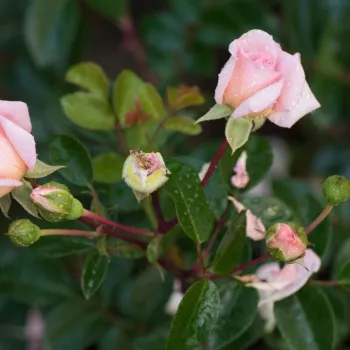
This cultivar tolerates partial shade, making it suitable for aspects that see morning sun and afternoon shade, or bright shade beside taller shrubs and hedging. In these conditions, the flowers still open well, and the strong, fruity fragrance carries on still days, adding atmosphere where other climbers might struggle. The glossy foliage helps maintain an attractive backdrop even when the rose is not in full flush, and the own-root system ensures that, once settled, it remains a long-lived feature rather than a short-term planting. This suits time-pressed urbanites. |
| Coastal and wind-exposed family gardens |
The flexible, rambling growth and dense leaf cover help this rose cope well in gardens where wind can be an issue, particularly near the coast or on open plots, so long as the soil is not waterlogged. Secured to sturdy supports, it weaves into a sheltered green wall that diffuses gusts without snapping, while moderate disease resistance is an advantage in more humid, salt-laden air. Its capacity to form a strong own-root base makes it slow to topple and able to regenerate from lower buds after storm damage, giving practical reassurance in blustery sites for cautious buyers. |
| Large containers and movable terrace features |
Where border space is limited, this climber can be grown in a substantial container of at least 40–50 litres, paired with a trellis or obelisk to frame a small terrace or balcony. In a pot, its medium maintenance needs translate into simple routines: regular watering, a top-up feed, and periodic tying in of new canes. The own-root habit is helpful here, as the plant responds well to occasional root-pruning and repotting, remaining stable and ornamental over the years rather than declining quickly. This flexibility makes it appealing to space-conscious renters. |
| Long-term structural rose for traditional mixed borders |
Planted at the back of a mixed cottage border, this rambler provides a permanent vertical framework that anchors seasonal planting, from spring bulbs to late-summer perennials. Over time it becomes a reliable backdrop of foliage and scented bloom, reducing the need to replant tall supports every year. Its award recognition for garden performance underlines its suitability as a long-term structural choice in typical British conditions, including sites with cool, damp spells where other climbers can struggle with foliage quality and health, particularly valued by detail-oriented planners. |