PASCALI® – white hybrid tea rose - Lens
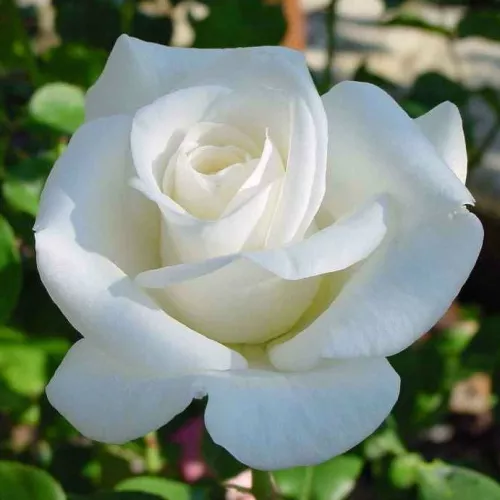
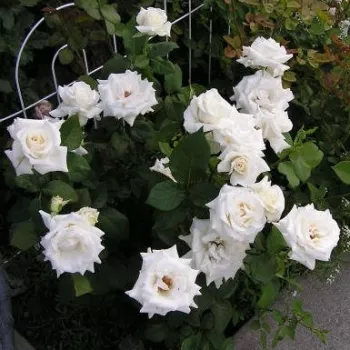
Bathed in soft afternoon light, PASCALI® brings a quietly luxurious romantic touch to family gardens, its high-centred white blooms perfect beside a cottage-style seating nook or under an arbour for leisurely teatime moments. This upright, well-behaved hybrid tea is easy to place in smaller borders, building into a graceful, medium-height structure that suits both formal lines and relaxed English-countryside planting. As an own-root rose it settles securely and ages with dignity – once established, new shoots reliably renew older wood for enduring longevity with minimal fuss. Its abundant repeat flowering and classic, exhibition-style form give you elegant cut stems for the table as well as a calm, storybook presence in the border. With a mild, softly sweet fragrance and blooms that keep their clear white colour even in bright sun and blustery, coastal conditions, PASCALI® offers long-term ornamental stability in everyday family gardens without demanding complicated care.
Usage options
| Target area | Reasoning |
|---|
| Feature rose near a seating area or arbour |
The classic, high-centred blooms and tidy, upright habit create a refined focal point beside a bench or pergola, ideal for afternoon tea corners and romantic cottage-style seating. A gentle, softly sweet scent adds to the sense of calm for the romantic gardener |
| Reliable repeat-flowering in a family front garden |
Remontant flowering ensures flush after flush of blooms through the season, keeping the garden looking cared-for even when you do little more than occasional deadheading. This steady performance suits busy households and small front gardens for the time-poor homeowner |
| Cutting bed or kitchen-garden border |
Long-stemmed, exhibition-type flowers are excellent for cutting, bringing crisp white roses indoors for vases and table settings. Plant in a row or small group near a path for easy access, combining beauty and practicality for the home flower arranger |
| Long-lived focal point in a small to medium border |
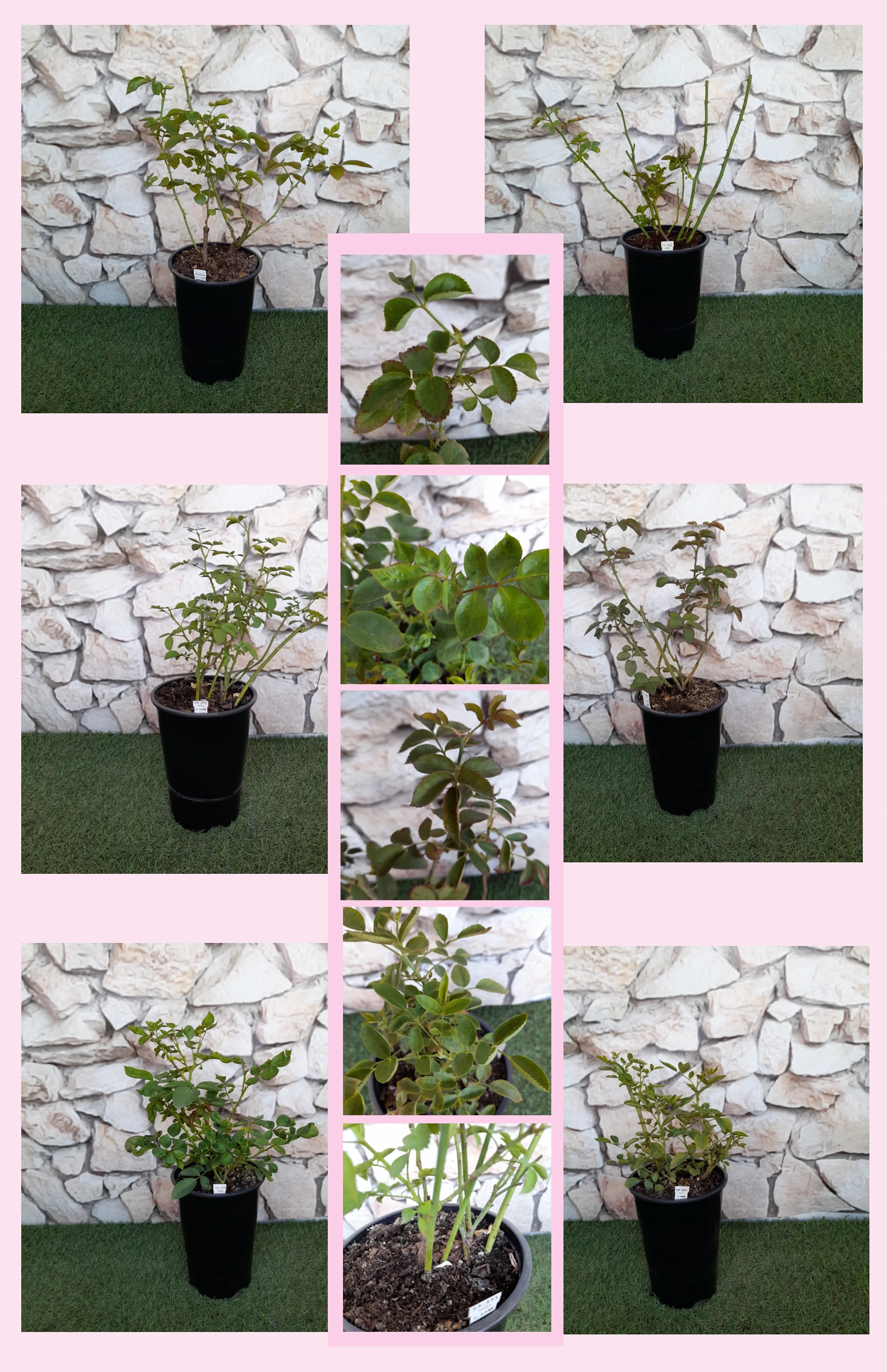
As an own-root hybrid tea, PASCALI® builds strength from below, regrowing from its own wood if cut back hard or after winter damage. Over time this supports a longer garden life and steadier display, especially valuable in smaller plots for the long-term planner |
| Formal or semi-formal hedge in a cottage garden |
The upright structure and recommended 55–65 cm spacing allow you to create a low, flowering hedge that frames a lawn or kitchen garden. Regular but straightforward pruning keeps lines neat without complex techniques, making formality achievable for the neat-border enthusiast |
| Borders with sun, wind and variable UK weather |
Good resilience to powdery mildew and black spot, along with flowers that hold their white colour even in strong sun and changeable breezes, means the plant remains attractive through typical British summers, including more exposed, breezy sites for the weather-aware gardener |
| Large container on terrace, patio or balcony |
Its upright habit and moderate spread suit a deep, stable container of at least 40–50 litres, where roots have space to anchor and store moisture. This is ideal for paved family spaces needing a single, elegant rose for the urban patio owner |
| Low-maintenance rose within a mixed cottage border |
Once planted well and watered in, the own-root system focuses on roots in year one, shoots in year two and full garden presence from year three, reducing replacement and replanting worries for gardeners who prefer simple routines for the low-fuss beginner |
Styling ideas
- Tea-table focus – Position PASCALI® by a bistro set or arbour with soft pink lupins and calamint for a fragrant, romantic tea corner – for lovers of leisurely afternoon garden moments.
- Cottage hedge – Plant a row along a path at the recommended spacing, underplant with low catmint or lady’s mantle for a frothy, storybook edge – for those who like gentle formality.
- Kitchen-cutting row – Align a short, sunny row beside the veg patch for easy stem picking, mixing in annuals like bupleurum for informal vase fillers – for home decorators who enjoy their own bouquets.
- Patio statement – Grow one plant in a 50‑litre clay pot with airy herbs at the rim, creating a calm white focal point on terraces or balconies – for urban gardeners wanting refined simplicity.
- White-and-green border – Combine PASCALI® with dark green shrubs and pale perennials to emphasise its clean white blooms and tidy form – for admirers of classic, quietly elegant planting.
Technical cultivar profile
| Characteristic | Data |
|---|
| Name and registration |
Hybrid tea rose; registered as LENip, traded as Pascali® hybrid tea rose LENip, ARS exhibition name Pascali; bred and introduced in 1963 for garden and cut-flower use. |
| Origin and breeding |
Bred by Louis Lens in Belgium from ‘Queen Elizabeth’ × ‘White Butterfly’; introduced and initially distributed by Lens Roses (Belgium) in 1963 as a premium white hybrid tea. |
| Awards and recognition |
Highly decorated classic: RNRS Certificate of Merit and The Hague Gold Medal (1963), Portland Gold Medal (1967), AARS Award (1969), and Rose Hall of Fame World’s Favourite Rose (1991). |
| Growth and structural characteristics |
Medium-height upright bush, around 95–125 cm tall and 75–105 cm wide, moderately thorny with slightly glossy dark green foliage and a balanced, tidy outline for beds or solitary planting. |
| Flower morphology |
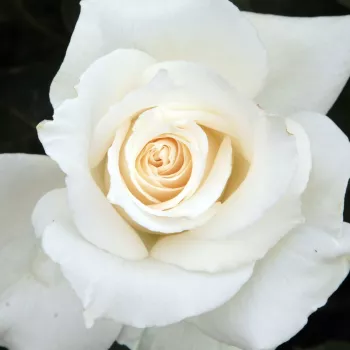
Large, fully double, high-centred blooms with 26–39 petals on mainly solitary stems; classic pointed-bud hybrid tea form, remontant with notably abundant second and later flushes in season. |
| Colour data and phenology |
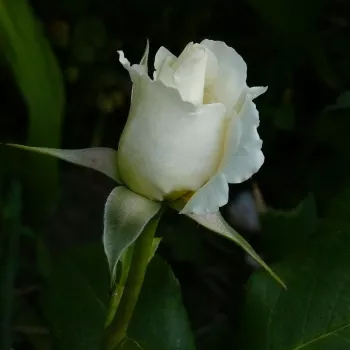
Uniform white with slight ivory tint; ARS code W, RHS 155C–155D; buds greenish-white, opening creamy at base then pure white, later taking a pale beige tone yet generally holding well in strong sunlight. |
| Fragrance and aroma |
Mild, softly sweet rose fragrance of refined character; present but not overwhelming, suitable for close seating areas and for cut stems indoors where a gentle scent is preferred. |
| Hip characteristics |
Occasional ellipsoidal hips, 10–14 mm, orange-red when ripe; of ornamental interest in late season but not produced in heavy quantities and seldom a primary feature of the plant. |
| Resistance and winter hardiness |
Rated H7, hardy to about −21 to −18 °C (USDA 6b); good resistance to powdery mildew and black spot, medium rust susceptibility; moderate heat tolerance, needing regular watering in prolonged drought. |
| Horticultural recommendations |
Best in full sun with fertile, well-drained soil; plant 55–65 cm apart or 2.5–2.9 plants/m²; medium maintenance with occasional spraying, deadheading and annual pruning for optimal repeat flowering and shape. |
PASCALI® offers elegant repeat-flowering, a compact upright habit and dependable long-term garden performance, while its own-root form supports regeneration and a longer lifespan; an excellent choice if you want a classic white rose you can keep.