PAPAGENA™ – orange bedding floribunda rose - McGredy
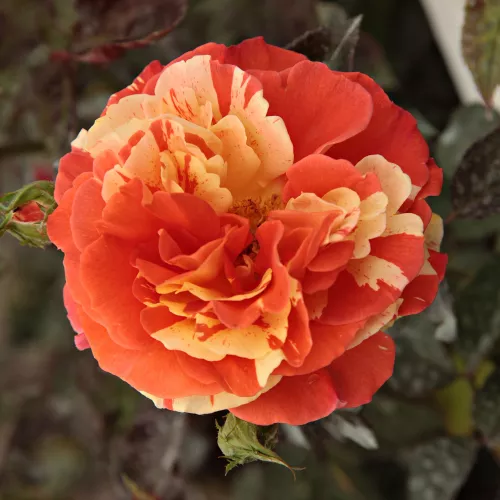
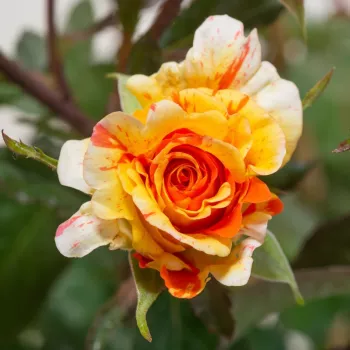
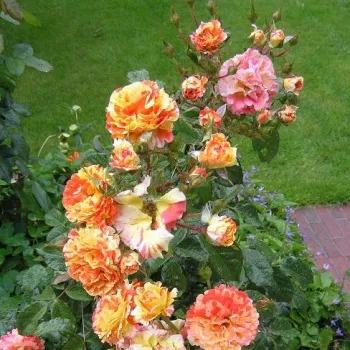
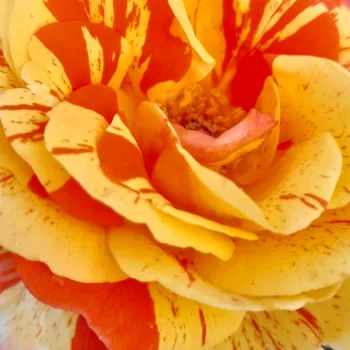
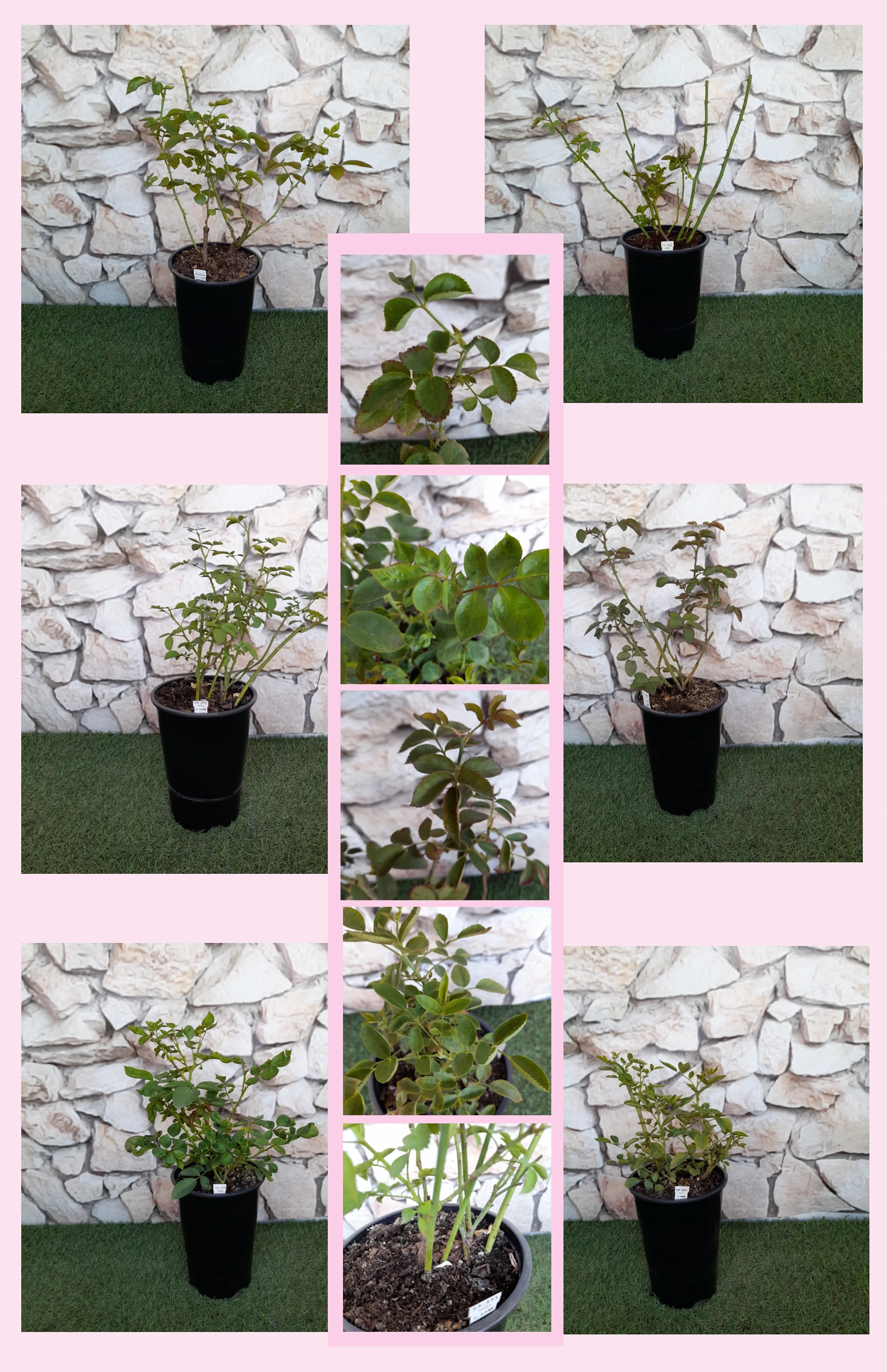
Step into a cosy, storybook corner of your garden with PAPAGENA™, a floribunda bred for effortless colour, romantic cottage charm and reliable, season-long flowering. Its upright, bushy habit forms a neat, medium-sized shrub that fits easily into family borders, kitchen gardens and front paths, even where breezy, damp weather and heavy soil demand a tougher rose. Clusters of semi-double, cup-shaped blooms glow in vivid orange brushed with lemon-yellow stripes, softening to pink and cream as they age, so each flush feels like a living watercolour. Grafted unions are absent, so this own-root plant builds a deep, resilient rootstock that ages gracefully, rewarding simple care with long life, as it moves from quiet first-year settling to fuller second-year shoots and finally a rich, three-year garden presence.
Usage options
| Target area | Reasoning |
|---|
| Feature point by the terrace or seating area |
The bold orange-and-lemon striping creates instant focus beside a bench or patio table, echoing the feel of afternoon tea under an arbour without needing a large structure. Its compact, bushy frame keeps sightlines open while still providing a romantic accent for beginners. |
| Cottage-style mixed border in a family garden |
Planted among herbs, perennials and low hedging, this floribunda brings classic cottage character through continuous, remontant clusters that weave easily into an informal layout. Its good disease resistance keeps upkeep light, even in busy family plots for homeowners. |
| Small-group bedding in front gardens |
Massed at the recommended spacing, shrubs knit into a tidy, upright planting that gives strong seasonal colour with minimal shaping. The consistent structure suits typical suburban beds, providing a cared-for look without frequent pruning for busy-urban-gardeners. |
| Own-root long-term specimen in lawn or gravel |
Planted singly at wider spacing, PAPAGENA™ develops into a durable, well-anchored shrub whose own-root growth can regenerate from the base over many years, preserving its ornamental value without graft worries for long-term-owners. |
| Containers and large pots on patios |
The moderate height and upright habit work well in substantial containers of at least 40–50 litres, where roots have room to establish and withstand seasonal swings. Its repeat flowering keeps smaller spaces lively, with simple watering and feeding routines for balcony-and-patio-gardeners. |
| Borders in areas with wet, breezy weather |
The variety’s good resistance to common fungal diseases supports reliable flowering where rain and wind often challenge roses, provided the planting area has reasonable drainage or a slight rise in heavy soils, giving confidence to cautious UK-climate-gardeners. |
| Kitchen garden edges and herb borders |
Its refined, fruity-citrus fragrance and bright colouring sit naturally alongside sages, thymes and other culinary plants, softening the working feel of a kitchen plot. Low maintenance needs suit those who want beauty around productive beds for hobby-gardeners. |
| Low, gently colourful park or shared-space planting |
The reliable, remontant flowering and tidy, bushy structure create a soft-edged, welcoming effect in communal borders with limited maintenance budgets, while its own-root resilience and simple annual pruning support long-term planting schemes for community-spaces-users. |
Styling ideas
- Striped-showpiece – Plant three PAPAGENA™ in a triangle near a seating area so the orange-and-lemon blooms read as one glowing mound – ideal for those who like a single, eye-catching focal point.
- Cottage-ribbon – Thread a loose line of bushes through a border with catmint, thyme and low box, creating a romantic, English-country feel – suited to fans of traditional cottage gardens.
- Kitchen-edge – Run plants along a vegetable or herb bed with sage and thyme, softening rows of crops while linking beauty and utility – perfect for kitchen-garden enthusiasts.
- Patio-companion – Grow one specimen in a 50-litre terracotta pot with trailing thyme at the rim, bringing long-season colour to compact terraces – made for small-space city gardeners.
- Warm-harmony – Combine with dusky purples like salvias and euphorbias for a refined, sunset palette that tones rather than clashes – ideal for those preferring coordinated, elegant borders.
Technical cultivar profile
| Parameter | Data |
|---|
| Name and registration |
Floribunda bed rose, registered as MACoranlem and marketed as Papagena™ bedding rose (also Oranges ’n’ Lemons™); bush rose / cut flower and show floribunda exhibition category. |
| Origin and breeding |
Bred by Samuel Darragh McGredy IV, New Zealand; ‘New Year’ × unknown seedling; introduced 1992 in New Zealand, 1995 in USA by Weeks and Saulaie, registered 1985. |
| Awards and recognition |
Royal National Rose Society Trial Ground Certificate 1993 and joint Breeders Choice (RNRS) 1993, reflecting strong garden performance and ornamental value in UK trial conditions. |
| Growth and structural characteristics |
Medium shrub 100–140 cm high, 65–95 cm spread; upright, slightly arching, bushy habit with dense, glossy dark green foliage and moderate prickliness, forming a balanced garden presence. |
| Flower morphology |
Semi-double, cup-shaped, flat-opening clusters; medium-sized blooms (about 4–7 cm), 13–25 petals, freely and repeatedly produced over the season, suitable for beds, cutting and decorative display. |
| Colour data and phenology |
Vivid orange petals with pure lemon-yellow stripes (RHS 28A outer, 14B inner), buds deep orange-red, ageing to pinkish tones with creamy yellow streaks; colour retention moderate through each flush. |
| Fragrance and aroma |
Fresh, mild citrus character; pleasantly scented without overpowering nearby seating areas, offering a light, refined perfume rather than a heavy rose fragrance; modest attraction for pollinators. |
| Hip characteristics |
Occasional small spherical hips, 8–12 mm, orange-red and decorative at close range; numbers generally low due to semi-double, petal-rich flowers, so hips are a minor visual element. |
| Resistance and winter hardiness |
Rated resistant to powdery mildew, black spot and rust; tolerates heat and humidity with watering in dry spells; hardy to about −21 to −18 °C (RHS H7, USDA 6b, Swedish Zone 3). |
| Horticultural recommendations |
Low-maintenance variety for beds, specimens, parks, cut flowers and containers; suitable for partial shade; plant 50–90 cm apart, around 3.3–3.8 plants/m² for mass effect in borders. |
PAPAGENA™ offers vivid striped colour, reliable repeat flowering and durable, own-root longevity, making it a thoughtful choice for relaxed, romantic gardens where you prefer beauty with minimal effort.