PAPA FRANCESCO – pale pink climbing rose - Ranchon
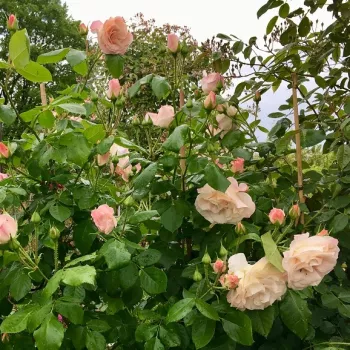
With its soft pastel flowers and calm, reliable character, PAPA FRANCESCO brings a gentle, storybook charm to arches and arbours in an average family garden. The pale pink clusters sit against light green, glossy foliage, creating a quietly elegant backdrop for afternoon tea, even where breezes and showers are frequent in exposed, coastal-influenced gardens. As an own-root climber it builds strength steadily, designed for a long, healthy lifespan with good regeneration if stems are ever damaged or cut back hard. Once settled, it offers season-long repeat flowering, steadily clothing structures without demanding complicated pruning routines. Its moderate vigour makes it easier to manage than very rampant climbers, while still reaching a generous height for screening and shade. Well-suited to classic cottage-style borders and kitchen gardens, it integrates smoothly with perennials, clematis and light variegated shrubs. In containers it will thrive long term in a substantial 40–50 litre planter, giving you flexibility in smaller spaces and paved seating areas.
Usage options
| Target area |
Reasoning |
| Arches and garden arbours near a seating area |
PAPA FRANCESCO’s moderate yet climbing habit reaches around 2,4–3,8 m, ideal for covering an arch without becoming unmanageable. Its pale pink clusters create a soft overhead canopy that suits tea corners and family seating, particularly for those who prefer a romantic look but do not want heavy pruning routines, making it ideal for the beginner. |
| House walls and fences in small to medium gardens |
The controlled spread of roughly 1,5–2,6 m makes this cultivar a good choice for training along wires or trellis on walls and fences. It offers repeat flowering through the season, giving ongoing colour without needing constant deadheading. This is practical for busy households who want a smart boundary with minimal complexity, especially suitable for the homeowner. |
| Traditional cottage-style mixed borders |
The soft pastel pink blends easily with perennials and shrubs, lending itself to English cottage schemes with blues, whites and variegated foliage. Semi-double, medium-sized blooms sit in airy clusters, so they weave through herbaceous planting rather than overwhelming it. This approach will appeal to lovers of informal gardens, particularly the romantic. |
| Rural kitchen garden edges and fruit plots |
As a climber with moderate prickliness, PAPA FRANCESCO offers light structure and vertical interest at the back of productive beds or along simple wire supports. Its near-neutral fragrance and tidy foliage help it sit quietly beside vegetables and herbs, giving a sense of enclosure without shouting for attention, suiting the practical-minded gardener. |
| Raised beds or improved soil over heavier ground |
The own-root form gives stable anchoring and long-term resilience, especially where soil is improved above heavier clay or stony subsoil. Once established, the plant copes reliably with seasonal wet and wind, supporting a near-natural, lower-input management style over the years for those who prioritise sustainable planting, particularly the eco-conscious. |
| Large containers on patios and roof terraces |
In a 40–50 litre container with support, this climber can be kept to a manageable framework, bringing vertical interest to paved spaces. The moderate vigour and repeat flowering mean dependable display with straightforward feeding and watering. This suits urban gardeners who need clear, simple routines, especially the time-pressed city-dweller. |
| Discreet screening between garden “rooms” |
The light green, moderately dense foliage and soft flower colour create a gentle visual screen rather than a heavy barrier, useful on simple post-and-wire runs or between lawn and kitchen garden. Over time, stems can be tied out to form a semi-transparent partition that still lets air and light through, appreciated by those shaping family spaces, particularly the planner. |
| Low-intervention, traditionally styled family gardens |
With medium disease resistance and remontant flowering, PAPA FRANCESCO suits gardens where spraying is avoided and tasks must be kept simple. Own-root plants tolerate occasional hard pruning or accidental damage, regrowing reliably and holding their ornamental value even with relaxed maintenance, which benefits hobby gardeners seeking reassurance, especially the novice. |
Styling ideas
- COTTAGE ARCH – Train PAPA FRANCESCO over a simple metal or wooden arch with blue clematis and forget-me-nots below for a soft, pastel tunnel – perfect for romantic cottage-style enthusiasts.
- WALLED NOOK – Fan the rose along sheltered brickwork behind a small bistro set, pairing with pots of lavender and herbs to frame an intimate tea corner – ideal for homeowners creating a calm retreat.
- KITCHEN WALK – Run the climber along posts and wires beside vegetable beds, underplanting with chives and calendula for a gentle, productive-feeling walk – suited to practical kitchen-garden keepers.
- PATIO SCREEN – Grow it in a 40–50 litre container with a trellis, combining with variegated dogwood in a nearby pot to soften views and neighbouring windows – useful for small-garden and balcony owners.
- GARDEN ROOM DIVIDER – Use paired climbers to mark a transition from lawn to play area, interweaving with airy grasses for a subtle, semi-transparent boundary – appealing to families zoning shared spaces.
Technical cultivar profile
| Parameter |
Data |
| Name and registration |
PAPA FRANCESCO – pale pink climbing rose - Ranchon; commercial climbing rose from the Climbing rose collection, marketed as a garden climber for arches, walls and traditional family gardens. |
| Origin and breeding |
Climbing seedling selection from ‘Sourire d’Orchidée’, bred by Jacques Ranchon at Pépinières Paul Croix in Bourg-Argental, France, introduced and registered for commercial sale in 2016. |
| Growth and structural characteristics |
Climbing rose reaching approximately 2,4–3,8 m in height with a 1,5–2,6 m spread; moderately dense, glossy light green foliage and moderate prickliness make it manageable on typical supports. |
| Flower morphology |
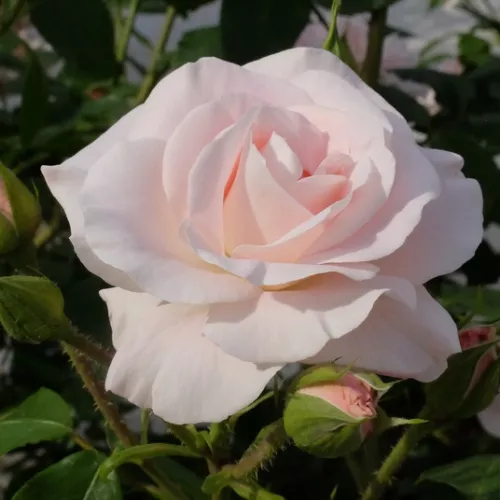
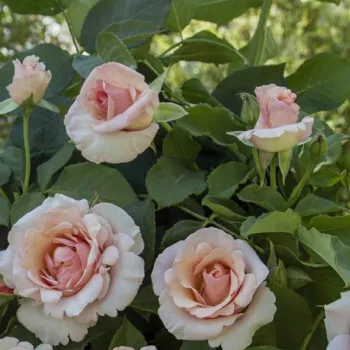
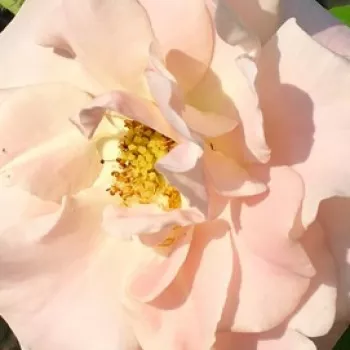
Semi-double, cup-shaped blooms with roughly 13–25 petals, medium-sized clusters on branching stems; remontant habit with an especially abundant second flush, suitable for extended seasonal display. |
| Colour data and phenology |
Pale, pastel pink blooms (RHS 65C outer, 65D inner) with a soft, pure tone; colour gradually lightens toward the petal edges, retaining a gentle pink halo as flowers age before dropping cleanly. |
| Fragrance and aroma |
Very weak, almost neutral fragrance with a clean character; chosen primarily for its visual effect and soft colouring rather than scent, making it unobtrusive near seating, windows or dining areas. |
| Hip characteristics |
Rose hips only form sporadically due to the semi-double flower form; when present they are small spherical orange-red fruits around 8–12 mm across, adding light seasonal interest in autumn. |
| Resistance and winter hardiness |
Medium overall disease resistance with moderate tolerance to powdery mildew, black spot and rust; reliably hardy to around –18 to –21 °C (RHS H7, Swedish zone 3, USDA zone 6b) under normal garden conditions. |
| Horticultural recommendations |
Best trained on arches, arbours, walls or robust trellis with 1,9–3,0 m spacing; prefers improved, drained soil, benefits from seasonal feeding, and may occasionally need routine pest or disease checks. |
PAPA FRANCESCO – pale pink climbing rose - Ranchon offers manageable vigour, reliable repeat flowering and long-term stability from its own-root form, making it a considerate choice for relaxed, traditional family gardens.