PANNONHALMA – cherry-red hybrid tea rose – Márk
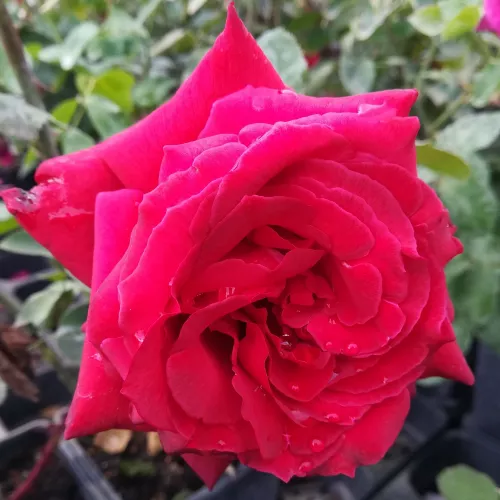
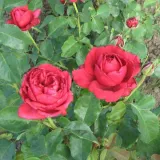
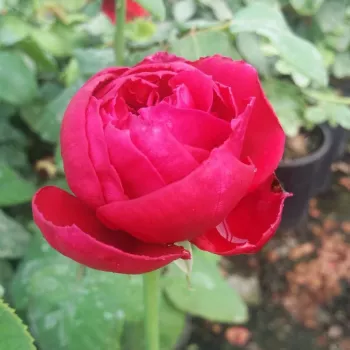
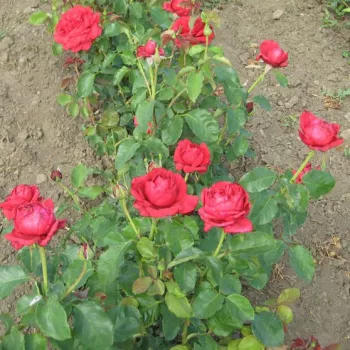
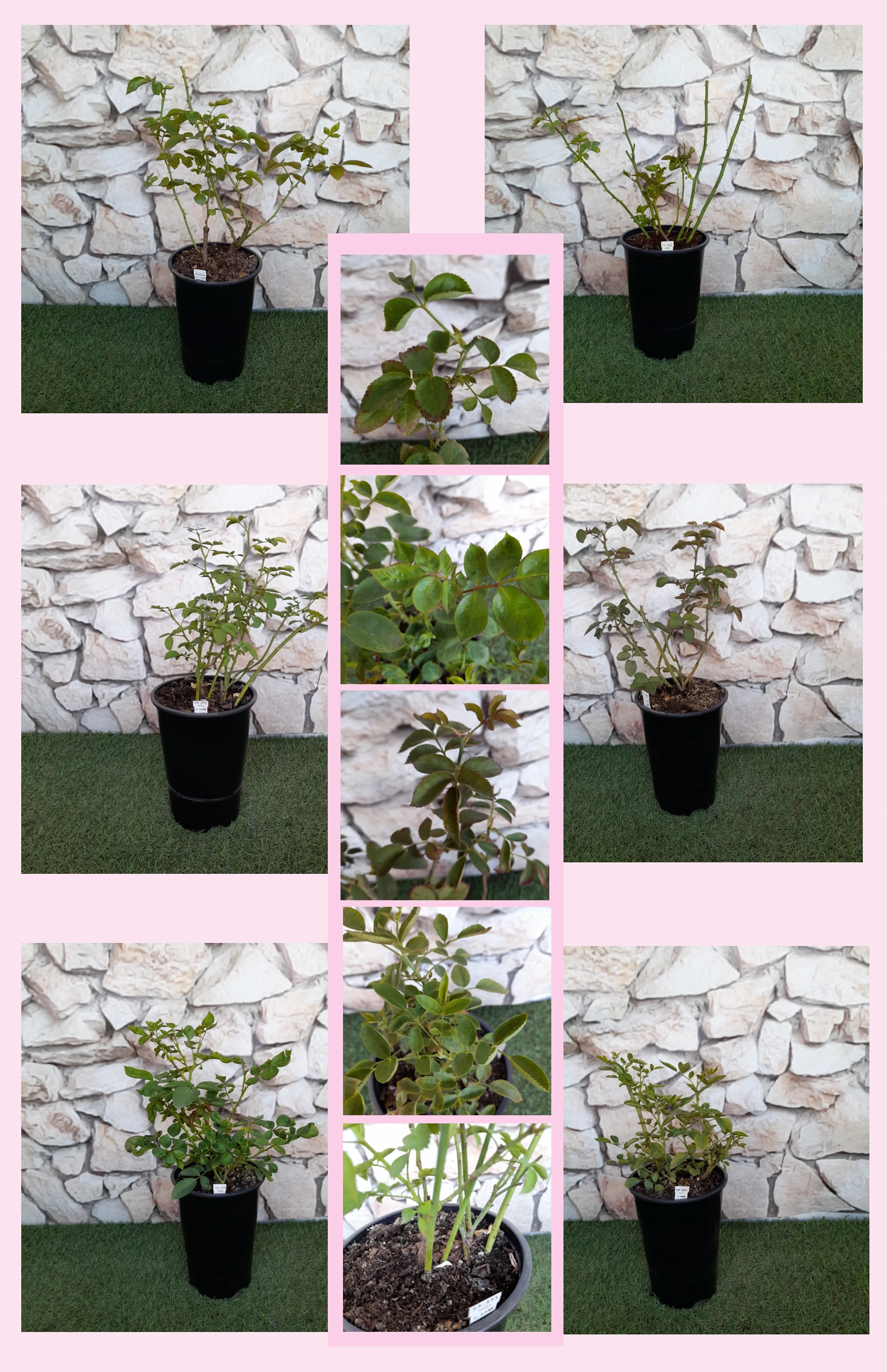
With its deep cherry-red blooms and medium, long-lasting perfume, PANNONHALMA brings a quietly romantic ambience to family gardens, evoking afternoon tea beside an arbour. This erect, compact hybrid tea settles well even where soils hold moisture and winds are frequent, provided drainage is sensibly managed. Its repeat-flowering habit offers generous flushes from early summer onwards, while the slightly glossy mid-green foliage supports a stable ornamental presence year after year. As an own-root rose, it is designed for longevity, rebuilding from the base after tougher winters and retaining its characteristic flower form. Once planted, routine care is pleasantly minimal, with disease-resistant foliage helping you avoid complicated spraying regimes. Ideal for classic bedding, mixed cottage borders or cutting for the vase, it fits naturally into a “girly” English countryside look with soft perennials and kitchen-garden planting. Given time to establish, it rewards you with a calm rhythm of growth – roots in the first year, stronger shoots in the second, and full storybook character by the third – creating a feeling of cosiness and lived-in charm. Its solitary, cupped flowers sit neatly on upright stems, perfect for cutting without disrupting the overall balance of the bush, while occasional decorative hips add a quiet seasonal accent in autumn.
Usage options
| Target area |
Reasoning |
| Classic hybrid tea bedding row |
PANNONHALMA’s erect, compact habit and solitary, cupped blooms make it ideal for traditional bedding rows along paths or lawns, where each deep cherry-red flower can be appreciated individually in a formal layout – perfect for homeowners. |
| Romantic cottage-style mixed border |
The rich cherry-red colour and slightly glossy foliage weave beautifully among cottage plants such as honesty, feverfew and bearded iris, creating a soft, romantic backdrop that suits storybook gardens and relaxed planting – ideal for cottage-lovers. |
| Low-maintenance family front garden |
Reliable resistance to black spot, mildew and rust keeps foliage attractive without complex spraying, so a few well-spaced plants can anchor a tidy, welcoming frontage that stays smart with only basic pruning – reassuring for busy-families. |
| Cutting and vase displays from the garden |
Large, very full, long-stemmed blooms with medium, classic rose fragrance are well suited to cutting; you can gather armfuls for the house while the shrub continues to flower in waves through the season – rewarding for flower-enthusiasts. |
| Small kitchen or utility garden accent |
Its upright, moderate spread and repeat flowering allow it to slot neatly into a kitchen garden corner, offering scent and colour near herbs and vegetables without overwhelming the space or demanding specialist care – appealing to kitchen-gardeners. |
| Own-root long-term garden feature |
As an own-root rose, PANNONHALMA rebuilds from its base after harsher seasons, avoiding graft-related failures and gradually forming a durable clump that can grace the same spot for many years with steady ornamental value – reassuring for long-term-planners. |
| Coastal or wind-exposed suburban plots |
The sturdy, erect framework and resilient foliage cope well where gardens feel open and breezy, provided planting holes are prepared with decent drainage in heavier soils that tend to stay wet and wind-buffeted – practical for coastal-gardeners. |
| Large decorative containers by seating areas |
When given a 40–50 litre or larger container with rich compost, this compact hybrid tea forms an elegant potted feature, placing colour and fragrance right beside patios or benches while remaining straightforward to prune and tidy – convenient for balcony-owners. |
Styling ideas
- Abbey Walk – Line a narrow path with PANNONHALMA and soft edging plants like feverfew to evoke a cloistered walkway – ideal for lovers of calm, structured cottage formality.
- Cherry Border – Combine its cherry-red blooms with mauve bearded irises and silver foliage perennials for a painterly, romantic border – suited to homeowners wanting a gentle yet striking focus.
- Tea-Cup Corner – Place one rose in a large terracotta pot by a bistro set, underplanted with low herbs, for scented afternoon tea moments – perfect for urban gardeners with limited space.
- Kitchen Nook – Tuck a small group near raised vegetable beds, with honesty and traditional herbs, to blend ornament and utility – attractive for families who enjoy a lived-in kitchen garden feel.
- Storybook Hedge – Plant a loose, low informal hedge at 40–50 cm spacing along a front boundary, underplanted with cottage annuals, for a gently enclosing, cosy street presence – ideal for traditional-style front gardens.
Technical cultivar profile
| Parameter |
Data |
| Name and registration |
Hybrid tea rose marketed as PANNONHALMA – cherry-red tea-hybrid rose – Márk; ARS exhibition name Pannonhalma; collection and commercial group: hybrid tea rose. |
| Origin and breeding |
Hybrid tea bred by Márk Gergely in Hungary, 1991; parentage and breeding institution not recorded; introduced by PharmaRosa Ltd., with verified cultivar authenticity for reliable identification. |
| Growth and structural characteristics |
Compact, erect shrub typically 80–110 cm tall and 60–80 cm wide, with moderately dense, mid-green, slightly glossy foliage and moderate prickliness, forming a tidy, upright garden presence. |
| Flower morphology |
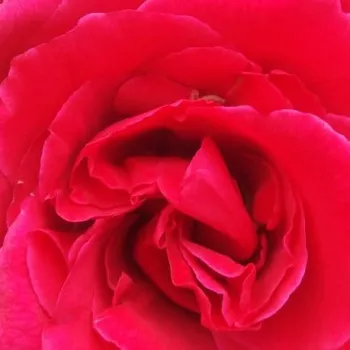
Large, solitary, cupped blooms with over 40 petals, very full and exhibition-type; repeat flowering through the season with a notably abundant second flush on sturdy stems suitable for cutting. |
| Colour data and phenology |
Intense cherry-red flowers, ARS code DR, RHS 187A outer and 53A inner; colour softens only moderately to muted wine-red as blooms age, maintaining depth and richness until just before withering. |
| Fragrance and aroma |
Medium-strength, full rose fragrance with classic character; scent is noticeable and long-lasting around seating areas and when cut for the vase, enhancing its use as both garden and indoor flower. |
| Hip characteristics |
Occasional ellipsoidal hips, around 10–14 mm in diameter, colouring orange-red in autumn; produced sporadically and mainly of seasonal decorative interest rather than for wildlife or culinary use. |
| Resistance and winter hardiness |
Rated resistant to powdery mildew, black spot and rust, supporting low-intervention care; hardiness around RHS H4, Swedish Zone 1, USDA 8b, with own-root growth aiding recovery after colder spells. |
| Horticultural recommendations |
Best in sunny positions for bedding or cutting; plant 40–50 cm apart for hedging, 50 cm for mass planting, 80 cm as a specimen, in well-drained soil enriched with organic matter. |
PANNONHALMA offers rich cherry-red, fragrant blooms on a compact, disease-resistant bush that establishes securely and endures as an own-root planting, making it a thoughtful choice for long-lived, romantic family gardens.