OCCHI DI FATA – white-pink bedding floribunda rose - Barni
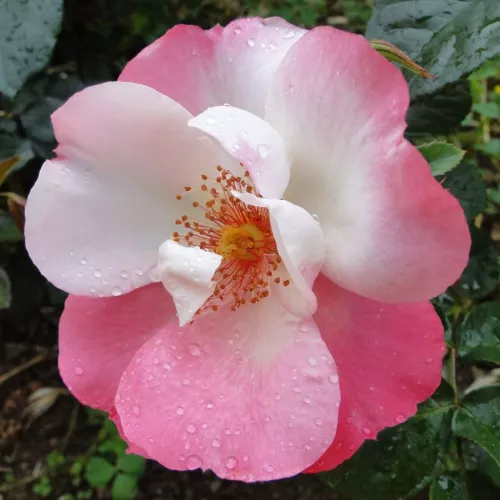
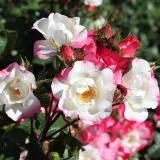
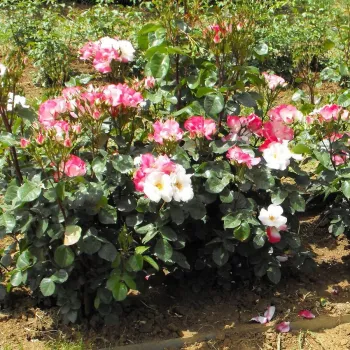
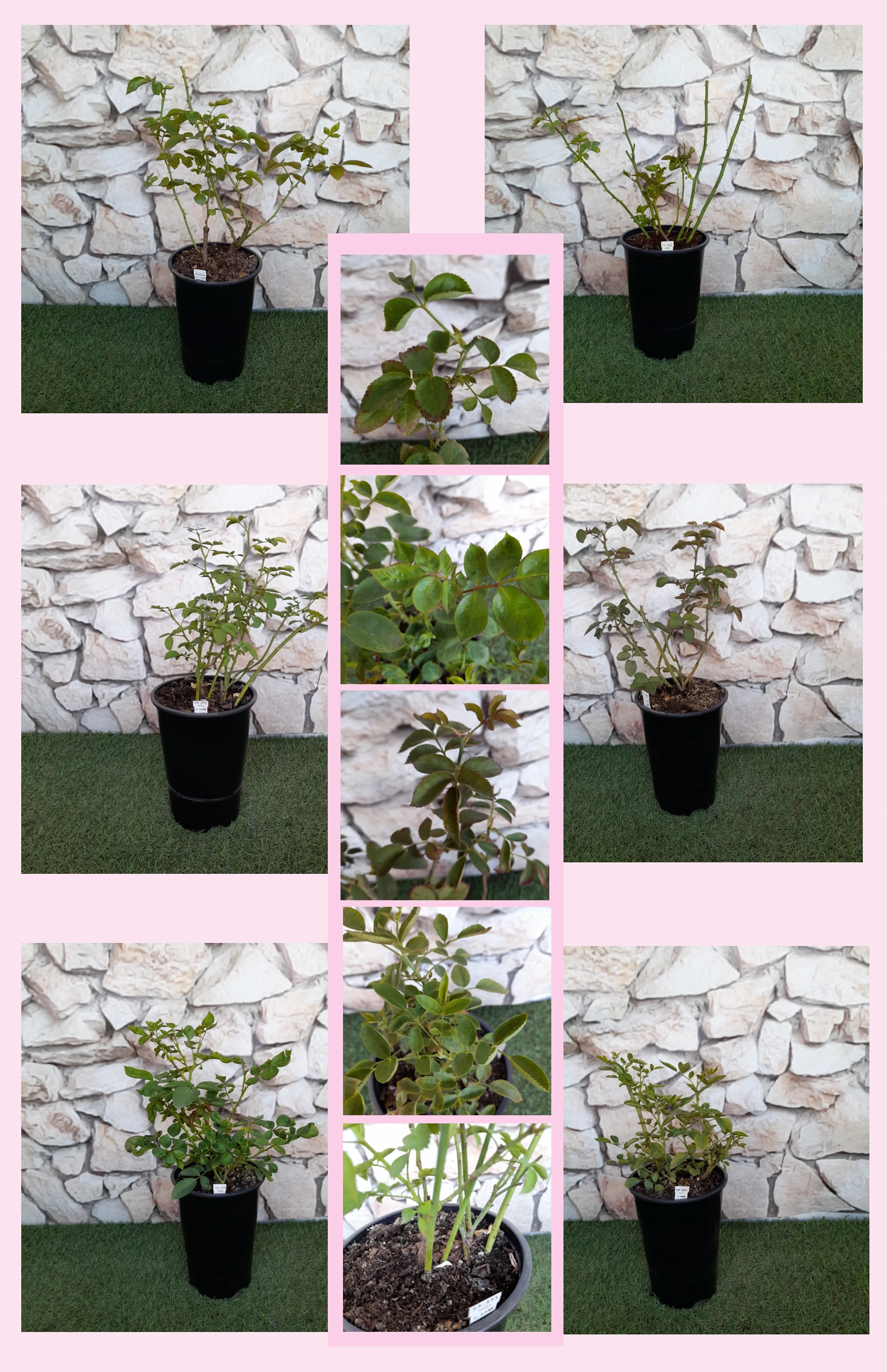
Bring a touch of storybook romance to your garden with Occhi di Fata, a compact floribunda whose single blooms shift from creamy white to deep pink, creating a constantly changing tapestry of colour. Its upright, bushy habit fits beautifully into modest family plots, edging paths or nestling beside a kitchen garden, while its accessible, pollen-rich flowers invite bees to linger. Own-root plants settle reliably, building a discreetly stronger framework each season for a longer-lived display, even where breezes and showers regularly sweep in from the coast. The clustered flowers repeat generously through summer into autumn, so a pair in a 40–50 litre container by a seating area can frame relaxed afternoon tea beneath an arbour, growing from roots in year one to fuller top growth in year two and an enchanting, complete picture by year three. The simple rosy fragrance and softly glowing colours give borders a quietly magical focus with very little fuss, while the compact habit, dense foliage and versatile height make it easy to weave into mixed plantings for enduring cottage-garden charm.
Usage options
| Target area | Reasoning |
|---|
| Front-of-border cottage edging |
The compact, upright growth and moderate height create a neat, low hedge that reads clearly from the house or patio. Clustered single flowers lend a soft, romantic edge to paths and vegetable plots without overwhelming smaller spaces, ideal for traditional family gardens and busy beginners. |
| Feature clumps in mixed beds |
Planted in small groups, the bushy structure and dense foliage form rounded mounds that anchor looser perennials. This habit gives reliable shape even when not in flower, helping borders look intentional year-round for time-pressed homeowners. |
| Colour-changing focal point near seating |
The petals shift from milky white to deep pink-crimson, so a single plant can deliver several tones across the season. This evolving palette draws the eye from a bench or terrace, adding interest without needing constant rearrangement for relaxed cottage-lovers. |
| Season-long bloom for family gardens |
With abundant repeat-flowering, it supplies waves of blossom from early summer into autumn. This dependable continuity supports a stable garden picture around play areas and outdoor dining spaces, suiting families wanting reliability. |
| Pollinator-friendly wildlife corner |
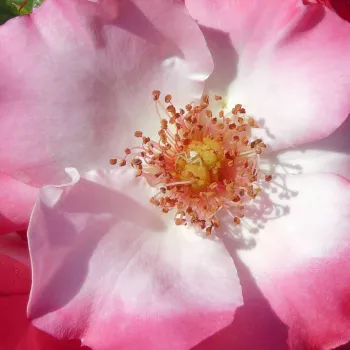
The single, open flowers with exposed stamens make nectar and pollen easy for bees to reach, supporting garden biodiversity. This works especially well when paired with herbs and simple perennials for nature-minded households. |
| Containers on patio or balcony (40–50 L+) |
Its compact frame and moderate root system adapt well to generously sized pots of at least 40–50 litres. A quality compost, steady watering and feeding give a long-lived, movable accent for urban terrace gardeners. |
| Long-term planting in small plots |
As an own-root rose, it thickens from the base and can regenerate from its own wood after harder pruning or weather setbacks, supporting a longer lifespan and stable display over the years for practical home gardeners. |
| Sunny, well-drained rose beds |
In a bright, open position with decent airflow and drainage, it forms a healthy, compact bush that is easier to keep in good condition, which is particularly reassuring where regular rain and wind from the coast can test many roses for low-maintenance seekers. |
Styling ideas
- Arbour-tea nook – Underplant a simple wooden arbour with Occhi di Fata rows and scent with wallflowers and herbs to frame an afternoon tea table – for cottage romantics who linger outdoors.
- Kitchen-border charm – Thread small groups between chives, sage and lavender along a vegetable plot edge, giving a soft, storybook transition from crops to flowers – for home growers who value prettiness as well as produce.
- Pastel bee haven – Combine with airy Nepeta, soft pink salvias and a late-summer clematis to extend nectar sources around its single blooms – for wildlife-friendly gardeners wanting gentle colours.
- Patio statement pot – Place one or three plants in a 50 litre terracotta container by French doors, underplant with trailing thyme for all-season texture – for balcony and terrace owners seeking a focal rose.
- Winter-structure ribbon – Use as a low ribbon through a mixed shrub bed, backed by Cornus ‘Midwinter Fire’, so its compact mounds support the winter stems’ show – for planners who like year-round structure.
Technical cultivar profile
| Property | Data |
|---|
| Name and registration |
Floribunda bed rose, registered as BARfata; marketed as Occhi di Fata in the Le Farfalle collection, exhibition floribunda and bush type for beds and borders. |
| Origin and breeding |
Bred by Enrico Barni, Rose Barni, Pistoia, Italy; selected and introduced in 2004 with BARfata as the registered name and Occhi di Fata the approved exhibition name. |
| Awards and recognition |
Gold medal, first prize Floribunda category at La Tacita International Trials for New Roses in 2009, confirming strong ornamental value and garden performance. |
| Growth and structural characteristics |
Compact, upright shrub reaching about 60–85 cm in height and 50–75 cm in spread, moderately thorny, with dense, slightly glossy dark green foliage forming tidy, bushy plants. |
| Flower morphology |
Single to semi-single blooms, 5–12 petals, medium-sized clusters on branching stems. Cup-shaped flowers open flat, borne repeatedly in generous flushes with a notably abundant second flowering. |
| Colour data and phenology |
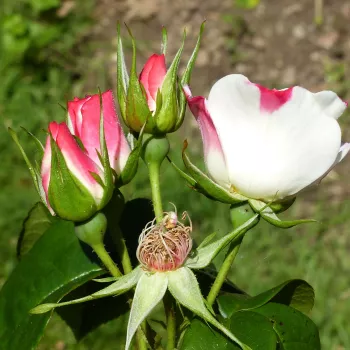
Base colour milky white (RHS 155C) shifting to pink (RHS 70A) in sun. Buds creamy; newly opened flowers white with pink edge, then deepen to mid- then crimson-pink as the season advances. |
| Fragrance and aroma |
Light, discreet rosy fragrance, noticeable at close range but never overpowering. Open flower form with accessible stamens supports pollinator visits, making it suitable for wildlife-friendly planting schemes. |
| Hip characteristics |
Forms moderate quantities of small, spherical orange-red hips around 8–12 mm in diameter, adding subtle late-season interest and additional wildlife value in mixed borders. |
| Resistance and winter hardiness |
Hardy to approximately −21 to −18 °C (RHS H7, USDA 6b, Swedish zone 3); disease sensitivity requires regular monitoring and protection, particularly against rust and common foliar diseases. |
| Horticultural recommendations |
Best in full sun with well-drained soil; recommended spacing 35–65 cm depending on use, 5.7–6.5 plants/m² for massing. Needs consistent care and plant protection to maintain foliage and flowering quality. |
Occhi di Fata offers compact structure, season-long colour-shifting bloom and bee-friendly single flowers in a durable own-root form that will mature gracefully in your family garden; an appealing choice if you favour romantic ease over complexity.