NOTRE DAME DU ROSAIRE – peach-pink nostalgia rose - Massad
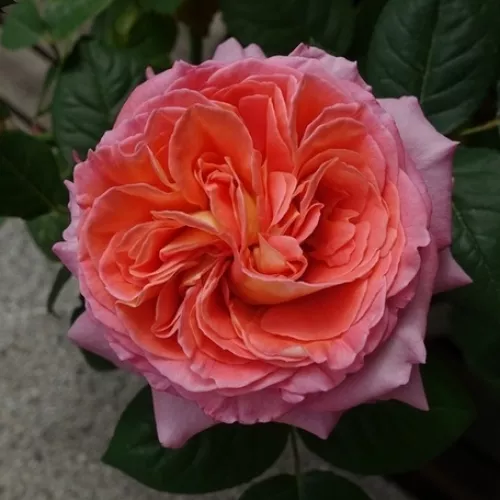
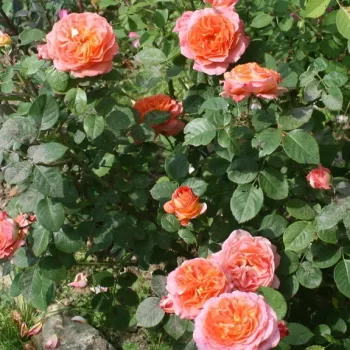
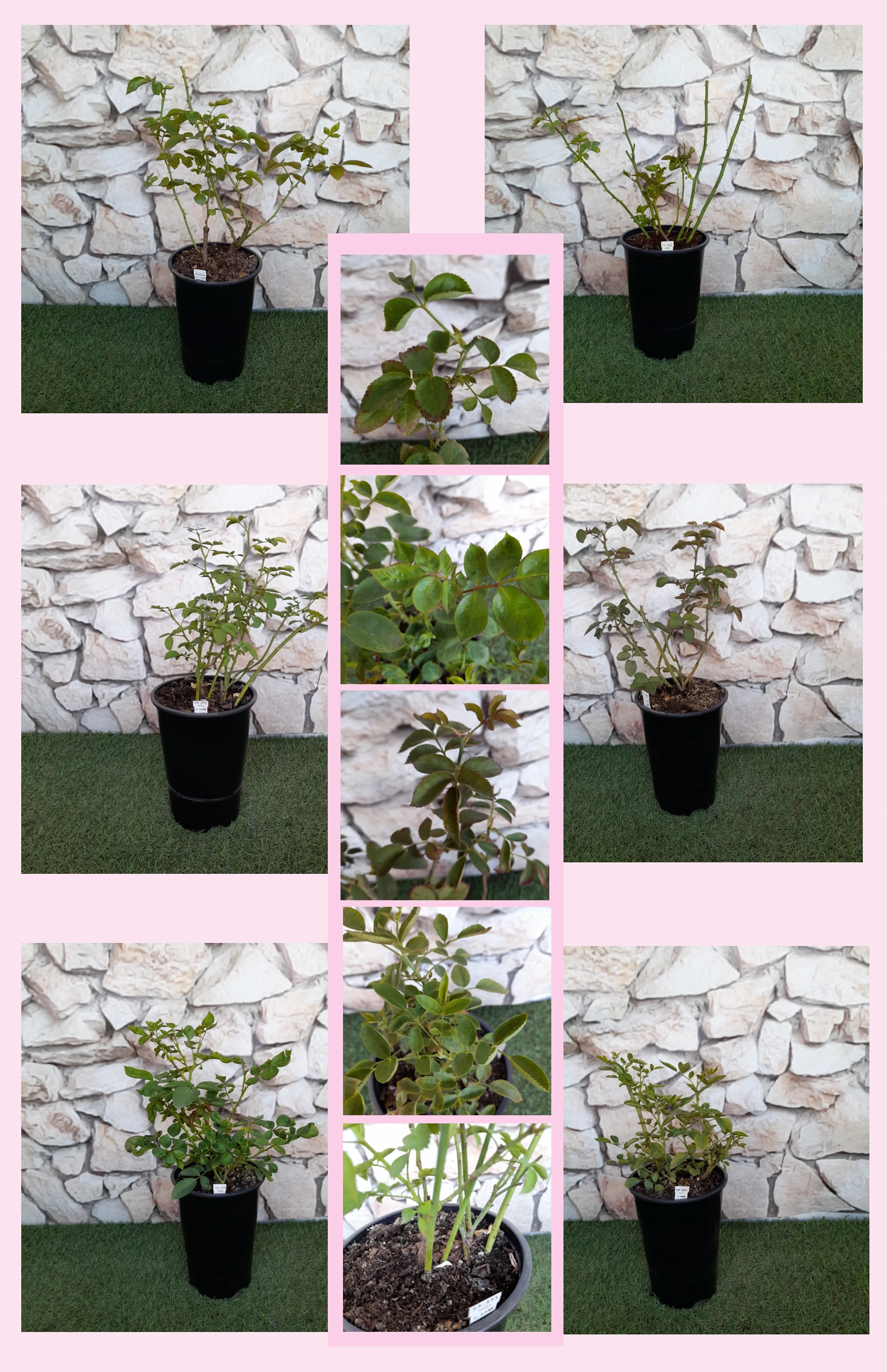
With its lush, peach-pink rosettes and romantic vintage charm, Notre Dame du Rosaire brings an unmistakably cottage feel to even the smallest plot, evoking afternoons of tea and quiet conversation beneath an arbour. As an own-root plant it is naturally long-lived, able to regenerate from the base and maintain stable ornamental value without complicated rejuvenation. In a typical British family garden, it settles confidently even where borders are exposed to salt-laden winds and changeable weather, rewarding you with richly scented, repeat-flowering clusters. Over time, you will see a gentle development from strong roots in the first year, to fuller shoots in the second, and then a truly complete garden picture by the third season.
Usage options
| Target area |
Reasoning |
| Romantic focal point by a seating area |
Large, very double rosette blooms and a strong, fresh citrus fragrance create an intimate, storybook feel beside a bench or small terrace, ideal where you wish to enjoy the flowers at close quarters in everyday life – especially for the reflective homeowner |
| Cottage-style mixed border |
Bushy, medium-height growth and dense, glossy foliage fit neatly into informal mixed borders, pairing well with perennials without dominating, so even a modest suburban bed can look like an English country border – perfect for the cottage-style enthusiast |
| Container on patio or balcony (large pot) |
In a 40–50 litre or larger container, this shrub rose forms a compact, fragrant feature that is easy to water and observe, allowing you to manage its higher disease needs more conveniently while still enjoying nostalgia colour effects – well suited to the busy urbanite |
| Small specimen near the front door |
Its warm peach-pink colour shifts gently through the season, giving welcoming interest from bud to fading bloom, while the own-root habit supports long-term structure without frequent replacing, ideal where first impressions matter – reassuring for the practical planner |
| Low, traditional rose hedge |
Recommended planting distances allow you to form a low hedge with repeating arches of scented flowers, offering gentle enclosure rather than a hard line, and anchoring paths in a family garden with traditional character – attractive for the tradition-loving family |
| Cutting garden row for fragrant bouquets |
Long-stemmed, clustered, very double flowers in nostalgic tones lend themselves to cutting; own-root vigour means plants recover reliably after harvest, so you can pick generously without fear of weakening the shrub – ideal for the home florist |
| Raised bed on heavier or challenging soils |
Planting into a raised, well-drained bed helps manage demanding UK conditions while the shrub’s bushy framework and repeat flowering still provide a satisfying display, even where borders catch frequent wind and wet – reassuring for the cautious beginner |
| Feature in a nostalgic, faith-inspired corner |
The cultivar name and devotional association combine with vintage flower form to create a contemplative space; long-term own-root growth supports a stable planting that matures elegantly over years, rather than needing regular renewal – appropriate for the thoughtful collector |
Styling ideas
- Parlour-border – Combine with dwarf baby’s breath and low lavender for a soft, parlour-like cottage border of peach, pink and misty white – for admirers of gentle, feminine garden rooms.
- Kitchen-path – Line a path to the kitchen garden with repeated plants, underplanted with calamint for movement and scent, creating a storybook walk to pots and veg – for families who love informal abundance.
- Arbour-nook – Place one or two shrubs beside a simple wooden bench or arbour, backed by holly balls, to frame a quiet reading nook with nostalgic colour – for readers and contemplative garden users.
- Patio-theatre – In a single large container, stage this rose as the lead actor, with trailing thyme at the rim, so colour and fragrance focus around a small terrace table – for compact patios and balconies.
- Frontage-charm – Repeat at gateways and under front windows with clipped evergreen shapes to give a romantic but orderly frontage that suits both period and modern homes – for homeowners wanting discreet kerb appeal.
Technical cultivar profile
| Property |
Data |
| Name and registration |
Notre Dame du Rosaire, collection Générosa, shrub/nostalgia rose, registered as MASnoda, ARS exhibition name Notre Dame du Rosaire; meaning refers to the Marian title “Our Lady of the Rosary”. |
| Origin and breeding |
Bred by Dominique Massad for Guillot in France before 2009; introduced commercially in 2010 after 2009 registration, continuing the Générosa line of romantic, old-fashioned style shrub roses. |
| Growth and structural characteristics |
Bushy shrub rose, about 65–95 cm tall and 50–70 cm wide, with dense, mid-green glossy foliage and moderate prickles; self-cleaning is only partial, so some spent blooms benefit from deadheading. |
| Flower morphology |
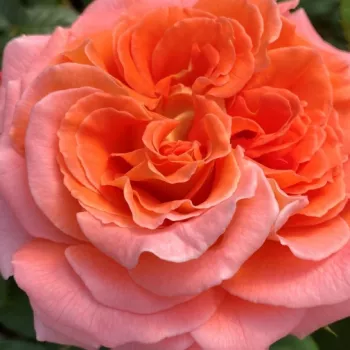
Large, very double rosette blooms with over 40 petals, usually in clusters; remontant habit with abundant repeat flowering, the second flush also strong, giving a prolonged display in season. |
| Colour data and phenology |
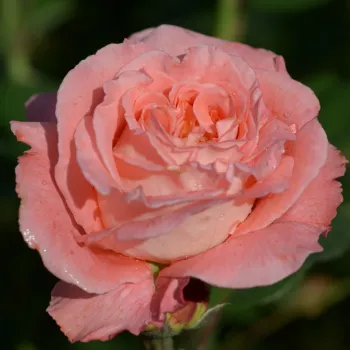
Warm peach-pink tones; buds deep peachy-pink with cream, opening rich peach-pink with creamy undersides, then lightening toward pale pink with peach; ARS code OB, RHS 36C outer and 38D inner. |
| Fragrance and aroma |
Strong, fresh, citrusy scent noticeable from a distance; blooms are fully double with packed petals, so the variety is mainly ornamental rather than pollinator-friendly despite its intense fragrance. |
| Hip characteristics |
Forms moderately abundant, spherical hips around 8–12 mm in diameter; hips colour to orange-red, extending seasonal interest into late summer and early autumn where spent flowers are left in place. |
| Resistance and winter hardiness |
Hardy to approximately −21 to −18 °C (RHS H7, USDA 6b, Swedish Zone 3); tolerates heat and moderate drought with watering but is very susceptible to major fungal diseases, requiring regular protection. |
| Horticultural recommendations |
Best in full sun with good air movement; suitable as border, specimen, low hedge, cut flower or large-container rose; plant at 35–65 cm spacing depending on use and allow for consistent care and spraying. |
Notre Dame du Rosaire offers nostalgic colour, strong fragrance and compact, bushy growth on a resilient own-root plant that will mature gracefully over years, making it a considered choice for those shaping a romantic family garden.