KYBRIA – purple-cream flowerbed floribunda rose – pharmaROSA®
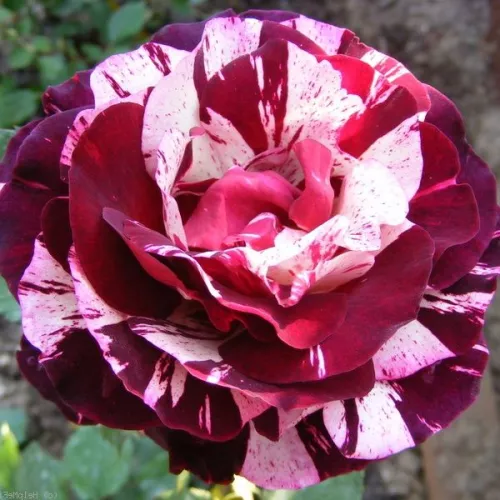
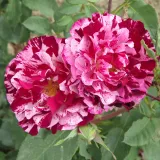
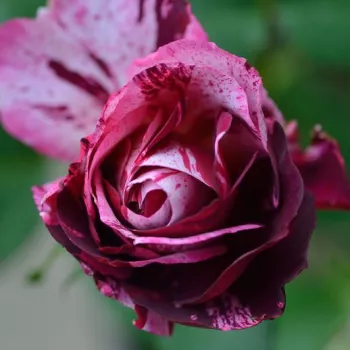
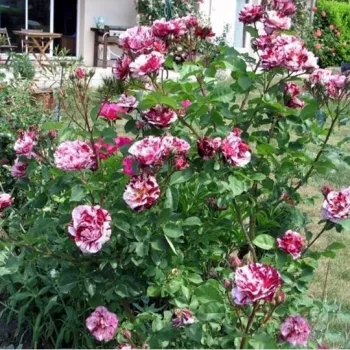
KYBRIA brings a touch of storybook romance to family gardens, combining richly marbled crimson-and-cream blooms with a strong, berry-like fragrance that suits a slow afternoon tea beneath an arbour. This compact, upright floribunda was selected for low maintenance, with reliable resistance to common rose diseases, so you spend more time enjoying flowers and less time spraying. As an own-root plant it offers long-term stability, quietly rebuilding from the base if damaged and keeping its shape and colour true over the years. It adapts well to typical UK conditions, coping steadily even where gardens are exposed to regular rain and brisk coastal winds. In beds and borders it forms a neat, moderately dense shrub that repeats well, sending up clusters of 3–5 medium-sized, double, cup-shaped blooms for a prolonged season. Planted in good garden soil or a large 40–50 litre container, it will settle quickly, establishing roots, then building top growth, before reaching its full cottage-garden impact over the next few seasons, giving you an easy, enduring focal point in front gardens, paths and kitchen-plot edges with quiet reliability.
Usage options
| Target area | Reasoning |
|---|
| Front-of-border in a cottage-style flower bed |
The compact, upright habit forms a balanced, moderately dense shrub that sits comfortably at the front of mixed borders without overwhelming neighbouring plants. Its tidy structure makes it easy for beginners to position and maintain in traditional cottage layouts, ideal for the busy home gardener. |
| Feature rose for small family gardens |
Medium-sized, double, cup-shaped blooms with richly marbled crimson-and-cream colouring create a clear focal point without needing complex combinations. This strong visual impact from a single plant helps smaller gardens feel designed and intentional with little planning, suiting the style-conscious beginner. |
| Low-maintenance bed or hedge strip along paths |
Good resistance to powdery mildew, black spot and rust means less need for spraying or intensive care, even in humid seasons. A line of plants at the recommended spacing forms a reliable, decorative edging that stays presentable with simple annual pruning, perfect for the time-pressed family. |
| Long-lived planting for established family plots |
As an own-root rose, KYBRIA regenerates from its base if stems are damaged by weather or pruning errors, avoiding the issue of unwanted rootstock shoots. This underpins a long lifespan with stable ornamental value, suiting garden plans that look ahead for years for the forward-planning owner. |
| Rain- and wind-exposed front gardens |
Its robust, upright framework and balanced growth help it stay presentable where sites are open to frequent rain and brisk breezes, such as corners or coastal streets. This allows dependable flowering and form even in less sheltered positions, reassuring for the practical UK gardener. |
| Season-long colour in mixed borders |
Remontant flowering with a plentiful second flush ensures colour returns after the first peak, keeping beds lively into late summer. Clusters of several blooms per stem fill visual gaps and extend display without replanting, an advantage for the colour-loving homeowner. |
| Large containers on patios or terraces |
In 40–50 litre pots with good drainage, the compact root system adapts well, making KYBRIA suitable for patios and terraces where border space is limited. Development is gradual and dependable, with roots establishing first, then shoots, then full ornamental effect over about three seasons, ideal for the urban balcony gardener. |
| Fragrant seating and afternoon-tea corners |
The strong, berry-like scent from double clusters of flowers makes this rose particularly suited to spots near benches, arbours or outdoor tables. Even short visits to the seating area feel more atmospheric as new flushes open through summer, pleasing the romantic cottage enthusiast. |
Styling ideas
- Kitchen-border charm – Line KYBRIA along a path edging a vegetable plot, interplanting with chives and low lavender for scent and structure – for cottage-plot families who like informal order.
- Arbour retreat – Place a pair of plants in large containers at an arbour entrance, underplant with trailing bellflower to soften edges – for those creating a storybook afternoon-tea corner.
- Front-garden welcome – Use a small group near the front door with white foxgloves and soft grasses to highlight KYBRIA’s marbled flowers – for homeowners wanting instant kerb appeal.
- Pastel partnership – Combine with pale campanulas and cream shrub roses to let the crimson-cream striping stand out without harsh contrast – for gardeners favouring gentle, romantic palettes.
- Hedged rhythm – Plant a loose, low hedge along a drive, repeating plants at regular intervals to create a steady, easy-care rhythm of colour – for busy households seeking structure with little effort.
Technical cultivar profile
| Parameter | Data |
|---|
| Name and registration |
KYBRIA floribunda bedding rose, commercial type flowerbed floribunda; current trade name Kybria Bedding rose pharmaROSA®, group floribunda, bed rose segment for decorative garden use. |
| Origin and breeding |
Discovered in France in 2004, breeder recorded as pharmaROSA®; parentage and original breeding institution not documented, introduced commercially by PharmaRosa® Ltd. (Hungary). |
| Growth and structural characteristics |
Upright, compact shrub reaching about 70–90 cm in height and 60–85 cm spread, with moderately dense, glossy mid-green foliage and moderate prickliness on stems. |
| Flower morphology |
Medium-sized, double, cup-shaped blooms with 26–39 petals, carried in clusters of 3–5 flowers per stem; remontant, producing a generous second flush in suitable conditions. |
| Colour data and phenology |
Striking crimson-cream marbled flowers; RHS 66C outer, 68B inner, with burgundy to chestnut tones and cream or yellowish streaks as blooms mature and contrast softens over time. |
| Fragrance and aroma |
Well-scented variety with a strong, fresh fragrance reminiscent of berries; double form reduces access to nectar and pollen, so it is not primarily selected for pollinator support. |
| Hip characteristics |
Occasional decorative hips may form after flowering, typically round to oval structures measuring approximately 10–14 mm in diameter; not usually a dominant ornamental feature. |
| Resistance and winter hardiness |
Rated hardy to approximately −26 to −23 °C (RHS H7, Swedish zone 4, USDA 5b); documented resistance to powdery mildew, black spot and rust supports low-input cultivation. |
| Horticultural recommendations |
Best used in flower beds and low hedging; recommended spacing 60 cm for mass plantings, 50 cm for hedges, 100 cm as solitary plants, allowing 2.8–3.2 plants per m² in groups. |
KYBRIA Bedding rose pharmaROSA® combines compact structure, season-long marbled colour and strong fragrance in a dependable own-root form that rewards patient gardeners planning a long-lived, easy-care feature, and is well worth considering.