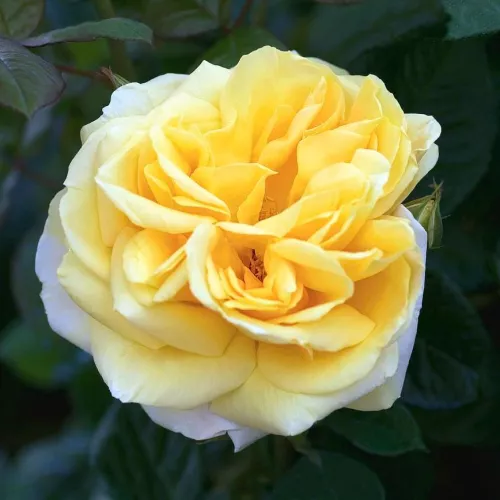
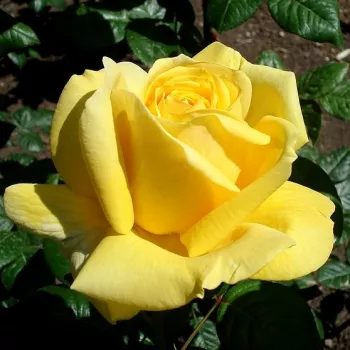
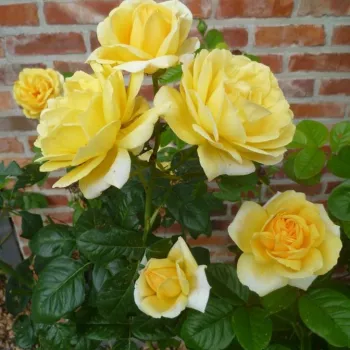
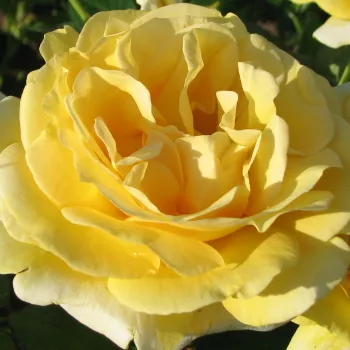
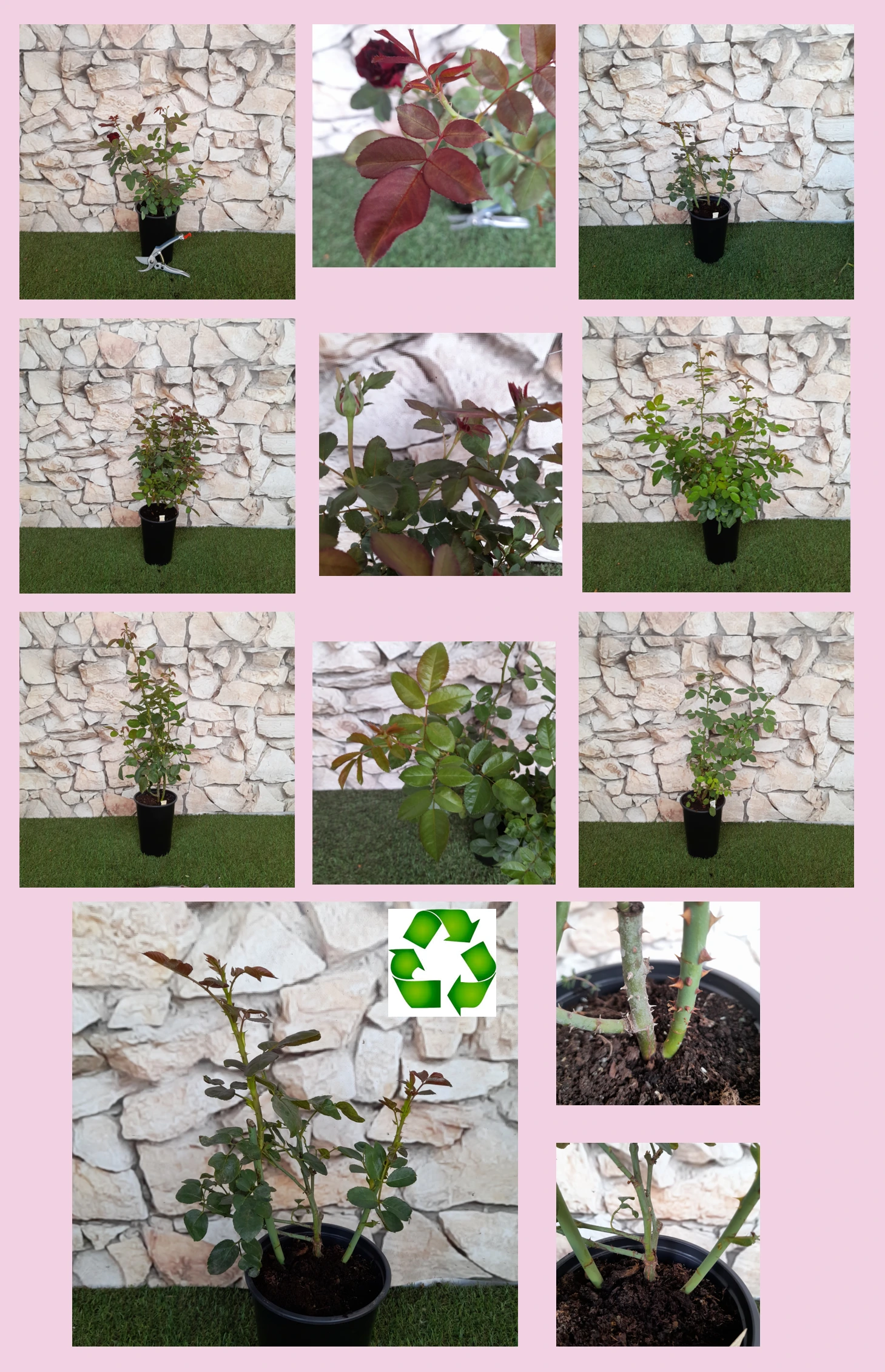
MICHELANGELO® – yellow hybrid tea rose – Meilland
If you dream of afternoon tea under an arbour and borders filled with storybook charm, MICHELANGELO® offers sumptuous, golden-yellow blooms on an upright, well-structured shrub that suits the traditional family garden beautifully. Its strong, lemony-honey fragrance and XL, very double blooms bring a romantic, “girly” cottage feel to small and medium beds without demanding complicated care. As a premium own-root rose in our 2-litre container, it establishes reliably in typical British gardens, even where heavy soils benefit from better drainage and more secure anchoring against weather. Over time the own-root structure supports long-lived, stable performance, quietly regenerating from the base after pruning. With medium maintenance needs and dense dark foliage, it offers dependable repeat flowering for cutting, hedging or specimen use while remaining suitable for larger containers on patios and terraces.
Usage options
| Target area | Reasoning |
|---|
| Classic cottage-style rose bed near the patio |
The upright, 110–150 cm growth and large, cupped XL flowers give MICHELANGELO® a classic hybrid tea presence that anchors a small to medium cottage bed. Repeat flowering provides a steady display through the season with simple, once- or twice-yearly pruning suiting beginners and busy homeowners who just want reliable structure and colour, especially family buyers. |
| Cutting patch for home-arranged bouquets |
As an exhibition-quality hybrid tea, this cultivar produces long, straight stems with solitary, very double flowers ideal for bringing indoors. The strong, rich lemony-honey scent fills rooms with a traditional rose aroma, so a modest cutting row can supply vases for the kitchen table and special occasions without needing complicated greenhouse care for hobby gardeners. |
| Romantic focal point as a solitary specimen |
Planted alone at about 1 m spacing, the dense dark green foliage and generous flower size create a striking focal shrub by a bench, arbour or front path. The own-root habit develops into a well-balanced, full-bodied plant over several seasons, offering a long-lived feature that can be rejuvenated by harder pruning when needed, reassuring homeowners. |
| Low, informal hedge along a path or kitchen garden |
With planting at around 55 cm, MICHELANGELO® forms an airy, flower-laced hedge that frames vegetable plots or lawns. The bright lemon-yellow flowers lighten to creamy tones in strong sun, softening the line and blending well with traditional cottage planting. Regular deadheading is the main task, manageable even for time-poor urban gardeners. |
| Large container on terrace, courtyard or balcony |
In a 40–50 litre or larger pot with good drainage, the rose provides vertical structure and scented blooms where soil is limited. Own-root resilience helps it cope with occasional missed watering and routine pruning, while the defined bush outline suits compact spaces where people want formality without fuss, appealing to busy professionals. |
| Family garden mixed border with perennials |
The medium height and upright shape fit easily among perennials such as salvia and euphorbia, giving a warm yellow accent without overwhelming smaller plants. Over the first three years roots establish, then shoots build, before full ornamental value develops, rewarding patient gardeners with enduring structure, especially beginners. |
| Coastal or wind-exposed suburban gardens |
The balanced, moderately thorny framework and dense foliage cope well in open aspects if planted in improved soil for good drainage and firm anchoring in blustery weather. Disease resistance is good when given air circulation, so maintenance remains straightforward for those who want reliability in challenging spots, including coastal residents. |
| Lightly managed front garden feature for kerb appeal |
Planted near gateways or paths, the award-winning fragrance and luminous colour greet visitors with a traditional rose welcome. Own-root growth offers long-term continuity even if the top is occasionally cut back hard, and routine care centres on watering in dry spells and simple pruning, suiting low-maintenance-minded front-garden owners. |
Styling ideas
- Buttercup-border – Combine MICHELANGELO® with blue Salvia nemorosa and soft grasses for a pastel cottage look – ideal for lovers of gentle, romantic palettes.
- Kitchen-edge – Line a kitchen garden path with this rose and low herbs so scented stems can be cut on the way indoors – perfect for home cooks who enjoy informal abundance.
- Golden-focus – Use a single shrub near a bench or pergola post with pale climbers behind to draw the eye – suited to those wanting one strong, tidy focal point.
- Terrace-aroma – Plant in a 50 litre container with trailing thyme and small spring bulbs to create a long-season, fragrant pot – good for balcony and patio owners.
- Front-welcome – Repeat-plant three shrubs by the front path with low evergreen edging for year-round structure and summer scent – appealing to families seeking classic kerb appeal.
Technical cultivar profile
| Parameter | Data |
|---|
| Name and registration |
Hybrid tea rose, registered as MEItelov; marketed as MICHELANGELO® Romantica®. Belongs to the Romantica® collection and recognised by the American Rose Society for exhibition. |
| Origin and breeding |
Bred by Alain Meilland, Meilland International SA, France, from (‘Meidragelac’ × ‘Meikinosi’) × ‘Korbelma’. Registered 1997 and introduced 1998 through Meilland International SA. |
| Awards and recognition |
Highly regarded exhibition hybrid tea with major trial successes: Monza Gold Medal 1997, Bagatelle Certificate 1997, Orléans Rose de Cristal 2000 and The Hague Fragrance Award 2001. |
| Growth and structural characteristics |
Upright, well-branched shrub, around 110–150 cm tall and 75–105 cm wide. Dark, slightly glossy, very dense foliage with moderate prickles; forms a strong, balanced garden presence. |
| Flower morphology |
Very double, XL solitary blooms with over 40 petals, cupped form and a distinct medium-high centre. Remontant flowering habit with a generous second flush when regularly deadheaded. |
| Colour data and phenology |
Bright lemon-yellow with golden tones, RHS 11A–12A; buds deep yellow, later softening to buttery and creamy shades in strong sun. Colour retention moderate; overall warm, luminous effect. |
| Fragrance and aroma |
Strong, well-defined scent with rich lemony-honey character. Primarily ornamental; highly double flowers obscure stamens, so pollinator attraction and pollen access are relatively limited. |
| Hip characteristics |
Occasional small, bottle-shaped hips, about 10–14 mm, greyish-orange RHS 168B. Generally unobtrusive in the garden and of minor ornamental significance compared with the showy blooms. |
| Resistance and winter hardiness |
Hardy to around −21 to −18 °C (RHS H7, USDA 6b, Swedish Zon 3). Generally resistant to powdery mildew and rust, with moderate black spot resistance when grown in airy conditions. |
| Horticultural recommendations |
Best in sunny beds or large containers with fertile, well-drained soil. Medium maintenance; water in prolonged drought, deadhead and prune in late winter. Needs protection in enclosed, humid courtyards. |
MICHELANGELO® combines award-winning fragrance, generous repeat flowering and a well-structured habit with the long-term reliability of an own-root shrub, making it a thoughtful choice for gardeners seeking enduring cottage-garden charm.