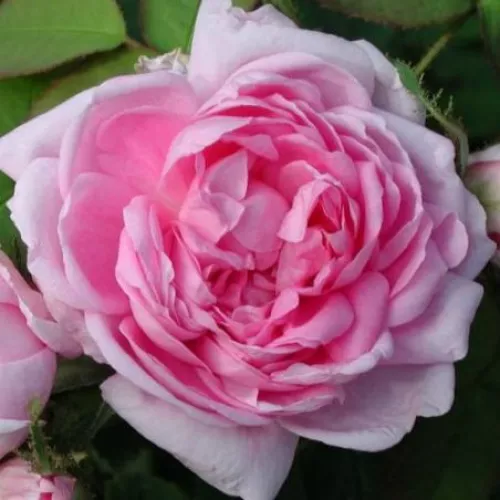
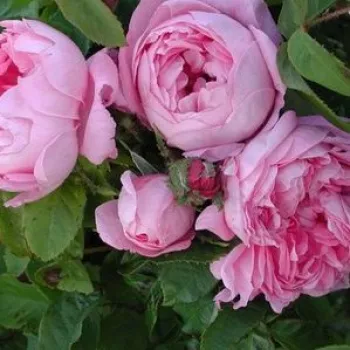
MARIE DE BLOIS – pale pink historic moss rose – Français & Robert
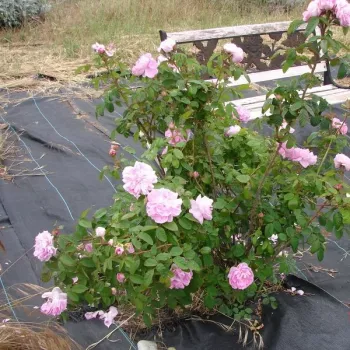
This romantic moss rose brings an air of heritage elegance to an English-style garden, its pastel-pink rosettes and mossy buds creating a soft cottage atmosphere around arbours, paths and lawns. Though bred in 1852, it remains wonderfully evocative for today’s family gardens, pairing beautifully with hedging, a kitchen plot and clipped topiary for a storybook backdrop to afternoon tea. The upright, shrub-like structure naturally lends itself to specimen planting or loose hedging, while own-root vigour gives reassuring longevity and the ability to regrow strongly if winter, wind or pruning are less than perfect. Over time it settles firmly, providing dependable anchoring even where gardens are exposed to persistent coastal breezes and sudden summer showers. The generous, long-lasting perfume is distinctly romantic, perfect beside a seating area, and the flower form is so very classic that a single stem in a jug completes a kitchen windowsill. Plant once, then watch it progress from quietly establishing roots to fuller shoots and, by the third season, its complete presence as a mature, storybook shrub.
Usage options
| Target area | Reasoning |
|---|
| Cottage-style feature in a family front garden |
The upright, shrub-like form and softly mossed buds give Marie de Blois a distinctly heritage character, ideal as a focal shrub by a gate, front path or doorway where visitors see it daily. Its romantic, pastel rosettes enhance traditional brick or stone, suiting homeowners who like a period feel for beginners. |
| Romantic seating corner or afternoon-tea nook |
Strong, long-lasting fragrance makes this cultivar especially rewarding near benches, arbours and small patios, where its scent can be enjoyed at close quarters on still evenings. Planted with fragrant herbs and soft perennials, it helps to create an enveloping, cosy atmosphere for tea-lovers. |
| Specimen shrub in a mixed cottage border |
Its tall, upright structure and moderately dense foliage give enough presence to anchor looser plantings of perennials and bulbs. Used as a single specimen, it adds height without needing a frame, offering structure through the season for stylists. |
| Loose flowering hedge along a boundary |
Recommended planting distances allow Marie de Blois to form an informal, romantic hedge, with mossy buds and rosettes softening fences or wire boundaries. As an own-root plant, it can be pruned back more firmly if needed, then regrows reliably for planners. |
| Historic-look rose bed in a traditional garden |
The pale-pink, rosette blooms and moss-rose character fit perfectly into beds that echo Victorian or early cottage plantings. Its remontant habit, with generous second flush, gives repeat displays in summer, suiting gardeners who value a period feel and season-long interest for collectors. |
| Partially shaded side garden or north–east aspect |
This cultivar tolerates partial shade, so it can be sited where morning or dappled light predominates, extending rose planting into trickier corners. A position with good air flow and careful spacing helps manage foliage health for problem-solvers. |
| Large container on terrace or gravel area |
Planted in a 40–50 litre container with good drainage, its upright habit and fragrant, double flowers give vertical accent and scent where borders are limited. Own-root resilience supports steady recovery from occasional underwatering or root pruning when repotting, appealing to city and courtyard container-gardeners. |
| Long-term structural shrub in a family garden plan |
As an own-root rose, Marie de Blois can live and perform for many years, maintaining ornamental value and regrowing from the base if cut back by weather, accidents or renovation. This gives confidence that, after initial establishment, it will remain a stable part of the garden picture for long-term-thinkers. |
Styling ideas
- Victorian-porch – Frame a front step with Marie de Blois on one side and a clipped box or yew on the other, underplanted with dwarf Heuchera and saxifrage – ideal for lovers of period charm.
- Kitchen-border – Combine this rose with herbs, runner beans on wigwams and traditional veg rows, letting its pastel flowers soften productive beds – perfect for cottage-kitchen gardeners.
- Pastel-hedge – Plant a loose line along a path, interspersed with lavender and catmint, to create a softly scented, romantic walkway – suited to families wanting a gentle, storybook look.
- Gravel-corner – In a large pot on gravel, pair with Sempervivum and low thyme, the upright rose giving height while succulents add texture – good for busy urban owners needing structure with character.
- Arbour-retreat – Place Marie de Blois beside a wooden seat with foxgloves and digitalis beyond, so its fragrance drifts over the sitting area – made for those who linger over afternoon tea outdoors.
Technical cultivar profile
| Parameter | Data |
|---|
| Name and registration |
Marie de Blois is a historical moss shrub rose from the Heritage rose collection, sold here under the trade name “MARIE DE BLOIS – pale pink historic moss rose - Français & Robert”. |
| Origin and breeding |
Bred in France in 1852 by Français and André Robert, with unknown parentage; introduced by Lens Roses in Belgium and remaining an unregistered but long-cultivated historic garden rose. |
| Growth and structural characteristics |
Upright shrub reaching about 130–210 cm high and 105–175 cm wide, with moderately dense, mid-green, slightly glossy foliage and characteristically dense prickles typical of moss roses. |
| Flower morphology |
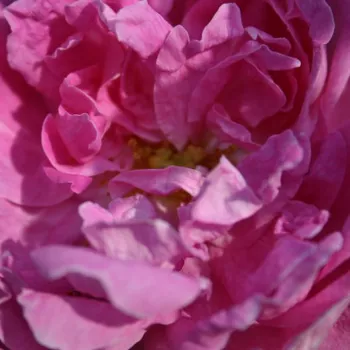
Very full, rosette-shaped flowers with more than 40 petals, produced in clusters of large blooms; remontant with a generous second flush, though spent flowers usually require deadheading by hand. |
| Colour data and phenology |
Pale pink with a subtle lavender undertone; buds are powder pink, opening pastel then lightening to creamy white, outer petals almost white by fall, with colour holding best in cooler, softer light. |
| Fragrance and aroma |
Strong, long-lasting scent with a slightly sweet character, especially noticeable in still, mild weather; double flowers conceal stamens, so this is primarily a decorative, perfume-focused cultivar. |
| Hip characteristics |
Rose-hip set is generally sparse due to the double flower form, but occasional small, spherical hips of around 12–18 mm may develop, ripening to an attractive orange-red shade late in the season. |
| Resistance and winter hardiness |
Hardy to approximately -21 to -18 °C (RHS H7, USDA 6b, Swedish zone 3); disease resistance is moderate to powdery mildew and black spot but very sensitive to rust, needing attentive care. |
| Horticultural recommendations |
Best in well-drained soil with regular watering; allow generous spacing, follow a consistent spray and hygiene regime, and position in light, airy sites to manage its inherently higher maintenance needs. |
Marie de Blois offers romantic fragrance, elegant shrub structure and enduring own-root longevity for gardeners who appreciate historic charm and are ready to give a little extra care to a truly characterful rose.