MADAME PLANTIER – white historic alba rose
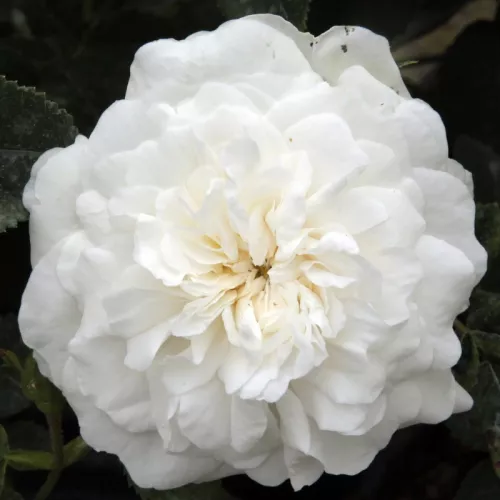
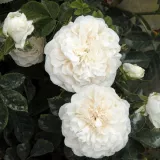
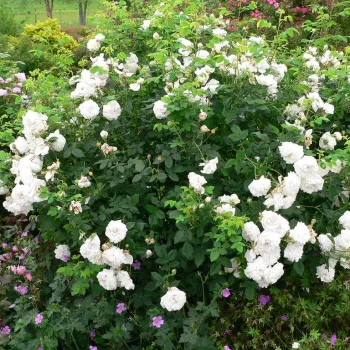
In a small family garden or cottage-style border, MADAME PLANTIER brings a veil of antique romance with her musky, creamy-white rosettes and reassuringly hardy character, creating a natural backdrop for afternoon tea beneath an arbour in even quite windy, exposed plots. This historical shrub rose forms a tall, bushy screen over time, ideal for softening fences or framing kitchen-garden paths, while its sparsely thorned stems are relatively gentle to handle when tying in or guiding along an arch. Despite its once-flowering habit, the early-summer display is abundant and memorable, with tightly packed blooms held in clusters that suit romantic, storybook planting schemes. Planted own-root in well-prepared soil, it repays simple, regular care with impressive longevity and the ability to regenerate from the base after harder pruning or winter damage, giving a stable, time-honoured presence in the garden. In its first seasons, focus is on root establishment and a few strong shoots, building towards a full curtain of blossom and foliage that delivers its best ornamental impact by about the third year, when the plant reads as a mature, woven feature in the overall garden picture.
Usage options
| Target area |
Reasoning |
| Romantic hedge in a family garden |
Use MADAME PLANTIER at 120 cm spacing to form a soft, tall flowering hedge that provides privacy and classic cottage character. Dense foliage and strong growth create an informal living screen that matures steadily with minimal shaping for those who appreciate a traditional boundary, especially family buyers. |
| Arbour or pergola around a seating area |
Train the long, flexible shoots onto an arbour or simple timber frame to enjoy the intense, musky fragrance at head height in early summer. Over several seasons, the tall, bushy habit clothes the structure, helping to shelter a small seating nook for relaxed afternoon tea, ideal for romantic gardeners. |
| Feature shrub in a cottage-style border |
As a specimen at around 220 cm spacing, MADAME PLANTIER becomes a pale, billowing focal point that anchors looser plantings of perennials and herbs. Its once-a-year flush of creamy-white rosettes provides a seasonal highlight, with light green foliage offering structure for the rest of the year, suiting cottage-garden enthusiasts. |
| Own-root planting for long-lived heritage effect |
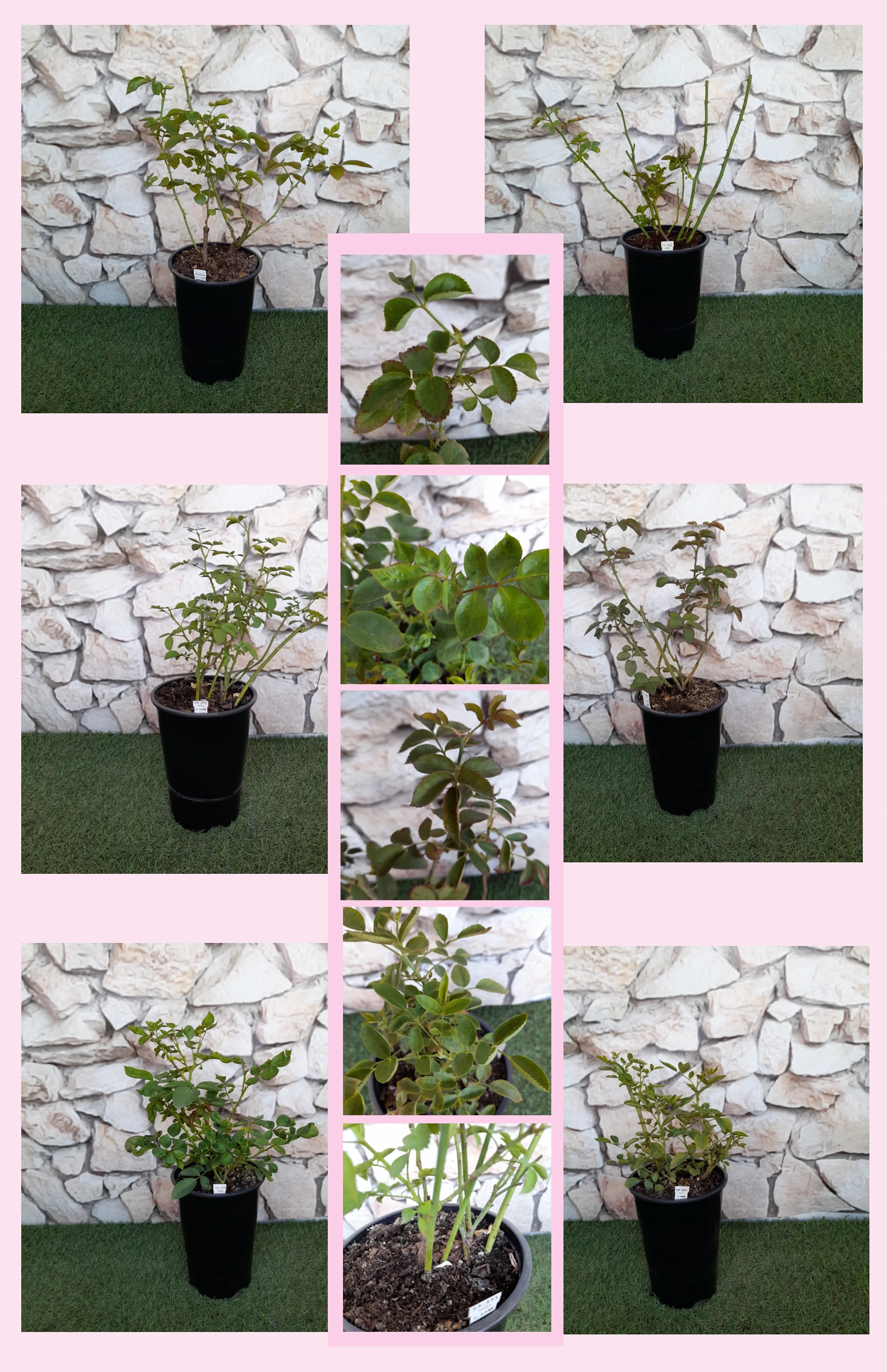
Being supplied on its own roots, this rose can regenerate from the base if older stems are removed, keeping the plant true to type over decades. This growth pattern gives a stable, heirloom presence in a family garden and reduces the need for complex graft-management, reassuring for beginner gardeners. |
| Robust structure in colder or exposed plots |
With hardiness down to around -35 °C and a resilient shrub framework, MADAME PLANTIER is suitable for many cooler or breezier UK locations when given decent soil preparation. Good anchoring and sturdy branching mean it can hold its own where lighter shrubs struggle, supporting rural homeowners. |
| Partial-shade corner near paths or outbuildings |
This rose tolerates partial shade, so it can be placed where it receives only a few hours of direct sun, such as beside sheds, garages or boundary walls. In such positions the pale flowers brighten gloomier corners and the tall growth helps soften hard edges, pleasing space-conscious urban gardeners. |
| Planted with simple seasonal care schedule |
Once established, the main tasks are straightforward: winter pruning to keep the shrub within bounds, feeding in spring, and consistent disease protection through the growing season. The plant’s vigorous habit responds well to this routine, making it manageable for those who prefer clear, predictable tasks, such as busy owners. |
| Kitchen-garden boundary with companion perennials |
Along the edge of a kitchen garden, MADAME PLANTIER offers a graceful backdrop for practical beds, while its height marks the boundary between productive and ornamental areas and stands up well to brisk coastal breezes with sensible staking and pruning. This suits those blending beauty and utility, especially kitchen-garden keepers. |
Styling ideas
- Arbour-draped – Train MADAME PLANTIER over a simple wooden arch with a bench beneath, underplanting with lady’s mantle and soft grasses for a frothy, romantic effect – perfect for cottage-style dreamers.
- Kitchen-edge – Line the back of raised vegetable beds with this tall shrub, interplanting with herbs and Alpine catchfly to merge practical rows with a soft, historic backdrop – ideal for home grow-your-own fans.
- Parkland-border – Use as a repeating feature every few metres in a long border, with fountain grass and pastel perennials woven between to echo old estate gardens – suited to generous suburban plots.
- Courtyard-screen – Plant in a narrow strip along a fence to form a loose, flowering screen that hides bins or sheds, adding a small bistro set for evening scent – appealing to compact-town-garden owners.
- Mixed-hedge – Combine with other heritage shrubs in a flowing boundary, allowing the tall white flush to punctuate dusky pinks and blues for a storybook lane feel – attractive to lovers of traditional country walks.
Technical cultivar profile
| Parameter |
Data |
| Name and registration |
Historical alba shrub rose marketed as MADAME PLANTIER, also known as Mme. Plantier; heritage garden variety without formal modern registration, verified for authenticity in premium own-root production. |
| Origin and breeding |
French heritage cultivar from 1835, bred by Plantier, probably from Rosa alba crossed with Rosa moschata; classified within alba, Hybrid China and Hybrid Noisette groups as a traditional garden and park rose. |
| Growth and structural characteristics |
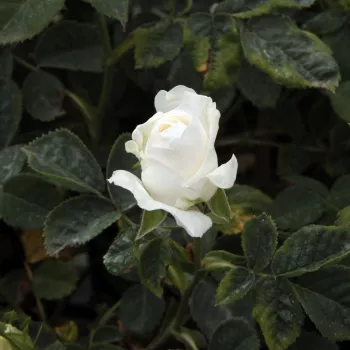
Strong, bushy shrub reaching about 240–360 cm tall and 150–250 cm wide, with dense, matt, light-green foliage and sparsely thorned stems; suitable for hedging, specimen use and training on light supports. |
| Flower morphology |
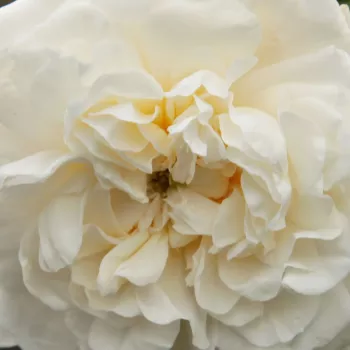
Large, very double rosette blooms, typically 2.8–4 inches across, borne in clusters on arching stems; petal count exceeds forty, giving a full, old-fashioned flower form that opens over several days in early summer. |
| Colour data and phenology |
Soft creamy-white flowers with subtle ivory and pearlescent tones; colour holds well but very double blooms may ball or brown in persistent rain; once-flowering habit produces a concentrated early-summer display only. |
| Fragrance and aroma |
Very strong, sweet musky fragrance detectable from several metres away, especially in still, humid air; double blooms largely ornamental, with hidden stamens and low value for pollinators due to restricted access to nectar. |
| Hip characteristics |
Hip set is generally poor because of the densely double flowers and limited fertilisation; where present, hips are few and have little ornamental impact, so the variety is mainly grown for blossom and scent. |
| Resistance and winter hardiness |
Extremely hardy, tolerating down to about -35 °C (RHS H7, USDA 3b) and Swedish zone 6 conditions; however, foliage is highly susceptible to powdery mildew, black spot and rust, requiring consistent disease management. |
| Horticultural recommendations |
Best in fertile, well-drained soil with full sun or light shade; space at 120–220 cm depending on use. Water during long dry spells, apply regular fungicide programme, and prune to manage height and encourage new basal shoots. |
MADAME PLANTIER offers tall, romantic hedging, intense musky fragrance and exceptional cold hardiness in a long-lived own-root form that can be rejuvenated over time, making it a thoughtful choice for gardeners planning a lasting cottage-style feature.