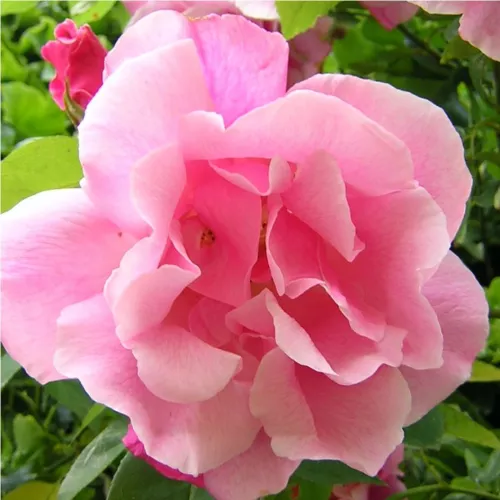
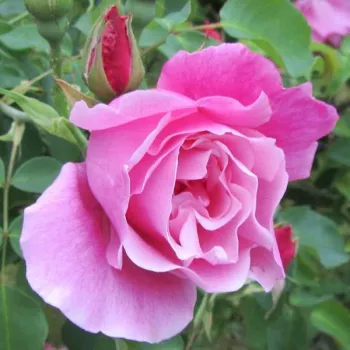
MADAME GRÉGOIRE STAECHELIN – pink rambler climbing rose – Dot
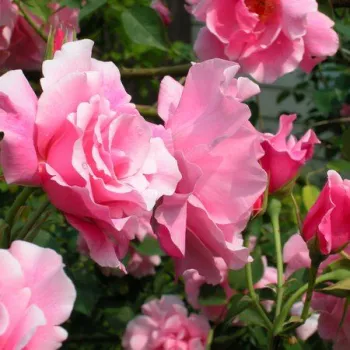
Give your garden a touch of storybook romance with Madame Grégoire Staechelin, a classic pink rambler that drapes gracefully over arches, pergolas and house walls to create a sheltered corner for afternoon tea. This long-lived, own-root rose establishes steadily, rewarding you with reliable structure and blooms while coping well even where gardens face wind-prone, rain-battered conditions by the coast. Once settled, its generous height and arching canes form a green backdrop for cottage borders, while the early-summer flush of soft, fragrant pink flowers feels wonderfully nostalgic. Medium maintenance but easy-going in everyday care, it suits busy homeowners who want impact rather than fuss, and it responds kindly whether you prefer gentle training or more decisive pruning. In a British family garden this makes an ideal pergola or wall rose, promising dependable structure, romantic blossom, and attractive autumn hips that keep the scene interesting as the year turns.
Usage options
| Target area | Reasoning |
|---|
| House wall or sunny gable |
Excellent height and spread make this rose ideal for clothing a house wall, softening brickwork and framing upper-storey windows with a single, dramatic flush of pink in early summer. Own-root vigour supports a long-lived, low-fuss feature for busy family gardeners. |
| Garden arch over a path |
Trained over an arch, its long, flexible canes create a romantic tunnel of blossom, perfect for that cottage-garden “walk-through” moment. The semi-double flowers and scent add charm without demanding complex pruning, suiting beginners seeking easy beauty. |
| Pergola above seating or “afternoon tea” corner |
Use it along a pergola to cast dappled shade and a fragrant pink canopy over a bench or small table, echoing English country-house gardens. Own-root resilience gives dependable cover and ornamental value year after year for lovers of cosy hideaways. |
| Trained into a mature tree |
This rambler can be allowed to scramble into a sturdy tree, threading its soft pink clusters among existing branches. The result is a natural, woodland-edge effect with minimal ground footprint, ideal for gardeners with small but tall spaces. |
| Fenceline or boundary screen |
Along a fence, the dense, glossy foliage forms an informal, flower-decked screen that gives privacy and softens boundaries. Own-root plants anchor well over time in typical UK soils, including heavier ground, benefiting homeowners wanting a lasting screen. |
| Mixed cottage border backdrop |
Planted at the back of a rose-and-perennial border, its cascading growth habit and pastel pink tones set off foxgloves, geraniums and herbs. The strong early-summer show becomes a seasonal highlight for fans of traditional cottage style. |
| Cut-flower and scent corner |
The exhibition-style, semi-double blooms and clear, sweet fragrance make lovely informal cut flowers for the house. A once-a-year flush is easy to plan around, offering seasonal bounty with little routine work for busy but romantic gardeners. |
| Wildlife-friendly, low-fuss feature |
Semi-double flowers with open centres invite pollinators, while autumn hips provide colour and seasonal interest with minimal intervention. Suited to gardens where plants must cope with blustery, rain-lashed conditions and still perform for nature-loving family owners. |
Styling ideas
- PERGOLA PARLOUR – Run the rose along a simple timber pergola, underplanting with lavender and strawberries for a scented, “tea-garden” nook – ideal for families who linger outdoors together.
- COUNTRY ARCH – Pair it on an arch with soft blue clematis and foxgloves to frame the path to a kitchen garden – suited to cottage-style enthusiasts who enjoy seasonal drama.
- SOFTENED GABLE – Train canes in fans across a sunny gable and edge the base with catmint and hardy geraniums – perfect for homeowners wanting romance without structural rebuilding.
- WOODLAND SCRAMBLE – Let it climb into a small ornamental tree, with ferns and spring bulbs below, for a relaxed, semi-wild corner – appealing to gardeners who favour naturalistic planting.
- BOUNDARY BOWER – Cover a fence behind a seating area, mixing with ivy and Cornus ‘Midwinter Fire’ for winter stems – for those needing privacy, colour and low weekly maintenance.
Technical cultivar profile
| Attribute | Data |
|---|
| Name and registration |
Madame Grégoire Staechelin, rambler-type climbing rose; current trade name Madame Grégoire Staechelin Climbing rose Dot; unregistered cultivar used in gardens and shows. |
| Origin and breeding |
Raised in Spain by Pedro Dot i Martínez, Viveros Dot, from ‘Frau Karl Druschki’ × ‘Château de Clos Vougeot’; introduced 1927 and long proven in European gardens. |
| Awards and recognition |
Highly regarded historic cultivar; Gold Medal Bagatelle (1927), American Rose Society John Cook Medal (1929), RHS Award of Garden Merit confirming dependable garden performance. |
| Growth and structural characteristics |
Vigorous climber to about 5–7,5 m high and 2,4–3,8 m spread; moderately thorny, with dense, glossy light green foliage that clothes supports well when properly trained. |
| Flower morphology |
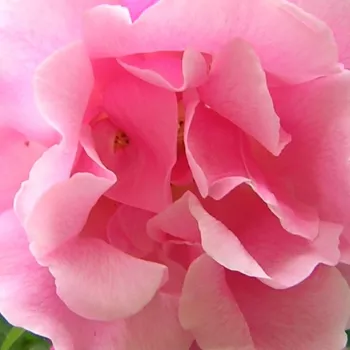
Semi-double, cup-shaped blooms with 13–25 petals, medium-sized clusters on arching stems; non-remontant, giving a single, showy main flush in early summer on established plants. |
| Colour data and phenology |
Vivid clear pink with delicate streaking; buds deep crimson-pink, opening to mid pink with silvery edges, then fading to pastel pink with creamy undertones as the display matures. |
| Fragrance and aroma |
Medium-strength, pleasantly soft sweet-floral scent, clearly noticeable in still air; semi-double blooms with exposed stamens also offer nectar and pollen that attract insects. |
| Hip characteristics |
Develops large, pear-shaped orange-red hips, about 22–34 mm across, in moderate quantities during autumn, adding ornamental interest and seasonal structure after flowering. |
| Resistance and winter hardiness |
Moderate disease resistance; may need occasional protection in humid periods. Tolerates heat and moderate drought once established; hardy around USDA 6b, RHS H7, to about −21 °C. |
| Horticultural recommendations |
Best on walls, fences, pergolas or trees in sun or partial shade, spaced 1,8–3,3 m. Train young shoots, then prune after flowering; suitable for medium-maintenance, long-term plantings. |
Madame Grégoire Staechelin offers romantic height, fragrant early-summer blossom and long-term structure on an own-root framework that matures reliably over the years, a thoughtful choice if you wish to invest in a lasting garden feature.