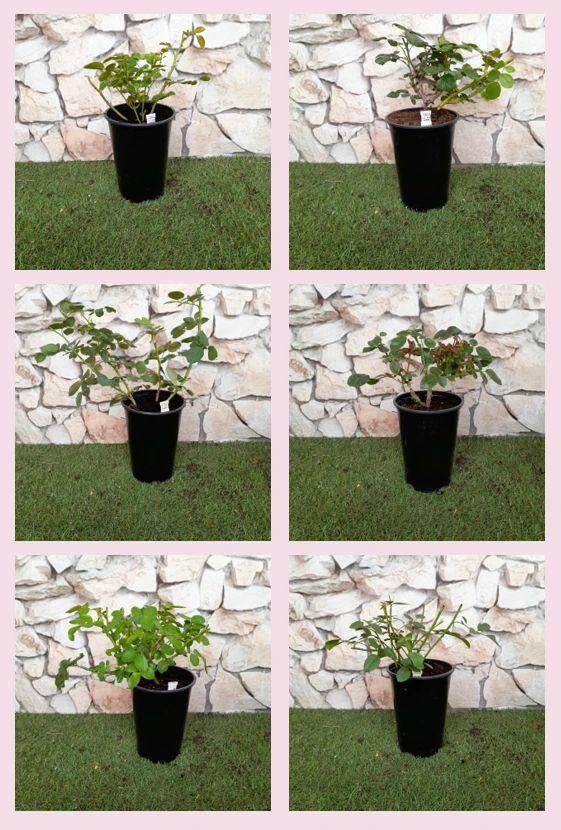
ROSA PIMPINELLIFOLIA MARY QUEEN OF SCOTS – lilac-white landscape shrub rose
Set the scene for afternoon garden tea with this historic shrub, whose once-a-year cascade of lilac‑pink and white blooms turns a small family plot into a romantic, storybook cottage corner. Mary Queen of Scots forms a bushy, upright, densely clothed plant that copes well with exposed British plots, even where breezes are funnelling in from the coast and soils dry out between showers, offering reassuring resilience with very little fuss. Semi‑double flowers with open centres are rich in pollen, drawing bees and other beneficial insects while dark, spherical hips carry the interest on into autumn. Grafted plants can weaken or sucker unevenly over time, but this own‑root, 2‑litre shrub establishes steadily and ages gracefully, giving you a long‑lived, regenerating structure that fits happily into low hedges, relaxed borders or large containers, developing roots, framework and full ornamental character within its first seasons. Plant it once, keep tasks simple, and enjoy a quietly romantic, naturally textured focal point that anchors your garden for years.
Usage options
| Target area | Reasoning |
|---|
| Low cottage-style hedge along a path or drive |
The bushy, upright habit and dense foliage create a readable, low hedge that feels soft rather than formal, ideal for edging paths to the front door. Consistent own-root growth gives an even line, while good disease resistance keeps the hedge tidy with minimal work for the busy homeowner. |
| Romantic mixed border in a small family garden |
Its once‑a‑year flush of lilac‑pink flowers with a pale centre delivers strong seasonal drama without demanding constant deadheading. The shrub’s moderate size suits typical UK plots, weaving easily among perennials and herbs, and its own‑root robustness supports the natural Year‑1 roots, Year‑2 framework, Year‑3 full display rhythm for the patient gardener. |
| Coastal or breezy, exposed positions |
The tough shrub structure and good heat and drought tolerance make this rose a reassuring choice where wind and summer dryness can stress fussier varieties, such as open coastal gardens or higher, unsheltered sites; it settles securely and weathers unsettled conditions for the practical planter. |
| Wildlife-friendly, naturalistic corners |
Semi‑double blooms with prominent yellow stamens offer easily accessible pollen and nectar, reliably drawing bees and other pollinators during its flowering period. Later, the almost black hips add food and structure, turning an ordinary corner into a discreetly wildlife‑supporting feature for the eco-conscious owner. |
| Low-maintenance family garden planting |
High resistance to black spot, mildew and rust means fewer sprays, fewer worries and a cleaner look even in humid summers. Once established, it only needs basic pruning and sensible watering, so your rose stays attractive without becoming another demanding chore for the time-poor gardener. |
| Feature shrub near a seating area or terrace |
The medium, noticeable fragrance and dramatic colour contrast between pink petals, white centre and yellow stamens create a focal point that rewards close viewing. Planting it near a bench or terrace lets you enjoy scent and detail at eye level, season after season, suiting the sensory appreciator. |
| Large containers on patios or in small urban gardens |
In a 40–50 litre container with good drainage, this own‑root shrub forms a stable, long‑lived framework that can be moved or re‑styled as your outdoor space changes. Its upright habit and thorny stems also give a gentle sense of enclosure for the balcony or courtyard gardener. |
| Traditional hedging and boundary definition |
Densely thorned stems, mid‑green foliage and ornamental dark hips provide a classic boundary that looks “right” with hedging, lawns and kitchen gardens, while remaining manageable in height. Own‑root growth recovers well from harder pruning or renovation, reassuring the heritage-style enthusiast. |
Styling ideas
- Cottage Hedge Walk – Run a loose hedge of Mary Queen of Scots along a gravel path, underplanting with lavender and catmint for soft blues and scent – ideal for lovers of relaxed, English-country approaches.
- Storybook Seat – Place a single shrub beside a wooden bench, with foxgloves and hardy geraniums threading through, to frame quiet reading or tea moments – suited to reflective, romantic garden users.
- Coastal Kitchen Edge – Combine this rose with hardy herbs and silvery foliage near a vegetable patch to bridge ornamental and productive areas – perfect for practical cooks who like traditional structure.
- Bee Corner – Group two or three shrubs with asters and St John’s wort to provide a long season of pollen and colour – a good fit for families encouraging children to notice wildlife.
- Courtyard Anchor Pot – Grow it in a large terracotta tub, flanked by clipped hollies or box substitutes, for a compact, old-world focal point – attractive for space-limited urban gardeners.
Technical cultivar profile
| Attribute | Data |
|---|
| Name and registration |
Historic shrub rose from the Botanical rose collection, traded as Rosa pimpinellifolia Mary Queen of Scots, a landscape shrub type; unregistered but long established and verified for authenticity. |
| Origin and breeding |
Traditional Scottish cultivar bred by Robert Brown and introduced by Dickson and Brown before 1803; parentage is unknown, but it has been grown in gardens for more than two centuries. |
| Growth and structural characteristics |
Bushy, upright shrub with dense, mid‑green foliage and many thorns, forming a solid, textured presence; suited to hedging or specimen use where a substantial, resilient framework is desired. |
| Flower morphology |
Semi‑double blooms with 13–25 petals, medium to large in size and usually borne singly; once‑flowering, they shed cleanly and are followed by dark decorative hips for extended seasonal interest. |
| Colour data and phenology |
Buds open medium pink with a lilac hint, then lighten to vivid pink with a whitish centre and yellow stamens; the pink gently fades towards pastel shades as the flower ages, remaining refined rather than brash. |
| Fragrance and aroma |
Noticeable, medium-strength scent that is clearly perceptible at close range, enhancing seating areas and paths; fragrance character is traditionally rosy yet not overpowering, suiting regular family use. |
| Hip characteristics |
Produces small, spherical hips around 10–15 mm across, ripening to a deep, almost black colour; they are valued for ornamental display and wildlife interest but are not recommended for culinary use. |
| Resistance and winter hardiness |
Robust shrub with high resistance to black spot, mildew and rust; reliably hardy to around −34 to −29 °C (RHS H7, USDA 3a), performing well in cold winters and typical British seasonal fluctuations. |
| Horticultural recommendations |
Well suited to borders, low hedging, cottage and coastal gardens, and large containers; plant 45–115 cm apart depending on use, in free‑draining soil, and prune lightly after flowering to maintain shape. |
Rosa pimpinellifolia Mary Queen of Scots offers low-maintenance health, strong seasonal impact and durable structure in dependable own-root form, making it a thoughtful choice for long-term, romantic garden planting.