LÉONIE LAMESCH – orange-yellow flower-bed polyantha rose - Lambert
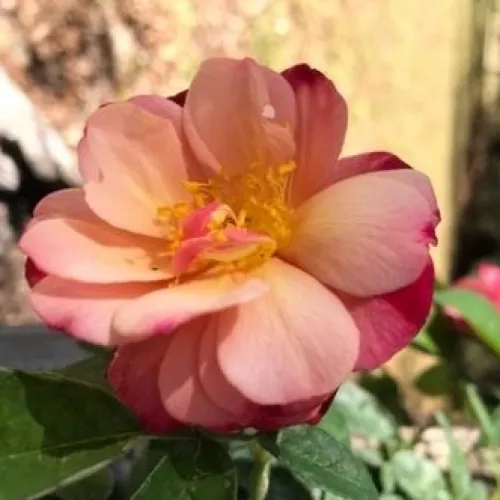
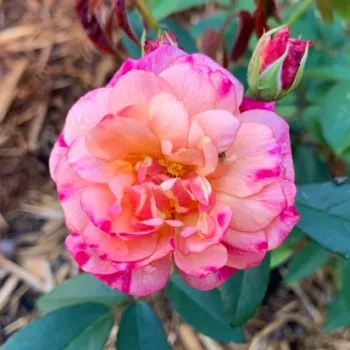
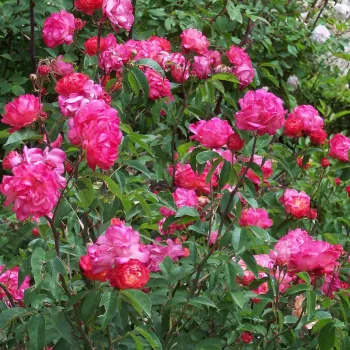
Slip this storybook rose into your cottage border and you gain a compact, bushy companion that flowers in generous clusters of semi-double blooms, each a changing swirl of copper-orange, creamy yellow and fine carmine edging. Its medium height and shrubs habit make it easy to place in a family garden, whether along a path or in front of taller hedging. The remontant flowering repeats reliably through summer, keeping beds colourful without constant fuss, while the pleasantly spicy, fruity fragrance drifts through your seating area at afternoon tea. On its own roots this rose builds a quiet longevity, regenerating well after pruning and settling into a steady rhythm over the years. In the first year it focuses on roots, the second on stronger shoots, and by the third it shows full ornamental impact, with well-anchored growth that stands up calmly to breezy, rain-washed coastal conditions. Light pruning is all it needs, and its moderate, manageable thorns and self-cleaning clusters help keep this vintage charmer looking neat with minimal effort.
Usage options
| Target area |
Reasoning |
| Front-of-border cottage bed |
The compact, bushy habit and modest height make Léonie Lamesch ideal for the front or mid-front of a mixed border, edging vegetable plots or softening low fencing without overwhelming nearby plants; its role suits busy family gardeners |
| Season-long colour anchor in small beds |
Remontant flowering with abundant clusters ensures dependable, rolling flushes of colour from early summer onwards, so even a small bed or short hedge line feels lively over many weeks rather than peaking once; reassuring for time-poor beginners |
| Romantic seating and path edges |
The medium-strength, spicy-fruity scent and constant small blooms make this cultivar excellent beside benches, pergola posts or narrow paths, where fragrance and soft colour can be enjoyed at close range by those who value atmosphere, including tea-loving homeowners |
| Containers and large patio tubs |
The upright, moderately dense structure suits a 40–50 litre or larger container, where own-root resilience helps it recover well from occasional dryness or repotting, bringing reliable colour and scent to paved patios valued by urban balcony users |
| Long-term structure in family gardens |
Being grown on its own roots, the plant tends to age gracefully, regenerating from the base if cut back hard and keeping its variety-true character for many years, a calm, low-drama choice appealing to long-term planners |
| Informal low hedging and path division |
The bushy, upright shrubs can be spaced to create a loose dividing line between lawn and kitchen garden, their moderate spread and repeat-blooming clusters giving structure as well as colour, pleasing those who favour traditional layouts |
| Low-input, easy-care planting schemes |
Medium maintenance with partial self-cleaning means less deadheading and shaping; the plant responds well to simple annual pruning, making it suitable where gardening time is limited but good presentation still matters to busy professionals |
| Exposed or breezy cottage-style borders |
Its medium height, firm framework and reliable anchoring let it cope well in beds that experience frequent wind and regular rain, especially in open, coastal-feeling gardens, reassuring for coastal-climate owners |
Styling ideas
- Cottage-Romantic Border – Combine Léonie Lamesch with feather reed grass and feverfew for a soft, continually flowering front border that defines lawns without blocking views – ideal for cottage-style enthusiasts
- Kitchen-Garden Edge – Use as a low, fragrant edging around vegetable beds, where its repeat clusters and own-root durability give long-term structure beside herbs and salad crops – perfect for kitchen-garden keepers
- Patio-Centrepiece Tub – Plant one shrub in a 50 litre terracotta pot, underplant with trailing thyme, letting its upright form and fruity scent anchor a small terrace – suited to balcony and courtyard dwellers
- Storybook Path Lining – Space plants along a winding garden path, interplanting with showy coneflower, so continuous copper-yellow clusters and gentle bushiness frame family walks – attractive for families with children
- Relaxed Tea Corner – Position near a small seating area with other fragrant perennials; its stable framework, repeat bloom and medium scent create an intimate, long-lived nook – appealing to afternoon-tea gardeners
Technical cultivar profile
| Parameter |
Data |
| Name and registration |
Léonie Lamesch is a shrub polyantha bed rose marketed as a polyantha bedding rose; exhibition name Léonie Lamesch, unregistered cultivar, verified for authenticity in the darinaROSE range. |
| Origin and breeding |
Bred by Peter Lambert, Germany, 1899, from ‘Aglaia’ × (‘Mignonette’ × ‘Shirley Hibberd’); introduced by Lambert & Söhne, reflecting classic late nineteenth-century European shrub-polyantha breeding. |
| Growth and structural characteristics |
Forms a bushy, upright shrub 80–120 cm tall and 100–140 cm wide, with moderately dense, mid-green, slightly glossy foliage and sparse prickles; suited to beds, borders and informal low hedges. |
| Flower morphology |
Semi-double, small (0.5–1.5 in) cup-shaped flowers carried in clusters, with roughly 13–25 petals; remontant, with a notably abundant second flush when reasonably maintained and watered. |
| Colour data and phenology |
Light copper-orange blooms with golden-yellow centre and fine carmine-red edges; colour softens to creamy yellow with a purplish veil, giving an evolving palette across each flowering phase. |
| Fragrance and aroma |
Medium-strength scent with a pleasantly spicy, fruity character, noticeable at close range around seating or paths; floral display is primarily ornamental, with moderate benefit for visiting pollinators. |
| Hip characteristics |
Sparse hip set; occasional small spherical hips, 5–8 mm in diameter, orange-red when ripe, adding a light seasonal accent rather than a major ornamental or wildlife feature in most garden settings. |
| Resistance and winter hardiness |
Moderate disease resistance to powdery mildew, black spot and rust; hardy to about −21 to −18 °C (RHS H7, USDA 6b, Swedish Zone 3), with average heat tolerance and need for watering in dry spells. |
| Horticultural recommendations |
Best in sunny positions with reasonably drained soil; plant 100–110 cm apart in beds or hedges, wider as a specimen; medium maintenance, with occasional pest control and straightforward annual pruning. |
LÉONIE LAMESCH offers romantic repeat-blooming colour, a compact, easily managed shrub form and long-lived own-root reliability, making it a thoughtful choice for relaxed family gardens and cottage borders.