KÖNIGIN VON DÄNEMARK – pink historic Alba rose - Booth
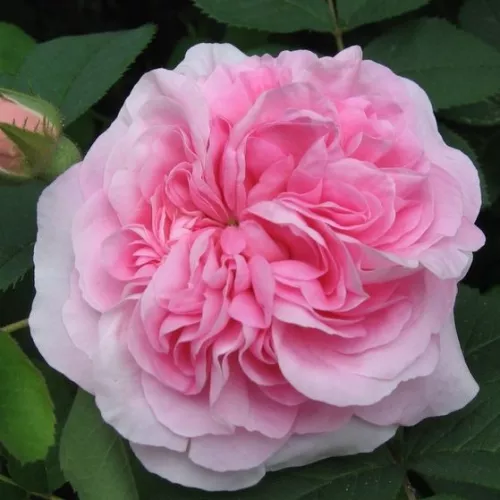
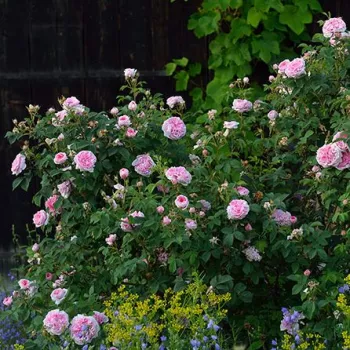
This classic Alba shrub rose brings a sense of old-world romance to family gardens, with luminous powder-pink blooms and a full, enveloping fragrance that feels tailor-made for afternoon tea corners and cottage-style seating areas. Its bushy, upright habit and almost thornless stems make it comfortable to live with around paths and play spaces, while own-root production supports long-term longevity and graceful regeneration after harder pruning. In typical UK gardens it copes well with breezier, more exposed spots where wind and rain can otherwise flatten less robust varieties, settling into hedges, mixed borders and specimen positions with reassuring ease. Medium maintenance – a simple yearly prune and feeding – is balanced by its once-a-year, storybook flush of very full rosette blooms, which can also be cut for nostalgic, scented vases indoors. Over the first few seasons it rewards patient gardeners as roots establish, top growth follows, and by the third year it reaches its full ornamental presence and flowering show, becoming a quietly dependable focal shrub with a traditional, rural character.
Usage options
| Target area | Reasoning |
|---|
| Romantic specimen near a seating area |
The very strongly scented, classic rose fragrance makes this variety ideal beside a bench, arbour or terrace where you regularly sit, echoing traditional afternoon tea gardens with its once-a-year, storybook flush and elegant, nostalgic character for fragrance-lovers. |
| Cottage-style flowering hedge along a boundary |
Its bushy growth, 120–180 cm height and 100–160 cm spread allow you to create a soft, flowering boundary that feels authentic in cottage and farmhouse settings, while the almost thornless canes make routine trimming and access along paths gentler for family-gardeners. |
| Feature shrub in mixed cottage borders |
Used as a focal point amid perennials and herbs, this historic Alba rose brings powder-pink rosette flowers and grey-green foliage that blend easily with traditional planting, providing a structured backbone around which seasons of colour can turn for cottage-style-owners. |
| Lightly shaded, east- or north-facing beds |
Because it tolerates partial shade, it suits the side of a typical UK house or fence that enjoys only morning or dappled light, keeping its blooms softer and longer-lasting where strong midday sun might otherwise bleach paler roses for shade-challenged-gardeners. |
| Low-maintenance, long-lived structural rose |
As an own-root shrub with hardy, Alba-Centifolia background, it is well suited to gardeners wanting a dependable, long-term framework rose that can recover from harder pruning, ageing gracefully with moderate annual care for time-conscious-owners. |
| Sheltered, wind- and rain-exposed corners |
In many UK family gardens, this rose’s robust shrub form and tightly packed blooms cope reliably with unsettled weather in slightly breezier spots, standing up better where wind-driven rain would spoil flimsier flowers for coastal-and-hillside-gardeners. |
| Informal historic or period-style plantings |
Introduced in 1826 and recognised with the RHS Award of Garden Merit, it fits seamlessly into period-inspired schemes, giving authenticity and a sense of continuity between house and garden while remaining practical and manageable for heritage-enthusiasts. |
| Larger beds, park-style and spacious family gardens |
Reaching up to around 1.8 m, this rose has the scale for broader borders and lawn-backed beds, where its airy, grey-green foliage and single, memorable flowering flush can be appreciated from a distance without overwhelming very small spaces for space-blessed-gardeners. |
Styling ideas
- Tea-corner hedge – Plant a loose row behind a garden bench, underplant with Calamintha nepeta ‘Blue Cloud Strain’ to draw the eye and soften the base – ideal for fragrance-focused homeowners.
- Cottage-axis focus – Place one rose at the end of a straight path, framing it with Heuchera clumps and low box or yew for a storybook view – suited to lovers of traditional structure.
- Pastel-mix border – Combine with soft mauves and whites, such as lavender and nepeta, to echo its powder-pink blooms in a gentle, family-friendly palette – perfect for romantic border planners.
- Parkland grouping – In larger gardens, plant informal drifts at 1.2–1.4 plants/m² with airy companions like Eupatorium cannabium for a naturalistic, historic feel – attractive to owners of bigger plots.
- Kitchen-garden edge – Use as a backdrop for vegetable beds, its grey-green foliage and once-a-year flush giving a traditional potager look – appealing to rural kitchen-garden keepers.
Technical cultivar profile
| Property | Data |
|---|
| Name and registration |
Königin von Dänemark, historic Alba shrub rose; exhibition historical shrub rose and fragrant cut flower; ARS exhibition name ‘Queen of Denmark’; unregistered cultivar widely known in commerce. |
| Origin and breeding |
Historic Alba-Centifolia hybrid selected by James Booth & Sons, Germany; seedling of ‘Great Maiden’s Blush’; bred around 1816, introduced 1826, long established in European and UK gardens. |
| Awards and recognition |
Royal Horticultural Society Award of Garden Merit (1993), confirming reliable performance, ornamental value and garden-worthiness under typical UK growing conditions across a range of sites. |
| Growth and structural characteristics |
Bushy shrub, 120–180 cm high and 100–160 cm wide; moderately dense, matt grey-green foliage; almost thornless shoots; moderate self-cleaning, with some spent blooms needing light deadheading. |
| Flower morphology |
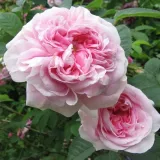
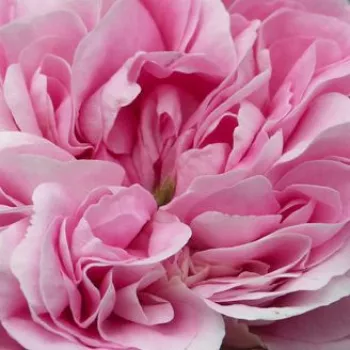
Large, very full rosette blooms with 40+ petals, borne mainly solitary; once-flowering, delivering a single abundant flush each season; suitable for cutting as nostalgic, scented stems for indoors. |
| Colour data and phenology |
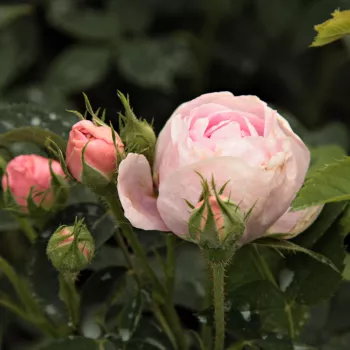
Pale powder-pink, slightly deeper toward the centre; buds softly green-tinged; newly opened flowers mid-pink, gradually fading to almost white, with faster lightening in strong sun and cooler tones in lower temperatures. |
| Fragrance and aroma |
Very strongly scented, full-bodied classic rose perfume that carries well in still air; ideal for seating areas and paths; double blooms enclose stamens, giving ornamental rather than pollinator-focused value. |
| Hip characteristics |
Rose hip set is generally sparse due to very double blooms; when present, hips are ovoid, orange-red (RHS 40A), around 14–22 mm diameter, adding occasional late-season interest without heavy seeding. |
| Resistance and winter hardiness |
Hardy to about –32 to –29 °C (RHS H7, Swedish Zone 5, USDA 4b); moderate resistance to powdery mildew, black spot and rust; tolerates heat moderately but appreciates watering in extended dry spells. |
| Horticultural recommendations |
Best as specimen, hedge or in beds and parkland settings; medium maintenance, needing regular feeding and pruning; suitable for partial shade; plant 80–160 cm apart depending on hedge or solitary use. |
KÖNIGIN VON DÄNEMARK offers powerfully scented, romantic historic blooms, long-lived own-root reliability and a gently bushy, almost thornless habit, making it a distinguished choice for those shaping a relaxed, traditional garden.