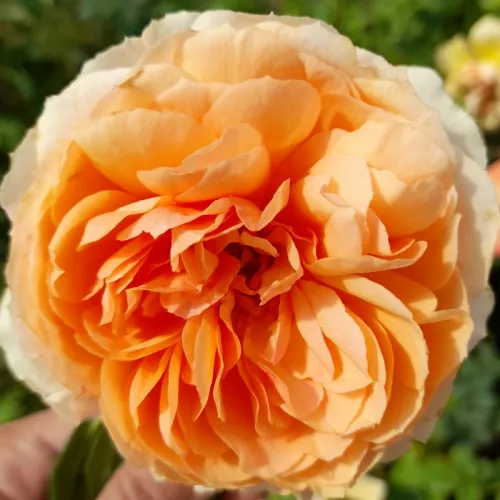
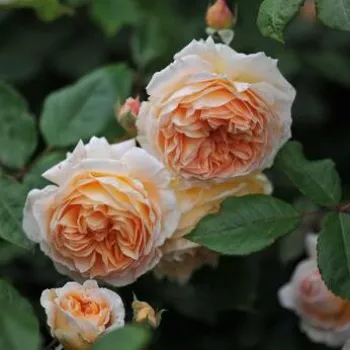
Light peach-yellow that leans slightly towards a salmon shade. - nostalgia rose - strong, long-lasting scented rose - classic, rose-like character
– XL rosette blooms with nostalgic charm
– Strong, long-lasting classic rose fragrance
– Refined pastel peach-pink colour play
– Upright shrub for borders and specimens
– Very hardy shrub, RHS H7, USDA 5b
– Special feature: Named “Kizuna” for Japanese solidarity after 2011.
Grower care – Elegant spaces
darinaROSE® ORIGINAL 2-litre own-root potted rose
18,50 £
Unfortunately, we are currently unable to ship to the United Kingdom; we only deliver to countries within the European Union. For more information, please contact us!
3(3704)
Kizuna Les Provençelles® MASkizu – apricot nostalgic shrub rose
This romantic shrub rose brings a feeling of quiet togetherness to an English-style family garden, with large, rosette blooms in soft apricot and peach-pink that look made for afternoon tea beneath an arbour. In a typical UK plot it forms an upright, dense screen, its glossy dark foliage creating the perfect backdrop for nostalgic borders and cottage-style paths. As an own-root plant it offers reassuring longevity, regrowing reliably from its own wood if winter or pruning are harsher than planned, and settling securely even where winds roll in from the coast. Over its first seasons it deepens its presence in the garden – first putting energy into roots, then building confident shoots, before showing its full ornamental value from about the third summer.
Freshly opened Kizuna flower in creamy apricot tones.
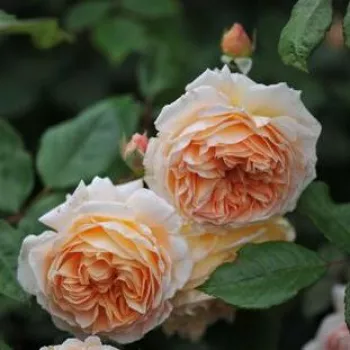
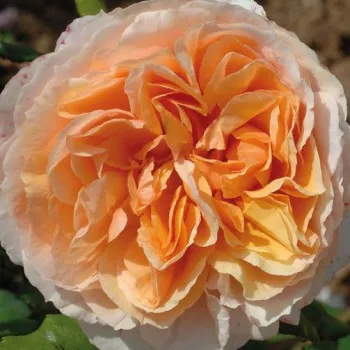
Kizuna showing a very full bloom with 40+ petals and a slightly yellower centre.
Usage options
Target area
Reasoning
Cottage-style front garden focal point
The very full, pastel rosette blooms and strong classic fragrance give instant romantic character beside a front path or gate. Its upright 100–140 cm habit fits modest spaces while still reading as a feature shrub. Best for those who value nostalgic elegance and scented welcomes at the front door, especially homeowners.
Informal mixed border with perennials
Dense branching and 50–80 cm spread allow Kizuna to weave naturally among perennials, while repeat flowering provides colour between summer waves of herbaceous plants. The own-root form copes well with periodic border reworking and division nearby, regrowing steadily after disturbance. Ideal for relaxed, traditional schemes enjoyed by hobby gardeners.
Small family back garden “tea corner”
Planted near a bench or small terrace, the strong, long-lasting scent and soft apricot-pink palette create a cosy atmosphere for afternoon breaks. Its moderate height offers a sense of enclosure without dominating a compact garden, and own-root resilience supports long-term continuity around seating. Suits busy but style-conscious families.
Romantic specimen in lawn or gravel
Used singly with 85 cm spacing around it, Kizuna reads as a sculptural, upright shrub, its glossy dark foliage and changing peach-to-pink blooms forming a season-long highlight. The plant’s capacity to regenerate from its own roots underpins a long lifespan, so the composition stays coherent for years. Well suited to patient, investment-minded gardeners.
Low, informal rose hedge
At 50 cm planting distance, it can form a low, billowing hedge defining paths or kitchen-garden boundaries, with a pretty succession of fragrant, XL rosette flowers. Own-root anchoring supports stability over time, even where soils are improved clay or slightly chalky. A charming option for those creating relaxed country-style borders.
Large container on terrace or patio
In a 40–50 litre or larger pot with good drainage, Kizuna offers romantic colour and perfume close to the house, avoiding problematic ground conditions while still developing a solid root system. The own-root habit helps it recover if containers dry or are pruned harder in spring. Best for time-pressed urban or suburban owners.
Sheltered coastal or breezy sites
The upright, moderately thorny framework and dense foliage give reliable structure where regular winds would spoil flimsier plants, while own-root anchoring helps it settle securely in improved, free-draining beds near exposed boundaries where breezes arrive from the sea. Recommended for coastal and edge-of-town garden buyers.
Cut flower production for home use
The XL, very full rosette blooms, classic form and strong, lingering scent make it an excellent rose for cutting a few special stems for vases or table settings, with repeat flowering providing several flushes through the season from a well-sited bush. Perfect for romantic, home-arranging enthusiasts.
Styling ideas
Cottage Archway – Train Kizuna loosely up a light obelisk or low arch, underplanting with garden pinks and catmint for a layered, pastel cottage effect – ideal for lovers of storybook garden entrances.
Tea-Terrace Trio – Plant three in a loose triangle near a seating area, with lavender and low thyme edging to echo the fragrance and soften paving – suited to homeowners creating a cosy afternoon tea corner.
Pastel Hedgelet – Use a short row along a path, interspersed with Penstemon ‘Husker Red’ and airy grasses for contrast, giving a romantic but not fussy boundary – good for family gardens needing gentle structure.
Kitchen-Garden Accent – Place one or two shrubs at the end of vegetable beds with Sedum and chives, giving a nostalgic, productive-plot feel that blends flowers and food – appealing to rural-style kitchen gardeners.
Patio Statement Pot – Grow Kizuna in a 50-litre clay container with trailing thyme and soft violas at the base, bringing colour and scent right to the back door – perfect for busy urban gardeners with limited borders.
Technical cultivar profile
Characteristic
Data
Name and registration
Shrub rose from the Les Provençelles® collection; registered as MASkizu and marketed as Kizuna Les Provençelles® MASkizu, with Kizuna approved as the exhibition name.
Origin and breeding
Bred by Dominique Massad in France from ‘Versigny’ × ‘Jocelyne Salavert’; bred in 2012, registered the same year and introduced commercially in Central Europe from around 2013.
Growth and structural characteristics
Upright shrub reaching about 100–140 cm in height and 50–80 cm spread, with dense, glossy dark green foliage and moderate prickliness, forming a substantial, well-furnished bush in garden borders.
Flower morphology
Very full, XL rosette blooms with 40+ petals carried mainly in corymbose clusters; remontant, with an abundant second flush giving a strong nostalgic look for cutting or garden display.
Colour data and phenology
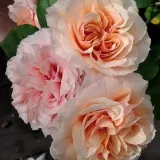
Peach-salmon and light peach-yellow tones shift through creamy apricot to pastel peach-pink, with a slightly yellower centre; colour lightens evenly and holds well, though strong sun may gently soften the shades.
Fragrance and aroma
Strong, classic rose fragrance with long-lasting character; the full, romantic blooms are bred primarily for ornamental and sensory impact rather than for pollinator support or culinary use.
Hip characteristics
Produces small numbers of ellipsoid hips, about 8–12 mm in diameter, in orange-red tones; ornamental interest is modest and hips are usually secondary to repeat flowering display.
Resistance and winter hardiness
Very susceptible to black spot, powdery mildew and rust, so regular protection is advisable; hardy to about -26 to -23 °C (RHS H7, Swedish zone 4, USDA 5b) when sited and cared for appropriately.
Horticultural recommendations
Best in full sun with fertile, well-drained soil and consistent moisture; plant 55 cm apart in masses or 50 cm for informal hedges, allowing around 85 cm for solitary specimens in mixed borders.
Kizuna Les Provençelles® MASkizu rewards you with large, fragrant nostalgic blooms, upright shrub structure and reassuring own-root longevity; an elegant, long-term choice for those curating a romantic family garden.
Detailed product attributes
Product Identification Data
Product Name:
KIZUNA – apricot nostalgic rose - Massad
Product Type:
darinaROSE® ORIGINAL - 2-litre own-root potted rose
Meaning of Cultivar Name:
The name in Japanese means “bond, togetherness”, and refers to solidarity with the victims of the 2011 Great East Japan Earthquake.
Pollinator Attraction:
Double-flowered (26–39 petals), its blooms have reduced stamen accessibility and therefore attract few pollinators.
Pollinator-Friendly Rating:
Double flowers with 26–39 petals partially cover the stamens, so its pollinator-friendliness is limited; primarily an ornamental variety.
Heat and Drought Tolerance Description:
According to the cultivar descriptions, it blooms reliably even in warm conditions; during prolonged drought it requires watering.
Maintenance Requirement:
Maintenance requirement high; due to its poor disease resistance, regular plant protection measures and frequent interventions are necessary.
Our product is a rose grown with pharmaROSA®’s unique cultivation technology!
2-litre, own-root, potted rose.
With a shoot system appropriate to the season.
With a root system that thoroughly permeates the growing medium.
Quality compliant with the requirements of the E.N.A. (European Nurserystock Association).
Supplied in unique packaging that prevents damage.
Can be planted during frost-free periods.
True-to-variety rose bush with a unique identifier.
The pharmaROSA® own-root potted rose is a well-rooted plant that supports reliable establishment when planted and cared for properly, so it can be planted whenever the soil is not frozen.
Crop overview: several varieties and growth stages in a short crop section.Shoot system: intensive growth of fresh basal shoots on a young plant.Root system: demonstration of a vigorous root system permeating the growing medium, by removing the pot.Balance: mature plant with root system and shoots in harmony with each other.
Information about the videos
The video series is not a “seasonal showcase”; it illustrates the essence of pharmaROSA® own-root cultivation in a tangible way: how the plant is built up, what the root system is like and how the shoot system regenerates. The recordings were therefore made at different times and with plants at various stages of development, so mixed foliage levels and differing stages of growth may appear in the videos. They are not a ‘sample’ of the batch dispatched, but a visual explanation of how the technology works. The current condition of the rose available to order — typical for the given period and similar to what you can expect to receive in the parcel — is shown in the upper part of the product page.
Pages for private customers Garden roses for the family garden, with minimal care → ORIGINAL® Premium garden roses – instant impact, a truly showpiece garden → EXTRA® Pages for professionals and private customers Roses for public spaces – large areas, sustainable maintenance → NATURAL® Roses for projects – hedge and row planting, fast implementation → RAPID® For professional partners only Production – propagation material for garden roses, wholesale → NEONATAL®
Company details
PharmaRosa Ltd. Company registration number: 01-09-717479 VAT number: 13075314-2-43 Plant health registration no.: HU130721 Bank account (IBAN): HU85117631891388688400000000 BIC (SWIFT): OTPVHUHB Bank name: OTP Bank Nyrt.