KIMONO – salmon-pink bedding floribunda rose - de Ruiter
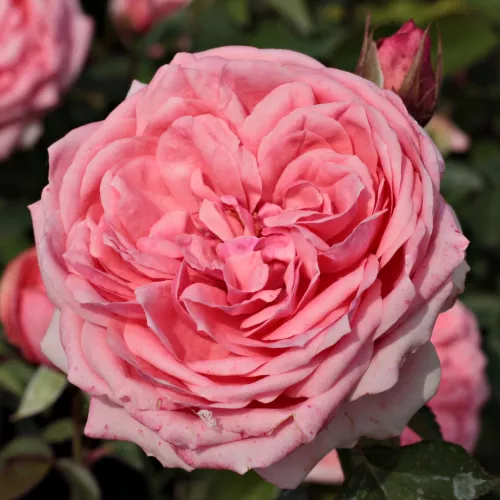
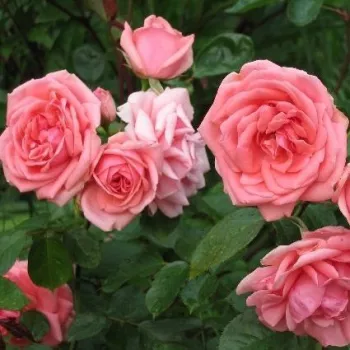
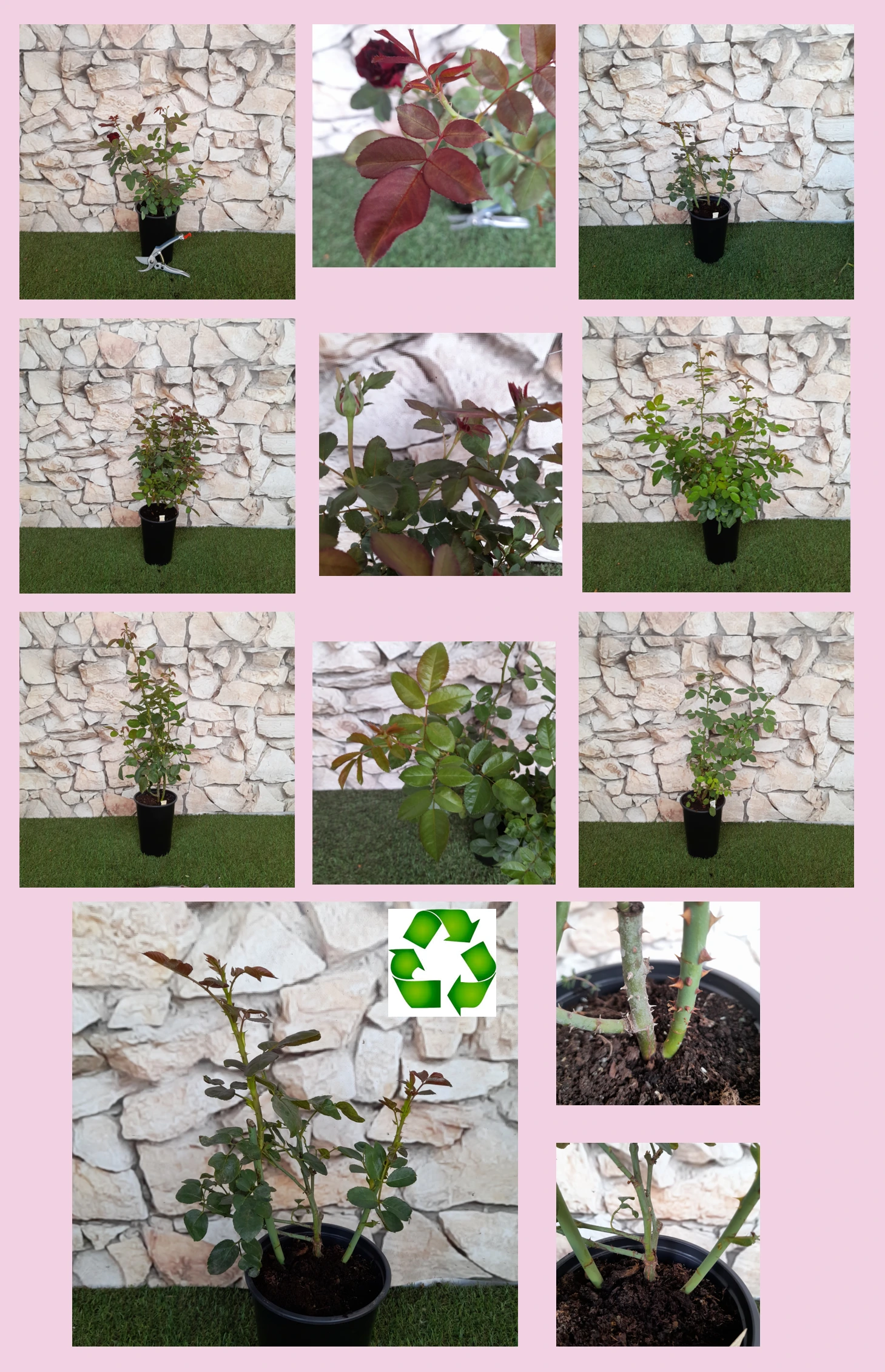
Softly coloured yet remarkably reliable, Kimono settles into the family garden as a compact, bushy floribunda that is easy to manage and rewarding across the seasons. Its salmon-pink, cup-shaped blooms appear in generous clusters above glossy, dark foliage, bringing a romantic, cottage-garden air that suits low hedges, beds and borders alike. As an own-root shrub, it develops steadily into a long-lived feature with dependable shape and flowering, even where gardens face brisk winds and frequent rain on exposed plots near the coast. Straightforward planting and modest care tasks make it suitable for those who prefer relaxed weekend gardening rather than intensive jobs, while the medium height, almost thornless stems and good disease resistance add to its practical appeal. Over time it forms a stable structure that copes well with pruning at different heights, fitting neatly into small urban plots and traditional village beds. In its second and third summers the repeat-flowering display becomes notably fuller, so you can enjoy ever-richer colour and fragrance with each passing year. Plant once, allow the roots and framework to establish, and Kimono will quietly provide a consistent, storybook backdrop to afternoon tea, children’s play and everyday moments, bringing a gentle feeling of cosiness to your outdoor retreat.
Usage options
| Target area | Reasoning |
|---|
| Front-of-border cottage bedding |
Kimono’s bushy, upright form and 75–105 cm height make it ideal for the front or mid-front of a mixed cottage border, where its neat outline and repeat-flowering clusters give structure without overwhelming the space, suiting beginner gardeners. |
| Low, traditional flowering hedge |
Planted at 45 cm intervals, Kimono forms a low, informal hedge with glossy, dark foliage and regular salmon-pink blooms, providing a romantic boundary along paths or around kitchen gardens while remaining easy to trim, perfect for family homeowners. |
| Easy-care mass planting in beds |
With low maintenance needs and good resistance to powdery mildew and black spot, Kimono can be planted in groups at 55 cm spacing to create uniform drifts of colour that stay presentable with only basic deadheading, suited to busy households. |
| Own-root long-term feature shrub |
As an own-root rose it regenerates well from the base and maintains true-to-type flowering shoots over many years, offering stable ornamental value and a dependable framework with only light renewal pruning, attractive for long-term planners. |
| Partially shaded town garden corners |
Kimono tolerates partial shade, so beds that receive only morning or afternoon sun can still host a reliable floribunda display, softening fence lines and patios where space and light are limited, supportive for urban gardeners. |
| Romantic seating and arbour surrounds |
The classic, medium-strength rosy fragrance and warm salmon-pink colouring create an inviting atmosphere near seating areas, echoing a gentle afternoon-tea mood without demanding elaborate care routines, welcoming for relaxed hosts. |
| Containers and large patio planters |
In large containers of at least 40–50 litres, Kimono’s moderate height, bushy habit and modest root vigour combine to give a balanced, manageable plant that brings cottage-garden charm to paved spaces, convenient for balcony owners. |
| Exposed coastal or windy beds |
This compact floribunda holds its bushy framework low and dense, helping it stand firm and flower reliably even where gardens are regularly buffeted by strong winds and salt-laden showers, reassuring for coastal residents. |
Styling ideas
- Cottage-ribbon hedge – Line a path with a single or double row of Kimono, interplanted with lady’s mantle to soften the edges and catch raindrops – ideal for nostalgic front gardens.
- Pastel bedding drift – Mass-plant Kimono in a curved bed, weaving in dwarf asters for late-season colour to prolong the romantic display – suited to low-maintenance family plots.
- Kitchen-garden frame – Use Kimono as a flowering boundary around raised vegetable beds, its almost thornless stems making access easier – helpful for practical cottage gardeners.
- Patio tea corner – Position a large Kimono-filled container beside a bistro set, adding scented herbs at the base for a cosy afternoon-tea nook – perfect for compact urban terraces.
- Soft-focus focal point – Plant a small group of three Kimono shrubs as a central feature in a lawn island, underplanting with pink lupins for a layered, storybook look – appealing to romantic-style enthusiasts.
Technical cultivar profile
| Attribute | Data |
|---|
| Name and registration |
Floribunda bedding rose, Registered Cultivar Name ‘Kimono’; ARS exhibition name Kimono. Belongs to the bed rose commercial group and is classed as a bush-type exhibition floribunda. |
| Origin and breeding |
Bred by Gerrit de Ruiter in the Netherlands, 1961, from cross ‘Cocorico’ × ‘Frau Anny Beaufays’. First distributed by Horstmann & Co. in Germany in 1961 and widely adopted in European gardens. |
| Awards and recognition |
Recipient of the Royal National Rose Society Trial Ground Certificate in 1961, indicating reliable performance and ornamental value under UK trial conditions shortly after its introduction. |
| Growth and structural characteristics |
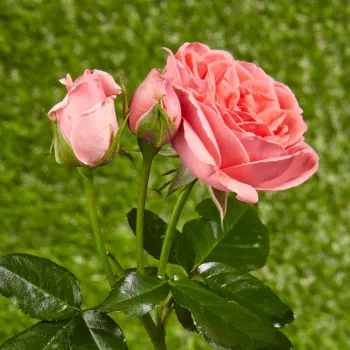
Bushy, upright shrub 75–105 cm high and 60–90 cm wide, with moderately dense, glossy dark green foliage and very few prickles. Medium self-cleaning: some deadheading is beneficial for best appearance. |
| Flower morphology |
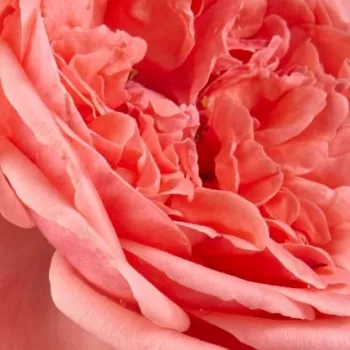
Very full, cup-shaped clusters of medium-sized blooms (approximately 4–7 cm across) with 40 or more petals. Repeat-flowering habit with a generous second flush; carried in clusters typical of floribunda bedding roses. |
| Colour data and phenology |
Warm salmon-pink overall, ARS pink blend; RHS 48C outer, 48D inner. Buds deep salmon, opening to vivid mid-tones that soften toward pastel shades and creamy hints as they age, especially in bright, hot sunshine. |
| Fragrance and aroma |
Classic, medium-strength rosy scent, noticeable at close range without being overpowering. Best appreciated around seating areas or when cutting stems for indoor arrangements, contributing to a traditional rose-garden feel. |
| Hip characteristics |
Occasional small spherical hips, about 8–12 mm across, maturing to an attractive orange-red. Not produced in abundance and generally secondary to the plant’s main role as a flowering bedding floribunda. |
| Resistance and winter hardiness |
Good resistance to powdery mildew and black spot, moderate susceptibility to rust where pressure is high. Hardy to approximately −21 to −18 °C (RHS H7; Swedish Zone 3; USDA 6b), suiting most UK garden conditions. |
| Horticultural recommendations |
Suited to beds, edging, low hedges, parks and cutting. Plant 55 cm apart in beds, 45 cm for hedges, 85 cm as specimens; 3.6–4.2 plants/m² for mass effect. Occasional rust monitoring and routine deadheading recommended. |
KIMONO combines compact bedding habit, good disease resistance and gentle fragrance in an own-root form that establishes into a stable, long-lived feature; a thoughtful choice if you would like lasting cottage charm with modest upkeep.