KIFTSGATE – white rambler climbing rose – Murrell
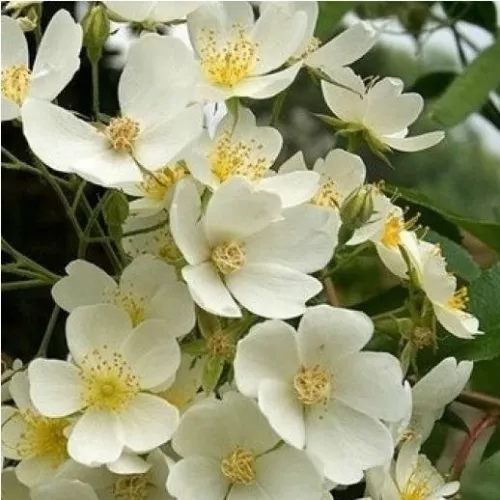
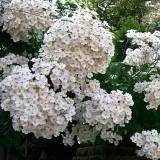
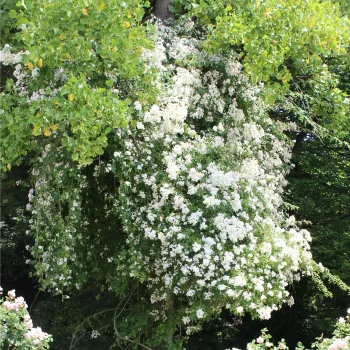
Planted once, KIFTSGATE quickly becomes a living curtain of blossom, turning arches, pergolas and tall walls into a foaming midsummer cascade of pure white flowers followed by glowing orange-red hips. This once-flowering rambler is chosen for its sheer impact: in early summer, large clusters of simple, open blooms draw in bees with a sweet, honeyed fragrance, then quietly self-clean as petals fall and hips form, so You are left with structure not deadheading. On its own roots it offers reassuring longevity and the ability to regenerate from the base, building a robust framework that Coping well with exposed, breezy positions near the coast and similar sites. In a typical family garden, trained into a mature tree or over a sturdy pergola, it develops from a young, manageable plant into a romantic screen, the first year spent rooting, the second building strong shoots and the third revealing its full cottage-garden character, a low-fuss, high-dramatic accent for relaxed afternoons.
Usage options
| Target area | Reasoning |
|---|
| Tall pergola in a family garden seating area |
KIFTSGATE’s exceptional height and spread quickly create an enveloping flower canopy, ideal above a dining set or bench. Once established, it needs only basic seasonal care, suiting households wanting drama without constant pruning, especially busy urban gardeners. |
| Covering a large, plain boundary wall or outbuilding |
The vigorous climbing habit turns bare masonry into a deep green backdrop smothered in white summer bloom, then studded with bright hips. Own-root resilience helps it anchor well and age gracefully, giving long-term cover for traditional cottage-rose lovers. |
| Training up and through a mature tree |
This rambler is classic for scrambling into trees, its long, flexible shoots weaving through branches to create a high-level cloud of blossom. Once guided in its early years, it largely fends for itself, appealing to low-maintenance country gardeners. |
| Wildlife-friendly corner or informal hedge line |
Simple single flowers with open centres are highly attractive to bees, followed by abundant orange-red hips that feed birds and add winter colour. It suits relaxed, nature-friendly planting schemes valued by family wildlife enthusiasts. |
| Raised bed or improved soil on heavier ground |
Where clay is present, planting into a raised, well-drained bed lets the strong root system establish securely, after which growth is vigorous and reliable. Own-root plants recover well from any weather set-backs, reassuring beginners with tricky soil. |
| Partial-shade side of the house or garden |
Suitable for partial shade, KIFTSGATE still produces generous clusters of white flowers that brighten dimmer aspects. Once its main framework is built, light annual tidying is usually enough, making it attractive for time-poor home owners. |
| Informal screen against wind or neighbouring views |
Its dense, vigorously produced foliage creates a thick green curtain that softens wind and filters unwanted views; the strong framework anchors well, Coping well with exposed, breezy positions near the coast and similar sites for coastal cottage gardeners. |
| Long-term feature in a large family garden |
An own-root rambler with a reputation for durability, KIFTSGATE rewards patient establishment: roots in year one, framework in year two, then fully romantic presence from year three onwards, giving a lasting storybook backdrop for multi-generation households. |
Styling ideas
- Cottage Arbour – Train KIFTSGATE over a deep wooden arbour with gravel underfoot and terracotta pots, letting the white foam frame your afternoon tea spot – perfect for lovers of classic English cottage gardens.
- Tree Garland – Allow the rambler to climb an established apple or ornamental tree, underplanting with chives and dwarf marigolds for a soft kitchen‑garden feel – ideal for relaxed, food‑focused family plots.
- Romantic Screen – Use KIFTSGATE along a fence, interplanted with cypress spurge for contrast and low perennials in front, creating a loose, flowering privacy veil – suited to families wanting charm over formality.
- Wildlife Edge – Place it at the back of a border and let hips ripen among grasses and pollinator plants, turning a boundary into a wildlife corridor – for nature‑minded gardeners who enjoy seasonal change.
- Garden Approach – Frame a long path or drive with sturdy posts and wires, clothing them with this rambler to form a white‑flowered tunnel in summer – appealing to homeowners who like a strong arrival moment.
Technical cultivar profile
| Parameter | Data |
|---|
| Name and registration |
Rambler rose marketed as KIFTSGATE Climbing rose Kiftsgate; unregistered cultivar name, discovered and named after Kiftsgate Court Gardens; classified within climbing rose commercial group. |
| Origin and breeding |
Naturally occurring variant of Rosa filipes, selected in the United Kingdom; discovered and introduced by E. Murrell (Edwin Murrell Ltd, Shrewsbury) around 1954 for garden and landscape use. |
| Awards and recognition |
Holds the Royal Horticultural Society Award of Garden Merit (1993), indicating proven performance, reliability and ornamental value under typical UK garden conditions and standard cultural care. |
| Growth and structural characteristics |
Exceptionally vigorous climber or rambler reaching about 9–15 m high and 2.5–4.5 m wide, with moderately dense, mid‑green, slightly glossy foliage and densely thorned shoots needing strong support. |
| Flower morphology |
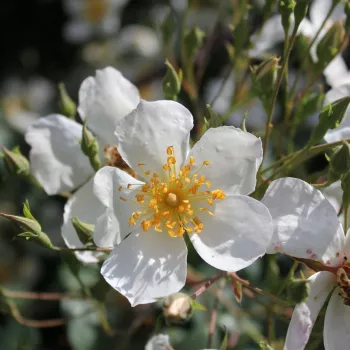
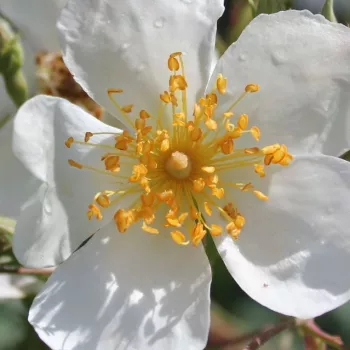
Single, flat flowers with 5–12 petals, small in size but carried in very large, showy clusters; non‑remontant, providing one impressive main flush each year, with good natural self‑cleaning after bloom. |
| Colour data and phenology |
Pure snow‑white flowers with a soft creamy tinge; buds cream‑white, petals dazzling white on opening, gently dulling to yellowish‑white before they fall; colour retention is very good throughout the bloom period. |
| Fragrance and aroma |
Medium-strength, sweet, honeyed scent noticeable around the plant in still air; simple, open flowers with exposed stamens are particularly attractive to bees and other pollinating insects in summer. |
| Hip characteristics |
Forms abundant, decorative, egg-shaped hips 15–22 mm across, coloured rich orange-red (RHS 33A); hips extend the season of interest into autumn and early winter and provide a natural wildlife food source. |
| Resistance and winter hardiness |
Hardy to approximately −26 to −23 °C (RHS H7, USDA 5b; Swedish zone 4); moderate disease resistance requiring occasional protection in high-pressure seasons; moderate heat and drought tolerance with watering. |
| Horticultural recommendations |
Best on walls, pergolas, trees and large structures; plant 2.25–3.6 m apart. Tolerates partial shade and benefits from improved drainage. Own-root form suits long-term garden use and regenerative pruning. |
KIFTSGATE offers spectacular height, wildlife-friendly blossom and hips, and long-lived, regenerative own-root growth that matures into a romantic garden feature over time; a thoughtful choice if You have space and enjoy enduring, storybook planting.