ISIDORA™ – golden-yellow flowerbed shrub rose
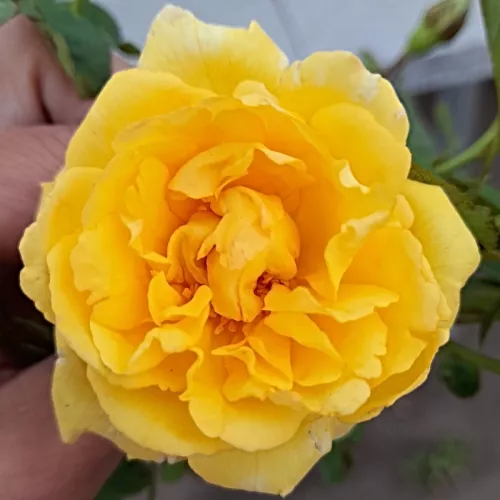
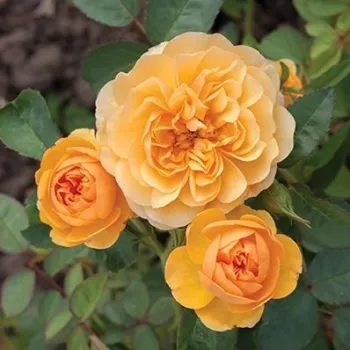
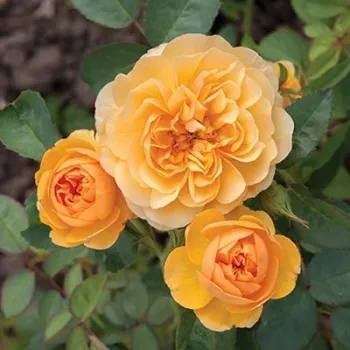
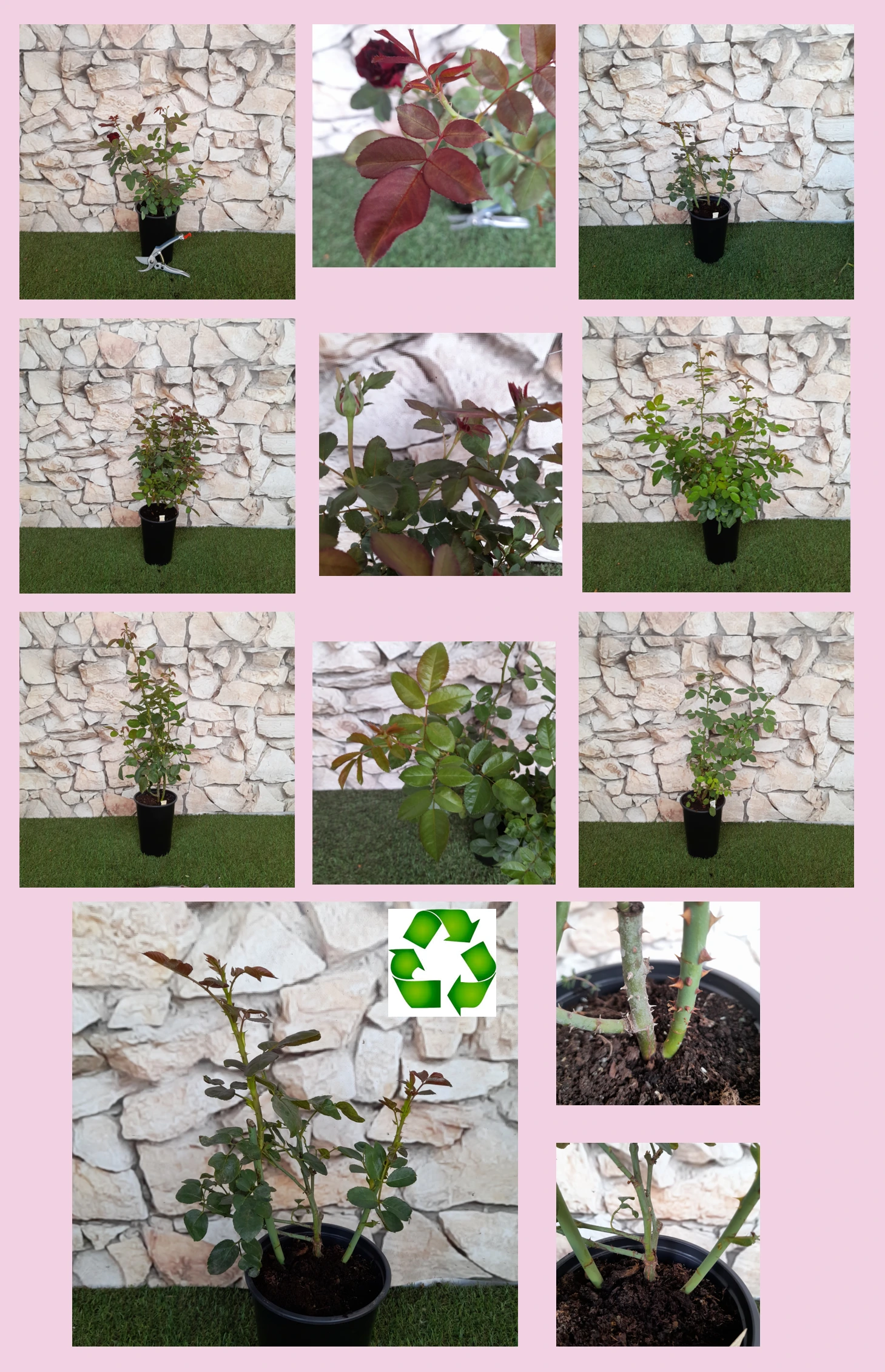
Bring a touch of storybook romance to your family garden with ISIDORA™, a compact golden-yellow shrub rose that fits beautifully into cottage-style borders and small plots. Its warm hue feels instantly welcoming, echoing traditional English gardens and suiting low-fuss, homely planting schemes. The rounded, compact habit is ideal where space is limited, creating an orderly, natural-looking mound in beds, along paths or in front of hedges. Fully double, cup-shaped blooms appear in generous clusters and repeat through summer, lending gentle drama without dominating the rest of your planting. As an own-root rose, it builds up steadily with reliable regrowth and a long, stable life, rather than exhausting itself after a few seasons. This makes it a reassuring choice if you want structure that quietly improves year on year, especially where breezy conditions or exposed aspects demand plants that anchor firmly. Over time it weaves itself into a soft, informal hedge or low backdrop, while still working just as well as a single centrepiece near a seating area for afternoon tea, and you can even grow it in a generous 40–50 litre pot for a moveable accent on terrace or patio.
Usage options
| Target area | Reasoning |
|---|
| Small to medium cottage-style front gardens |
The naturally rounded, compact habit keeps ISIDORA™ neat without heavy pruning, so it slips easily into modest front gardens where space is tight and a tidy look matters. Its repeat-flowering clusters create a soft, traditional cottage feel that suits busy homeowners seeking dependable structure and colour over several seasons, including beginners. |
| Low flowering hedge along paths or drives |
Planted at the recommended hedge spacing, ISIDORA™ gradually joins into a low, informal hedge that softens boundaries and guides the eye along paths or drives. The own-root system helps plants knit together and recover if an individual stem is damaged, supporting a long-lived line of colour for those who prefer enduring features and straightforward upkeep, especially families. |
| Mixed cottage border with perennials and herbs |
The warm golden-yellow flowers blend beautifully with pinks, mauves and blues, giving a storybook cottage look among lupins, catmint or hardy geraniums. Its moderately dense, pale green foliage sits comfortably behind lower perennials, creating a layered, romantic backdrop that matures steadily and rewards patient, low-effort gardening, ideal for hobby-gardeners. |
| Feature rose near seating or terrace |
Clusters of very double, cup-shaped blooms and a mild spicy fragrance make ISIDORA™ a charming feature close to where you sit for tea or evening rest. The compact shrub form avoids overpowering small terraces, while the steady repeat flowering extends interest, appealing to those who want gentle luxury without complex pruning or fussy routines, especially homeowners. |
| Large containers on patio or balcony |
In a 40–50 litre container, ISIDORA™ forms a stable, well-rooted shrub that is easy to position near doors or seating. Own-root growth means that if top growth is ever cut back hard, it can regenerate from its own base without the graft issues seen in traditional roses, reassuring time-pressed urban gardeners and balcony residents. |
| Family gardens in breezy or exposed spots |
The relatively low, compact stature helps it cope more comfortably with gusty, open aspects than taller, top-heavy roses, while the own-root system anchors the plant securely over time. This suits typical family plots where wind funnels between houses and fences, and where planting must cope without constant cossetting for busy parents. |
| Traditional kitchen gardens and working plots |
ISIDORA™’s neat footprint and repeat-flowering habit make it easy to weave into kitchen gardens as a decorative edging to vegetable beds or along fruit cages. Its structured form brings order without demanding specialised pruning shapes, fitting gardens where practicality comes first but a touch of romance is still welcome for enthusiastic yet time-limited growers. |
| Informal mass planting in front of hedges or fences |
Used in groups at the suggested planting distances, ISIDORA™ builds a low, billowing foreground of colour that softens straight hedge or fence lines, while own-root durability supports a consistent display across many seasons and copes well with gardens where heavy clay necessitates raised beds and careful drainage, particularly for suburban gardeners. |
Styling ideas
- Cottage-Ribbon Border – Thread ISIDORA™ in a loose line along a front path with catmint, hardy geraniums and soft grasses to frame the route to your door – for lovers of romantic, cottage-style entrances.
- Kitchen-Garden Edge – Plant a low row beside vegetable beds, pairing with chives, sage and marigolds to blur the line between productive plot and ornament – for practical gardeners who still enjoy charm.
- Golden-Focus Patio Pot – Grow a single ISIDORA™ in a 40–50 litre terracotta container flanked by lavender and dwarf heuchera for colour by your favourite chair – for balcony and terrace users wanting easy impact.
- Soft-Hedge Screen – Create a flowering, waist-high screen in front of a plain fence, mixing ISIDORA™ with white foxgloves and pale pink lupins – for families who prefer gentle privacy over hard barriers.
- Storybook Corner – Group three shrubs in a triangle under a small tree with spring bulbs and blue globe thistle to form a romantic reading or tea nook – for anyone dreaming of an English countryside hideaway.
Technical cultivar profile
| Property | Data |
|---|
| Name and registration |
Shrub rose from the Frayla® collection; registered as BOZisidfra and marketed as ISIDORA™ Frayla®, a golden-yellow flowerbed shrub rose in the bed rose commercial group. |
| Origin and breeding |
Bred by Biljana Božanić Tanjga of PhenoGeno Roses d.o.o. in Serbia; a 'Graham Thomas' seedling introduced and registered in 2018 by PhenoGeno Roses. |
| Growth and structural characteristics |
Compact shrub reaching about 55–85 cm in height and 50–70 cm spread, moderately dense, pale green, matte foliage, and moderate prickliness; naturally rounded, suitable for borders and low hedging. |
| Flower morphology |
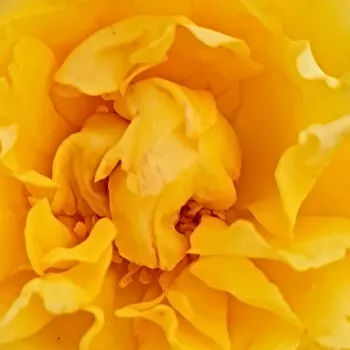
Very double, cup-shaped flowers with 40 or more petals, medium-sized clusters on branching stems, remontant with abundant second flush, providing generous seasonal flowering in beds and plantings. |
| Colour data and phenology |
Blooms open deep golden yellow, then uniform golden yellow with slightly paler petal edges, finally fading to pale golden and buttery-yellow tones, giving a warm, evolving colour display as flowers mature. |
| Fragrance and aroma |
Mild, restrained fragrance with a gentle spicy character; primarily ornamental in effect rather than strongly scented, adding subtle sensory interest without dominating nearby seating or living areas. |
| Hip characteristics |
Occasional ellipsoidal hips form after flowering, around 10–14 mm across, taking on an attractive orange-red colour that can contribute additional late-season detail in less rigorously deadheaded plantings. |
| Resistance and winter hardiness |
Hardy to approximately –26 to –23 °C (RHS H7, Swedish zone 4, USDA 5b) but with medium susceptibility to blackspot and powdery mildew and high rust sensitivity, needing regular, proactive plant protection. |
| Horticultural recommendations |
Suited to mass planting, hedging and solitary use at 35–65 cm spacing; plan for regular disease prevention, especially against rust, and follow standard shrub rose feeding and watering in well-drained, prepared soil. |
ISIDORA™ offers a compact habit, romantic golden-yellow clusters and reliable own-root longevity that suits family gardens and containers, making it a thoughtful choice if you want durable cottage charm with manageable care.