INGRID BERGMAN™ – dark red hybrid tea rose - Olesen & Olesen
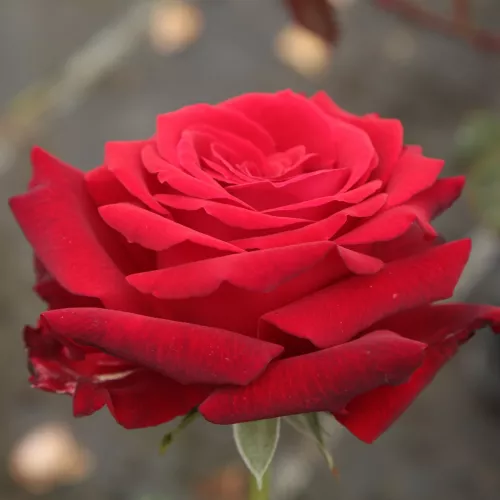
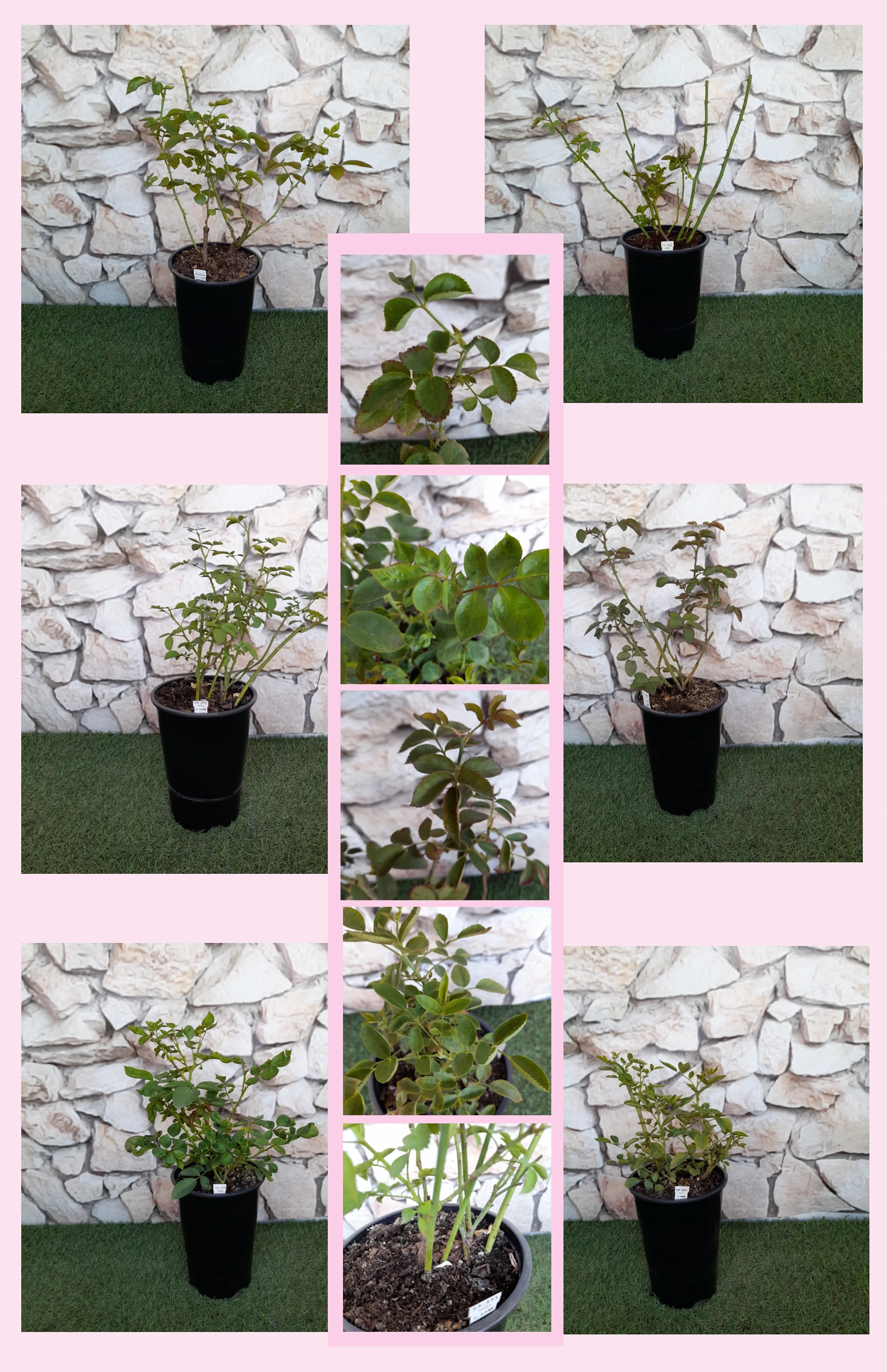
Sink into a romantic, storybook corner of your own garden with Ingrid Bergman™, a classic hybrid tea rose whose velvety blooms give the feeling of cosiness at every glance. Its deep, lasting colour hardly fades, even in strong sun, so borders and patios keep their rich tone through the season, while the upright habit fits beautifully into small to medium family gardens. Grown on its own roots, it builds strength steadily for a long-lived, dependable display, ideal where winds and rain regularly sweep in from the coast and gardens need roses that stay anchored and elegant. Over time, foliage fills out to a dense, dark green backdrop for those high-centred, exhibition-style flowers that look at home beside a pot of herbs or a cottage-style arbour. Perfect for cutting, this variety gives you armfuls of long-stemmed roses for afternoon tea indoors, while an easy, once-a-year pruning routine keeps it looking orderly. Plant it in a sunny spot with decent drainage and enjoy the natural, three-year settling-in rhythm of own-root roses: first the roots, then the structure, then the full, mature display.
Usage options
| Target area |
Reasoning |
| Feature rose near a seating area or arbour |
Large, velvety dark-red blooms and high-centred buds create a classic, “afternoon tea” focus point beside benches, arbours or pergolas. Reliable colour retention means the display remains rich between deadheading rounds for lovers of romantic cottage style. |
| Mixed cottage border in a family garden |
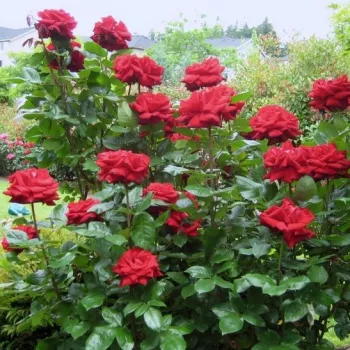
Compact, upright growth and dense foliage allow easy pairing with perennials and herbs in small to medium borders, giving a storybook countryside feel without demanding advanced pruning skills, ideal for hobby gardeners and beginners. |
| Cutting bed for home bouquets |
High-centred, exhibition-type blooms on strong, straight stems produce elegant cut flowers, so a small row can supply vases and table arrangements for most of summer, suiting homeowners who enjoy cut flowers indoors. |
| Own-root long-term planting in front garden |
As an own-root shrub it regrows faithfully from its base after winter or pruning, keeping shape and colour true for many years and avoiding the worry of suckers from a graft, reassuring for family buyers planning a lasting garden. |
| Sunny bed in cooler or exposed climates |
Good frost hardiness and tolerance of heat make it suitable for many UK regions; where coastal winds and driving rain are common, its firm, upright growth and secure root system help it stay stable for busy urban and coastal gardeners. |
| Formal pair planting by paths or doorways |
Regular spacing and a naturally upright outline lend themselves to planted pairs or short runs, framing paths and entrances with a neat, traditional look that appeals to those who prefer a classic, orderly garden. |
| Large containers on patio or terrace |
When given a generous container of at least 40–50 litres with good drainage, it performs well on patios, allowing renters or small-garden owners to enjoy its blooms close up, which suits busy urban garden owners with limited space. |
| Small rose hedge or backdrop to kitchen garden |
Planted in a short row at the recommended distances, it forms a low, flowering hedge that screens veg beds or compost areas, tying functional plots into a romantic setting for rural kitchen-garden and allotment enthusiasts. |
Styling ideas
- Cottage-Border Ribbon – Thread Ingrid Bergman™ through a mixed border with feverfew and meadow sage to echo traditional English cottage gardens – ideal for those who want soft structure without fussy upkeep.
- Arbour-Tea Corner – Place two or three shrubs near a seat or arbour, underplanted with low herbs, to create a cosy afternoon-tea nook – perfect for romantics who enjoy lingering in the garden.
- Patio-Showpiece Pot – Grow a single plant in a 40–50 litre container with trailing thyme at the rim for a bold, movable feature – well suited to balcony or courtyard gardeners.
- Front-Garden Welcome – Flank your front path or doorway with matching pairs, using clipped box or lavender as companions – appealing to homeowners who like a traditional, tidy entrance.
- Kitchen-Garden Backdrop – Run a short row behind vegetable beds, adding vertical canes of sweet peas between plants – attractive to families who want their productive plot to feel decorative too.
Technical cultivar profile
| Characteristic |
Data |
| Name and registration |
Hybrid tea rose, registered as POUlman; marketed as Ingrid Bergman™ Hybrid Tea POULSEN® POUlman, with Ingrid Bergman as the American Rose Society approved exhibition name. |
| Origin and breeding |
Bred by L. Pernille Olesen and Mogens Nyegaard Olesen, Poulsen Roser A/S, Denmark; cross of ‘Precious Platinum’ × ‘Else Poulsen’; introduced and registered in 1984. |
| Awards and recognition |
Highly decorated rose, including RNRS Trial Ground Certificate, multiple European gold and silver medals, RHS Award of Garden Merit, and World’s Favourite Rose in the WFRS Rose Hall of Fame. |
| Growth and structural characteristics |
Upright hybrid tea, typically 80–105 cm tall and 50–70 cm wide, with dense, slightly glossy dark green foliage and moderate thorns; self-cleaning is weak, so regular deadheading improves appearance. |
| Flower morphology |
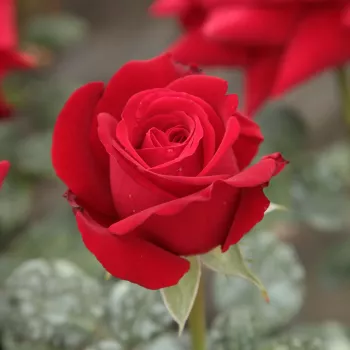
Large, double, high-centred blooms with 26–39 petals, borne mainly singly on stems; classic pointed-bud, cut-rose form with strong repeat flowering and a notably abundant second flush in good conditions. |
| Colour data and phenology |
Deep, velvety dark-red flowers (ARS dark red, RHS 187A–187B) that hold colour extremely well; buds open ruby-red, deepen towards blackish-bordeaux before ageing, with minimal fading even in bright sunlight. |
| Fragrance and aroma |
Light, unobtrusive fragrance typical of modern hybrid teas; not overpowering near seating or doors, offering a gentle rose scent rather than a strongly perfumed presence in the garden. |
| Hip characteristics |
Rosehip production is usually sparse due to double blooms; when present, hips are small ellipsoidal red fruits around 10–14 mm in diameter, adding modest late-season interest. |
| Resistance and winter hardiness |
Hardy to approximately −32 to −29 °C (RHS H7, USDA 4b, Swedish zone 5); needs regular protection against powdery mildew and rust, with moderate black spot susceptibility, and benefits from attentive care. |
| Horticultural recommendations |
Best in full sun with fertile, well-drained soil; suitable for beds, specimens, hedging or large containers, at about 2.8–3.2 plants/m², with consistent watering, feeding and plant protection for top performance. |
INGRID BERGMAN™ offers rich, long-lasting dark-red blooms, an upright, space-efficient habit and reliable own-root regrowth for years of enjoyment; consider it if you seek a traditional, enduring rose for your garden.