INDIGOLETTA – purple climbing rose - Laak
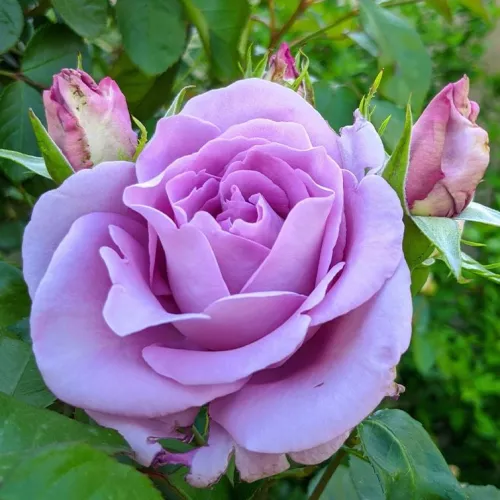
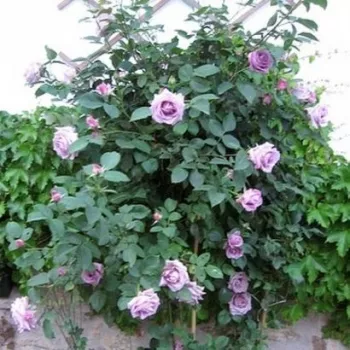
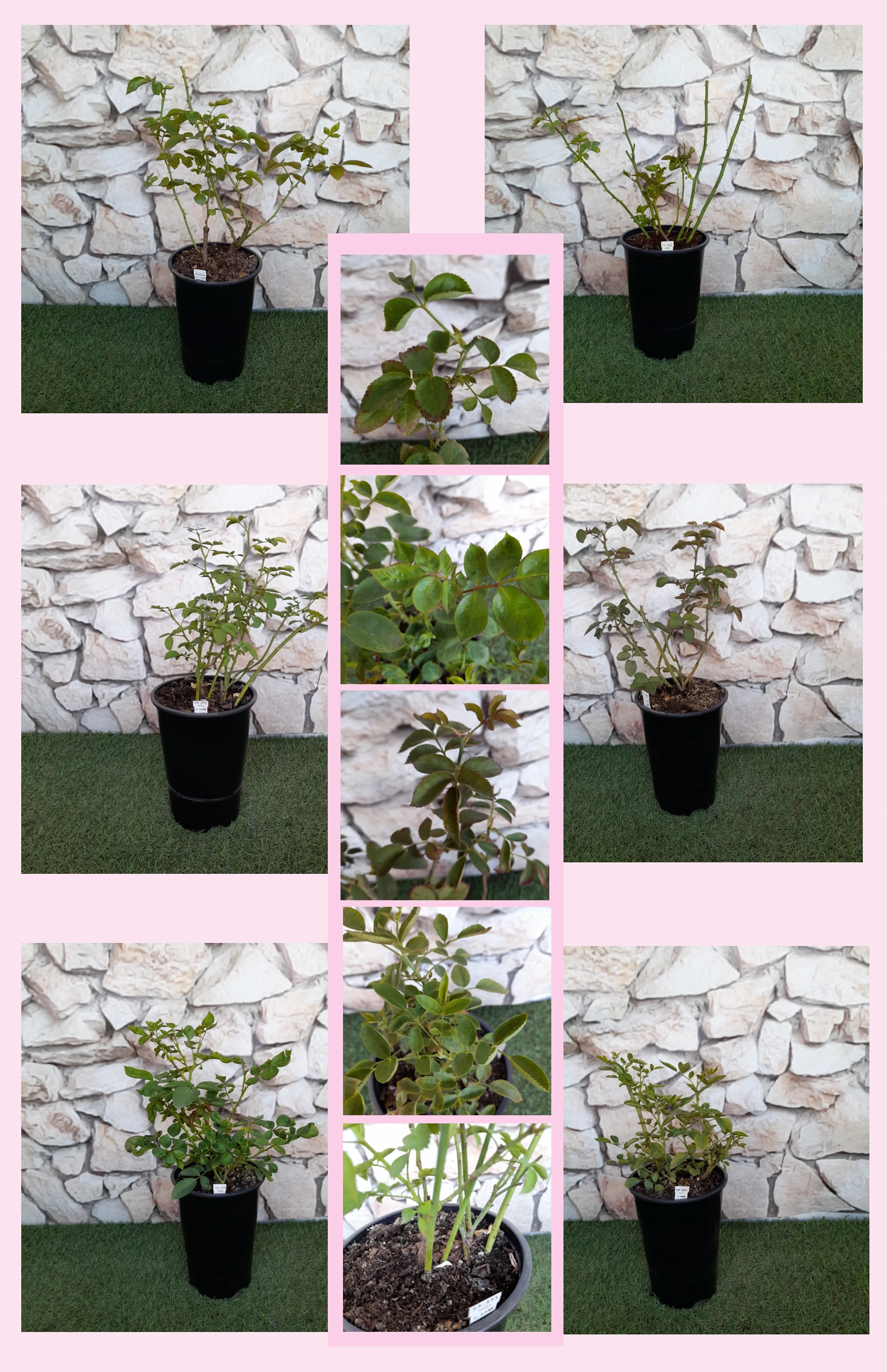
Create a corner of romantic cottage charm with this strongly fragrant climber, its lavender-purple blooms shimmering with a soft, silvery sheen even in cooler, part-shaded spaces. Own-root growth gives reassuring stability and an impressive lifespan, regenerating steadily after pruning so you can keep training it where you want it over the years. Ideal for a pergola, wall or trellis, it clothes its supports with dense, dark-green foliage and storybook arches, while coping reliably with breezier, damp conditions near the coast and on exposed plots that often challenge other roses. In its pharmaROSA® ORIGINAL 2-litre form it is straightforward to plant throughout the season, establishing first its roots, then stronger shoots, and by the third year giving the full show that makes afternoon tea beneath your rose-covered arbour feel wonderfully complete.
Usage options
| Target area | Reasoning |
|---|
| Pergola or arbour in a family seating area |
The tall, flexible canes and dense foliage make it ideal for covering an arbour or simple timber pergola, bringing shade, privacy and scented colour right over the seating area; perfect for families wanting a cosy, romantic focus for afternoons. |
| House wall or sunny garage wall |
Trained on wires against a wall, its 2,4–3,6 m height and 1–1,7 m spread provide a vertical curtain of purple-lilac blooms while leaving space beneath for shrubs or herbs; suited to homeowners seeking long-lived structure with minimal replanting for decades. |
| Fence or boundary in an average-sized garden |
Along a boundary fence it forms a flowering screen that softens hard lines and gives more privacy without taking excessive ground space, especially valuable in small to medium plots for busy households aiming for impact without complex borders for weekends. |
| Romantic cottage-style mixed border backdrop |
Placed at the back of a cottage border, its violet flowers and dark foliage provide height and a soft, storybook background for lower perennials and kitchen-garden herbs, suiting gardeners who want a traditional look that frames paths and beds for guests. |
| Part-shaded side passage or east-facing wall |
Where many climbers lose colour, this variety keeps its purple tones particularly well in part shade, making it useful for side returns or east-facing walls that only receive morning sun, ideal for town gardens with limited full-sun spots for owners. |
| Coastal or more exposed garden positions |
Its climbing habit and firm framework anchor well to supports, providing a dependable vertical feature even where wind and frequent rain can flatten taller perennials, reassuring those gardening in breezier, damp-prone locations along coasts or open plains for families. |
| Large container by a terrace or doorway |
In a 40–50 litre container with a sturdy obelisk or trellis, it offers scented height beside a doorway or terrace, and the own-root habit copes well with periodic pruning, ideal for busy urban gardeners wanting controllable, movable colour near guests. |
| Low-maintenance, long-term feature planting |
Once established, its own-root system supports steady regrowth after pruning and reduces the risk of graft failure, so you gain a stable, long-lived feature with only seasonal feeding, tying-in and deadheading, suiting beginners prioritising simple tasks over expertise. |
Styling ideas
- Tea-arbour – Train it over a simple timber arbour and underplant with lavender and catmint to create a scented afternoon-tea nook – for romantic homeowners who enjoy lingering outside with a book.
- Cottage-fence – Let it scramble along a picket or post-and-rail fence with foxgloves and hardy geraniums in front – for those building a soft, storybook edge to a family garden.
- Kitchen-border – Use it at the back of a potager bed, teamed with herbs and berries, giving vertical colour without sacrificing growing space – for cooks who want beauty and productivity together.
- Courtyard-focus – Grow it in a large 40–50 litre pot with an obelisk beside the back door, combined with terracotta pots of thyme and rosemary – for urban gardeners wanting a single striking, low-effort feature.
- Evening-scent – Place it near a terrace or bench where its strong, sweet-spicy perfume can be enjoyed on still evenings – for fragrance lovers who value atmosphere more than formal layouts.
Technical cultivar profile
| Aspect | Data |
|---|
| Name and registration |
Large-flowered climbing rose; registered as ‘Azubis’, marketed as Indigoletta Climbing rose Azubis; exhibition climbing rose with American Rose Society name Indigoletta. |
| Origin and breeding |
Shoot mutation of ‘Mainzer Fastnacht’, bred by G. L. M. Van de Laak, Van de Laak Nursery, Lottum, Netherlands; bred 1981, introduced by Verschuren & Sons from 1985. |
| Growth and structural characteristics |
Vigorous climbing habit to around 2,4–3,6 m high and 1–1,7 m wide; dense, slightly glossy dark-green foliage; moderately thorny shoots; weak self-cleaning so benefits from deadheading. |
| Flower morphology |
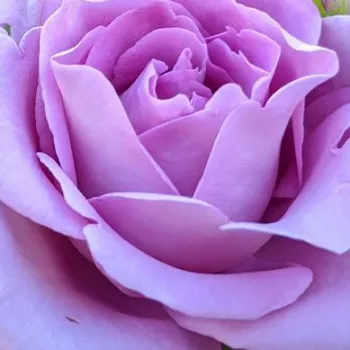
Large, double, cupped blooms with 26–39 petals, mainly borne singly; repeat-flowering with a lighter second flush; flowers typically 7–10 cm across under good garden conditions. |
| Colour data and phenology |
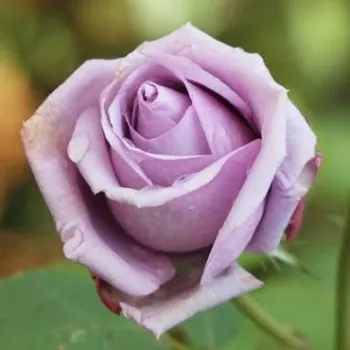
Deep violet-purple with bluish tone and silvery sheen; buds crimson-purple, opening lilac-blue; colour lightens in strong sun but intensifies in cool or semi-shaded positions; overall colour retention good. |
| Fragrance and aroma |
Strong, distinct fragrance with a sweet, spicy character; noticeable on still days and evenings, especially when trained close to paths, doors, seating areas or sheltered garden rooms. |
| Hip characteristics |
Rose-hip formation generally limited because of double flowers; any hips produced are small, ellipsoid, red and about 8–12 mm in diameter, adding a modest autumn detail without dominating. |
| Resistance and winter hardiness |
Medium resistance to powdery mildew, black spot and rust; best in airy positions with good hygiene; hardy to about –21 to –23 °C (RHS H7), suitable for USDA zone 6a and comparable climates. |
| Horticultural recommendations |
Best on fences, pergolas, walls and trellises at 140–225 cm spacing; plant in well-drained soil, avoid prolonged drought; suitable for partial shade; use a 40–50 litre container minimum for potted culture. |
INDIGOLETTA – purple climbing rose - Laak offers richly scented violet blooms, reliable vertical coverage and the long-term security of an own-root plant, making it a thoughtful choice if you want a lasting, romantic feature in your garden.