INDIGO – violet historic Portland rose - Laffay
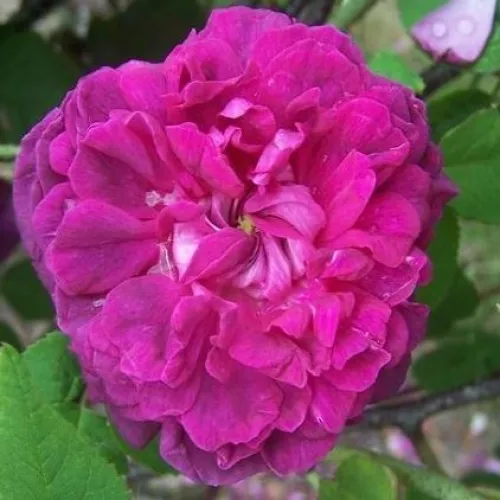
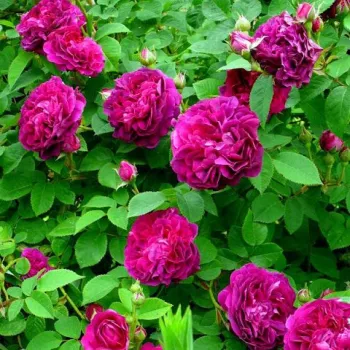
Bring a touch of storybook romance to your garden with ‘Indigo’, a genuine 1840s Portland rose that combines historic charm with reassuring modern reliability. Its velvety violet flowers and strong, far‑carrying fragrance create a dreamy afternoon‑tea atmosphere around arbours, seating areas or a cottage‑style kitchen garden. This own‑root shrub establishes steadily for a long garden life, quietly rebuilding from the base if damaged and holding its shape year after year. Well‑branched, medium‑tall growth and dense mid‑green foliage make it easy to place in small family plots, even where gardens are exposed to windswept conditions near the coast and need roses that keep their footing. Repeat flowering adds a generous second flush of colour, so borders never feel bare, while low day‑to‑day maintenance and good disease resistance suit busy households and beginners. It suits free‑draining clay or chalky soil in well‑prepared beds, and will give its best when planted where its colour can glow against pale companions; over the first few seasons the plant focuses on roots, then builds stronger shoots and finally settles into its full ornamental presence in the border.
Usage options
| Target area | Reasoning |
|---|
| Main rose border in a family garden |
Medium height and upright habit make ‘Indigo’ easy to weave into existing mixed borders without overshadowing other shrubs, giving a romantic focal point that still leaves space for children’s play and everyday use of the garden, ideal for the busy home gardener. |
| Cottage-style bed near a seating area |
The velvety violet blooms and strong, far‑carrying scent create a cosy, afternoon‑tea atmosphere around benches or patios, so you can enjoy classic rose perfume at close quarters without needing a large, formal rose garden, perfect for the lover of fragrance. |
| Feature rose in a small or medium front garden |
Its historic character and refined flower form give instant period charm by the front door, while the bushy, upright shape stays manageable with simple annual pruning, offering kerb appeal that suits traditional houses and cottages for the style‑conscious owner. |
| Informal flowering hedge or row |
Planted at the recommended spacing, ‘Indigo’ forms a gently upright, dense line of foliage and blooms that can soften fences or mark boundaries without feeling harsh, providing privacy and colour with only routine deadheading for the practical family gardener. |
| Raised beds or improved heavy clay borders |
In raised or well‑drained beds on clay, its robust own‑root system anchors the plant securely and steadily thickens over time, so the shrub copes better with exposed, breezy spots and typical UK soil challenges, suiting the weather‑aware planter. |
| Partially shaded corners and north‑east aspects |
Good tolerance of partial shade allows you to place it where many modern roses sulk, still rewarding you with repeat violet blooms and scent, making awkward, lightly shaded corners feel cared‑for and intentional for the space‑maximising gardener. |
| Long‑term planting for low‑intervention gardens |
As an own‑root, disease‑resistant historic shrub, ‘Indigo’ is bred for longevity, rebuilding from its base after hard pruning or weather damage and holding decorative value for decades with simple seasonal care, ideal for the hands‑off rose owner. |
| Informal cutting patch or kitchen‑garden edge |
The medium, double blooms on clustered stems lend themselves to occasional cutting for small jugs indoors, while remontant flowering and a generous second flush keep the border colourful even after picking, rewarding the home flower arranger. |
Styling ideas
- Cottage Edging – Line a path with ‘Indigo’ and airy grasses like Stipa tenuissima to frame walks to the kitchen garden with soft movement and vintage colour – perfect for nostalgic cottage‑style enthusiasts.
- Tea‑Corner – Plant near a small seating nook with pale foxgloves and lavender so the violet blooms and strong scent wrap around afternoon tea or evening reading – ideal for gardeners who prize relaxation spaces.
- Heritage Focus – Use ‘Indigo’ as a central specimen among old‑fashioned perennials and clipped Euonymus japonicus ‘Microphyllus’ to echo a period‑garden look – suited to lovers of historic, characterful schemes.
- Kitchen‑Garden Border – Soften the edge of vegetable beds with a loose row of ‘Indigo’ interplanted with Scabiosa columbaria for a productive space that still feels ornamental – appealing to kitchen‑garden families.
- Front‑Garden Welcome – Combine ‘Indigo’ with white roses and silver foliage plants in a compact front border to create a refined, storybook entrance – ideal for homeowners seeking elegant but manageable planting.
Technical cultivar profile
| Parameter | Data |
|---|
| Name and registration |
Historical Portland rose, trade name Indigo – violet historic Portland rose - Laffay; ARS exhibition name Indigo; unregistered cultivar within the wider heritage rose collection. |
| Origin and breeding |
Historic French shrub rose attributed to Jean Laffay; introduced around 1844–1845, parentage undocumented, representing the Portland/Damask Perpetual group of repeat‑flowering heritage roses. |
| Growth and structural characteristics |
Upright shrub reaching about 100–150 cm in height and 80–120 cm spread; dense, mid‑green, slightly glossy foliage with moderate prickles, forming a bushy, well‑filled outline over time. |
| Flower morphology |
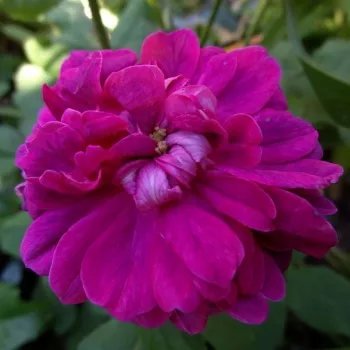
Double, flat blooms with roughly 26–39 petals, medium‑sized and borne in clusters; remontant character with a generous second flush provided basic deadheading and seasonal care are carried out. |
| Colour data and phenology |
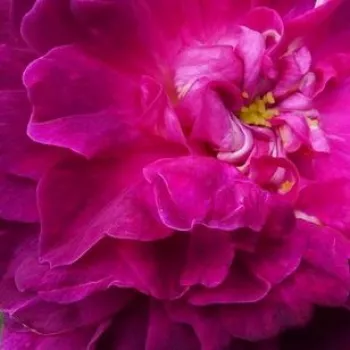
Rich deep violet with slate‑grey shading; outer petals RHS 86A, inner 79A; colour may lighten in strong sun and deepen in cool weather, gently fading towards lilac‑grey and soft brownish tones. |
| Fragrance and aroma |
Strongly scented heritage rose with a far‑carrying perfume typical of old garden varieties; precise aroma notes are undocumented but valued for intensity and presence in traditional plantings. |
| Hip characteristics |
Low hip production overall; occasional small spherical orange‑red hips 10–15 mm in diameter may appear after flowering if spent blooms are not removed, adding modest late‑season interest. |
| Resistance and winter hardiness |
Rated resistant to black spot, powdery mildew and rust; reliably hardy to about −32 to −29 °C (RHS H7, USDA 4b, Swedish zone 5), suitable for exposed and colder UK garden situations. |
| Horticultural recommendations |
Best in well‑prepared beds or raised borders with good drainage; spacing 90–180 cm depending on use; tolerates partial shade; low general maintenance, benefits from routine deadheading and annual pruning. |
Indigo – violet historic Portland rose - Laffay offers richly scented violet blooms, reliable repeat flowering and a long‑lived own‑root shrub form; a considered choice if you wish to anchor a romantic, easy‑care cottage border.