IMPÉRATRICE FARAH™ – white-red tea-hybrid rose – Delbard
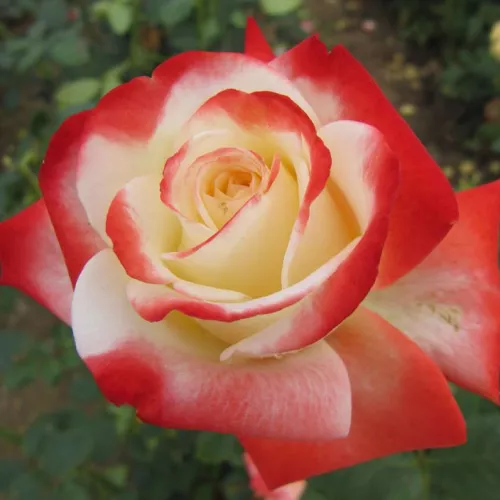
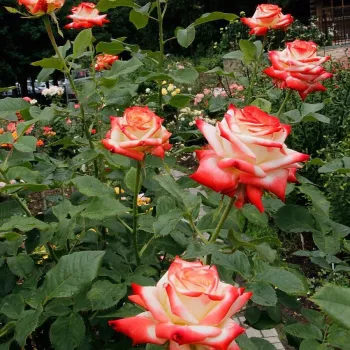
Imagine a light-splashed corner of your garden where tall, elegant blooms bring the feeling of afternoon tea under a rose-covered arbour: IMPÉRATRICE FARAH™ offers statuesque height, refined form and a distinctive bi‑colour display of snow-white petals edged in vivid carmine red. This hybrid tea rose is bred for generous rebloom, sending up wave after wave of long-stemmed flowers ideal for cutting, while its glossy foliage and proven hardiness give reassurance in typical UK conditions with cool summers and brisk coastal winds. As an own-root plant, it develops steadily for a long, dependable life and recovers well from pruning or weather damage, providing enduring structure in a family garden border or large 40–50 litre container. The pharmaROSA® ORIGINAL 2-litre pot size arrives already established, so you can plant with confidence and enjoy how this rose gradually settles into your cottage-style garden rhythm and ease.
Usage options
| Target area |
Reasoning |
| Main feature in a cottage-style mixed border |
The tall, upright habit and striking white-and-red blooms give clear vertical focus in a mixed border, anchoring looser planting such as cranesbills and hardy herbs while remaining manageable for beginners who want classic structure in a family garden, appealing to the romantic homeowner. |
| Cutting patch for indoor arrangements |
High-centred, exhibition-type flowers on long, straight stems are ideal for vases and special-occasion table settings, so a small cutting row lets you harvest luxurious blooms without spoiling the overall picture of the border, suiting the tea‑and‑flowers enthusiast. |
| Statement rose in a large patio container |
Planted in a 40–50 litre pot with good drainage, this upright hybrid tea becomes a refined focal point near a seating area, combining formal elegance with easy access for deadheading and watering on busy weeks, making life simpler for the time‑pressed urban gardener. |
| Romantic entrance or path-side feature |
Positioned by a front path or gate, the regular flushes of pristine bi‑colour blooms create a welcoming, “storybook” first impression that pairs well with hedging or low lavender, ideal for the cottage‑style family. |
| Structured backdrop for kitchen and herb gardens |
The clear, upright framework and dark, glossy foliage form a tidy backdrop behind vegetables or herbs, bringing ornamental order without overshadowing productive beds and suiting those who like both beauty and practicality, especially the kitchen‑garden traditionalist. |
| Feature within a small, easy-care family garden |
Medium disease resistance, good black spot resistance and moderate maintenance needs keep care tasks straightforward, while the own-root form helps long-term resilience, making it a reassuring choice for the busy garden beginner. |
| Wind‑exposed or open suburban sites |
The strong, upright growth and firm stems help the flowers hold their shape even in exposed, breezy spots typical of open UK suburbs, reducing the need for staking and tying, which benefits the low‑maintenance planner. |
| Long-term focal plant in a settled garden layout |
With a robust own-root system and reliable repeat flowering over many seasons, this rose develops into a durable feature that supports long-term design plans without frequent replacement, reassuring the long‑view garden investor. |
Styling ideas
- Tea‑time Axis – Plant IMPÉRATRICE FARAH™ as the tall pivot beside a bistro set, underplant with fragrant cranesbill and thyme to frame a relaxed afternoon-tea corner – for romantic couples and quiet readers.
- Cottage Ribbon – Line a path with widely spaced plants, weaving between soft pink peonies and catmint so the crisp white-red blooms punctuate a pastel border – for lovers of classic English cottage gardens.
- Patio Centrepiece – Grow a single plant in a 50 litre terracotta pot with trailing lobelia or bacopa at the rim to soften the base while keeping the rose at perfect viewing height – for balcony and small-terrace owners.
- Kitchen‑Garden Frame – Place one or two bushes at the back of a raised veg bed, echoed by clumps of chives and calendula, to lend elegance and gentle order to productive plots – for home cooks who cherish homegrown charm.
- Entrance Theatre – Flank a front door or gate with paired plants, backed by dark evergreen hedging so the luminous blooms stand out like lanterns – for families who value a welcoming, storybook first impression.
Technical cultivar profile
| Property |
Data |
| Name and registration |
Hybrid tea rose; registered as DELivour and marketed as IMPÉRATRICE FARAH™ hybrid tea rose DELivour; ARS exhibition name Impératrice Farah, premium gold authenticity rating. |
| Origin and breeding |
Bred by Georges Delbard in France, 1986; introduced commercially by Delbard and Georges Delbard SA in 1992; parentage undocumented but selected for exhibition-quality hybrid tea blooms. |
| Awards and recognition |
Gold medal in Rome 1992 and a further eight international show and trial medals, reflecting consistent exhibition performance and visual quality in competitive rose events. |
| Growth and structural characteristics |
Upright hybrid tea shrub reaching about 130–170 cm in height and 70–95 cm spread; moderately dense, glossy dark green foliage; densely thorned stems with moderate self-cleaning requiring occasional deadheading. |
| Flower morphology |
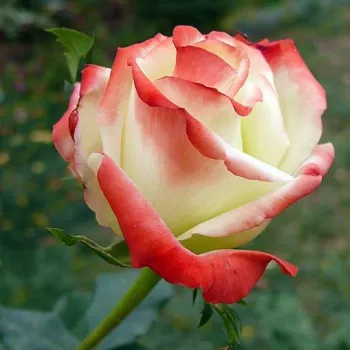
Large, double, high-centred blooms with 26–39 petals on mainly solitary stems; classic pointed buds of cut-flower form; remontant, with a strong second flush that maintains ornamental value through the season. |
| Colour data and phenology |
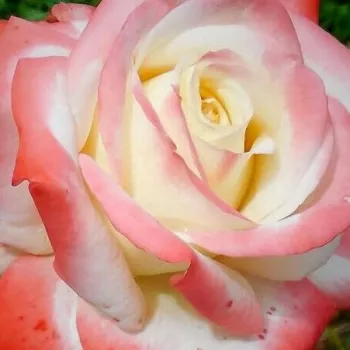
Pure snow-white petals edged bright carmine red (ARS Wbl, RHS 53A margin, 155D base); strong carmine band when fully open, fading gradually to pale pink with a creamy white base yet retaining good overall colour clarity. |
| Fragrance and aroma |
Fragrance is very weak with a light rosy character, barely noticeable at a distance; this cultivar is grown chiefly for its visual impact and flower form rather than scent intensity in garden or vase. |
| Hip characteristics |
Hip set is usually sparse due to the double flowers; where present, small egg-shaped orange-red hips around 10–14 mm in diameter may appear late season, adding modest interest without seeding concerns. |
| Resistance and winter hardiness |
Medium overall disease resistance with notable black spot resistance and moderate tolerance of mildew and rust; hardy to about −21 to −18 °C (RHS H7, Swedish zone 3, USDA 6b) with moderate heat tolerance needing summer watering. |
| Horticultural recommendations |
Best in full sun with fertile, well-drained soil; ideal for flower beds, specimen planting, hedging and containers; plant 50–60 cm apart in groups or 100 cm as specimen, allowing space for air movement and easy maintenance. |
IMPÉRATRICE FARAH™ offers tall, elegant bi‑colour blooms on a resilient, own-root hybrid tea that rewards you with reliable repeat flowering and long-term structure in borders or large containers, making it a thoughtful choice for a romantic, enduring garden.