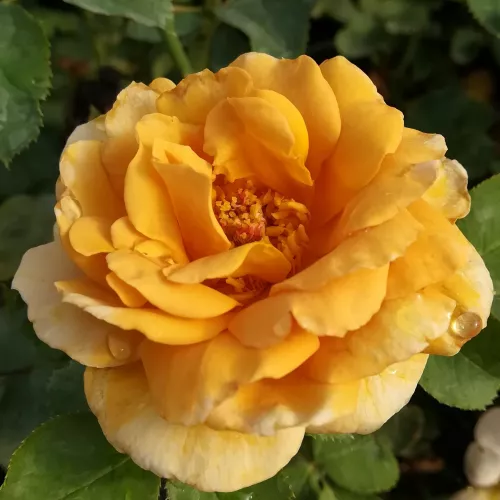
Warm, honey-gold base colour with a slight bronzed tone. In cooler weather it develops a stronger, copper-leaning shade. - grandiflora bedding rose - strong, long-lasting scented rose - sweet, fruity
– Strong, long-lasting sweet fruity fragrance
– Warm honey-gold blooms with caramel tones
– Reliable repeat flowering with rich second flush
– Upright, dense habit for structured bedding
– Proven award-winner in international trials
– Special feature: Unusual vintage mustard-gold colour blending to copper in cool weather.
Low chemical use – Dream-garden-focused choice
darinaROSE® ORIGINAL 2-litre own-root potted rose
21,00 £
Unfortunately, we are currently unable to ship to the United Kingdom; we only deliver to countries within the European Union. For more information, please contact us!
4.5(6564)
HONEY DIJON™ – yellow bedding grandiflora rose - Sproul
Set the scene for afternoon tea and quiet garden stories with HONEY DIJON™, a grandiflora bedding rose whose honey‑gold blooms bring a gently romantic glow to family plots and cottage borders. Its upright habit and dense, glossy foliage form a naturally tidy structure, suiting small to medium gardens where every plant must earn its place. Own‑root plants settle securely, stand up well to blustery, rain‑laden coastal weather and develop into long‑lived shrubs with reliable flowering. Over time, you will see strong roots, then building shoots, and by the third year its full ornamental value completes the picture. The large, double, caramel‑gold blooms carry a strong, sweet‑fruity fragrance, ideal for cutting for the table or enjoying on the stem, with medium care needs that stay manageable for busy, style‑conscious households.
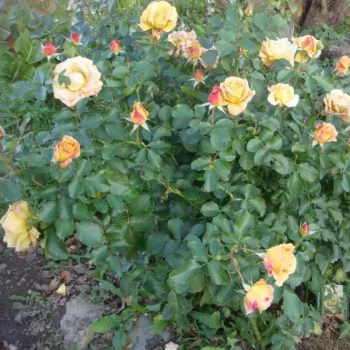
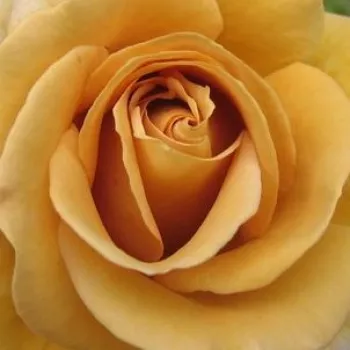
Freshly opened Honey Dijon™ flower with golden-caramel petals and a soft pink blush.
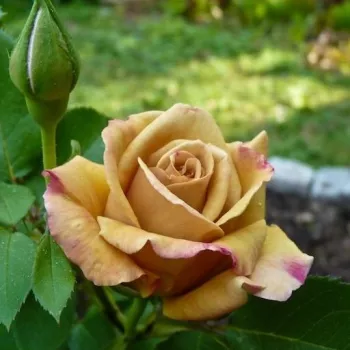
Closed bud of Honey Dijon™ with deep caramel-gold colouring.
Honey Dijon™ with dense, glossy mid-green foliage.
Close-up of the moderately thorny stems of Honey Dijon™.
Usage options
Target area
Reasoning
Feature rose in a small family flowerbed
The upright, moderately tall habit and dense foliage allow a single plant to read as a clear focal point without overwhelming a modest border, giving strong visual impact from limited space for style‑conscious beginners.
Romantic cottage‑style bedding groups
Planted at the recommended spacing, the warm honey‑gold flowers repeat through the season, creating a softly traditional, “girly” cottage feel with medium maintenance that suits relaxed, storybook schemes for busy homeowners.
Cut‑flower rows in kitchen or cutting gardens
Long, upright stems with large, double, strongly scented blooms make it a reliable source of caramel‑gold flowers for vases, bringing the charm of the garden indoors for fragrance‑loving gardeners.
Own‑root long‑term structure in mixed borders
As an own‑root shrub it ages steadily, rebuilding from the base after hard pruning and supporting a long lifespan with stable shape, ideal where you want lasting structure with minimal replacements for patient planners.
Coastal or breezy suburban plots
The firm, upright framework and well‑anchoring root system help it stand up to wind and frequent rain in exposed gardens, especially when soil is improved for drainage, reassuring owners of weather‑tested plots.
Containers and large terrace planters
In a 40–50 litre or larger container, its vertical habit and repeat flowers give a generous display near seating areas, while own‑root resilience makes long‑term pot culture more forgiving for time‑pressed city‑dwellers.
Low‑chemical, family‑friendly planting schemes
Medium disease resistance and moderate care needs mean routine checks and simple interventions usually suffice, supporting low chemical use where children and pets share the garden for health‑conscious families.
Season‑to‑season development in new gardens
From a well‑established 2‑litre plant, it settles quickly, then builds top growth and flowering over the next seasons, suiting new gardens where steady improvement is welcome rather than instant perfection for practical starters.
Styling ideas
Honeyed‑hedge – Line a path with a loose row of HONEY DIJON™, underplant with lavender for scent and edging; ideal for families wanting a romantic but orderly cottage look.
Kitchen‑cutting – Combine with rows of herbs and dahlias so you can pick both blooms and ingredients for the table; suits home cooks who like their garden to serve the kitchen too.
Country‑container – Plant one shrub in a 50‑litre terracotta pot with trailing thyme at the rim; perfect for renters or balcony owners seeking classic cottage charm in limited space.
Warm‑border – Weave through a mixed border with bronze grasses and late perennials like crocosmia and liatris for an antique‑gold palette; good for gardeners building a coordinated colour story.
Tea‑corner – Place near a small seating area, paired with scented annuals, so cut blooms and perfume frame afternoon tea outdoors; made for those who value calm, atmospheric garden moments.
Technical cultivar profile
Category
Data
Name and registration
Grandiflora bedding rose; registered as WEKsproulses, marketed as HONEY DIJON™; ARS exhibition name Honey Dijon; premium gold quality, own‑root 2‑litre container‑grown plant for gardens.
Origin and breeding
Bred by James A. Sproul in the United States from ‘Stainless Steel’ × ‘Singin’ in the Rain’; bred and registered in 2003, first introduced commercially in 2005 by Weeks Wholesale Rose Grower.
Awards and recognition
Bronze medal at the National Rose Trial Garden of Australia in 2003 and First Season Certificate of Merit at the Rose Hills International Rose Trials in 2005, confirming solid garden and show performance.
Growth and structural characteristics
Upright, medium‑tall shrub, around 110–150 cm high and 75–105 cm wide, with dense, glossy mid‑green foliage and moderate prickliness, forming a tidy, vertical accent suited to beds, borders and containers.
Flower morphology
Large, double, cup‑shaped blooms with 26–39 petals, typically borne in clusters of three to five on a stem; remontant habit ensures an initial flush followed by a generous second wave of flowering.
Colour data and phenology
Warm honey‑gold with a bronzed, caramel tone; buds deep caramel‑gold, opening to antique gold with faint pink blush, then lightening towards beige‑gold, with richer copper shades in cooler weather conditions.
Fragrance and aroma
Strong, sweet, fruity perfume that lingers well on the plant and in the vase, giving a noticeable scent presence along paths or near seating areas and making it very suitable for scented cut‑flower use.
Hip characteristics
Occasionally forms small spherical hips, 10–14 mm wide, in a decorative orange‑red tone; hips are incidental rather than a key ornamental feature and may be reduced by regular deadheading of spent blooms.
Resistance and winter hardiness
Rated H7 and hardy to approximately −21 to −18 °C (USDA 6b); medium resistance to black spot, powdery mildew and rust, with good heat tolerance if watered regularly during extended dry periods.
Horticultural recommendations
Best in full sun with improved, free‑draining soil; plant 55–65 cm apart, one metre for specimens; suits beds, hedging, cutting and large containers, with medium maintenance and periodic health monitoring.
HONEY DIJON™ offers richly scented honey‑gold blooms, an upright space‑saving habit and long‑lived own‑root reliability, making it a thoughtful choice for gardeners seeking enduring cottage‑style character; consider it where romance must also be practical.
Competition and Show Awards:
National Rose Trial Garden of Australia – Bronze medal (2003); Rose Hills International Rose Trials – First Season Certificate of Merit (2005)
Pollinator Attraction:
Double (26–39 petals) flowers limit access to the stamens, so this cultivar is only weakly attractive to pollinators.
Pollinator-Friendly Rating:
Double (26–39-petalled) flowers partially cover the stamens, so its pollinator-friendliness is limited and it is primarily an ornamental variety.
Our product is a rose grown with pharmaROSA®’s unique cultivation technology!
2-litre, own-root, potted rose.
With a shoot system appropriate to the season.
With a root system that thoroughly permeates the growing medium.
Quality compliant with the requirements of the E.N.A. (European Nurserystock Association).
Supplied in unique packaging that prevents damage.
Can be planted during frost-free periods.
True-to-variety rose bush with a unique identifier.
The pharmaROSA® own-root potted rose is a well-rooted plant that supports reliable establishment when planted and cared for properly, so it can be planted whenever the soil is not frozen.
Crop overview: several varieties and growth stages in a short crop section.Shoot system: intensive growth of fresh basal shoots on a young plant.Root system: demonstration of a vigorous root system permeating the growing medium, by removing the pot.Balance: mature plant with root system and shoots in harmony with each other.
Information about the videos
The video series is not a “seasonal showcase”; it illustrates the essence of pharmaROSA® own-root cultivation in a tangible way: how the plant is built up, what the root system is like and how the shoot system regenerates. The recordings were therefore made at different times and with plants at various stages of development, so mixed foliage levels and differing stages of growth may appear in the videos. They are not a ‘sample’ of the batch dispatched, but a visual explanation of how the technology works. The current condition of the rose available to order — typical for the given period and similar to what you can expect to receive in the parcel — is shown in the upper part of the product page.
Pages for private customers Garden roses for the family garden, with minimal care → ORIGINAL® Premium garden roses – instant impact, a truly showpiece garden → EXTRA® Pages for professionals and private customers Roses for public spaces – large areas, sustainable maintenance → NATURAL® Roses for projects – hedge and row planting, fast implementation → RAPID® For professional partners only Production – propagation material for garden roses, wholesale → NEONATAL®
Company details
PharmaRosa Ltd. Company registration number: 01-09-717479 VAT number: 13075314-2-43 Plant health registration no.: HU130721 Bank account (IBAN): HU85117631891388688400000000 BIC (SWIFT): OTPVHUHB Bank name: OTP Bank Nyrt.