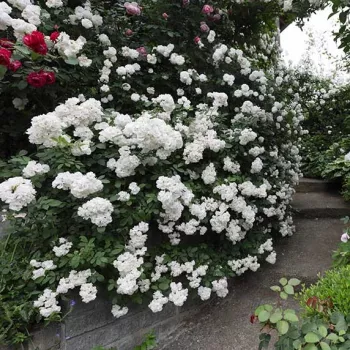
GUNSEI – white rambler climbing rose – Kikuchi
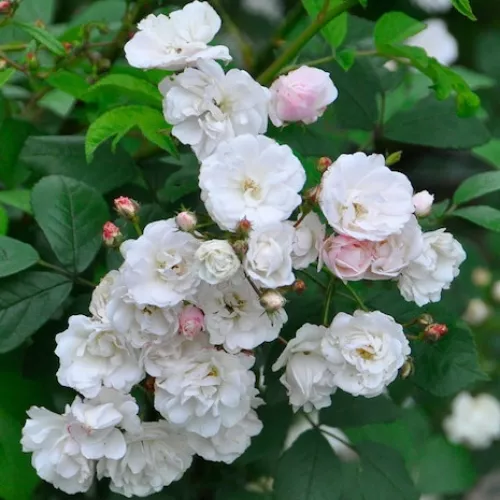
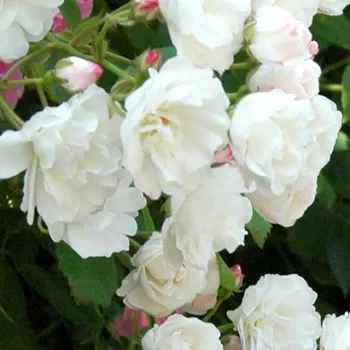
Create a romantic garden retreat with GUNSEI, a softly scented white rambler that drapes effortlessly over arches, pergolas and fences to form a storybook backdrop for afternoon tea. Its semi-double clusters open from blush buds into clouds of translucent white, delivering a charming, cottage-garden atmosphere with minimal shaping or training. Once settled, the own-root plant builds long-term stability and can regenerate from the base, helping it withstand exposed conditions where breezes and showers meet typical British weather. Tall, flexible growth makes it ideal for vertical features in smaller plots, while the modest flower size means fallen petals are discreet and easy to live with. Over time, you can expect a natural progression from rooting-in to stronger shoots and finally full ornamental character across the structure, rewarding patient cottage-garden enthusiasts who value atmosphere more than perfectionist plant grooming.
Usage options
| Target area | Reasoning |
|---|
| Pergola over a seating or tea area |
The long, flexible canes of GUNSEI are ideal for being tied along pergola rafters, creating a light, lacy canopy of white bloom that suits relaxed afternoon gatherings beneath. The own-root structure builds a lasting framework that can be renewed from the base if canes age or suffer winter damage, keeping the pergola clothed for many seasons for the romantic cottage-garden homeowner. |
| Archway marking garden entrances |
GUNSEI’s medium height and moderate spread make it well suited to covering a traditional arched support without overwhelming narrow paths. Semi-double, small blooms mean fallen petals are subtle and do not create slippery drifts on paving. With simple annual tying-in, the rose forms a soft, storybook gateway that frames views and photos for families and visiting friends. |
| Training along a tall fence or trellis |
Used along a boundary, GUNSEI provides vertical interest without becoming excessively woody at the base, as new shoots can be encouraged from the own-root crown over time. Its bright green, moderately dense foliage gives a gentle screen rather than a heavy wall of leaves, fitting neatly into average-sized suburban gardens where light levels for neighbours still matter to the considerate gardener. |
| Obelisk or pillar in a cottage border |
Because its canes are relatively manageable, GUNSEI can be spiralled around an obelisk to create a tall, airy accent in a mixed cottage border of herbs and perennials. The translucent white flowers pair naturally with sage and grasses, and the small hips bring late-season structure, turning a simple vertical support into a focal point that rewards the style-conscious beginner. |
| Partially shaded side garden path |
This cultivar copes with partial shade, making it suitable for side paths where sunlight is limited to a few hours. Trained flat against trellis, it lightens darker corners with white, semi-double clusters and soft fragrance. It is especially helpful where you want impact without taking up precious ground space along narrow routes used daily by a busy household. |
| Small town garden boundary with exposure |
Where gardens are a little more exposed to wind and rain, GUNSEI’s own-root resilience and capacity to reshoot from low down give it an advantage, helping it recover from weather damage over the years. The climbing habit allows vertical greening of compact plots, adding romance without sacrificing play or sitting space for the urban family buyer. |
| Low-maintenance visual impact over the seasons |
Once properly established, GUNSEI’s self-cleaning small flowers fall reasonably quickly, reducing the need for deadheading in harder-to-reach upper sections. The combination of repeat flushes, attractive foliage and modest hips provides a long window of interest. After the initial establishment, day-to-day care primarily involves simple tying-in and inspection suited to the relaxed hobby gardener. |
| Long-term feature in a traditional family garden |
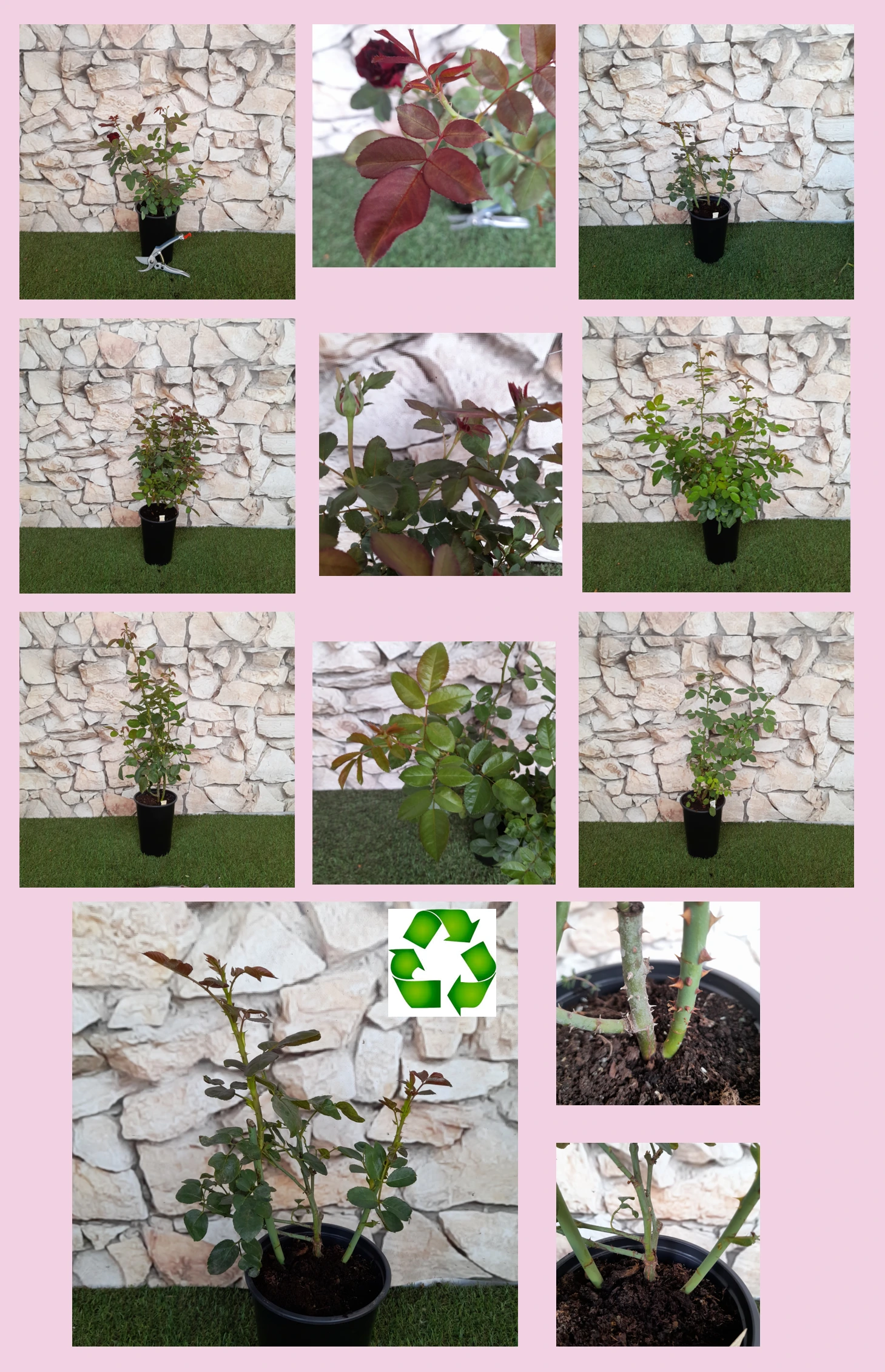
Planted as an own-root, half- to one-year-old rose, GUNSEI gradually builds a durable framework that can be refreshed rather than replaced, supporting its role as a long-lived structural element in the garden. While some plant protection is advisable in humid seasons, its enduring presence and romantic look repay the effort for those planning their garden in years, not months, particularly the forward-thinking cottage-style planner. |
Styling ideas
- Tea-Arbour Elegance – Train GUNSEI over a wooden arbour, underplant with sage and low sedges for a soft green-and-white palette – ideal for those creating a classic afternoon-tea nook.
- Cottage Gateway – Cover a metal arch at the garden entrance, edging the path with herbs and old-fashioned perennials – for romantics who want a welcoming, storybook front garden.
- Vertical Kitchen-Garden – Let GUNSEI climb a trellis beside raised vegetable beds, where its airy flowers contrast with productive rows – suits families blending ornament and utility.
- Soft Boundary Screen – Space plants along a fence at the recommended distance to form a gentle, flowering boundary – perfect for small-plot owners wanting privacy without heaviness.
- Pillar Focus – Spiral GUNSEI up a sturdy obelisk in a mixed border of grasses and cottage perennials – for gardeners seeking a graceful, compact vertical accent.
Technical cultivar profile
| Parameter | Data |
|---|
| Name and registration |
GUNSEI – white rambler climbing rose, Hybrid Multiflora Rambler group; commercial climbing rose type, exhibited as a climbing rose on supports, breeder Kikuchi Rikichi, Japan, trade name Gunsei Climbing rose Kikuchi. |
| Origin and breeding |
Natural seedling selection from Rosa multiflora, bred by Kikuchi Rikichi in Japan and introduced around 1986; exact registration data and initial distributor records are not available from current sources. |
| Growth and structural characteristics |
Rambling climber reaching about 200–350 cm in height with an 80–150 cm spread; moderately dense, bright green, slightly glossy foliage; sparsely thorned canes suited to tying onto pergolas, arches, fences and other vertical structures. |
| Flower morphology |
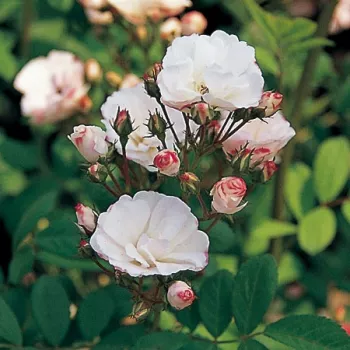
Semi-double, cupped flowers with roughly 13–25 petals, produced in clustered inflorescences; small blooms (about 0.5–1.5 inches) opening repeatedly, with a lighter second flush; moderate self-cleaning and subsequent formation of small hips on spent clusters. |
| Colour data and phenology |
Buds tipped carmine-pink, sides white; newly opened flowers show a faint pink base that quickly fades to pure bright white (RHS NN155D outer, NN155C inner), later creamy white before paling further in strong sun, with slightly discoloured petal edges as they age. |
| Fragrance and aroma |
Displays a mild, delicately sweet fragrance typical of lighter multiflora-influenced climbers; scent is gently noticeable at close range around seating areas without becoming overpowering, contributing to a subtle romantic garden atmosphere. |
| Hip characteristics |
Produces moderately abundant, small ellipsoidal red hips, approximately 6–9 mm in diameter, forming on the flower clusters; these add a fine-textured seasonal accent and modest wildlife interest in late summer and early autumn. |
| Resistance and winter hardiness |
Hardy to approximately –26 to –23 °C (RHS H7, USDA 5b, Swedish Zone 4); tolerates heat reasonably well but needs watering in extended drought; disease resistance is weak, with high susceptibility to powdery mildew and black spot, and moderate rust sensitivity. |
| Horticultural recommendations |
Best trained on pergolas, arches, trellises, obelisks, tall fences and walls; allow about 130–220 cm spacing depending on use, with 0.5–0.6 plants/m² for mass planting; suitable for partial shade; regular monitoring and protective treatments advised in humid seasons. |
GUNSEI offers graceful climbing coverage, romantic white blooms and long-lived own-root resilience; a thoughtful choice for creating a gently nostalgic focal point in your garden.