GOLDFINCH – yellow historic old garden rose - Paul
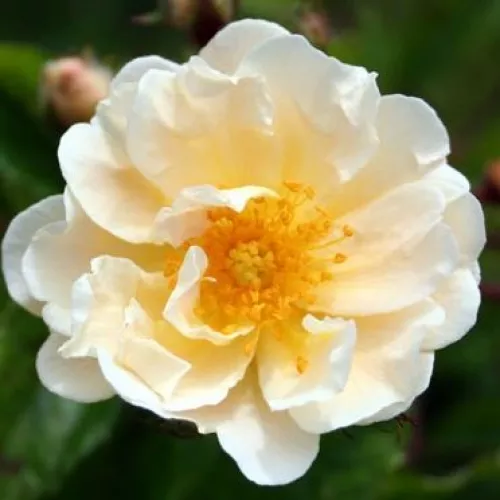
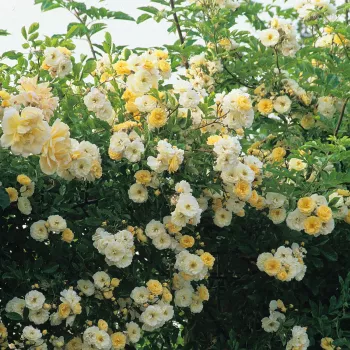
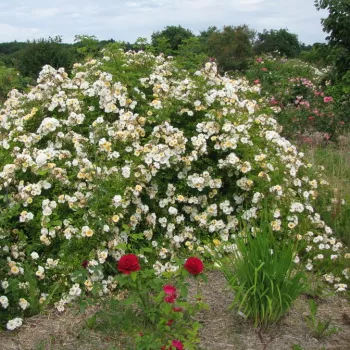
With its airy clusters of lemon-yellow blooms and old-world charm, ‘Goldfinch’ creates a soft, romantic veil over arches, pergolas or cottage-style fences. This historic rambler is remarkably easy to live with: disease-resistant foliage, naturally regenerating own-root growth and barely any thorns make it a practical choice where children play. Once settled, it offers a graceful, long-season presence with glossy dark foliage, pretty red hips and an inviting, fruity fragrance that suits afternoon tea beneath an arbour. Its reliable performance remains steady even where gardens are exposed to frequent rain and strong coastal winds. Over the first few years it develops steadily – first strengthening its roots, then building long flowering shoots, before reaching its full, billowing ornamental impact and storybook cottage-garden romance.
Usage options
| Target area | Reasoning |
|---|
| Pergola over a seating area |
Long, flexible canes and moderate foliage density make ‘Goldfinch’ ideal for training over pergolas, creating a light, airy curtain of single-season blossom and scent without casting deep shade, perfect for those seeking a romantic yet practical focus for family relaxation, especially beginners. |
| Arches along a cottage-style path |
The semi-double clusters and soft yellow tones fading to cream give a nostalgic look that pairs beautifully with traditional cottage perennials, while the barely thorny shoots make tying-in and passing underneath more comfortable for everyday use, especially suited to family gardeners. |
| Climbing feature on fences and trellis |
Its climbing habit and good spread allow effective coverage of plain boundaries with a refined, historic character; self-cleaning flowers reduce deadheading, keeping maintenance low for those who want charm along the garden edge without continual pruning, ideal for busy owners. |
| Solitary specimen on a wall |
Trained as a specimen, ‘Goldfinch’ offers a strong vertical accent with glossy dark foliage and a cascade of once-a-year, memorable bloom, giving reliable structure and a clear focal point while the own-root habit supports long-term stability, attractive to homeowners. |
| Classic cottage garden border backdrop |
The light, lemon-to-cream colour palette blends easily with pastel herbaceous planting and traditional kitchen-garden plots, adding height without visual heaviness and providing a gentle, romantic background for summer borders that appeals to lovers of cottage style. |
| Part-shaded corner or north-east aspect |
Good tolerance of partial shade allows planting where sun is limited, such as the side of a house or a lightly shaded boundary, maintaining healthy foliage and dependable flowering without complicated care, a reassuring option for small, awkward plots tended by hobby gardeners. |
| Low-intervention family garden schemes |
High resistance to common rose diseases, self-cleaning clusters and moderate heat tolerance mean less spraying, less tidying and simple seasonal pruning, suiting those who value long-lived structure and beauty with minimal input, particularly appealing for time-poor gardeners. |
| Wildlife-friendly, romantic garden corner |
Semi-double, open flowers invite pollinators, while the small red hips extend interest into autumn and support wildlife; this gentle, nature-friendly character fits well with relaxed, meadow-style or kitchen-garden spaces, even in gardens exposed to frequent rain and brisk winds, delighting wildlife-lovers. |
Styling ideas
- Tea-Arbour Retreat – Train ‘Goldfinch’ over a pergola with underplanting of lavender and catmint to frame a bistro set, ideal for those wanting a scented afternoon tea corner – for relaxed cottage-style romantics
- Cottage Pathway Arch – Pair with foxgloves and hardy geraniums along a series of arches for a storybook entrance to the kitchen garden – for gardeners who enjoy traditional English countryside charm
- Soft Boundary Screen – Let it climb a trellis fence with climber-friendly clematis in matching pastel tones to soften garden edges – for families seeking privacy without a heavy, formal hedge
- Part-Shade Alcove – Use on a lightly shaded wall with ferns and hostas beneath to create a cool, romantic nook – for urban owners with awkward aspects and limited direct sun
- Wildlife Corner – Combine with verbena, echinacea and ornamental grasses so summer flowers, scent and hips all support insects and birds – for nature-conscious gardeners wanting low-fuss habitat value
Technical cultivar profile
| Parameter | Data |
|---|
| Name and registration |
‘Goldfinch’ – historic Hybrid Multiflora rambler; Old rose / Historical rose group; commercial name GOLDFINCH – yellow historic old garden rose - Paul; ARS exhibition name: Goldfinch. |
| Origin and breeding |
Bred by George Paul Jr., United Kingdom, 1907; parentage ‘Hélène’ × unknown seedling; bred at Paul & Son, Cheshunt Nurseries; initially distributed by Hazlewood Bros. Pty. Ltd. in Australia. |
| Growth and structural characteristics |
Vigorous climbing rambler, around 3,2–5 m high and 1,8–2,8 m wide; moderately dense, glossy dark green foliage; barely thorny stems; good self-cleaning of spent clusters reduces maintenance needs. |
| Flower morphology |
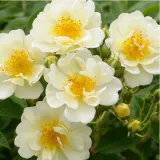
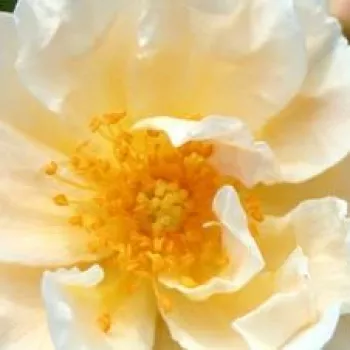
Semi-double, cupped to flat-opening clusters of small flowers (approx. 1,3–3,8 cm); 13–25 petals; cluster-flowered inflorescences; non-remontant with one main flowering period, providing a concentrated seasonal display. |
| Colour data and phenology |
Initially deep golden yellow (RHS 11C outer, 4D inner), buds dark golden-yellow; colour fades through buttery pastel yellow to cream and almost white; sunlight accelerates fading, giving a gentle, changing pastel effect. |
| Fragrance and aroma |
Fresh, fruity scent of strong intensity; well-scented clusters provide notable fragrance around seating areas; semi-double, open blooms also offer accessible stamens that attract pollinating insects during peak flowering. |
| Hip characteristics |
Moderately formed, spherical red hips, about 6–9 mm in diameter; develop after flowering if not deadheaded; offer additional late-season visual interest and modest ornamental value in wildlife-friendly planting schemes. |
| Resistance and winter hardiness |
Generally low-maintenance with good resistance to powdery mildew, black spot and rust; hardy approximately to -15 to -12 °C (RHS H6, Swedish Zone 2, USDA 7b); tolerates moderate heat and short drought with watering. |
| Horticultural recommendations |
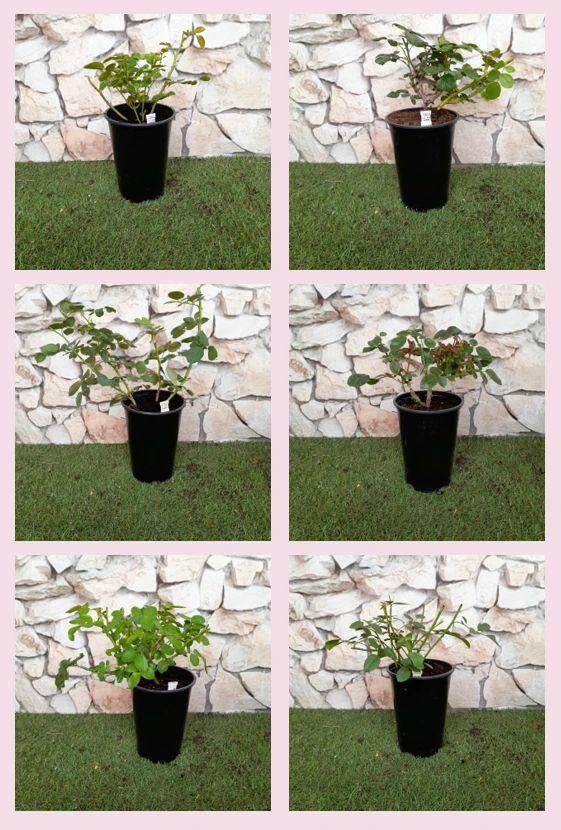
Best on pergolas, arches, fences or walls; suitable as solitary specimen in cottage or family gardens; tolerates partial shade; space 1,2–2,2 m depending on use; own-root 2-litre plants adapt well once established. |
Goldfinch offers romantic, once-a-year cascades of fragrant yellow blossom, reliable disease resistance and long-term stability from its own-root form; an excellent choice if you would like a gentle, enduring climber for your garden.