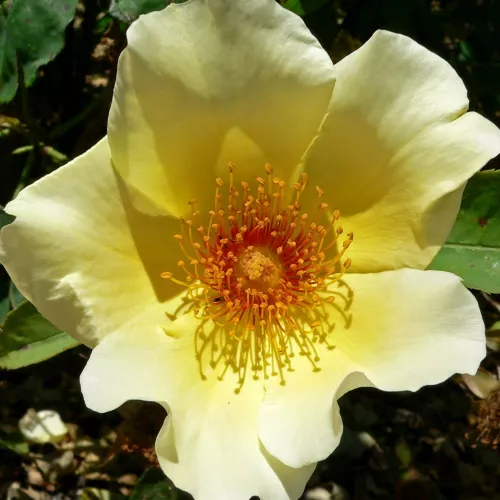
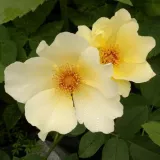
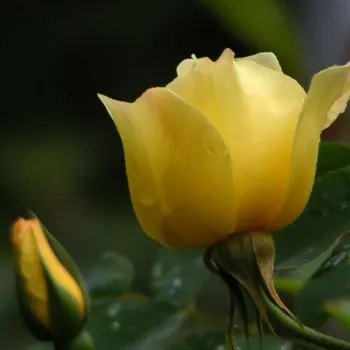
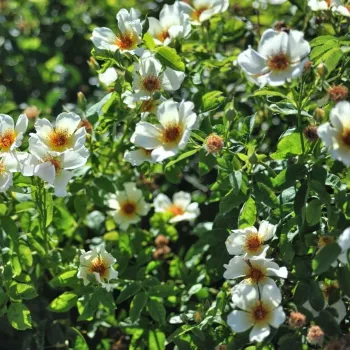
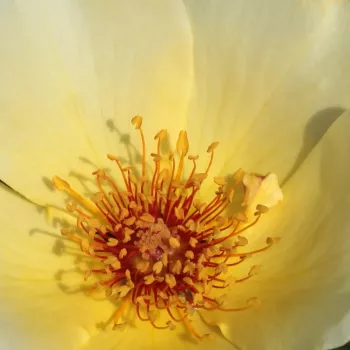
GOLDEN WINGS – yellow wild rose – Shepherd
With its light-filled blooms and airy habit, GOLDEN WINGS brings a romantic, storybook charm to cottage-style borders and family gardens. The large, single golden flowers glow against fine, light green foliage, creating an inviting atmosphere for afternoon tea corners, child-friendly play spaces and relaxed weekend evenings. As an own-root shrub, it builds strength steadily, rewarding you with reassuring reliability, long life and the ability to regenerate from the base after harsh weather or less-than-perfect pruning. It grows well even in exposed gardens where coastal breezes and frequent rain demand sturdier planting choices, and its good heat and drought tolerance supports easier care during busy summers. Generous repeat flowering keeps borders looking alive from early season into late summer, while the naturally self-cleaning flowers and sparse prickles mean fewer tasks and safer, more comfortable access for everyday garden enjoyment.
Usage options
| Target area |
Reasoning |
| Cottage-style flowerbed in a family garden |
Large, single golden flowers and light, open growth give a classic cottage look without appearing heavy or formal. Repeating flushes keep the border lively through summer with only moderate pruning and basic feeding, suiting busy home gardeners. |
| Informal flowering hedge along boundaries |
The tall, upright habit and dense foliage form a soft, semi-transparent screen that still feels welcoming. Moderate hips in autumn add seasonal interest if spent flowers are left, ideal where you want privacy yet a friendly, village-garden feel for family households. |
| Specimen shrub near seating or terrace |
Its refined golden tones and wide, arching outline create a gentle focal point beside a bench, pergola or patio. Good self-cleaning means the plant stays presentable, while the light fragrance adds subtle atmosphere for afternoon tea lovers. |
| Urban front garden or small lawn feature |
RHS Award of Garden Merit and American Rose Society recognition indicate long-term performance and reliability in typical garden conditions. Once rooted in well-prepared soil, it offers lasting structure with few interventions, appealing to first-time owners. |
| Low-maintenance mixed shrub and perennial border |
Medium maintenance needs and average disease resistance sit comfortably in a mixed planting where you prefer occasional, planned care rather than constant spraying. Its partly drought-tolerant nature pairs well with robust perennials for relaxed gardeners. |
| Pollinator-friendly family and kitchen garden |
The open, single flowers with accessible stamens are highly attractive to bees and butterflies, supporting a more natural, productive garden. Gentle prickliness makes day-to-day access easier around vegetables and herbs for wildlife-conscious families. |
| Lightly exposed or breezy sites |
The upright, well-anchored shrub structure and own-root resilience cope better with wind, helping it settle into spots where lighter plants would struggle, such as semi-open suburban plots affected by regular breezes, reassuring coastal-edge gardeners. |
| Large container or half-barrel planting |
In a generously sized pot of at least 40–50 litres with good drainage, its upright, airy habit and repeat flowering give height and colour on patios or balconies. Over the first few years, roots, then shoots, then full display develop steadily, suiting space-limited gardeners. |
Styling ideas
- COTTAGE ARCH – Train GOLDEN WINGS lightly onto a rustic metal arch, underplant with lavender and catmint for a soft blue haze – for romantic cottage-style enthusiasts.
- HEDGEROW GLOW – Plant as an informal hedge with mixed hawthorn and viburnum, letting golden blooms and autumn hips add warmth – for rural boundary-upgrading homeowners.
- KITCHEN PATCH – Position near a kitchen garden path with chives, thyme and calendula so pollinators move naturally between beds – for practical kitchen gardeners.
- EVENING CORNER – Place one or three shrubs by a seating area, combined with white gaura and ornamental grasses for a light, airy dusk effect – for after-work garden relaxers.
- URBAN BARREL – Grow in a large wooden half-barrel with trailing rock cress and low calamint to soften paving and steps – for compact city-space dwellers.
Technical cultivar profile
| Parameter |
Data |
| Name and registration |
Golden Wings, a park-shrub wild rose type, registered in commerce but not formally registered as a cultivar, also known under the approved American Rose Society exhibition name Golden Wings. |
| Origin and breeding |
Bred by Roy Eustace Shepherd in the United States in 1956 from ‘Soeur Thérèse’ × (Rosa pimpinellifolia ‘Altaica’ × ‘Ormiston Roy’); first distributed by Bosley Nursery. |
| Awards and recognition |
Holder of the American Rose Society Gold Medal (1958) and the Royal Horticultural Society Award of Garden Merit (1993), reflecting dependable garden performance over many decades. |
| Growth and structural characteristics |
Upright shrub to 150–220 cm high and 130–200 cm wide, with dense, light green glossy foliage, sparsely thorned stems, and good natural self-cleaning of spent blooms for a tidy appearance. |
| Flower morphology |
Large, single to semi-double flowers with 5–12 petals, flat and cluster-flowered, typically 2.75–3.95 inches across, repeating well with a distinct second flush after the main early-summer display. |
| Colour data and phenology |
Pure, radiant golden-yellow (RHS 11A outer, 11B inner) on opening, buds deep yellow, fading gradually through light yellow to creamy pale yellow in strong sun, creating a softly changing colour effect. |
| Fragrance and aroma |
Light but noticeable rose fragrance that gently surrounds the plant rather than overwhelming nearby seating; best appreciated at close quarters in still evening air around paths and terraces. |
| Hip characteristics |
Produces moderate numbers of egg-shaped orange hips, 14–22 mm in diameter, developing after flowering if spent blooms are not removed, adding wildlife interest and late-season ornamental colour. |
| Resistance and winter hardiness |
Hardy to approximately −32 to −29 °C (RHS H7, USDA zone 4b, Swedish zone 5), with good tolerance of summer heat and moderate drought, plus medium overall disease resistance and good black spot resistance. |
| Horticultural recommendations |
Best in full sun with well-drained soil; spacing 90–165 cm depending on hedge, mass or specimen use, plant 0.9–1 per m², with occasional plant protection and pruning to manage size and encourage rebloom. |
Golden Wings offers reliable repeat flowering, pollinator-friendly open blooms and long-lived own-root strength, making it a thoughtful choice for relaxed, romantic gardens you plan to enjoy for many seasons.