GOLDBEET – yellow bedding floribunda rose - Noack
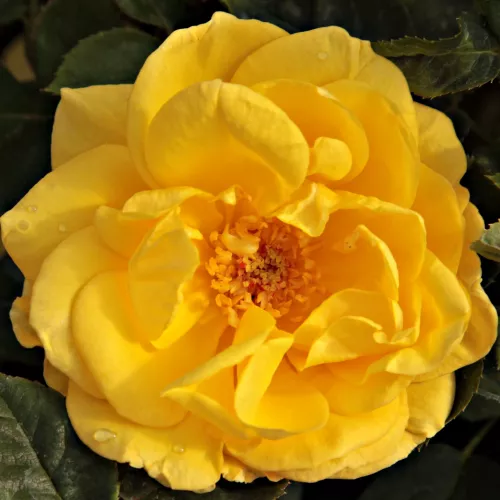
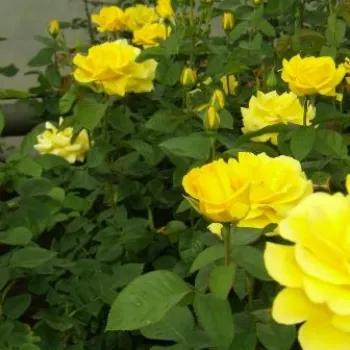
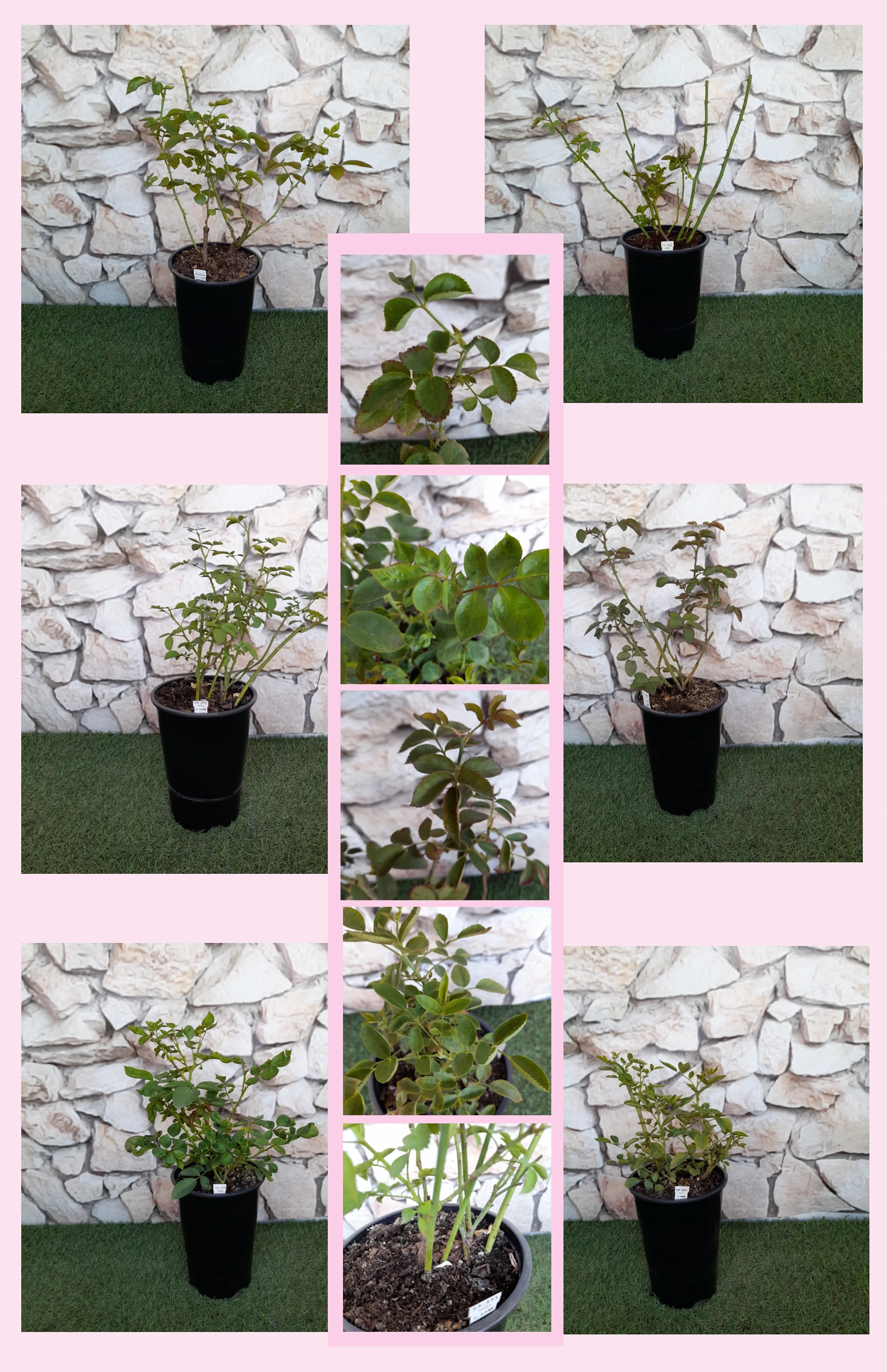
With its vivid yellow clusters and relaxed, bushy form, GOLDBEET brings a quietly romantic, storybook feel to everyday family gardens, thriving even where wind and rain test other plants. This floribunda is made for easygoing, cottage-style borders and relaxed kitchen gardens, flowering generously in waves from early summer well into autumn. Over time its own-root form knits into a reliable, long-lived shrub that shrugs off hard winters and keeps your beds looking consistently full. In its first years it steadily builds strength, giving you a graceful arc from root establishment to abundant, confident flowering without complicated techniques or expert know-how. Medium care needs mean simple routines: basic feeding, sensible watering, and light annual tidying rather than intricate pruning. The rounded, mid-green foliage creates a soft backdrop for the golden blooms, helping the plant sit naturally among herbs, perennials and low hedging for a cosy, afternoon-tea-under-the-arbour atmosphere in even the most ordinary gardens. Suitable for partial shade and steady in typical British conditions, it suits busy owners who want colour, rhythm and balance rather than fuss, working just as well in raised beds on heavier soil as in more free-draining borders. In larger containers of at least 40–50 litres it offers a welcoming, cottage-style focus by the front door or terrace, its clusters of golden blooms echoing the warm character of traditional English country planting while remaining straightforward to manage year after year.
Usage options
| Target area |
Reasoning |
| Front garden bed in a family home |
GOLDBEET’s strong golden clusters and bushy outline create an immediate, friendly welcome along paths and drives, while its moderate care needs keep weekend jobs manageable for years. Ideal for the time-pressed homeowner. |
| Cottage-style mixed border |
The mid-height, rounded habit and layered yellow tones sit easily with perennials and herbs, giving that informal English cottage feel without demanding precise pruning or staking. A good fit for the romantic cottage-gardener. |
| Kitchen garden edging |
Low to mid-height rows of GOLDBEET frame vegetable beds with colour through much of the season, while its own-root robustness ensures stable structure even as crops rotate. Particularly appealing to the traditional kitchen-gardener. |
| Raised beds on heavier clay soil |
In raised, well-drained beds this rose offers dependable structure where heavier ground would otherwise stay wet, providing season-long yellow accents that cope with brisk, coastal-style weather. Suits the practical, space-conscious gardener. |
| Informal flowering hedge |
Planted at the recommended hedge spacing, GOLDBEET knits into a soft, semi-transparent screen, combining structure with light, repeat colour that blends easily with lawns and play areas. Ideal for family-focused buyers. |
| Large containers on patio or terrace |
In 40–50 litre or larger pots it becomes a relaxed focal point near seating, offering repeat golden blooms and steady foliage without complex feeding regimes, perfect beside an afternoon tea table. Well suited to busy urban gardeners. |
| Pollinator-friendly corner |
Semi-double flowers provide some access for bees, while regular remontant flushes offer a steady, if modest, source of interest through the season, complementing herbs and wildflower-style planting. Good for wildlife-aware families. |
| Long-term, low-fuss structural planting |
Own-root plants age gracefully, re-sprouting well from the base and maintaining an even outline with simple annual trimming rather than complex shaping, supporting the natural Year 1–3 build-up of a settled, confident shrub. Best for patient, future-thinking garden-owners. |
Styling ideas
- Golden cottage ribbon – Thread GOLDBEET in a loose line through a border with catmint, hardy geraniums and soft grasses for a relaxed cottage feel – ideal for romantic-style homeowners.
- Kitchen-garden frame – Use short rows to edge vegetable beds, pairing with chives, thyme and salad greens so the yellow blooms echo terracotta pots – perfect for practical kitchen-garden enthusiasts.
- Sunlit entrance pots – Plant one or two in 40–50 litre half-barrels by the front door with trailing ivy and heuchera for year-round structure and seasonal colour – great for busy urban dwellers.
- Soft family hedge – Create a knee- to chest-high informal hedge along a lawn, interspersed with lavender and low box for a calm play-space backdrop – suited to families wanting gentle structure.
- Warm evening corner – Group GOLDBEET with coral bells and cypress spurge beside a bench, so the yellow clusters glow into dusk – appealing to those seeking a cosy, storybook retreat.
Technical cultivar profile
| Parameter |
Data |
| Name and registration |
Floribunda bedding rose marketed as GOLDBEET, used as an exhibition floribunda bush rose; part of the Bedding rose collection, with American Rose Society exhibition name registered as Goldbeet. |
| Origin and breeding |
Bred by Werner Noack in Steinfurth, Germany, and introduced in 1974; a floribunda bed rose of unknown parentage, developed within the Noack Rosen breeding programme for robust garden performance. |
| Growth and structural characteristics |
Bushy shrub reaching about 120–180 cm in height and 100–150 cm spread, with dense, mid-green, slightly glossy foliage and moderate prickliness, forming an informal, well-furnished presence in beds and borders. |
| Flower morphology |
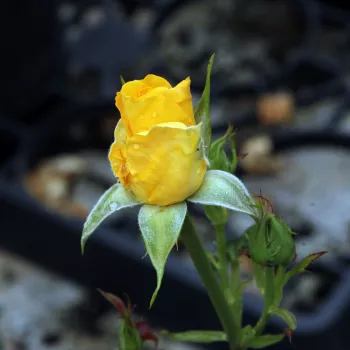
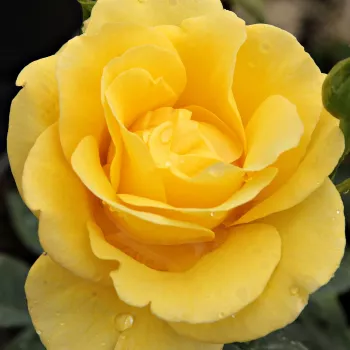
Semi-double, small (0.5–1.5 in) cup-shaped blooms carried in clusters, with 13–25 petals and a pronounced, medium-height bush habit, offering reliable remontant flowering in multiple flushes through the season. |
| Colour data and phenology |
Golden-yellow blooms (RHS 14A outer, 14B inner) open rich and luminous, then fade via mid-yellow to pale lemon, petal edges becoming almost cream, giving gentle tonal variation as each cluster matures. |
| Fragrance and aroma |
Very weakly scented rose with a soft, neutral fragrance character; chosen mainly for colour impact and garden effect rather than perfume, making it suitable where strong scent is not required or desired. |
| Hip characteristics |
Occasionally sets small rose hips about 0–6 mm across, generally few and unobtrusive, so they do not significantly alter the plant’s ornamental effect or require special attention in normal garden maintenance. |
| Resistance and winter hardiness |
Hardy to around -21 to -18 °C (RHS H7, USDA 6b, Swedish Zone 3) with moderate resistance to black spot, mildew and rust, and moderate heat tolerance requiring regular watering during prolonged warm, dry spells. |
| Horticultural recommendations |
Suited to beds, edging and containers; plant 110–120 cm apart in groups or hedges, about 0.7–0.8 plants/m², in sun or light shade, with medium maintenance including basic feeding and periodic pest and disease checks. |
GOLDBEET offers warm golden clusters, informal bushy structure and reliable remontant flowering, while its own-root form promises long-term stability and easy regeneration for those considering a quietly enduring garden feature.