GIPSY BOY – crimson historic-Bourbon rose - Geschwind
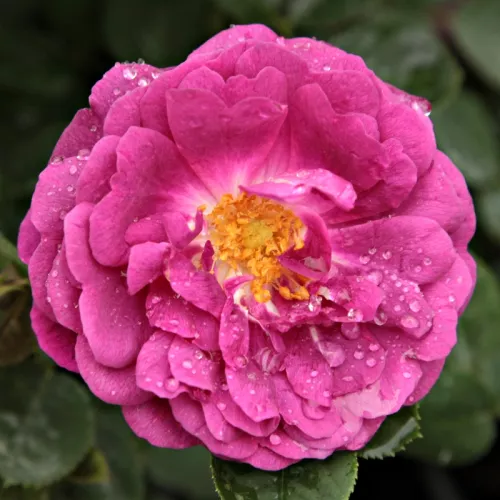
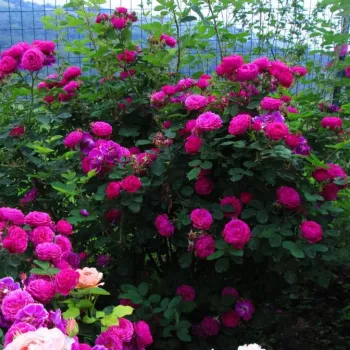
Romantic summer evenings feel made for the deep, shifting crimson‑to‑mauve blooms of Gipsy Boy, a historic Bourbon shrub rose that brings storybook character to cottage borders and period-style gardens. Its upright, arching habit and dense, matt mid‑green foliage create gentle structure, ideal for soft hedging, path-lining or anchoring a mixed flower bed. Once‑a‑year, it rewards you with a memorable flush of double, fragrant flowers, releasing a strong, full-bodied Bourbon perfume that hangs in the air like afternoon tea beneath an arbour. On its own roots it develops steadily for years, giving you reassuringly low‑fuss longevity and the ability to regenerate from the base if winter or pruning are less than perfect. In typical British gardens it copes well with exposed sites, remaining reliable even where frequent wind and rain test other varieties, provided soil drains reasonably and is not waterlogged. Hardy to H7, it shrubs up into a generous, arching presence that feels instantly authentic in a traditional setting, maturing from a quietly settling plant into a fully fledged feature without demanding complex care. Over the first seasons roots establish, then shoots build, and by the third year you see its full cottage‑garden impact with a summer curtain of richly coloured, old-world charm.
Usage options
| Target area | Reasoning |
|---|
| Feature shrub in a family cottage border |
Gipsy Boy forms a tall, upright, arching shrub with dense, mid‑green foliage, giving strong vertical shape and a romantic, historic look from a single plant. Best for homeowners wanting a focal point with minimal fuss, especially beginners. |
| Fragrant seating-area backdrop |
The strong, long-lasting Bourbon scent and large seasonal flush of double blooms make it ideal behind a bench or terrace, where you sit close and enjoy perfume on still evenings. Suits those who prioritise sensory atmosphere and relaxed outdoor living couples. |
| Informal flowering hedge |
Recommended spacings of about 105 cm allow a loose, romantic hedge that defines boundaries without looking harsh, with thorniness adding a subtle deterrent. Ideal for family gardens wanting characterful separation between lawn and kitchen garden households. |
| Low-maintenance historic rose collection |
As a once-flowering, own-root historic shrub with moderate disease resistance and reliable hardiness, it fits collections where character matters more than constant grooming. Well suited to busy enthusiasts who prefer straightforward annual tasks collectors. |
| Partially shaded side garden or alley |
Its tolerance of partial shade and strong colour that still reads well in lower light suit side paths and north‑east aspects, where many roses underperform. A good match for urban plots needing dependable flowering in less-than-ideal light city-dwellers. |
| Raised beds on heavier or chalky soils |
The shrub’s robust, own-root growth copes well when given improved drainage, making it suitable for raised beds or worked clay with added organic matter and grit, especially where frequent wind and rain challenge structure in exposed plots coastal-gardeners. |
| Traditional mixed border with grasses and perennials |
Its arching form and smoky crimson-to-mauve colour blend beautifully with airy grasses and textural perennials, creating layered, sustainable compositions over many seasons. Ideal for those designing relaxed, storybook borders rather than formal displays design-lovers. |
| Long-term, low-replacement planting in family gardens |
Own-root growth means plants can live and perform for many years, regenerating from the base if cut back hard, reducing the need for frequent replacement. Best for budget-conscious gardeners wanting enduring structure with simple pruning options families. |
Styling ideas
- Arbour-dream – Train Gipsy Boy loosely along a rustic arch, underplant with lavender and catmint for scent layers – for romantic cottage-garden enthusiasts.
- Old-village – Use as repeating shrubs along a picket fence, interplanted with foxgloves and lady’s mantle – for lovers of traditional village-front gardens.
- June-hedge – Create an informal flowering hedge, edging with low geraniums to cover bare bases later – for families wanting soft boundaries with seasonal drama.
- Twilight-border – Place near a terrace with white campanulas and evening primrose to catch the scent at dusk – for those who use the garden mainly after work.
- Heritage-mix – Combine with Stipa tenuissima, globe thistles and fountain grass for a sustainable, textural historic-rose vignette – for design-led, low-intervention gardeners.
Technical cultivar profile
| Parameter | Data |
|---|
| Name and registration |
Historic Bourbon shrub rose, trade name Gipsy Boy, unregistered cultivar, also listed as a historic Geschwind introduction, verified for authenticity for darinaROSE® ORIGINAL 2‑litre own-root production. |
| Origin and breeding |
Bred by Rudolf Geschwind in Austria from a ‘Russelliana’ seedling and first introduced by Peter Lambert in Germany in 1909, representing early twentieth-century Central European Bourbon breeding. |
| Growth and structural characteristics |
Vigorous, upright to arching shrub, typically 130–180 cm tall and 100–150 cm wide, with dense, matt mid‑green foliage and strong prickliness, forming a substantial, shapely presence in beds or hedging. |
| Flower morphology |
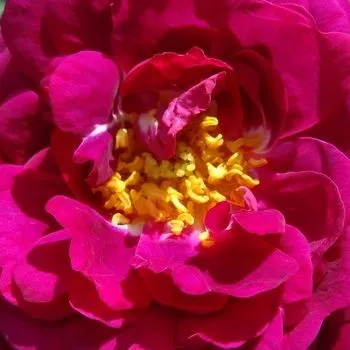
Medium-sized, double blooms with 26–39 petals, cup-shaped then flattening, carried in clusters on arching stems; flowers once per season rather than repeatedly, creating a concentrated main display. |
| Colour data and phenology |
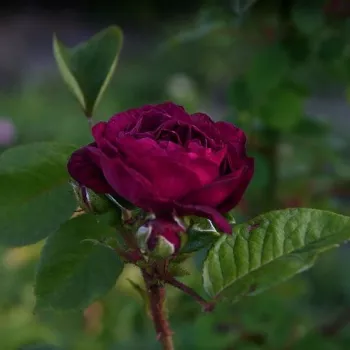
Deep crimson buds open to carmine-red with purplish-violet centres, then shift through lilac-purple to smoky mauve; colour holds reasonably well but may lighten slightly in strong sun during full flowering. |
| Fragrance and aroma |
Notable, strong Bourbon-type fragrance with a full-bodied, classic rose character that lingers around the plant, especially in warm, still conditions, making it particularly suited to seating and pathway locations. |
| Hip characteristics |
Double flowers rarely set hips, but when they do they are spherical, 12–18 mm in diameter, orange-red and of modest ornamental value, adding a subtle autumn accent among the arching shoots. |
| Resistance and winter hardiness |
Hardy to around −32 to −29 °C (RHS H7, USDA 4b, Swedish Zon 5) with moderate resistance to black spot, powdery mildew and rust; benefits from standard hygiene and occasional preventative care. |
| Horticultural recommendations |
Best in fertile, well-drained soil; suitable for beds, hedging or specimens, including partial shade; plant with spacings of 105–200 cm depending on use, and prune after flowering to shape and manage height. |
Gipsy Boy offers a richly fragrant early-summer display, strong hedging structure and long-lived, regenerating own-root growth, making it a thoughtful choice for creating a lasting, romantic feature in your garden.