GÄRTNERFREUDE ® – raspberry-red groundcover rose - Kordes
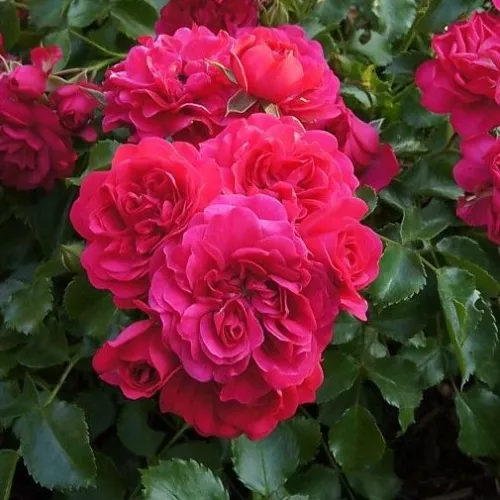
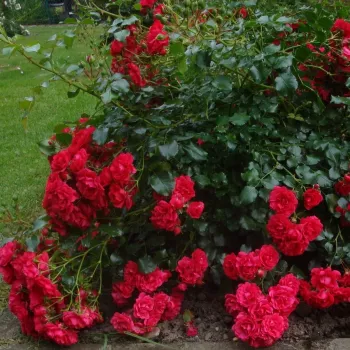
Imagine settling down for afternoon tea while a carpet of raspberry blossoms spills beneath your feet: Gärtnerfreude® creates that cosy, storybook cottage atmosphere with masses of small, very double pompon flowers that renew themselves with reliable remontant waves of colour. Bred for modern, low-effort family gardens, this ADR-winning shrub offers robust disease resistance and a naturally spreading habit that quickly knits together borders, banks and beds, even in exposed spots where frequent rain and wind might threaten lesser roses. Dense, dark green, glossy foliage and self-cleaning blooms mean less time deadheading and more time enjoying the view, while the own-root form settles steadily for a long-lived, easy-care groundcover presence that suits busy homeowners who want impact, not chores.
Usage options
| Target area | Reasoning |
|---|
| Front-of-border groundcover in a family cottage garden |
Low, spreading growth quickly blankets bare soil at the border edge, giving a soft, romantic finish in raspberry red without obstructing taller perennials behind. Self-cleaning flowers reduce constant tidying, ideal for a relaxed, pretty look for beginners. |
| Mass planting for long-season colour in small to medium beds |
Planted at the recommended density, its compact, even habit forms a unified sheet of colour, with repeat flowering providing months of display from early summer onwards. Own-root plants build a durable structure that refills gaps naturally over years for homeowners. |
| Low-maintenance groundcover on banks, slopes or awkward corners |
The spreading shrub habit and dense foliage help stabilise soil while reducing weed growth, particularly useful on difficult-to-mow slopes. Minimal pruning and low upkeep suit those who prefer to plant once and simply enjoy the result for busy. |
| Informal hedge or edging along paths and seating areas |
Regular planting at hedge spacing creates a low, flowery line that frames garden paths and seating terraces without feeling rigid or formal. The neat height range keeps views open while the rich raspberry colour adds a welcoming focus for families. |
| Part-shade corners near patios, sheds or fences |
Suitable for partial shade, it continues to flower where many roses thin out, brightening north- or east-facing aspects. The glossy, dark foliage keeps its presence even between flushes, lending depth and texture to overlooked spots for urbanites. |
| Large containers or half-barrels on terraces and courtyards |
In a substantial 40–50 litre container, its compact, arching growth fills the space with abundant clusters, creating a portable cottage-garden effect for paved yards. Own-root resilience supports good recovery if watering lapses, reassuring for novices. |
| Resilient planting in exposed or coastal-style sites |
This variety was developed for heavy-use beds and holds its flowers in wet, blustery weather, so you can rely on clean bloom and foliage structure even where rain and wind are common companions. Such toughness particularly benefits time-poor gardeners. |
| Long-lived rose feature in mixed cottage and kitchen gardens |
The own-root plant focuses first on roots, then bush, then full display, rewarding patience with a stable, long-lived presence that anchors a traditional mix of herbs, vegetables and perennials. Once settled, it offers dependable colour for years for enthusiasts. |
Styling ideas
- Cottage-Ribbon Border – Drift Gärtnerfreude® along the front of a mixed border with foxgloves and hardy geraniums behind for a soft, old-fashioned ribbon of raspberry red – ideal for romantic-style homeowners.
- Kitchen-Garden Edge – Use it to line vegetable beds, where its neat height and generous flowers give a storybook potager feel while keeping paths defined – suited to family kitchen gardeners.
- Terrace Container Grove – Plant three own-root shrubs in a 50 litre half-barrel with chives and thyme at the rim to create a scented, edible-accent container – perfect for balcony and courtyard dwellers.
- Bank-Softening Sweep – On a sunny bank, mix it with blue globe thistle and ornamental grasses so the spreading roses knit the slope while spiky textures dance above – good for sloping suburban plots.
- Urban-Romantic Bed – Combine with coneflowers and lavender in a simple, low-maintenance scheme where dense foliage, strong health and repeat flowering give long colour with minimal fuss – made for busy city gardeners.
Technical cultivar profile
| Parameter | Data |
|---|
| Name and registration |
Groundcover shrub rose from the RigoRosen® collection; registered as KORstesgli, marketed as Gärtnerfreude® RigoRosen®; classified as ground cover / shrub for garden and landscape use. |
| Origin and breeding |
Bred by Wilhelm Kordes III, W. Kordes’ Söhne, Germany, from ‘The Fairy’ and complex seedlings; bred 1991, registered 1998, introduced 1999 through W. Kordes’ Söhne in international trade. |
| Awards and recognition |
Highly decorated groundcover rose: Baden-Baden Gold Medal 1999, Kortrijk Gold 2001, Kortrijk Silver 1999, ADR 2001, UK Gold Standard 2008, and Gerald Maylen Award for best groundcover. |
| Growth and structural characteristics |
Low, spreading habit 40–65 cm high and 50–90 cm wide, with dense, dark green, glossy foliage and moderate prickles; forms a compact, ground-hugging shrub ideal for mass or edging plantings. |
| Flower morphology |
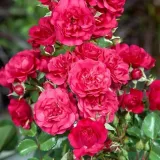
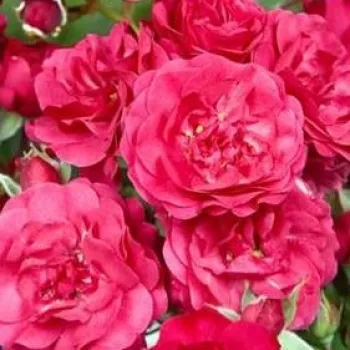
Small, cluster-borne, very double pompon blooms with over 40 petals per flower; spherical in outline and freely produced in flushes throughout the season, with good natural self-cleaning of spent heads. |
| Colour data and phenology |
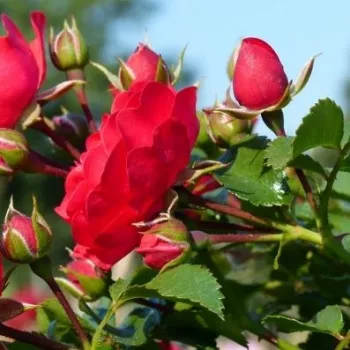
Bright raspberry-red flowers: buds deep matt red, opening glossy and intense; colour holds well with minimal fading, later softening to rose-pink tones while maintaining an overall rich, lively effect. |
| Fragrance and aroma |
Primarily ornamental rather than scented; any fragrance is very weak and barely perceptible in normal garden conditions, so selection should focus on colour effect, habit and resilience rather than perfume. |
| Hip characteristics |
Poor hip set expected because of the very double blooms; any fruits are small spherical red hips, about 4–7 mm diameter, and generally insignificant in the overall ornamental character of the plant. |
| Resistance and winter hardiness |
Rated H7 and hardy around -26 to -23 °C, USDA zone 5b, Swedish zone 4; demonstrably resistant to black spot, powdery mildew and rust, with good heat tolerance when watered during prolonged dry periods. |
| Horticultural recommendations |
Low-maintenance, self-cleaning shrub for beds, slopes, parks, containers and urban schemes; plant 45–95 cm apart depending on use, 3.3–3.8 plants/m² for mass plantings; suitable for partial shade situations. |
Gärtnerfreude® offers low, spreading groundcover, repeat raspberry-red flowering and strong disease resistance in a durable own-root form that rewards patient gardeners with years of dependable colour, making it a thoughtful choice for your next planting.