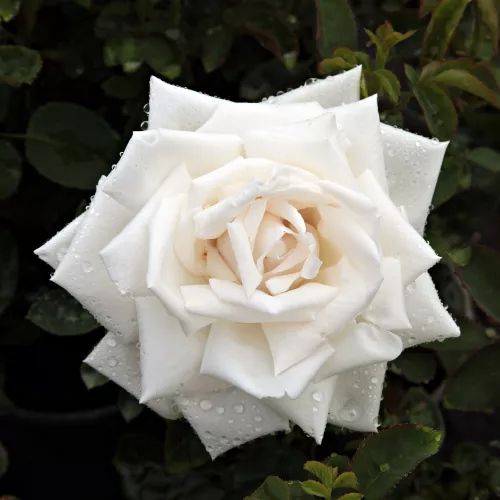
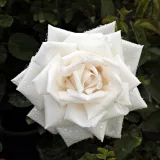
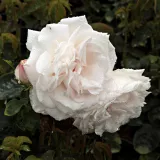
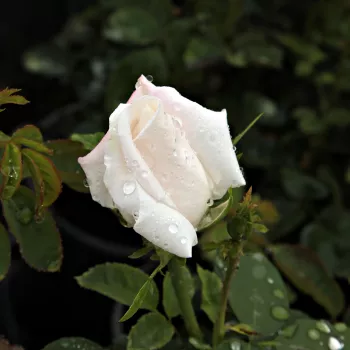
FRAU KARL DRUSCHKI – white historic perpetual hybrid rose - Lambert
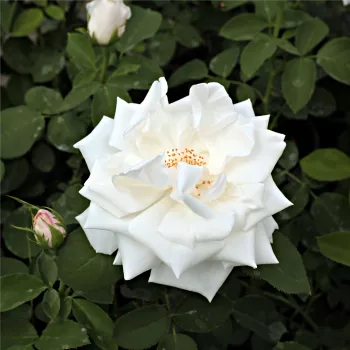
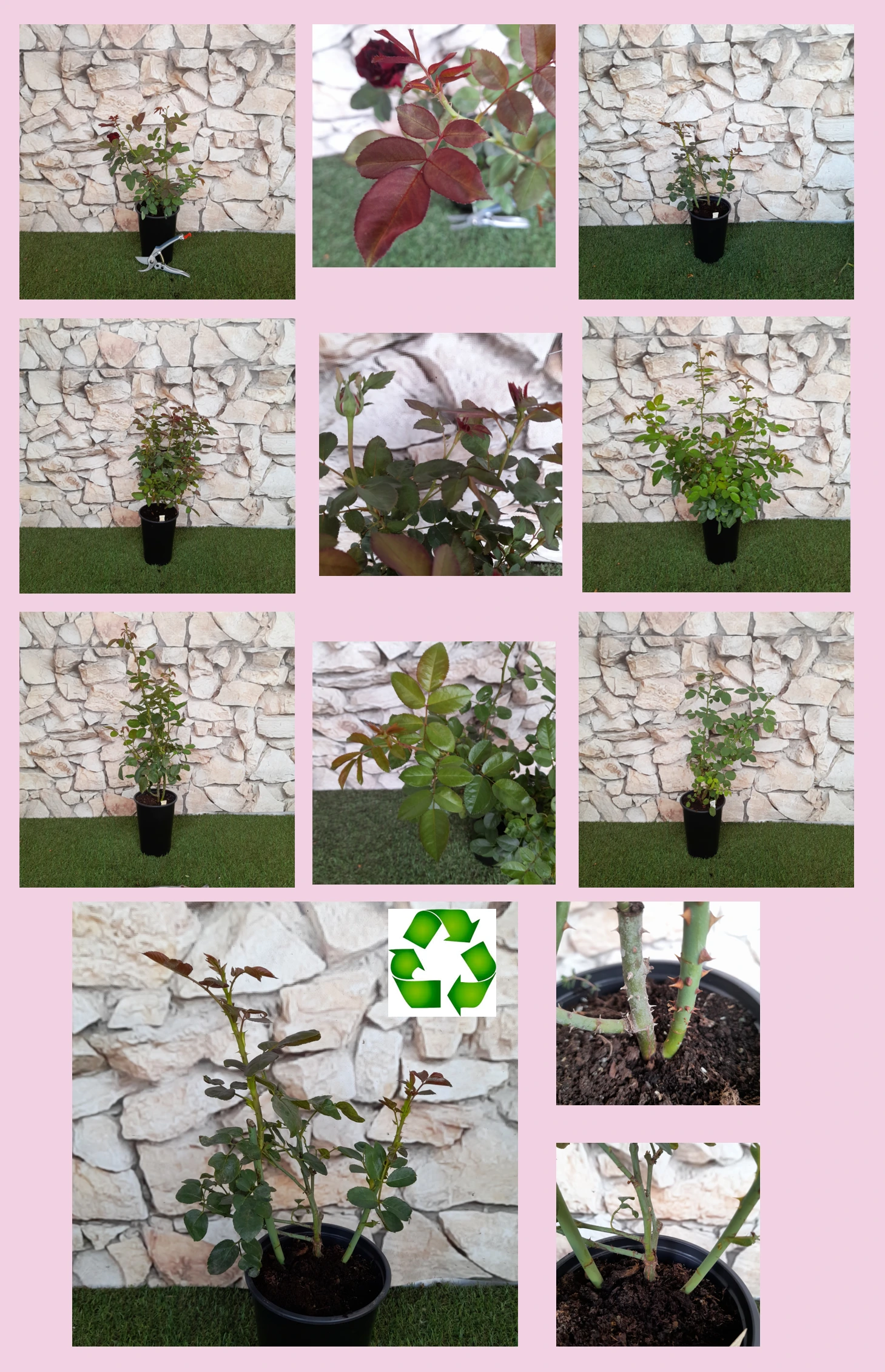
This classic pure white hybrid perpetual brings a feeling of afternoon-tea romance to family gardens, combining generous flower size with an upright, well-foliaged structure that slips naturally into an English cottage setting. Its once-per-summer display is intensely abundant, producing extra-large, snow-white blooms ideal for nostalgic cutting and traditional borders, while the dense leaves and strong framework give a reassuringly permanent presence in beds, hedging runs or as a specimen near a seating area. As an own-root plant it settles reliably, rebuilding from the base for long-term vigour and stable shape, so you can enjoy dependable form with modest seasonal maintenance. Well suited to cooler, breezier conditions, it copes particularly well where gardens see frequent rain and wind, especially in raised beds or improved clay, delivering a quietly luxurious, long-lived focus for romantic, storybook planting schemes.
Usage options
| Target area |
Reasoning |
| Feature shrub in a cottage-style front garden |
The tall, upright habit and dense foliage create a clear vertical accent that feels instantly traditional, while the large, pure white blooms read well from the pavement and front gate. Ideal where you want a single, long-lived feature that anchors the planting and only needs straightforward annual care – perfect for the busy homeowner. |
| Small informal hedge along a path or boundary |
Planted at hedge spacing, Frau Karl Druschki forms a leafy, moderately tall line with showy white flowers dotted along it in summer, softening fences or separating lawn from kitchen garden beds. Once established, the own-root framework thickens steadily, giving many years of reliable cover with simple winter pruning – well suited to the family gardener. |
| Mixed cottage border with perennials and herbs |
Its neutral snow-white flowers blend easily with any colour palette, from soft pastels to stronger cottage shades, tying together plants like aubrieta, lamb’s ear and bee balm. The once-a-year flowering fits a classic rhythm of early roses followed by perennials, and the robust structure keeps its place even when not in bloom – attractive for the romantic stylist. |
| Cutting corner for traditional vase arrangements |
The extra-large, double blooms on strong stems are ideal for nostalgic indoor arrangements, especially when cut in cool morning light from a sunny bed. Although it flowers once, that summer flush is generous, providing plenty of stems for jugs and vases without stripping the bush, while the shrub itself remains durable and productive over many seasons – appealing to the home florist. |
| Raised bed or improved clay border near a seating area |
In gardens with heavier soil, planted into a raised or well-drained bed this variety forms a solid, upright presence that frames benches or small patios with calm white colour and green foliage. The own-root system gradually consolidates in the soil, giving good anchoring and long service life with modest feeding and mulching – reassuring for the beginner gardener. |
| Cooler, breezier sites and coastal-influenced gardens |
Frau Karl Druschki is happiest where summers are not extreme, so typical British conditions with regular rain and moving air suit it well; in such gardens it rewards you with dependable growth and clean foliage when planted in an open, sunny position, even where frequent gusts and showers would challenge fussier roses – a sound choice for the coastal resident. |
| Traditional park-style planting in larger family plots |
Where space allows, planting at specimen distances lets this rose reach its full, upright stature, echoing classic park and estate plantings in a private setting. Over the years the own-root base thickens rather than exhausting itself, supporting a durable outline that responds well to various pruning styles yet always retains its dignified shape – ideal for the heritage enthusiast. |
| Long-term backbone shrub in a low-maintenance scheme |
Although it needs basic deadheading and occasional pest checks, its disease profile is steady and foliage is naturally dense, so it slots well into schemes where you prefer a few reliable structural plants over constant replanting. Once settled, you can keep it going for many years with simple winter pruning and seasonal mulching, letting time build its full effect – well matched to the time-poor gardener. |
Styling ideas
- White-arbour focus – Train two or three shrubs near a simple wooden arch, underplant with lavender and lamb’s ear to highlight the snow-white blooms – for lovers of romantic garden entrances.
- Kitchen-garden edge – Use a loose row to mark the edge between vegetables and lawn, weaving in chives and nepeta to soften the line – for cottage-plot owners who like order with charm.
- Pastel tapestry – Combine with soft pink peonies, pale foxgloves and airy grasses so the neutral white ties mixed hues together – for stylists seeking a gentle, storybook colour scheme.
- Cool-toned corner – Pair with blue geraniums, aubrieta and silver foliage to create a calm, reflective nook visible from the house – for homeowners wanting a restful tea-time outlook.
- Heritage showcase – Plant as a central specimen amid other historical varieties and old-style perennials, adding a bench for evening viewing – for collectors who appreciate traditional forms and stories.
Technical cultivar profile
| Property |
Data |
| Name and registration |
Frau Karl Druschki, a historical hybrid perpetual / hybrid tea rose marketed as a heritage variety; unregistered cultivar used under this established trade and exhibition name. |
| Origin and breeding |
Bred by Peter Lambert in Trier, Germany from ‘Merveille de Lyon’ × ‘Madame Caroline Testout’, introduced in 1901 and distributed widely as a vigorous white garden and exhibition rose. |
| Awards and recognition |
Awarded a National Rose Society (United Kingdom) gold medal around 1907 as best hybrid perpetual rose, confirming its value for exhibition and traditional rose gardens of the period. |
| Growth and structural characteristics |
Upright shrub reaching about 140–190 cm high and 100–160 cm wide, densely thorned with full foliage; forms a strong, lasting framework suitable for hedging, beds and specimen use. |
| Flower morphology |
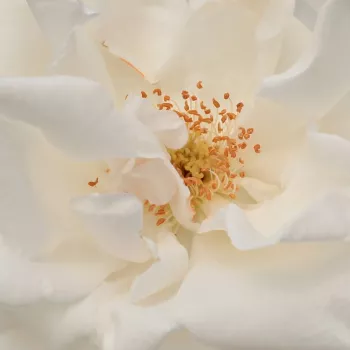
Very large, double, cup-shaped blooms with 26–39 petals, usually solitary; once-flowering in early summer, providing a concentrated seasonal display rather than repeat flushes. |
| Colour data and phenology |
Snow-white petals (ARS W, RHS 155C outer, 155D inner) that do not yellow; colour holds well, though in wet weather buds may remain closed, and fading is subtle without cream tones. |
| Fragrance and aroma |
Softly sweet, mild fragrance suited to close-up enjoyment near paths or seating; not overpowering indoors, but gives a gentle traditional rose scent in cool morning or evening air. |
| Hip characteristics |
If deadheading is skipped, occasional dark red, spherical hips 10–15 mm in diameter may form, adding quiet seasonal interest but not produced in large quantities each year. |
| Resistance and winter hardiness |
Hardy to about −32 to −29 °C (RHS H7, USDA 4b, Sweden zone 5); disease resistance generally medium, with good tolerance to powdery mildew and black spot, moderate susceptibility to rust. |
| Horticultural recommendations |
Best in sunny, cooler-summer climates with moisture-retentive yet drained soil; prefers regular watering in dry spells, annual pruning and deadheading to manage its weak self-cleaning habit. |
Frau Karl Druschki offers a tall, reliable structure with pure white summer blooms and steady, medium-care performance, and in own-root form it builds long-term vigour and resilience in your garden, making it a thoughtful choice for enduring cottage style.