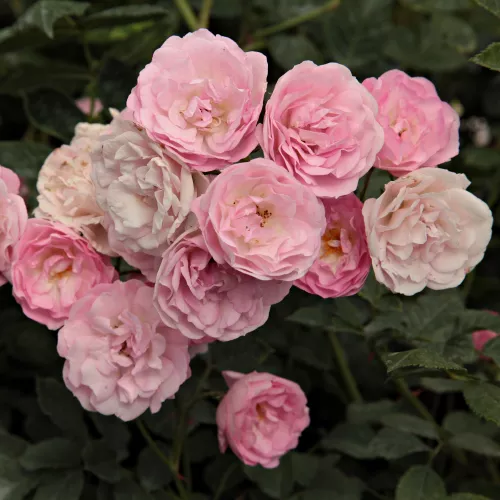
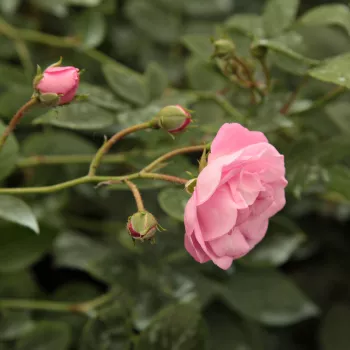
FRAU EVA SCHUBERT – pink rambler climbing rose
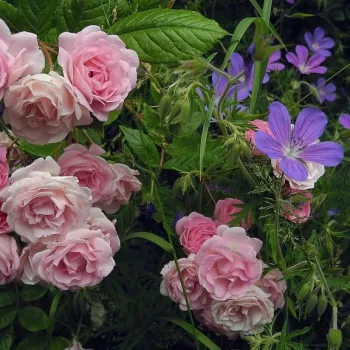
Let romance spill over your pergola with the softly cascading blooms of FRAU EVA SCHUBERT, a vintage rambler chosen for its grace, airy clusters and almost thornless canes that are kinder to family gardens. This own-root climber offers reassuring longevity, quietly rebuilding from the base and holding its place for years with stable ornamental value. In a typical British plot it brings cottage-garden charm to fences, arches and arbours, while coping reliably with blustery, wetter spells and exposed, breezier spots near coastal gardens. Plant once and watch the natural rhythm unfold: first it invests in roots, then it pushes confident new shoots, before settling into its full, storybook presence over the next few seasons. The once-a-year flush of soft pink, pompon-like sprays adds a theatre of blossom, an understated backdrop for afternoon tea and evening light, turning simple seating areas into gentle sanctuaries.
Usage options
| Target area |
Reasoning |
| Pergola or arbour over a seating area |
Trained over a pergola or arbour, its long, flexible canes and light, semi-double clusters create a soft veil of blossom, ideal above a table for afternoon tea. The near-thornless growth is more family-friendly where people brush past frequently, and its own-root constitution builds a lasting woody framework over time for patient romantics and busy beginners. |
| House wall or sunny garage wall |
Against a south or west-facing wall, this rambler makes a refined vertical accent with delicate pastel pink flowers that gently fade to cream, suiting traditional brick and render. Once anchored to wires or a trellis, its climbing habit covers a good area without becoming visually heavy, giving relaxed cottage character with straightforward tying-in for homeowners. |
| Garden arch marking an entrance |
Used on a rose arch, the airy pompon blooms frame paths and gatewalks with a romantic, almost storybook look. The medium self-cleaning habit means many spent flowers fall away unaided, so the arch keeps a light, tidy outline with minimal deadheading, attractive for those seeking charm without constant fuss, especially time-pressed gardeners. |
| Fence line in a family back garden |
Along a boundary fence, FRAU EVA SCHUBERT offers a looser alternative to a rigid hedge, weaving between posts with delicate, light green foliage. Own-root planting protects long-term continuity: if parts are damaged by weather or pruning, new shoots regenerate from below, keeping the fence dressed for years, which reassures cautious first-timers. |
| Solitary specimen near a terrace or lawn |
As a standalone feature on a strong obelisk or free-standing frame, the soft pink trusses read beautifully from the house, lending a focal point without overwhelming small to medium plots. The subtle fragrance and semi-double form add gentle movement in the breeze, complementing relaxed family spaces for cottage-style enthusiasts. |
| Traditional mixed cottage border |
Threaded into a mixed border with perennials, this climber provides vertical height and a pastel canopy above herbaceous planting. Its once-a-season flush sits well with classic cottage rhythms, and the moderately pollinator-friendly, semi-double flowers contribute seasonal interest without dominating, suiting wildlife-aware yet aesthetic-minded gardeners. |
| Large container by a patio (minimum 50 L) |
In a very large, 50–60 litre container with a strong support, it can be enjoyed even where borders are limited. Regular watering keeps the moderate drought tolerance satisfied, while the own-root system steadily occupies the compost, reducing the need for frequent replacement and offering dependable structure in compact spaces for urban dwellers. |
| Exposed or breezier family gardens |
In more open, breezy gardens where hedges and fences feel stark, its flexible, climbing canes are easily tied in, holding steadier in wind than rigid, upright shrubs. This makes it a useful softening layer for structures in gardens that often feel weather-beaten, appealing to families seeking sheltering beauty in coastal regions. |
Styling ideas
- Pastel pergola – Let FRAU EVA SCHUBERT drape over a wooden pergola with white garden furniture and soft textiles, using its graceful once-a-year bloom as a seasonal highlight – ideal for romantic tea-lovers.
- Storybook arch – Pair it on an arch with Dalmatian bellflower at the base to echo the pink and lilac palette, creating a fairy-tale entrance – suitable for families wanting a gentle focal point.
- Cottage fence run – Train along a fence with clumps of foxgloves and catmint in front to build a layered, informal border that still feels ordered – for those seeking easy cottage charm.
- Patio pillar – Grow in a 50–60 litre pot with a slim obelisk, underplanted with goldmoss stonecrop for a neat, drought-tolerant edge – perfect for small patios and balconies.
- Kitchen-garden screen – Use as a floral screen between vegetable beds, combined with low herbs and dwarf honeysuckle groundcover to blend productivity with prettiness – for traditional kitchen-garden owners.
Technical cultivar profile
| Property |
Data |
| Name and registration |
FRAU EVA SCHUBERT – pink rambler climbing rose; garden climbing rose for pergolas and walls; ARS exhibition name Frau Eva Schubert; unregistered but historically established cultivar. |
| Origin and breeding |
Hybrid between Rosa multiflora and Rosa moschata from German breeder Hugo Tepelmann; introduced in 1937 by Tepelmann nursery, representing classic pre-war European rambler breeding. |
| Growth and structural characteristics |
Strong, climbing rambler with 225–375 cm height and 150–250 cm spread; dense, light green, slightly glossy foliage; almost thornless canes; requires support and training on arches, pergolas or walls. |
| Flower morphology |
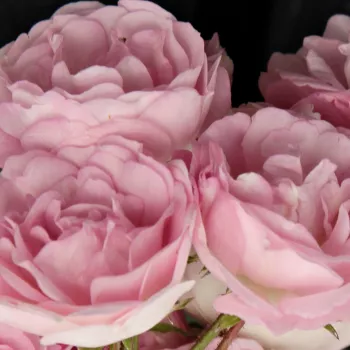
Semi-double pompon to ball-shaped flowers, 13–25 petals, small size in airy clusters; once-flowering rambler with a single, abundant summer flush; medium self-cleaning, with some deadheading helpful. |
| Colour data and phenology |
Soft light pink flowers, porcelain-pink on opening, fading towards creamy white at petal edges; colour fade quicker in strong sun; creates a pastel, nostalgic effect during the main flowering period. |
| Fragrance and aroma |
Subtle, mild fragrance with a restrained scent profile; not overpowering near seating areas, suits pergolas and arches where an understated, gentle rose perfume is preferred rather than intense notes. |
| Hip characteristics |
Produces moderate quantities of small, spherical red hips, around 7–11 mm in diameter; adds gentle late-season interest and a naturalistic touch when flowers have finished, supporting a wilder aesthetic. |
| Resistance and winter hardiness |
Hardy to approximately –21 to –18 °C (RHS H7; Swedish zone 3; USDA 6b); disease-susceptible foliage needs regular protection; prefers fresh, evenly moist soil and does not tolerate prolonged drought. |
| Horticultural recommendations |
Best in full sun with fertile, moist but well-drained soil; ideal for arches, pergolas, fences and walls; plant 140–220 cm apart depending on use; allow for annual training and plant protection care. |
FRAU EVA SCHUBERT lends romantic pastel blossom, a family-friendlier almost thornless habit and a regenerating, long-lived own-root framework to pergolas and arches, making it a thoughtful choice if you treasure gentle garden atmosphere.