FRAU E. WEIGAND – golden-yellow hybrid tea rose
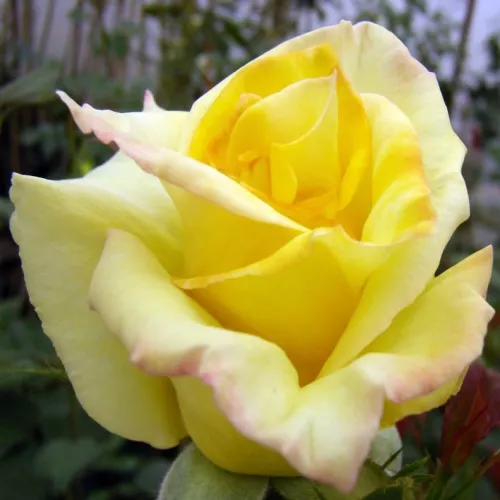
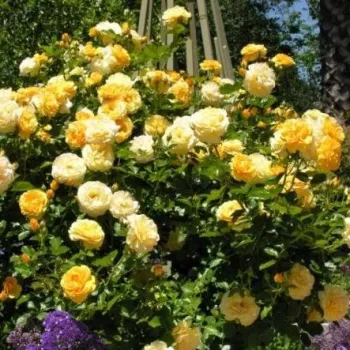
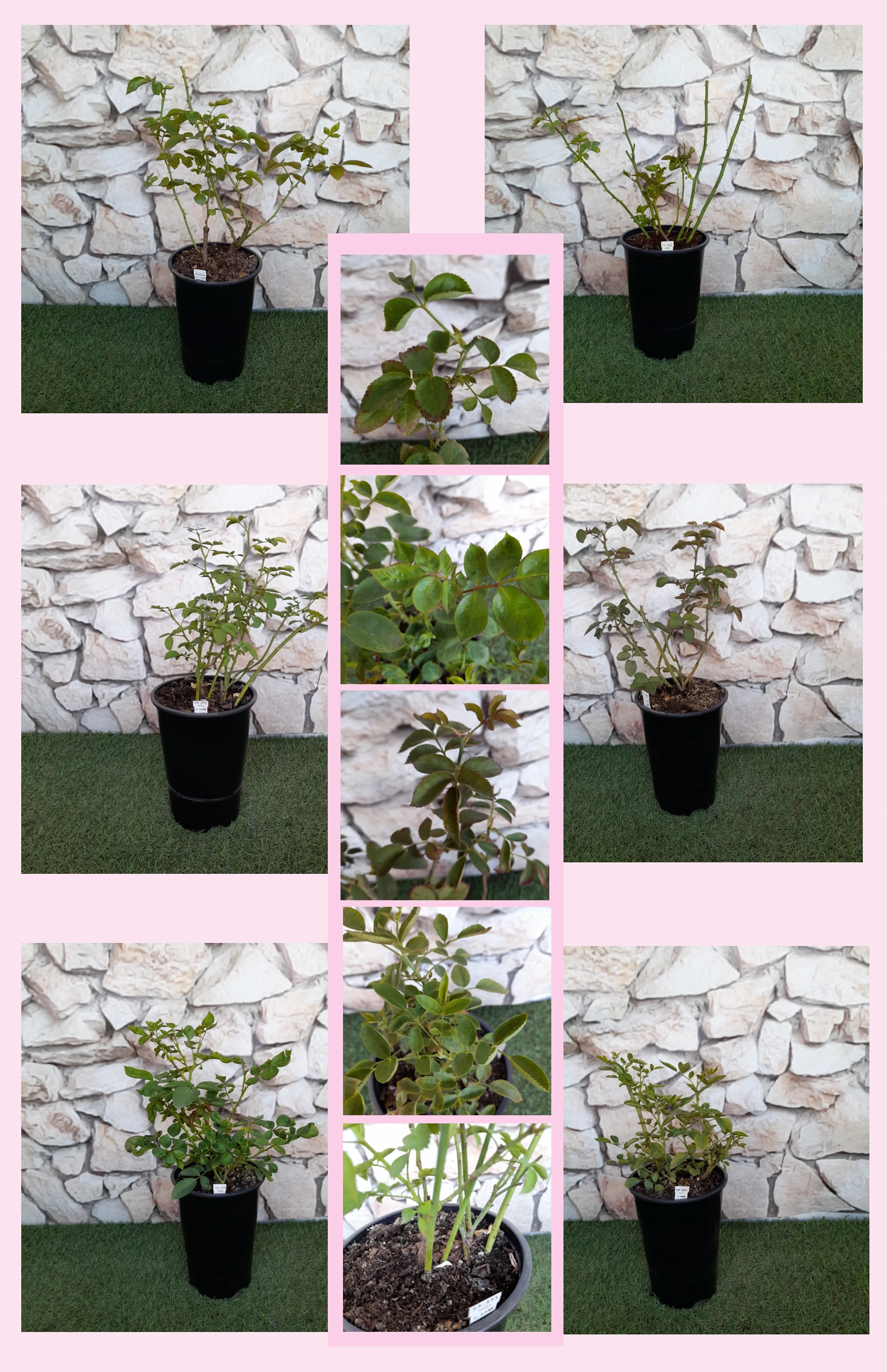
Step into a world of afternoon tea and storybook romance with FRAU E. WEIGAND, a classic golden‑yellow hybrid tea rose that fits effortlessly into family gardens and cottage borders. Its upright, well‑balanced habit carries very full, high‑centred blooms that repeat generously all summer, bringing reliable colour and form to mixed borders and paths. Bred in 1930, this variety combines time‑tested hardiness with modern expectations of disease resistance, staying healthy even in damp, changeable weather. The strong, fruity fragrance drifts towards seating areas, ideal beside a bench or low arbour for evening unwinding. As an own‑root rose it builds a resilient root system, supporting long‑term longevity in the same spot and making regeneration from the base simpler over the years. Easy to handle in its 2‑litre pot, it settles quickly into improved heavy soils and raised beds and over a few seasons naturally grows from establishing roots, to confident new shoots, to its full ornamental presence.
Usage options
| Target area |
Reasoning |
| Feature rose near a seating area or terrace |
The upright habit and medium height (around 1–1.4 m) make this rose ideal beside a bench, arbour or patio, where its large, fully double, exhibition-style blooms can be appreciated up close. Strong, fruity scent creates a cosy, afternoon-tea atmosphere in small gardens, especially appealing for romantic cottage-garden lovers. |
| Mixed cottage border in a family garden |
FRAU E. WEIGAND repeats generously through the season, providing dependable colour rhythm among perennials and herbs. Its rich golden-yellow flowers, tipped with pink-orange, harmonise beautifully with blues and soft whites in cottage-style planting, while robust health reduces spraying in busy households, suiting time-poor family gardeners. |
| Own-root specimen in lawn or front garden |
Planted as a solitary specimen at about 90 cm spacing, the balanced, upright shrub forms a tidy, long-lived focal point. The own-root form ages gracefully in one place, with fresh shoots from the base maintaining shape and flower quality over many years, ideal for homeowners seeking lasting structure. |
| Informal flowering hedge or row |
At 50–55 cm spacing, this variety creates a loose, traditional hedge along paths or driveways. Repeat flowering and healthy, dark green foliage provide a neat, romantic boundary without constant intervention; light deadheading and a winter trim usually suffice, making it attractive to gardeners wanting low-effort formality. |
| Cutting bed for home-grown bouquets |
High-centred, pointed buds and strong stems suit cutting for vases and indoor arrangements, with the scent carrying well indoors. Reliable remontant flowering ensures a regular supply of blooms across the summer, perfect for those who enjoy bringing garden flowers into the house, especially creative home florists. |
| Roses in heavy clay or challenging ground |
This rose establishes steadily in improved heavy clay or chalky soils when planted in a prepared hole or raised bed with good drainage. Own-root plants anchor well and recover strongly from occasional stress, supporting long-term display despite difficult ground conditions, well suited to gardeners with less-than-ideal soil. |
| Large containers on patios and courtyard gardens |
In a minimum 40–50 litre container with quality compost and regular watering, FRAU E. WEIGAND forms an elegant, upright shrub ideal for small urban spaces. Its strong scent and repeat flowering maximise impact where space is limited, appealing particularly to balcony and patio rose enthusiasts. |
| Low-maintenance traditional rose bed |
Good resistance to black spot, powdery mildew and rust means fewer chemical treatments and simpler care, even in humid, wind-exposed locations where fungal pressure is higher. An easy annual prune and occasional deadheading keep it performing well, making it reassuring for beginners and casual gardeners. |
Styling ideas
- Cottage-curve border – Plant FRAU E. WEIGAND in a sweeping arc with lavender and hardy geraniums, using its repeat golden blooms as a gentle backbone – for romantics shaping a classic English-style path edge.
- Afternoon-tea corner – Position one or three plants by a small bench, under a simple wooden arch, allowing the strong fragrance and upright habit to frame a cosy seating nook – for homeowners creating a quiet reading spot.
- Kitchen-garden blend – Thread this rose between rows of herbs and vegetables, where its robust health and own-root longevity give enduring structure amid seasonal crops – for those who love productive yet decorative plots.
- Golden feature pot – Use a single plant in a 50‑litre terracotta container, underplanted with trailing thyme or violas, to showcase the cut-flower-quality blooms on a sunny patio – for urban gardeners short on border space.
- Classic rose row – Line a path or driveway with evenly spaced plants, letting the uniform height and repeat flowering create a traditional rose walk that needs only straightforward pruning – for families wanting a simple, formal touch.
Technical cultivar profile
| Parameter |
Data |
| Name and registration |
Hybrid tea rose, Pernetiana group; trade name FRAU E. WEIGAND – golden-yellow hybrid tea rose – Weigand; ARS exhibition name FRAU E. WEIGAND; unregistered cultivar in formal registers. |
| Origin and breeding |
Bred by Ludwig Weigand in Germany (1928), introduced 1930 by Hazlewood Bros. Pty. Ltd.; parentage ‘Madame Caroline Testout’ × ‘Souvenir de Claudius Pernet’, honouring Mrs E. Weigand. |
| Growth and structural characteristics |
Upright hybrid tea shrub, around 100–140 cm tall and 70–90 cm wide; moderately dense dark green, slightly glossy foliage; moderately thorny shoots, solitary buds on strong stems. |
| Flower morphology |
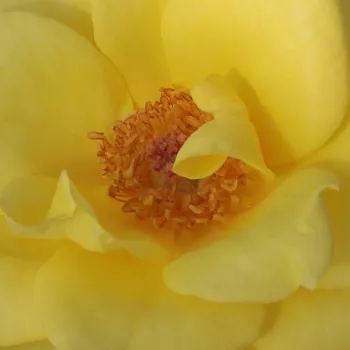
Very full, high-centred, pointed buds with over 40 petals; medium flower size (approx. 4–7 cm across); classic hybrid tea form, mainly solitary blooms; strong remontant character with abundant second flush. |
| Colour data and phenology |
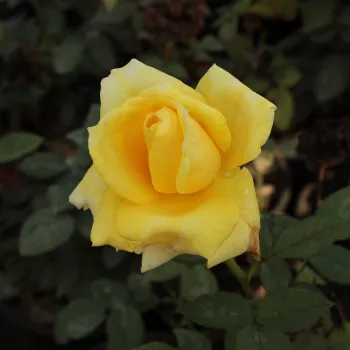
Rich golden-yellow base with orange-red petal edges; RHS 33A outer, 13A inner; deep orange-red buds with golden tips; colour lightens to creamy yellow as blooms age, with pink rim gently fading. |
| Fragrance and aroma |
Strong, long-lasting scent with pleasantly sweet, fruity character; fragrance noticeable around seating areas and when used as a cut flower, adding sensory appeal to traditional garden settings. |
| Hip characteristics |
Occasional spherical hips, about 9–12 mm diameter; orange-red when ripe; typically incidental in ornamental use, as deadheading can be practised to encourage repeat flowering. |
| Resistance and winter hardiness |
Very hardy shrub (approx. USDA 4b, RHS H7, to about −29 to −32 °C); good resistance to powdery mildew, black spot and rust; tolerates warmth but needs watering during extended droughts. |
| Horticultural recommendations |
Best in sunny position; plant 55 cm for masses, 50 cm for hedges, 90 cm as specimen; allow 3.3–3.8 plants/m²; low maintenance with simple annual pruning and regular deadheading if desired. |
FRAU E. WEIGAND offers strongly fragrant, repeat-flowering golden blooms on a healthy, long-lived own-root plant, making it a graceful, reliable choice for those refining a romantic family garden.