FOUNTAIN – blood-red hybrid tea rose - Tantau
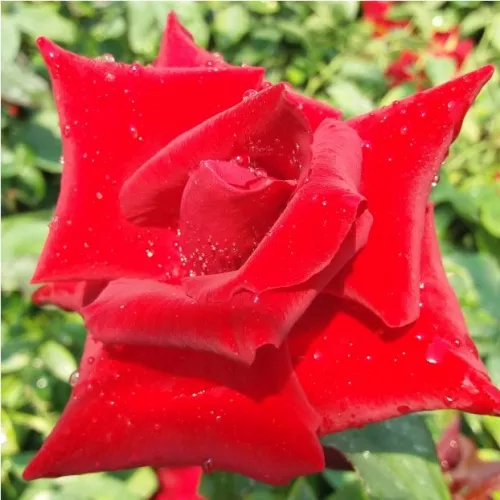
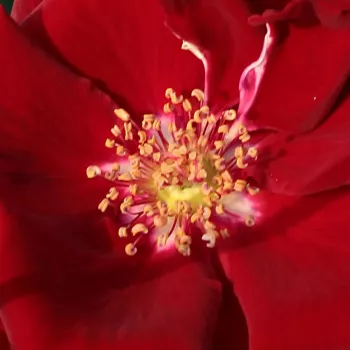
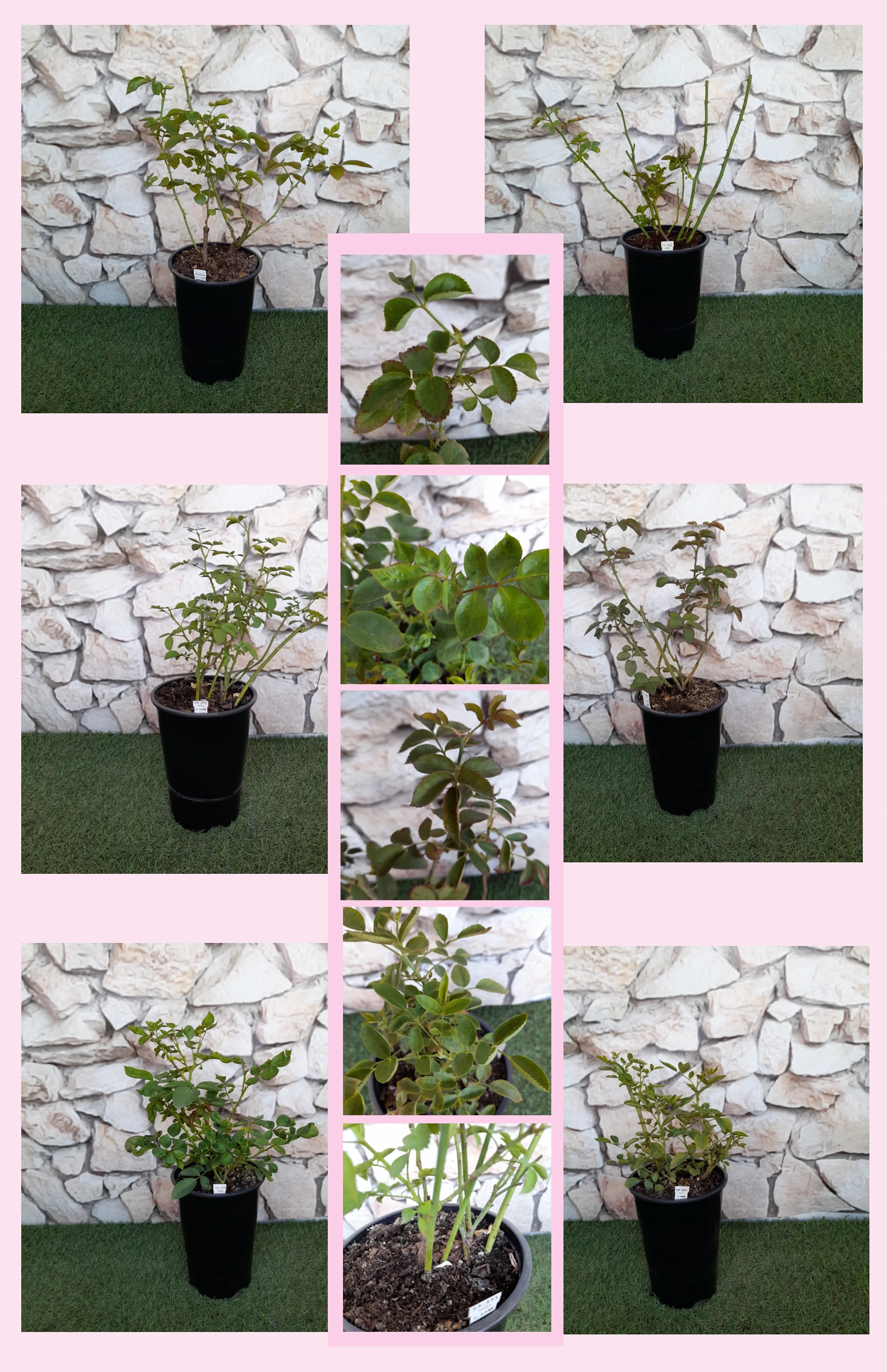
FOUNTAIN brings a sense of timeless romance to the family garden, with tall, upright stems bearing large, velvety, blood-red blooms ideal for evening tea corners or a cottage-style arbour. Its naturally healthy foliage and reliable remontant habit mean you enjoy repeat flushes of colour with very little effort, even in exposed gardens where strong winds and driving showers regularly sweep in from the coast. As an own-root rose it builds strength year by year, quietly extending its lifespan and regenerating from the base after harsher winters or harder pruning. Over the first three seasons it settles in, then deepens its display – roots in the first year, shoots in the second, and full ornamental value by the third, giving you a long-term, reassuring focal point for a “girly”, English countryside border.
Usage options
| Target area | Reasoning |
|---|
| Main rose bed in a family garden |
The upright hybrid tea habit, dense dark foliage and large, velvety red flowers give strong structure and colour in a relatively small footprint, making it ideal for the main rose area in an average family garden where space must be used efficiently for decorative impact – for beginners seeking dependable structure |
| Cutting patch for home bouquets |
Long, straight stems and solitary, exhibition-type blooms lend themselves naturally to cutting; the flowers open slowly from dark crimson buds to full goblets, holding well in the vase so you can bring classic blood-red roses indoors for dining tables or weekend guests – for home florists and romantic decorators |
| Low-maintenance cottage-style border |
Good resistance to black spot, powdery mildew and rust keeps foliage clean with minimal spraying, which suits relaxed cottage borders where you prefer perennials and herbs over chemical routines; its balanced, close-to-nature growth blends well with informal planting – for busy gardeners wanting healthy borders |
| Feature rose near seating or arbour |
A strong, long-lasting fragrance combined with rich, changing shades of red makes this a rewarding focal plant beside a bench or pergola, where you notice both scent and colour at close quarters during afternoon tea or evening unwinding outdoors – for fragrance lovers and evening sitters |
| Small hedge or repeated accent line |
Recommended planting distances allow you to create a low, elegant rose hedge or rhythm of repeated plants along a path; the upright form and consistent height give a neat line that still feels romantic rather than formal, suiting front gardens and driveway edges – for families wanting tidy yet traditional edges |
| Exposed or breezy suburban plots |
Its sturdy, upright framework and dense foliage help it stand up well where gardens are regularly touched by strong winds and rain sweeping in from nearby open countryside, keeping its overall shape reliable without constant staking or fuss – for homeowners in windy, open locations |
| Large containers on patios or terraces |
In a 40–50 litre or larger pot, its compact spread and vertical habit provide height and colour without overwhelming the space; own-root vigour allows it to recover from occasional drying or pruning, ideal for patios where watering and care must remain straightforward – for balcony and terrace rose enthusiasts |
| Long-term planting in family gardens |
As an own-root hybrid tea with low maintenance needs and good disease resistance, it is well suited to long-term positions where you want a rose to settle, mature and keep its ornamental value for many seasons with only basic pruning and feeding – for planners investing in lasting garden structure |
Styling ideas
- Cottage Arbour Duo – Train FOUNTAIN up a light obelisk with sage and calamint at the base to soften the stems and echo the romantic red tones – for lovers of classic cottage seating nooks
- Kitchen-Garden Border – Line a vegetable plot with FOUNTAIN interplanted with common sage and knotweed, giving a fragrant, ornamental edge that frames productive beds – for rural kitchen-garden owners
- Patio Centrepiece – Grow a single plant in a 50-litre terracotta pot, underplant with low lavender or thyme to contrast the dark foliage and crimson blooms – for small gardens and townhouse patios
- Storybook Pathway – Repeat FOUNTAIN along a front path, alternating with white or pale-pink perennials to create a romantic, storybook entrance that feels welcoming year-round – for families who enjoy a traditional welcome
- Evening Scent Corner – Place two or three plants near a bench, combining them with soft grasses and pale flowers so the deep red blooms and strong fragrance stand out at dusk – for those who relax outdoors after work
Technical cultivar profile
| Parameter | Data |
|---|
| Name and registration |
Hybrid tea rose, registered as ‘Fountain’, also marketed as FOUNTAIN – blood-red hybrid tea rose - Tantau; exhibition hybrid tea category, suitable for garden and cutting use. |
| Origin and breeding |
Bred by Mathias Tantau Jr. at Rosen Tantau, Germany; introduced and registered in 1969 with unknown parentage, combining classic hybrid tea form with robust garden performance. |
| Growth and structural characteristics |
Upright shrub 120–160 cm tall, 85–115 cm wide, with dense, glossy dark green foliage and moderate prickliness; forms a well-branched framework suitable for borders, hedging and specimen use. |
| Flower morphology |
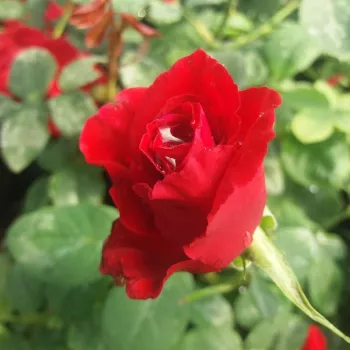
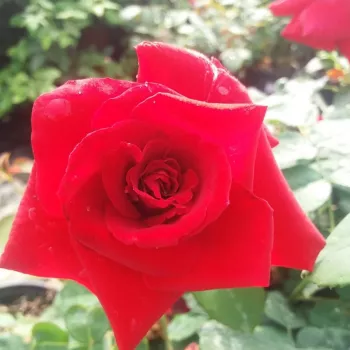
Large, double, cup-shaped blooms (26–39 petals) borne mainly singly on stems; strong remontant habit with an abundant second flush, giving repeated decorative value for cutting and garden display. |
| Colour data and phenology |
Deep, velvety blood-red with dark wine tones; buds near-black crimson, shifting through vivid ruby to rich crimson, then maturing to muted wine-red with slight edge browning, maintaining good colour retention overall. |
| Fragrance and aroma |
Classed as a strong, long-lasting scented rose; fragrance persists well on the bush and in the vase, enhancing its value near seating areas and for home-cut bouquets despite the lack of a detailed scent description. |
| Hip characteristics |
Occasionally forms small, spherical red hips around 8–12 mm; decorative in autumn but generally sparse, so they do not detract from the plant’s primary role as a flowering and cutting hybrid tea. |
| Resistance and winter hardiness |
Rated resistant to powdery mildew, black spot and rust; reliably hardy to approximately –21 to –18 °C (RHS H7, Swedish Zone 3, USDA 6b), suiting most UK garden conditions with standard winter care. |
| Horticultural recommendations |
Low maintenance, needing only routine pruning and feeding; spacing 55–100 cm depending on use, with 2.4–2.7 plants/m² for massing; thrives in well-drained soil and benefits from mulching to stabilise moisture. |
FOUNTAIN offers velvety blood-red blooms, strong fragrance and reliable disease resistance on a long-lived, own-root framework that suits easy-care family gardens, making it a refined choice if you wish to invest in a lasting romantic feature.