FLIRTING™ – red bedding shrub rose - Olesen & Olesen
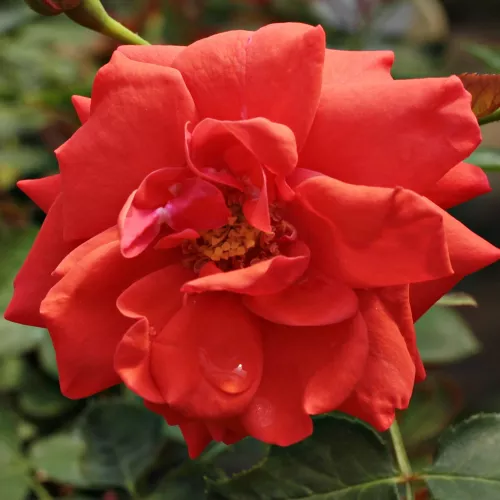
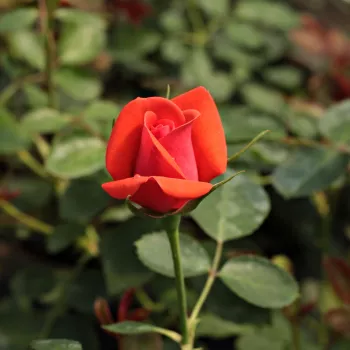
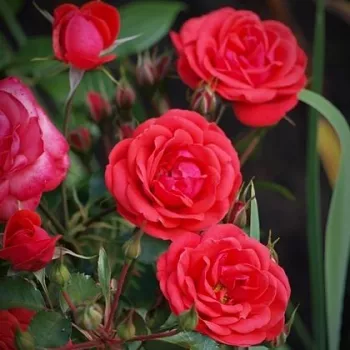
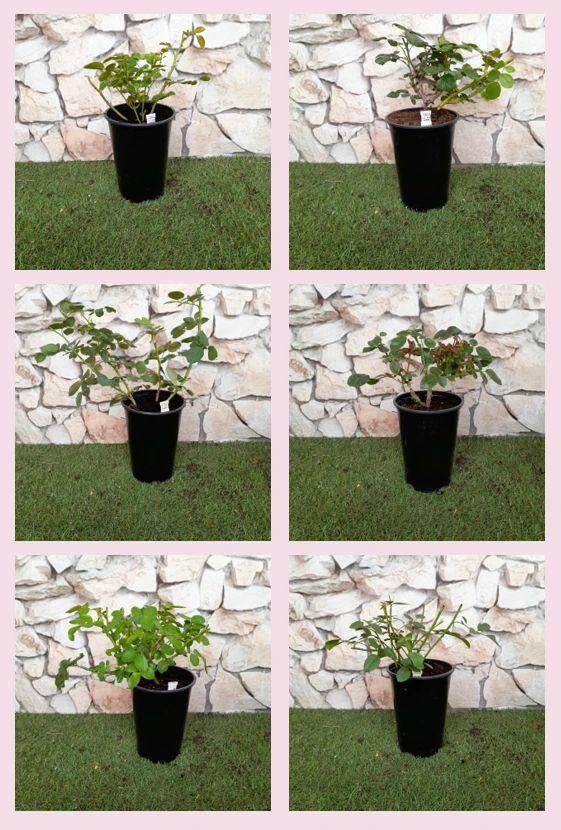
Understated yet irresistibly inviting, this compact floribunda is made for relaxed cottage-style borders where you can enjoy romantic colour with very little effort. Its low, cushion-like habit creates a natural, storybook edging along paths, beds and even informal hedges, bringing a sense of cosiness close to seating areas or a favourite bench. Masses of double, medium-sized blooms in changing shades of orange-red, coral and peach appear in generous flushes all season, providing reliable colour in smaller family gardens where every square metre counts. As an own-root plant it builds a naturally balanced framework that copes well with breezy sites and typical British weather, settling in steadily and rewarding you with long-term, dependable performance. Planted in a sunny, reasonably drained spot – or in a large 40–50 litre container – it offers low-maintenance structure, flexible pruning options and an easy way to echo classic English cottage style beside kitchen gardens or play lawns, moving from root-building to fuller top growth and then to a mature, richly flowering garden feature over its first three years of life for lasting value.
Usage options
| Target area | Reasoning |
|---|
| Front-of-border cottage edging |
The compact, spreading habit forms a neat, cushion-like line at the front of borders, ideal for framing lavender, herbs or low perennials without becoming over-tall. Dense, glossy foliage offers a tidy backdrop to its repeat-flowering clusters, keeping the border looking full even between flushes. This is reassuringly straightforward for beginners. |
| Small family garden flower bed |
Medium height and modest spread make it well-suited to average UK gardens where space is limited but a generous display is still desired. The repeat flowering and medium maintenance needs fit busy lifestyles, as a simple seasonal feed and watering in dry spells are usually sufficient. This planting style best suits a practical homeowner. |
| Low informal flowering hedge |
At the recommended 35–40 cm spacing, plants knit into a low, softly rounded line, giving romantic structure along paths, driveways or vegetable plots. The masses of coral-red to peach blooms bring storybook charm while remaining easy to trim once a year without complex techniques. This approach appeals to a traditionalist family. |
| Large containers and courtyard pots |
In 40–50 litre pots the balanced, low growth habit is easy to manage and less likely to rock in wind, providing vivid colour on patios, balconies or courtyards. Own-root plants re-shoot well if pruned harder, making pot upkeep more forgiving over the years. This suits a time-pressed urban gardener. |
| Romantic mass planting |
Planted at the suggested density for beds, the uniform height and spreading habit create a continuous sheet of warm-toned flowers that read as one cohesive feature. The colour changes from orange-red to peach add depth without complicating design, ideal for a simple yet impressive display. This works well for a style-conscious buyer. |
| Wind-exposed or coastal-feel sites |
The low, cushion-like structure and dense foliage help the plant remain stable and visually tidy where taller roses might rock or look wind-battered, while own-root growth gives a solid base that ages gracefully in such spots, coping well with blustery, mixed British conditions. This benefits a weather-aware gardener. |
| Low-input, long-term planting |
Being grown on its own roots, it forms a durable framework that can regenerate from the base after hard pruning or occasional damage, avoiding the graft issues of many older roses and maintaining an even look for years with just basic yearly care. This strongly supports a forward-planning owner. |
| Flexible training and pruning schemes |
The naturally low, branching habit allows for very relaxed maintenance: you can lightly trim for shape, cut back more firmly in late winter, or even refresh older plants without needing advanced pruning knowledge, then simply enjoy its repeated flowering cycles through the season. This fits a no-fuss enthusiast. |
Styling ideas
- Cottage Border Ribbon – Run a curving line of FLIRTING™ along the front of mixed borders, weaving between catmint and salvias to create a soft, low edging of repeat colour – ideal for lovers of relaxed, romantic schemes.
- Kitchen Garden Halo – Frame a vegetable or herb plot with a loose hedge, pairing the rose with chives and marigolds so the productive area feels ornamental too – perfect for families who value both beauty and home-grown produce.
- Patio Feature Pot – Plant a single bush in a 40–50 litre terracotta pot with trailing thyme at the rim to bring warm coral tones right to the seating area – suited to balcony or terrace owners wanting easy, movable colour.
- Storybook Bed – Combine drifts of this rose with Rudbeckia and Echinacea for a nostalgic, picture-book flower bed of reds, peaches and golds that glows from summer into autumn – appealing to those chasing classic English country charm.
- Pathway Welcome – Line a front path with evenly spaced plants, underplanting with low-growing allysum for a gentle, scented entrance that remains compact and manageable – a good option for busy homeowners seeking tidy kerb appeal.
Technical cultivar profile
| Parameter | Data |
|---|
| Name and registration |
Floribunda, bed rose type; registered as POUlac011, traded as Flirting™ Palace®; exhibition category floribunda bush rose used mainly as a compact flowerbed shrub in private gardens. |
| Origin and breeding |
Bred by L. Pernille Olesen and Mogens Nyegaard Olesen (Poulsen Roser A/S, Denmark), breeding completed 1992, introduced commercially in 2003; parentage undocumented, selected for bedding suitability. |
| Growth and structural characteristics |
Low, spreading shrub 40–50 cm high and 55–65 cm wide, forming a cushion-like outline with dense, glossy dark green foliage and moderate prickliness, ideal for edging, small beds and low informal hedges. |
| Flower morphology |
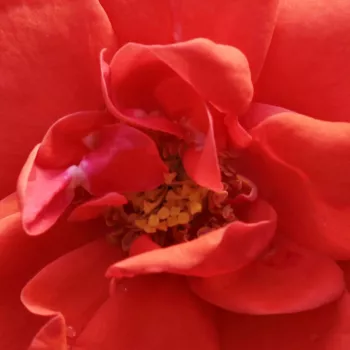
Double, cup-shaped clusters of medium-sized blooms (about 4–7 cm) carried in large inflorescences; 26–39 petals; repeat-flowering habit with an abundant second flush, useful for long-season display. |
| Colour data and phenology |
Initially bright orange-red with coral tones, then orange-pink with a yellowish centre, finally soft peach before fading; colour retention moderate but transitions create depth; uniformly orange-pink at full, saucer-shaped openness. |
| Fragrance and aroma |
Fragrance is mild but detectable, with a delicately spicy, piquant character; not overpowering near seating areas, adding subtle interest without clashing with strongly scented companion plants or small courtyards. |
| Hip characteristics |
Occasional spherical hips, 10–14 mm diameter, orange-red RHS 40A; usually incidental to garden effect but can offer modest seasonal interest in late season if spent flowers are not regularly removed. |
| Resistance and winter hardiness |
Hardy to about −26 to −23 °C (RHS H7, USDA 5b, Swedish zone 4); disease resistance moderate for black spot, mildew and rust, needing protection only in extremely humid locations for best foliage quality. |
| Horticultural recommendations |
Best in sunny positions with well-drained soil; planting distance 35–65 cm depending on hedge or specimen use; medium maintenance, with regular watering in prolonged drought and standard rose feeding once or twice a season. |
FLIRTING™ offers compact structure, abundant repeat flowering and forgiving, long-lived own-root growth, making it a cultured, dependable choice for anyone wishing to anchor a small romantic border with ease.