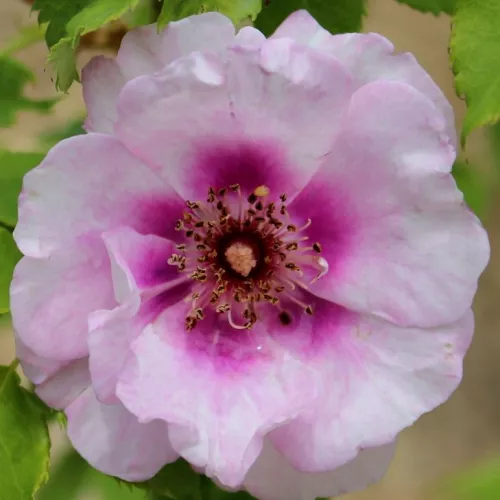
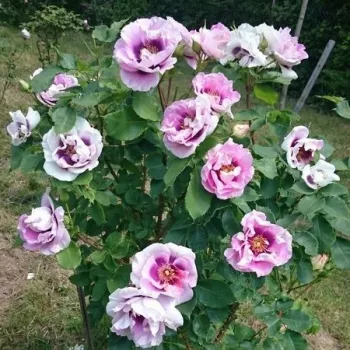
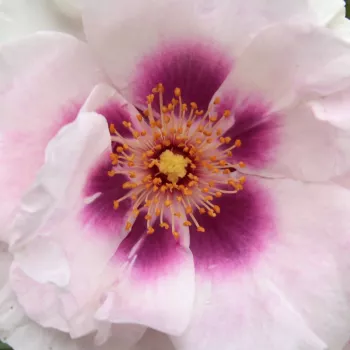
The outer parts of the petals are pale lilac-white, while the inner parts show a distinct, dark crimson eye spot. - floribunda bedding rose - strong, pronounced-scented rose - fresh, lemony
– Unusual lilac-white blooms with dark eye.
– Strong, fresh lemony fragrance in flower.
– Compact, bushy habit for beds and pots.
– Good heat tolerance and winter hardiness.
– Repeats well with abundant second flush.
– Special feature: Awarded at Bagatelle and Nagaoka for beauty and scent.
Reliable online shop – Low chemical use
darinaROSE® ORIGINAL 2-litre own-root potted rose
19,10 £
Unfortunately, we are currently unable to ship to the United Kingdom; we only deliver to countries within the European Union. For more information, please contact us!
4.5(6828)
BLUE EYES – lilac-white bedding floribunda rose – James
With its unusual lilac-white petals and dark central “eye”, Blue Eyes creates a truly romantic focal point in family gardens while remaining reassuringly robust in everyday conditions. This compact floribunda settles well in typical British soils, even where gardens face brisk breezes and frequent showers along exposed coasts, giving you dependable colour from early summer onwards. The bushy, medium-height habit is naturally compact, making it easy to place beside a path, near a seating area or in front of taller shrubs. Semi-double blooms with a rich fragrance invite you to sit and enjoy afternoon tea, while clusters of flowers continue in flushes with reliable repeat performance. The own-root 2‑litre plant arrives already established, building strong roots in the first year, fuller shoots in the second and a rounded, storybook presence by the third, for an impressively long-lived feature in your cottage-style borders with notably low day-to-day fuss.
Blue Eyes showing pale lilac-white flowers with a vivid purple eye.
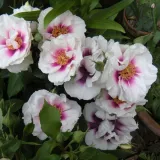
Blue Eyes petals fading to almost white, with the central eye softening to mauve-purple.
Usage options
Target area
Reasoning
Front-of-border beds by a terrace or seating area
Blue Eyes forms a dense, bushy mound that rarely overwhelms nearby plants, so you keep clear sightlines from garden chairs and windows. Repeating flushes of distinctive lilac blooms with the dark eye create a soft, romantic frame for family gatherings and evening drinks. The own-root plant settles into a predictable, medium-sized shape that needs only straightforward pruning, which suits busy home gardeners.
Mixed cottage-style rose and perennial border
The compact floribunda habit and moderate spread allow easy weaving between catmints, salvias and traditional cottage favourites without crowding. Semi-double flowers offer accessible pollen while still reading as classic roses, so they blend naturally with a relaxed English countryside look. Over time the own-root base thickens, giving a long-lived structure ideal for romantic cottage enthusiasts.
Feature planting near paths, gates or front doors
The unusual eye-patterned blooms stand out at a glance, adding character where you pass every day. Strong, fresh, lemony scent drifts as you walk by, especially in still evening air. Because the plant keeps a manageable height, it will not snag clothing excessively despite moderate thorns, making it practical for family households.
Small flowering hedge or loose boundary line
Planted at the recommended spacing, Blue Eyes knits into a low, informal hedge that defines areas without forming a solid wall. Repeat flowering ensures colour along the whole line for much of the season, while own-root growth gives a stable framework that responds well to occasional shaping. This simple structure suits traditional-style gardeners.
Large containers on patios or roof terraces
In a substantial 40–50 litre container, the compact root system can develop steadily, which means fewer problems with drying out between waterings. The bushy habit and cluster-flowered stems create generous colour even where border space is limited. Moderately self-cleaning flowers reduce deadheading to an occasional task for urban balcony owners.
Sunny spots in family lawns or play-adjacent beds
This rose performs best in full sun, rewarding an open position with strong scent and regular repeat blooms. The plant tolerates periods of summer heat well provided it is not left in prolonged drought, so standard garden watering routines are normally sufficient. Its moderate disease resistance fits a low-intervention approach preferred by health-conscious families.
Coastal or more exposed garden sections
Dense, glossy foliage and a rounded framework help the plant stay upright and visually tidy, giving you a reliable flowering point even where winds and frequent showers sweep across the plot. As an own-root rose it anchors and regenerates well if stems are ever damaged or pruned hard, which is reassuring for coastal homeowners.
Kitchen-garden edges and paths to seating arbour
The distinctive flower eye and strong lemony scent create a gentle transition between productive beds and a seating arbour, echoing the feel of a traditional working cottage plot. Own-root plants mature steadily into a long-lived, low-maintenance framework that copes with straightforward, once-a-year pruning preferred by time-poor beginners.
Styling ideas
Storybook-edging – Line a cottage path with Blue Eyes, underplanting with lamb’s ear and Irish moss for a soft, pastel carpet – ideal for lovers of gentle, romantic borders.
Patio-centrepiece – Place one plant in a large clay pot (40–50 litres) surrounded by glaucous sedge for foliage contrast – suited to small patios needing a single striking focus.
Kitchen-crossing – Alternate Blue Eyes with herbs like chives or thyme along vegetable plot paths – perfect for gardeners who enjoy blending ornament and utility.
Pastel-partnering – Combine with airy grasses and pale perennials to highlight the dark flower eye and scented clusters – attractive for those curating a soft, feminine palette.
Low-hedge – Plant a loose line at recommended spacing to edge lawns or divide garden rooms – a choice for families wanting gentle structure without hard fencing.
Technical cultivar profile
Category
Data
Name and registration
Floribunda bedding rose, Hybrid Hulthemia persica group; registered as PEJbigeye, marketed as Blue Eyes, also known in some catalogues as Eyes for You.
Origin and breeding
Bred in the United Kingdom by Peter Joseph James from (‘SCRivbell’ × ‘Tingle’) × ‘Blue for You’; introduced and registered in 2009 from 2004 breeding work.
Awards and recognition
Recognised with Certificat de Mérite at Bagatelle, Paris in 2011, and awarded a Silver Medal at the Nagaoka International Fragrant Rose Trials in Japan in 2012.
Growth and structural characteristics
Compact, bushy shrub reaching about 70–95 cm in height with a 60–90 cm spread; moderately thorny shoots clothed in dense, glossy, dark green foliage for a well-filled outline.
Flower morphology
Semi-double, cup-shaped flowers with 13–25 petals, produced in clusters on short stems; large bloom size in repeat flushes, with moderate self-cleaning that still benefits from occasional deadheading.
Colour data and phenology
Pale lilac-white petals with a distinct dark crimson to violet eye; colour lightens towards white with a softer mauve-purple centre as blooms age, while remontant flowering provides an abundant second flush.
Fragrance and aroma
Pronounced, fresh lemony fragrance considered strong for the group; open, semi-double form and scent help attract pollinating insects where nectar and pollen are easily accessible.
Hip characteristics
Produces small, spherical hips around 6–8 mm across, coloured orange-red and moderately abundant, adding fine-textured seasonal interest after flowering if spent blooms are not removed.
Resistance and winter hardiness
Hardy to around −21 to −18 °C (RHS H7, USDA 6b); tolerates summer heat well but prefers regular watering in prolonged dry spells; shows moderate resistance to common fungal diseases.
Horticultural recommendations
Best grown in sunny beds, borders or large containers at 50–95 cm spacing; medium maintenance, with occasional plant protection and light annual pruning to renew flowering wood and shape.
Blue Eyes combines compact, manageable growth, distinctive scented flowers and long-lived own-root reliability, making it a thoughtful choice for relaxed, romantic gardens you wish to enjoy for many seasons; consider it where space and time are both limited.
Detailed product attributes
Product Identification Data
Product Name:
BLUE EYES – lilac-white bedding floribunda rose - James
Product Type:
darinaROSE® ORIGINAL - 2-litre own-root potted rose
Competition and Show Awards:
Bagatelle (Paris) – Certificat de Mérite (2011); Nagaoka International Fragrant Rose Trials (Echigo Hillside, Japan) – Silver Medal (2012)
Flower Colour Description:
The outer parts of the petals are pale lilac-white, while the inner parts show a distinct, dark crimson eye spot.
Closed Bud:
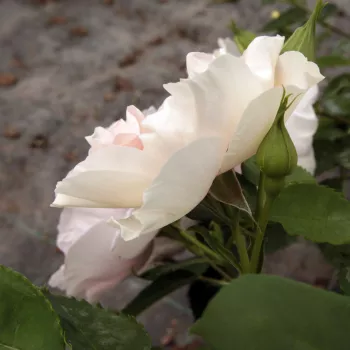
Buttery to lilac-white base colour with a subtle lavender tint.
Newly Opened Flower:
Pale lilac-white petals with a vivid violet-purple lens-shaped spot in the centre.
Full Bloom:
Pale lilac-white-edged, slightly undulating petals, the central eye spot remains an intense purple-lilac.
Before Fading:
The petals fade to almost white, and the eye spot takes on a muted mauve‑purple shade.
Colour Fading Description:
During opening the pale lilac‑white petals gradually fade to almost white; the central violet eye remains intense until full opening, then softens to a subdued mauve‑purple.
Pollinator Attraction:
According to descriptions, its open, semi‑double flowers and fragrance attract pollinators, since flower form (single/semi‑double/double) and the accessibility of the stamens influence how readily pollinating insects can reach nectar and pollen.
Pollinator-Friendly Rating:
Because of its semi-double flowers, it can be considered partially pollinator-friendly.
Our product is a rose grown with pharmaROSA®’s unique cultivation technology!
2-litre, own-root, potted rose.
With a shoot system appropriate to the season.
With a root system that thoroughly permeates the growing medium.
Quality compliant with the requirements of the E.N.A. (European Nurserystock Association).
Supplied in unique packaging that prevents damage.
Can be planted during frost-free periods.
True-to-variety rose bush with a unique identifier.
The pharmaROSA® own-root potted rose is a well-rooted plant that supports reliable establishment when planted and cared for properly, so it can be planted whenever the soil is not frozen.
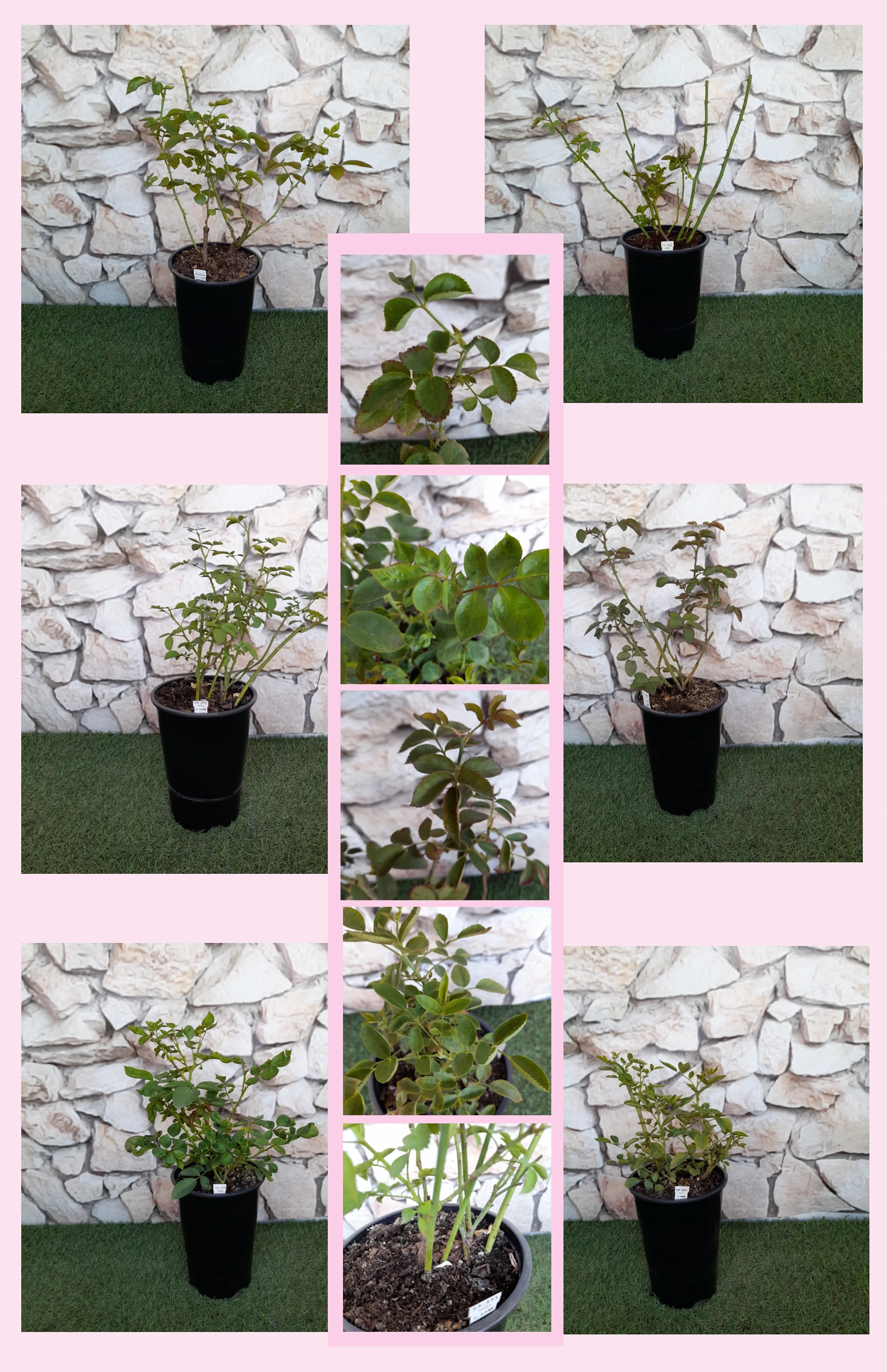
Crop overview: several varieties and growth stages in a short crop section.Shoot system: intensive growth of fresh basal shoots on a young plant.Root system: demonstration of a vigorous root system permeating the growing medium, by removing the pot.Balance: mature plant with root system and shoots in harmony with each other.
Information about the videos
The video series is not a “seasonal showcase”; it illustrates the essence of pharmaROSA® own-root cultivation in a tangible way: how the plant is built up, what the root system is like and how the shoot system regenerates. The recordings were therefore made at different times and with plants at various stages of development, so mixed foliage levels and differing stages of growth may appear in the videos. They are not a ‘sample’ of the batch dispatched, but a visual explanation of how the technology works. The current condition of the rose available to order — typical for the given period and similar to what you can expect to receive in the parcel — is shown in the upper part of the product page.
Pages for private customers Garden roses for the family garden, with minimal care → ORIGINAL® Premium garden roses – instant impact, a truly showpiece garden → EXTRA® Pages for professionals and private customers Roses for public spaces – large areas, sustainable maintenance → NATURAL® Roses for projects – hedge and row planting, fast implementation → RAPID® For professional partners only Production – propagation material for garden roses, wholesale → NEONATAL®
Company details
PharmaRosa Ltd. Company registration number: 01-09-717479 VAT number: 13075314-2-43 Plant health registration no.: HU130721 Bank account (IBAN): HU85117631891388688400000000 BIC (SWIFT): OTPVHUHB Bank name: OTP Bank Nyrt.