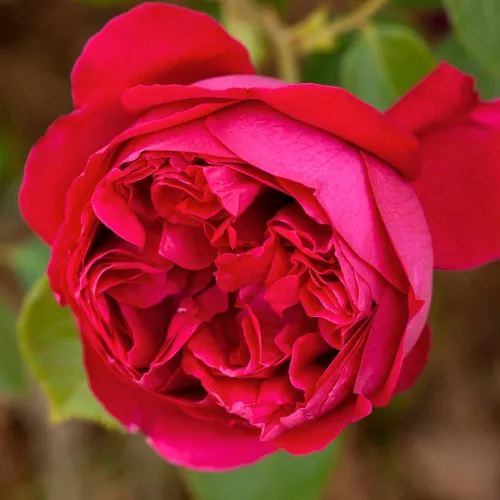
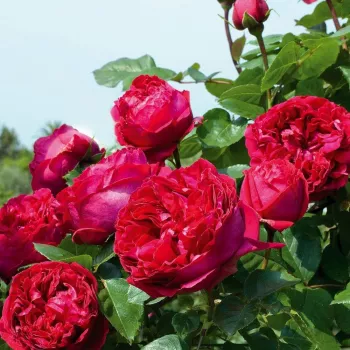
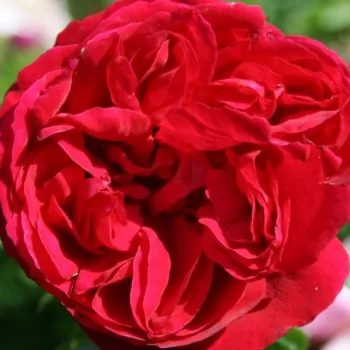
ERIC TABARLY® – dark red climbing rose – Meilland
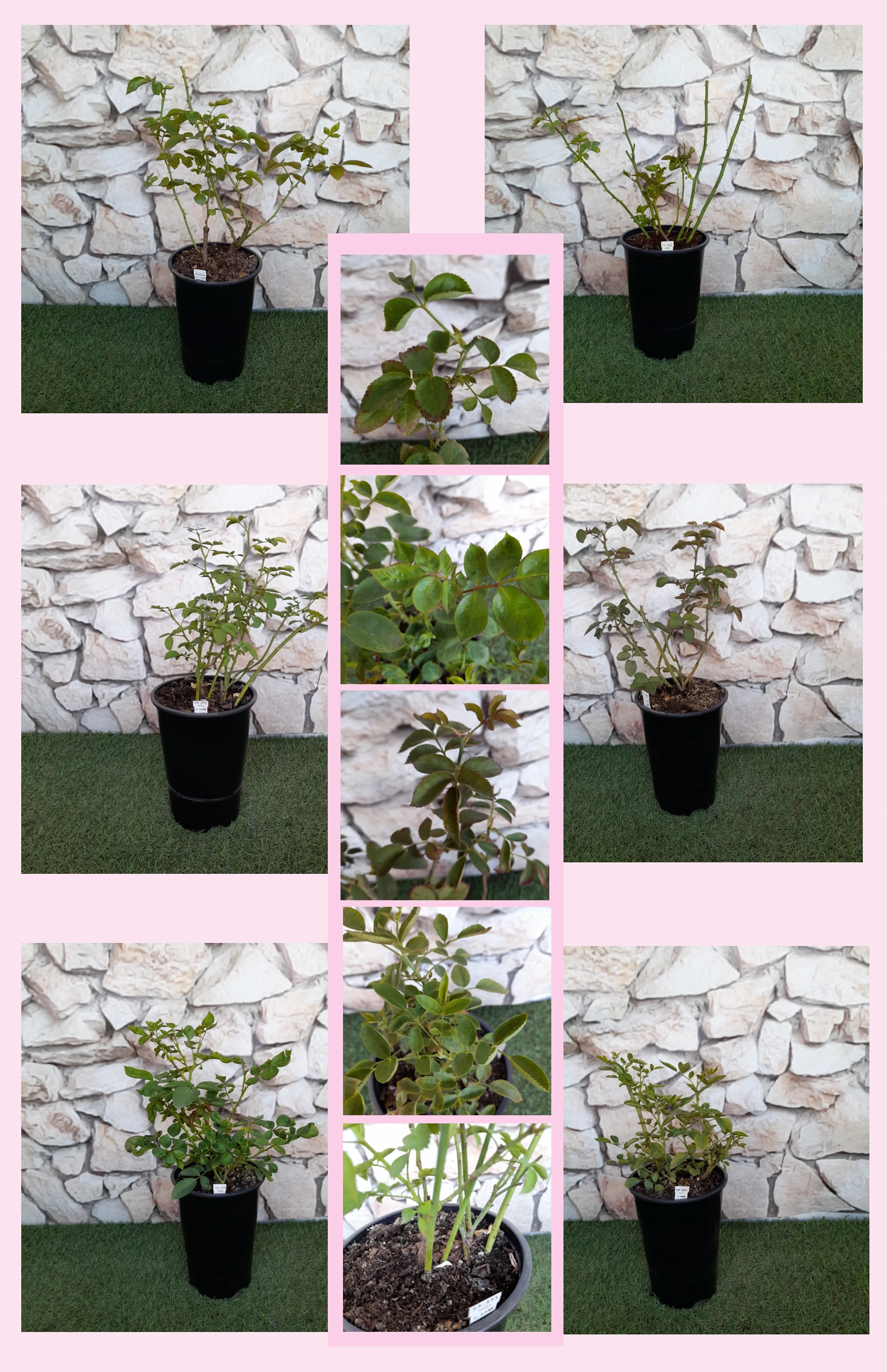
Drawing on the romance of classic French climbers, ERIC TABARLY® folds naturally into a family garden, bringing velvety petals, dramatic arches of bloom and a classic damask scent to pergolas, fences and façades. Its remontant flowering gives generous flushes from early summer, while dense, mid‑green foliage keeps structures looking filled and sheltered even between waves of blossom. As an own‑root climber it matures gradually, rewarding patience with reliable regrowth and a notably long life. In typical British conditions it copes well with exposed spots where coastal winds and rain demand sturdy, well‑anchored growth, provided the roots are given decent drainage. Easy to place in cottage‑style borders with clematis or kitchen‑garden hedging, this enduring rose will, over a few seasons, move from a young plant to a fully furnished arbour, the familiar rhythm of year‑on‑year development becoming part of your garden’s story.
Usage options
| Target area | Reasoning |
|---|
| Pergola or arbour over an afternoon seating area |
Ideal where you want a strong structure of growth and billows of dark red, rosette blooms framing a bench or small dining set. Its long, climbing canes create a romantic tunnel effect and own‑root resilience means it will steadily build presence over many years, suiting relaxed family gardeners. |
| House façade or garage wall |
Clothing a sunny or lightly shaded wall, the dense foliage and repeat flowering help soften brick or render while preserving a traditional look. Good heat tolerance suits south‑ or west‑facing aspects, while medium maintenance simply asks for tying‑in and a light tidy, appealing to busy homeowners. |
| Boundary fence in a cottage garden |
Used along a garden boundary it provides height, privacy and a storybook backdrop for herbs, vegetables and perennials. Own‑root growth gives dependable recovery after pruning and the structured height works well in small to medium plots, making it practical for kitchen‑garden enthusiasts. |
| Feature arch at the entrance to the garden |
Training ERIC TABARLY® over an entrance arch creates an immediate sense of arrival, with strong fragrance at nose level and deep red clusters that photograph beautifully. Medium disease resistance and robust canes keep upkeep reasonable for romantic cottage‑style lovers. |
| Large container on terrace or courtyard (40–50 L minimum) |
Where soil is heavy or space limited, a generous container lets you control drainage and feeding while enjoying a climber against railings or a wall. A 40–50 litre pot supports root development and stable anchoring in spots where coastal winds and rain can buffet plants, fitting urban balcony owners. |
| Part‑shaded side passage or north‑east aspect |
Tolerant of partial shade, this rose will still flower well where only morning or dappled light is available. Strong colour and form prevent the display from looking washed out, bringing warmth to otherwise overlooked side paths for practical yet style‑conscious gardeners. |
| Cut‑flower corner near the house |
Grown where stems are easy to reach, its large, very full blooms and long‑lasting damask fragrance make superb cut flowers. The own‑root habit supports continuous framework renewal, useful when you regularly harvest stems, which suits home floristry enthusiasts. |
| Long‑term focal specimen in a medium family garden |
Planted with space to spread, ERIC TABARLY® can become a defining feature over several seasons, combining stable dark red colour with reliable structure. Expect roots to establish first, then stronger top growth, before you enjoy its full ornamental presence after a few years, rewarding patient garden planners. |
Styling ideas
- Tea‑arbour – Train ERIC TABARLY® over a simple wooden arbour with a small bistro table beneath, pairing it with soft pink clematis for layers of bloom – ideal for couples who cherish quiet afternoon tea corners.
- Storybook‑porch – Frame a cottage‑style porch with this dark red climber and underplant with lavender and catmint to echo its fragrance – perfect for homeowners seeking a welcoming, traditional frontage.
- Kitchen‑border – Run it along a fence beside raised vegetable beds, mixing in gooseberries and herbs so flowers, scent and produce share the same space – suited to families who enjoy a productive yet pretty garden.
- Courtyard‑classic – Grow it in a 50‑litre terracotta pot against a sun‑warmed wall, with white hydrangeas in matching containers to contrast the deep red blooms – great for urban gardeners wanting elegance in small courtyards.
- Evening‑scent – Place a bench beneath a pergola clothed in ERIC TABARLY®, weaving pale clematis through its foliage for twilight contrast – appealing to those who value fragrant, low‑effort evening relaxation spaces.
Technical cultivar profile
| Parameter | Data |
|---|
| Name and registration |
ERIC TABARLY® Romantica® (MEIdrason), large‑flowered climbing rose from the Romantica® collection; ARS exhibition name Eric Tabarly; registered cultivar name MEIdrason, commercial climber type. |
| Origin and breeding |
Bred by Alain Meilland (Meilland International SA), France, from ‘Cappa Magna’ × ‘Ulmer Münster’; bred 2002, protected in EU from 2002, US plant patent PP15052 registered 2004, introduced after 2004. |
| Awards and recognition |
Recognised on the show bench as a quality climber; awarded the Los Angeles Rose Society Show – Climber (ARS) Award in 2005 for exhibition performance and bloom character. |
| Growth and structural characteristics |
Vigorous climbing habit, typically 300–500 cm high with 200–300 cm spread; dense mid‑green, slightly glossy foliage; canes densely thorned; weak self‑cleaning, so old blooms benefit from manual deadheading. |
| Flower morphology |
Very full, rosette‑shaped flowers with 40+ petals, XL size from about 3.5 inches upwards; cluster‑flowered trusses; remontant with a generous second flush, providing repeated displays through the main season. |
| Colour data and phenology |
Deep, velvety dark red with subtle crimson tones; buds dark burgundy, opening rich red, darkening to deep burgundy then slightly fading only in strong sun; good colour retention with uniform dark red at full bloom. |
| Fragrance and aroma |
Strong, long‑lasting classic damask fragrance; primarily ornamental as the very double blooms enclose stamens and offer limited access for pollinators, best appreciated near seating or paths for maximum scent enjoyment. |
| Hip characteristics |
Occasional spherical hips, around 12–18 mm diameter; red, RHS N45A; appear sporadically rather than heavily, so they do not usually dominate the plant’s late‑season appearance in most garden situations. |
| Resistance and winter hardiness |
Medium resistance to powdery mildew, black spot and rust; good heat tolerance with regular watering in drought; reliably hardy to about −23 to −21 °C (RHS H7, USDA 6a, Swedish Zone 3) in well‑prepared soil. |
| Horticultural recommendations |
Best on pergolas, fences and façades at 145–270 cm spacing; tolerates partial shade; needs tying‑in and occasional plant protection; own‑root plants suit long‑term positions and respond well to renewal pruning. |
ERIC TABARLY® offers velvety dark red, strongly scented blooms on a long‑lived, own‑root climber that rebuilds reliably after pruning, making it a thoughtful choice for those planning a romantic, enduring garden feature.