EMERAUDE D'OR – golden-yellow hybrid tea rose - Delbard-Chabert
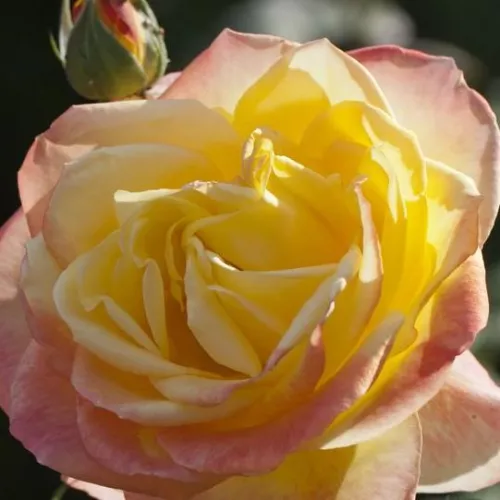
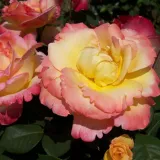
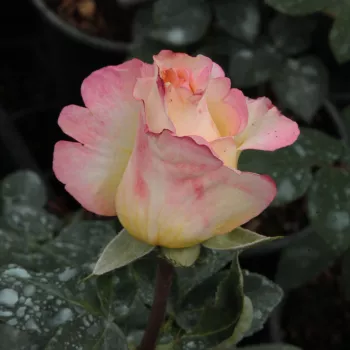
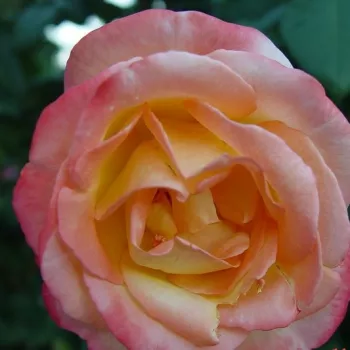
In a classic family garden where Sundays mean unhurried tea and children’s games on the lawn, EMERAUDE D’OR settles in as a quietly dependable focal point, its golden blooms glowing against dark green leaves with a bronze sheen. This upright, very bushy hybrid tea lends itself beautifully to traditional cottage-style borders, hedging a path or framing an arbour with a feeling of cosy enclosure and storybook romance. Own-root planting offers reassuring longevity and stable shape over the years, regenerating well if stems are cut back after weather damage or routine pruning. You can plant it through the season with confidence, even in gardens where winter is sharp and frosts bite hard, thanks to its reliable hardiness and good anchoring in exposed spots with frequent strong winds and driving rain. Over time you will notice how its changing colours – from luminous yellow buds to flushed pink, then richer carmine flower edges – give the border a living palette that suits “girly” cottage schemes, pastel planting and kitchen-garden boundaries. Maintenance remains pleasantly manageable, with only occasional disease checks and the simple task of snipping off spent flowers to keep the shrub neat and productive. In the first years the habit balances quickly, with roots establishing, then shoots building, before you enjoy its full ornamental presence in the third season. The generous flower size and tidy form work especially well beside seating areas, where a single cut bloom in a small vase brings the same elegance indoors. For those who cherish a rose that matures gracefully alongside the garden itself, this cultivar offers a quietly confident presence that rewards patient, gentle care and everyday enjoyment.
Usage options
| Target area | Reasoning |
|---|
| Front or mid-border in a cottage-style family garden |
Its upright, very bushy habit and 140–180 cm height create a clear vertical accent without overwhelming typical UK family borders, giving structure among perennials and herbs while staying in scale for smaller gardens; ideal for beginners. |
| Feature rose near seating, terrace or summerhouse |
Large, double, cup-shaped flowers on solitary stems offer a classic hybrid tea look, perfect for positions where individual blooms can be admired up close and occasionally cut for vases, appealing to those who enjoy traditional hybrid tea form; ideal for romantics. |
| Informal hedge or boundary in a small to medium plot |
Recommended spacing of about 90–100 cm allows you to create a loose, flowering hedge that marks paths or separates kitchen garden from lawn, providing seasonal privacy and a romantic frame around family spaces; ideal for homeowners. |
| Season-long colour anchor in mixed planting schemes |
The bloom cycle moves from golden yellow to apricot and fuchsia pink, then deeper carmine tones, so even one plant offers a shifting colour story that ties together pastel, white or stronger pink companions in a “girly” cottage palette; ideal for stylists. |
| Own-root, long-lived structural rose in established beds |
As an own-root plant, it ages evenly without graft-suckers, recovers well after harder pruning and holds its ornamental value for many years, suiting gardeners who prefer to plant once and keep a dependable framework shrub; ideal for planners. |
| Low-effort rose for busy households and new gardeners |
With medium maintenance needs and medium disease resistance, it generally requires only periodic checks and light deadheading, fitting those who want a handsome, repeat-flowering rose but have limited time for detailed care; ideal for families. |
| Long-season focal point in colder UK regions |
Hardy to around −21 to −18 °C (RHS H7, Swedish zone 3, USDA 6b), it copes reliably with typical British winters, making it a sound choice for exposed suburban plots wanting a romantic look without the worry of frequent winter losses; ideal for pragmatists. |
| Wind-exposed beds, coastal and open-site plantings |
The strong, bushy framework and good root anchoring help it stand firm in open, breezy gardens where frequent wind and driving rain might rock flimsier roses, giving reassurance in unsheltered family plots and coastal fringes; ideal for coastal-gardeners. |
Styling ideas
- Kitchen-border charm – Border EMERAUDE D’OR with chives, lavender and low herbs so its shifting yellow-to-pink blooms light up a productive edge by the veg beds – for cottage-style kitchen gardeners.
- Pastel-hedge walk – Plant an informal hedge and weave through soft pink campanulas and white foxgloves to create a romantic path towards a bench – for lovers of dreamy, storybook walks.
- Tea-terrace focus – Use a pair in large 50–60 litre containers flanking a small terrace, underplant with nepeta and dwarf euonymus for neat foliage contrast – for busy owners wanting easy elegance.
- Perennial-partner glow – Combine with Echinops and Penstemon ‘Husker Red’ for blue and bronze foliage contrast, letting the golden flowers act as a warm focal point – for confident colour mixers.
- Family-front garden – Place a single specimen by the front path with low box or euonymus edging so its bushy shape and reliable flowering greet you daily – for families seeking welcoming kerb appeal.
Technical cultivar profile
| Property | Data |
|---|
| Name and registration |
Hybrid tea rose; registered as DELrop, marketed as Emeraude d'Or. ARS exhibition name Emeraude d’Or. Part of the hybrid tea collection, suitable as garden and exhibition flower. |
| Origin and breeding |
Bred by André Delbard-Chabert, Pépinières et Roseraies Georges Delbard, France. Cross of ‘Sultane’ × ‘Queen Elizabeth’. Introduced and registered in 1965, distributed in France and the UK. |
| Growth and structural characteristics |
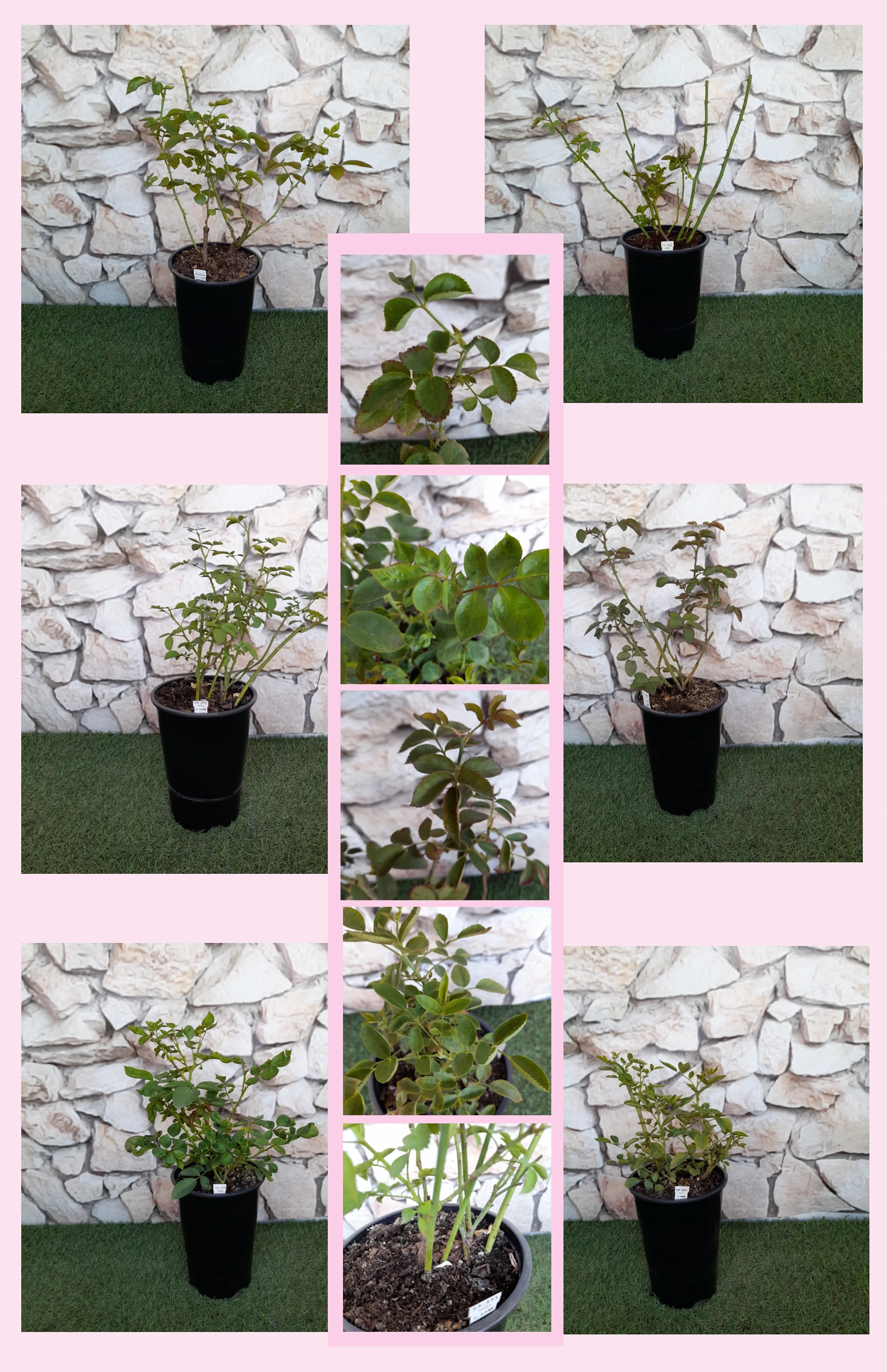
Upright, very bushy shrub 140–180 cm tall, 100–140 cm wide. Moderately dense, slightly glossy dark green foliage with a bronze tinge. Moderately thorny shoots form a sturdy, well-filled framework over time. |
| Flower morphology |
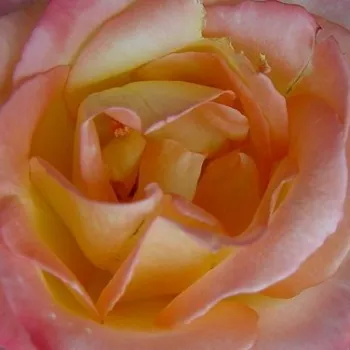
Large, double hybrid tea blooms with 26–39 petals, mainly solitary on stems. Cup-shaped flowers of distinctly medium height, remontant with a plentiful second flush, suitable for cutting and display. |
| Colour data and phenology |
Golden-yellow base with soft pink veiling (RHS 14A outer, 45B inner). Buds amber yellow, then apricot and fuchsia pink tones deepen to carmine, with occasional beige-edged ageing; moderate colour retention. |
| Fragrance and aroma |
Delicate, rose-like fragrance of very weak intensity, often barely noticeable in the garden. Chosen primarily for its colour and flower form rather than scent, best appreciated visually at close quarters. |
| Hip characteristics |
Rose-hip set generally sparse due to double flowers. Where formed, hips are spherical, orange-red, around 14–22 mm across, adding modest late-season interest without significant self-seeding issues. |
| Resistance and winter hardiness |
Medium overall disease resistance, with moderate susceptibility to powdery mildew, black spot and rust, requiring occasional monitoring. Hardy to approximately −21 to −18 °C (RHS H7, Swedish zone 3, USDA 6b). |
| Horticultural recommendations |
Prefers full sun and well-drained soil. Plant 90–100 cm apart for hedges, 180 cm as specimen. Deadhead to offset weak self-cleaning. Medium maintenance; occasional pest and disease control as needed. |
EMERAUDE D'OR offers a bushy, upright presence with glowing colour shifts, strong winter hardiness and the long-term stability of an own-root hybrid tea, making it a thoughtful choice for gardeners planning a lasting, romantic border.