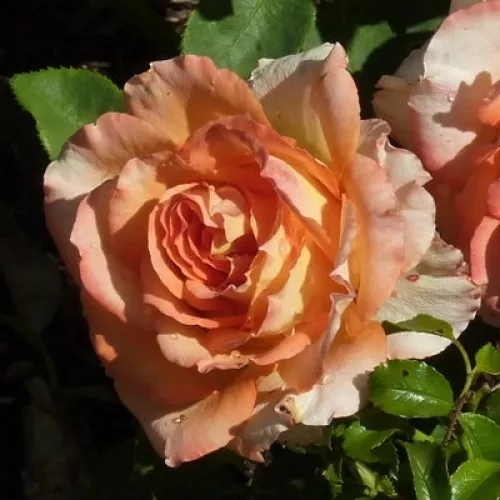
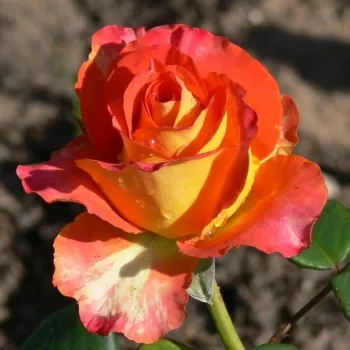
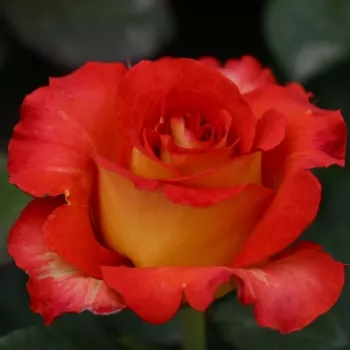
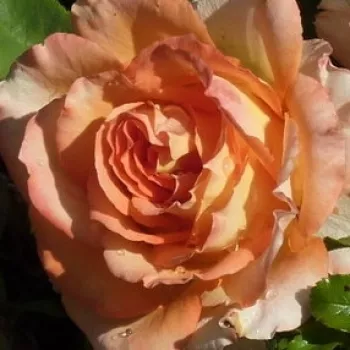
A warm golden-yellow base is enlivened by vivid orange and delicate red edges. - tea hybrid rose - very weak, barely perceptible scented rose - scent description not available
– Glowing golden‑orange blooms with red edges.
– Elegant high‑centred, classic hybrid tea form.
– Compact, bushy habit for beds and borders.
– Medium disease resistance in garden use.
– Suitable for cutting and vase decoration.
– Special feature: Colour shifts beautifully from deep red bud to peach‑rose tones as the bloom matures.
Thoughtful design – Soil-friendly approach
darinaROSE® ORIGINAL 2-litre own-root potted rose
18,50 £
Unfortunately, we are currently unable to ship to the United Kingdom; we only deliver to countries within the European Union. For more information, please contact us!
4.5(6850)
ELISABETH VON THÜRINGEN – golden-orange hybrid tea rose
Under the soft light of late afternoon, ELISABETH VON THÜRINGEN settles into your garden with a quietly luxurious charm: high‑centred buds and generous blooms in golden-orange and peach tones that look at home against clipped hedges, cottage borders and well‑loved lawns. This compact, bushy hybrid tea lends itself to simple, repeatable planting schemes and is easy to space in typical family plots, even where soil is heavy and benefits from improved drainage in raised beds. The colour shift from red‑tinted bud to warm, glowing flower gives long‑lasting interest in beds and cutting rows, while the own‑root form supports a long lifespan, reliable regrowth after pruning and stable shape over many seasons. Starting with a well‑rooted 2‑litre plant keeps tasks light: plant, water, mulch and allow it to put energy into roots in year one, build strong flowering shoots in year two, and enjoy its full ornamental impact by year three.
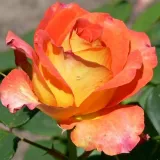
Elisabeth von Thüringen in different opening phases, from deep-red bud to golden-orange bloom.
Elisabeth von Thüringen with fully open golden-orange blooms.
Usage options
Target area
Reasoning
Main flower bed in a family garden
The compact, bushy growth (around 50–75 cm high) makes this rose very easy to position near the front or middle of a mixed border, where children and adults can appreciate the colour changes at eye level without it overtaking neighbouring plants; straightforward deadheading and seasonal pruning are quite manageable for beginners.
Traditional cottage-style border
The warm golden-orange blooms with fine red edges blend beautifully with soft pinks, blues and creams, reinforcing a romantic cottage feel without clashing; the solitary, high‑centred flowers lend a classic hybrid tea look that suits storybook‑style paths and low picket fences for romantics.
Cutting row beside a kitchen garden
Large, high‑centred flowers borne singly on sturdy stems are ideal for cutting, with the colour evolving attractively in the vase; remontant flowering and an abundant second flush provide a steady trickle of stems through the summer, with minimal technical knowledge needed for homeowners.
Small front garden or town house approach
The moderate height and fairly narrow spread allow neat planting along drives or short paths, giving a cultivated look without demanding complex pruning; own‑root plants recover well from occasional mishaps, supporting long-term structure and reducing replacement costs for busy urbanites.
Low informal hedge or edging line
Regular spacing at 25–30 cm creates an attractive, low rose line that frames lawns or vegetable plots; the bushy habit helps the plants knit together, while simple winter pruning keeps them tidy without specialist skills, suiting family gardens tended by hobby-gardeners.
Raised beds on heavier or wetter soils
This rose performs well in typical UK conditions when given reasonable drainage and a sunny spot, so raised beds or improved soil structure are enough to keep roots healthy; own‑root plants anchor firmly over time, giving a stable, long-lived presence valued by planners.
Large containers on patio or terrace
In a container of at least 40–50 litres with quality compost, the compact habit and medium maintenance needs translate into a striking, easy-care feature near seating areas; watering and feeding routines are straightforward, with reliable repeat bloom for relaxed tea-drinkers.
Long-term structural planting scheme
The own‑root form supports gradual thickening at the base and dependable regrowth after harder pruning, helping the plant maintain shape and flowering over many years; medium disease resistance aligns well with simple preventive care routines for time-conscious families.
Styling ideas
Cottage-arch – Plant ELISABETH VON THÜRINGEN in pairs to flank a path or small metal arch, underplanting with Coreopsis grandiflora for sunny yellow echoes – ideal for lovers of gentle countryside romance.
Kitchen-border – Line a vegetable or herb plot with a short row of these roses, interspersed with Verbena hastata ‘Blue Spires’ for vertical contrast – suitable for practical gardeners who enjoy cutting flowers for the table.
Sunny-patio – Grow one or two plants in 50‑litre terracotta pots, combined with trailing thyme or small grasses to soften the rim – perfect for balcony and terrace owners seeking low-fuss elegance.
Hedged-room – Place the rose inside a framework of small-leaved Euonymus fortunei ‘Minimus’ to create a green “room” with glowing blooms at the centre – appealing to design-minded homeowners who like structured planting.
Front-garden-duo – Repeat two or three plants along a short path with lavender or catmint for a fragrant, romantic welcome – recommended for busy families wanting a classic look with simple upkeep.
Technical cultivar profile
Parameter
Data
Name and registration
Hybrid tea rose, registered as DICkarl; traded as ELISABETH VON THÜRINGEN – golden-orange hybrid tea rose – Dickson, own-root in 2-litre pharmaROSA ORIGINAL form for consumer gardens.
Origin and breeding
Hybrid tea bred by Colin Dickson in Germany, 2007; detailed parentage and introduction year are not recorded, but it follows the classic Dickson tradition of garden-worthy hybrid teas.
Growth and structural characteristics
Compact, bushy shrub typically 50–75 cm high and 35–50 cm wide, with moderately dense, glossy dark green foliage and moderate thorns; suited to beds, low hedges and larger containers.
Flower morphology
Large, double, high-centred hybrid tea blooms with 26–39 petals, usually solitary on stems; remontant with an abundant second flowering period, suitable both for display in beds and for cutting.
Colour data and phenology
Deep red buds with golden-orange hints open to warm golden-yellow and orange with delicate red edges, later softening toward peach-rose; ARS code ob, RHS 24A and 46A, with medium colour retention.
Fragrance and aroma
Fragrance is very weak and barely perceptible; primarily grown for its colour effects and flower form rather than perfume, making it suitable where scent is not the main design priority.
Hip characteristics
Rose-hip formation is usually limited because of the double flowers; when present, hips are small, spherical, around 10–14 mm in diameter, and orange-red, adding a modest late-season detail.
Resistance and winter hardiness
Rated H7 with approximate hardiness between –21 and –18 °C; disease resistance is medium to powdery mildew, black spot and rust, responding well to standard preventive care in home gardens.
Horticultural recommendations
Best in sunny positions with reasonable drainage; plant 25–45 cm apart depending on use, at 12.8–14.7 plants/m² for massing; maintenance needs are moderate, with occasional plant protection as required.
ELISABETH VON THÜRINGEN offers compact structure, glowing golden-orange flowers and reliable repeat bloom on a durable own-root plant; an excellent choice if you seek lasting romance with manageable care.
Detailed product attributes
Product Identification Data
Product Name:
ELISABETH VON THÜRINGEN – golden-orange hybrid tea rose - Dickson
Product Type:
darinaROSE® ORIGINAL - 2-litre own-root potted rose
Flower Colour Description:
A warm golden-yellow base is enlivened by vivid orange and delicate red edges.
Closed Bud:
Deep red bud with a golden-orange hint at the tip.
Newly Opened Flower:
The red edging of the outer petals strongly contrasts with the inner golden‑orange petals.
Full Bloom:
When fully open a uniform golden-orange dominates, with a fine red tinge at the edges.
Before Fading:
The colour fades from peach to rose and the red edge becomes blurred.
Colour Fading Description:
At opening the deep‑red bud changes to golden‑orange, and when fully open golden‑orange predominates with a thin red edge; before the bloom fades it lightens to a peachy‑rose and the red edge becomes diffused.
Pollinator Attraction:
Its very double flower form and reduced accessibility of the stamens make it only weakly attractive to pollinators.
Pollinator-Friendly Rating:
Its double flowers mostly conceal the stamens, so it only attracts pollinators to a limited extent and is primarily an ornamental variety.
Hip Comment:
Rose-hip formation is expected to be limited due to the double flowers; occasionally spherical orange-red hips 10–14 mm in diameter are formed.
Our product is a rose grown with pharmaROSA®’s unique cultivation technology!
2-litre, own-root, potted rose.
With a shoot system appropriate to the season.
With a root system that thoroughly permeates the growing medium.
Quality compliant with the requirements of the E.N.A. (European Nurserystock Association).
Supplied in unique packaging that prevents damage.
Can be planted during frost-free periods.
True-to-variety rose bush with a unique identifier.
The pharmaROSA® own-root potted rose is a well-rooted plant that supports reliable establishment when planted and cared for properly, so it can be planted whenever the soil is not frozen.
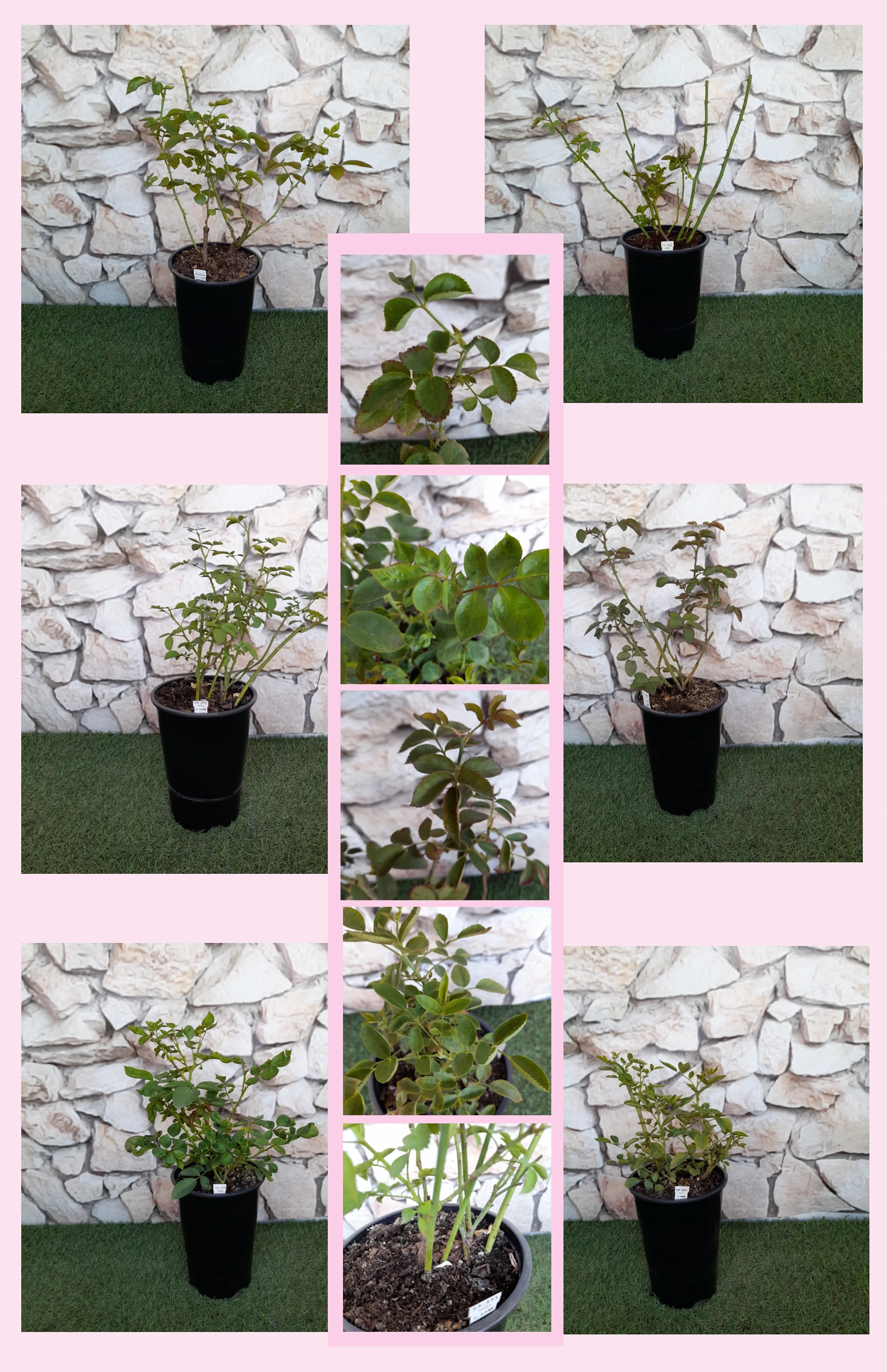
Crop overview: several varieties and growth stages in a short crop section.Shoot system: intensive growth of fresh basal shoots on a young plant.Root system: demonstration of a vigorous root system permeating the growing medium, by removing the pot.Balance: mature plant with root system and shoots in harmony with each other.
Information about the videos
The video series is not a “seasonal showcase”; it illustrates the essence of pharmaROSA® own-root cultivation in a tangible way: how the plant is built up, what the root system is like and how the shoot system regenerates. The recordings were therefore made at different times and with plants at various stages of development, so mixed foliage levels and differing stages of growth may appear in the videos. They are not a ‘sample’ of the batch dispatched, but a visual explanation of how the technology works. The current condition of the rose available to order — typical for the given period and similar to what you can expect to receive in the parcel — is shown in the upper part of the product page.
Pages for private customers Garden roses for the family garden, with minimal care → ORIGINAL® Premium garden roses – instant impact, a truly showpiece garden → EXTRA® Pages for professionals and private customers Roses for public spaces – large areas, sustainable maintenance → NATURAL® Roses for projects – hedge and row planting, fast implementation → RAPID® For professional partners only Production – propagation material for garden roses, wholesale → NEONATAL®
Company details
PharmaRosa Ltd. Company registration number: 01-09-717479 VAT number: 13075314-2-43 Plant health registration no.: HU130721 Bank account (IBAN): HU85117631891388688400000000 BIC (SWIFT): OTPVHUHB Bank name: OTP Bank Nyrt.