AUSmak – pink English rose – Austin
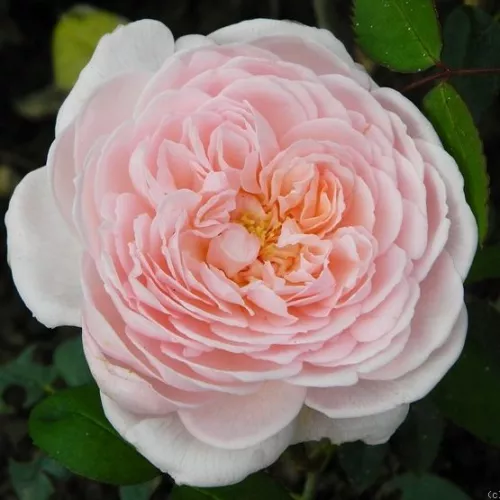
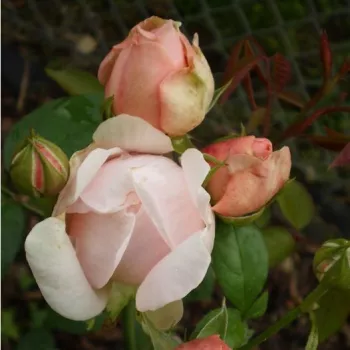
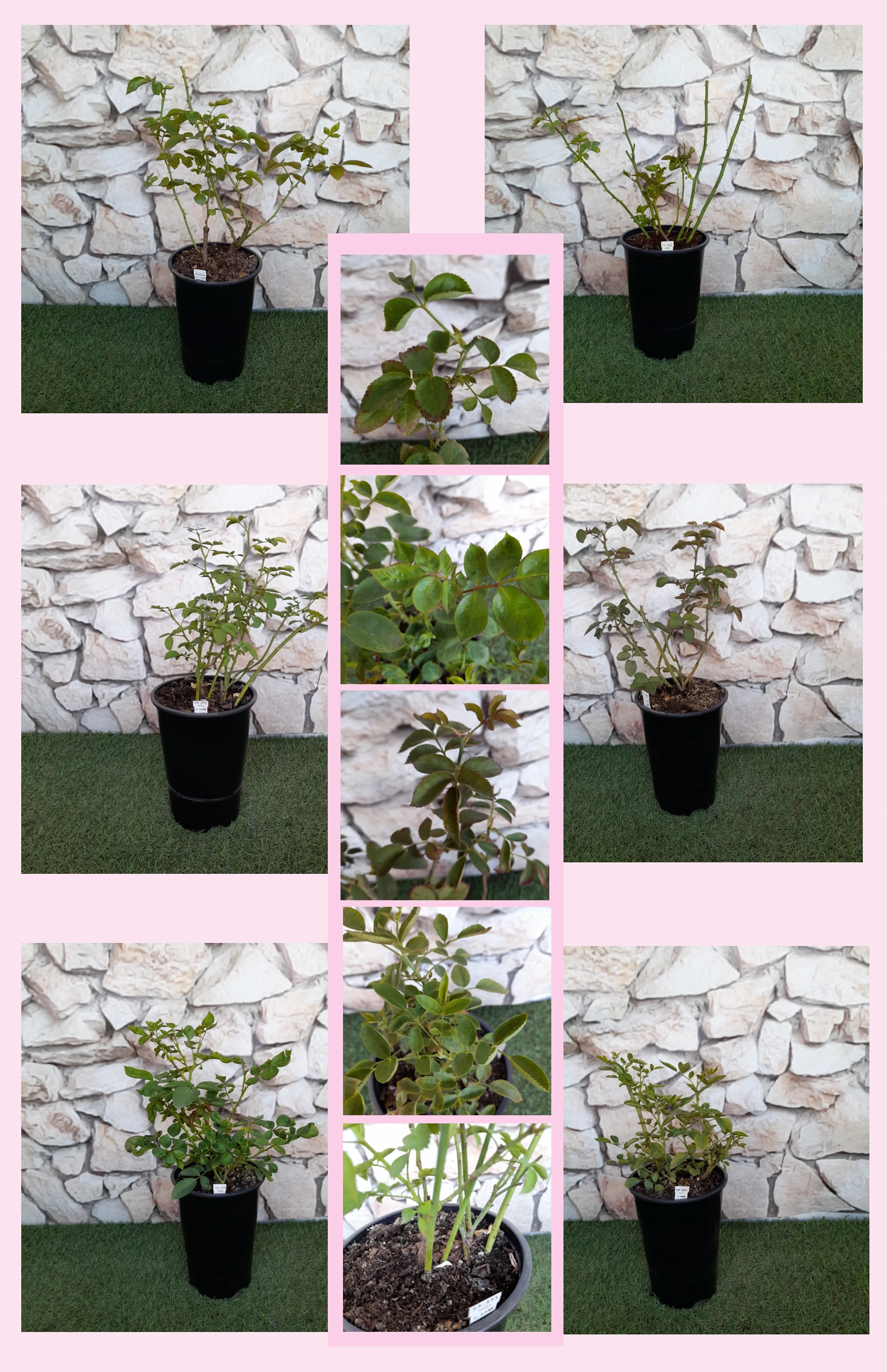
Poised between traditional charm and modern reliability, this English shrub rose brings a soft, shell-pink glow to family gardens while coping well with breezy, wetter corners and heavier soils where drainage is sensibly improved. Bushy, medium-height growth creates an easy-to-place presence for beds, borders and kitchen-garden paths, while the very double, cupped blooms open in waves from early summer well into autumn for a long, dependable display. The delicately sweet, tea-scented fragrance and pastel colouring suit relaxed cottage schemes just as comfortably as a neater front garden. As an own-root plant it builds up steadily, rewarding you with a naturally balanced, long-lived framework that can be pruned quite flexibly as your space develops. Over time the plant’s capacity to regenerate from its own roots underpins stable flowering and ornamental value, even if you occasionally miss a pruning season or need to cut back more hard. Container-friendly and suitable for partial shade, it fits busy lives where gardening has to share space with work and family, offering reliable colour without complex routines. With simple watering and light plant protection where needed, this rose matures from a well-rooted young plant into a lasting part of your garden’s story, its softly romantic blooms framing moments of everyday cosiness.
Usage options
| Target area | Reasoning |
|---|
| Main rose bed in a family garden |
The bushy, medium-height habit and dense foliage make this rose ideal as the backbone of a family rose bed, giving structure without overpowering neighbouring plants; repeat flushes keep colour going through the school holidays – an easy choice for the busy homeowner. |
| Cottage-style mixed border with perennials |
Soft, pale pink rosette blooms blend effortlessly with herbaceous planting and traditional perennials, providing romantic continuity between summer waves of colour and tying together an informal English countryside look – well suited to the cottage-garden lover. |
| Near seating, terrace or garden bench |
The medium-strength, clearly noticeable tea fragrance is best appreciated close up, while the moderate height keeps blooms at nose level and not blocking views, creating a gentle, storybook feel around spots where you linger – perfect for the afternoon-tea gardener. |
| Low, traditional flowering hedge |
Planted at the recommended closer spacing, the dense, mid-green foliage and repeat-flowering clusters form a soft, flowering boundary that looks romantic yet ordered along paths or around a kitchen garden – appealing for the traditional hedge enthusiast. |
| Large containers and terrace planters |
Its bushy framework and moderate spread mean it performs well in generous pots of at least 40–50 litres, where regular watering is straightforward and deadheading is easy to manage at arm’s length – a practical option for the urban balcony owner. |
| Partially shaded corners or north-east aspects |
This variety tolerates partial shade, so it can bring pastel colour and scent to spots that miss midday sun, softening walls or fences and linking sunnier borders together without demanding prime planting ground – helpful for the space-conscious gardener. |
| Informal park-style planting or small front lawns |
With its award-backed garden performance and steady repeat flowering, one or more shrubs work beautifully as stand-alone specimens in lawns or looser park-style plantings, giving reliable softness without fussy upkeep – ideal for the low-maintenance planner. |
| Clay or breezier sites with improved soil structure |
Once established in well-prepared soil with added drainage, the own-root shrub form anchors securely, facing typical British breezes and wetter spells without staking, then building a durable framework over successive seasons – reassuring for the coastal-cottage owner. |
Styling ideas
- Cottage Border Ribbon – Run a loose line of shrubs along a path with foxgloves, hardy geraniums and catmint for a soft, storybook edge that flowers repeatedly – ideal for those wanting a romantic family walkway.
- Pastel Tea Corner – Place it by a small seating area in a large pot with lavender and dwarf box, using its medium fragrance and repeat blooms to frame quiet afternoon breaks – suited to terrace and patio owners.
- Kitchen-Garden Hedge – Use a row along raised vegetable beds, letting the pale pink flowers and dense foliage soften productive spaces without casting heavy shade – perfect for rural kitchen gardeners.
- Front-Garden Focus – Plant a single specimen on either side of a front door with low underplanting of thyme and violas to create a welcoming, traditional entrance – appealing to homeowners after classic kerb appeal.
- Soft Shrub Drift – Mix small groups with Cornus ‘Midwinter Fire’, grasses and evergreen ivy on a lawn edge to give year-round shape, with pastel roses floating above summer textures – ideal for relaxed, naturalistic planters.
Technical cultivar profile
| Parameter | Data |
|---|
| Name and registration |
English shrub rose from the English Rose Collection, registered as AUSmak and marketed as Eglantyne, with verified cultivar authenticity and suitability for bush and cut-flower use. |
| Origin and breeding |
Bred by David C. H. Austin in the United Kingdom from an unknown seedling × ‘Mary Rose’, introduced and registered in 1994 by David Austin Roses Ltd. |
| Awards and recognition |
Holds the Royal Horticultural Society Award of Garden Merit (2001) and was a Modern Shrub Rose winner at the Central Ohio Rose Society Show in 1999. |
| Growth and structural characteristics |
Bushy, medium-height shrub reaching about 90–140 cm tall and 80–120 cm wide, with dense, slightly glossy mid-green foliage and moderate prickliness, forming a rounded, full-bodied framework. |
| Flower morphology |
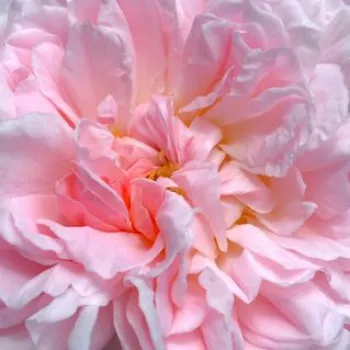
Produces medium-sized, very double, rosette-shaped blooms with more than 40 petals, carried mainly in clusters, and is strongly repeat-flowering with an abundant second flush in season. |
| Colour data and phenology |
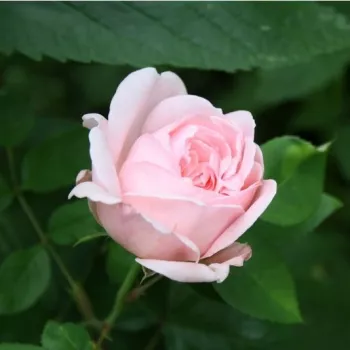
Soft, uniform pale pink flowers with a creamy undertone, buds powder-pink, fading towards pastel pink and then almost white in the centre, with colour lasting longer in cooler, less intense sunlight. |
| Fragrance and aroma |
Displays a clearly noticeable, medium-strength fragrance of delicately sweet, tea-scented character, best appreciated near paths, seating areas or windows where air circulation is gentle. |
| Hip characteristics |
Owing to fully double flowers, rose hips are sparse; when present they are small, spherical, orange-red hips around 8–14 mm in diameter, adding occasional late-season interest. |
| Resistance and winter hardiness |
Hardy to approximately –26 to –23 °C (RHS H7, Swedish Zone 4, USDA 5b) with moderate disease resistance, showing good black-spot resistance but only moderate tolerance to mildew and rust. |
| Horticultural recommendations |
Best in flower beds, hedges or as specimens at 55–100 cm spacing; tolerates partial shade, prefers regular watering in dry spells and benefits from routine deadheading and occasional plant protection. |
AUSmak – pink English rose – Austin offers romantic pastel blooms, repeat flowering and a durable own-root shrub that settles into family gardens with reassuring ease, making it a thoughtful choice if you seek long-term, low-fuss charm.