EDITH PIAF® – ruby-red tea-hybrid rose - Meilland
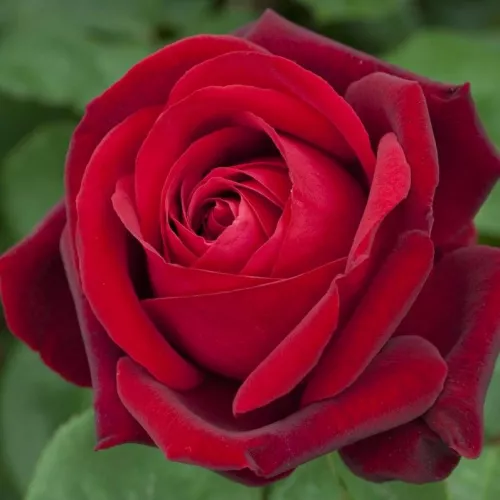
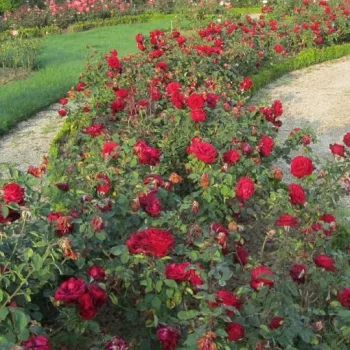
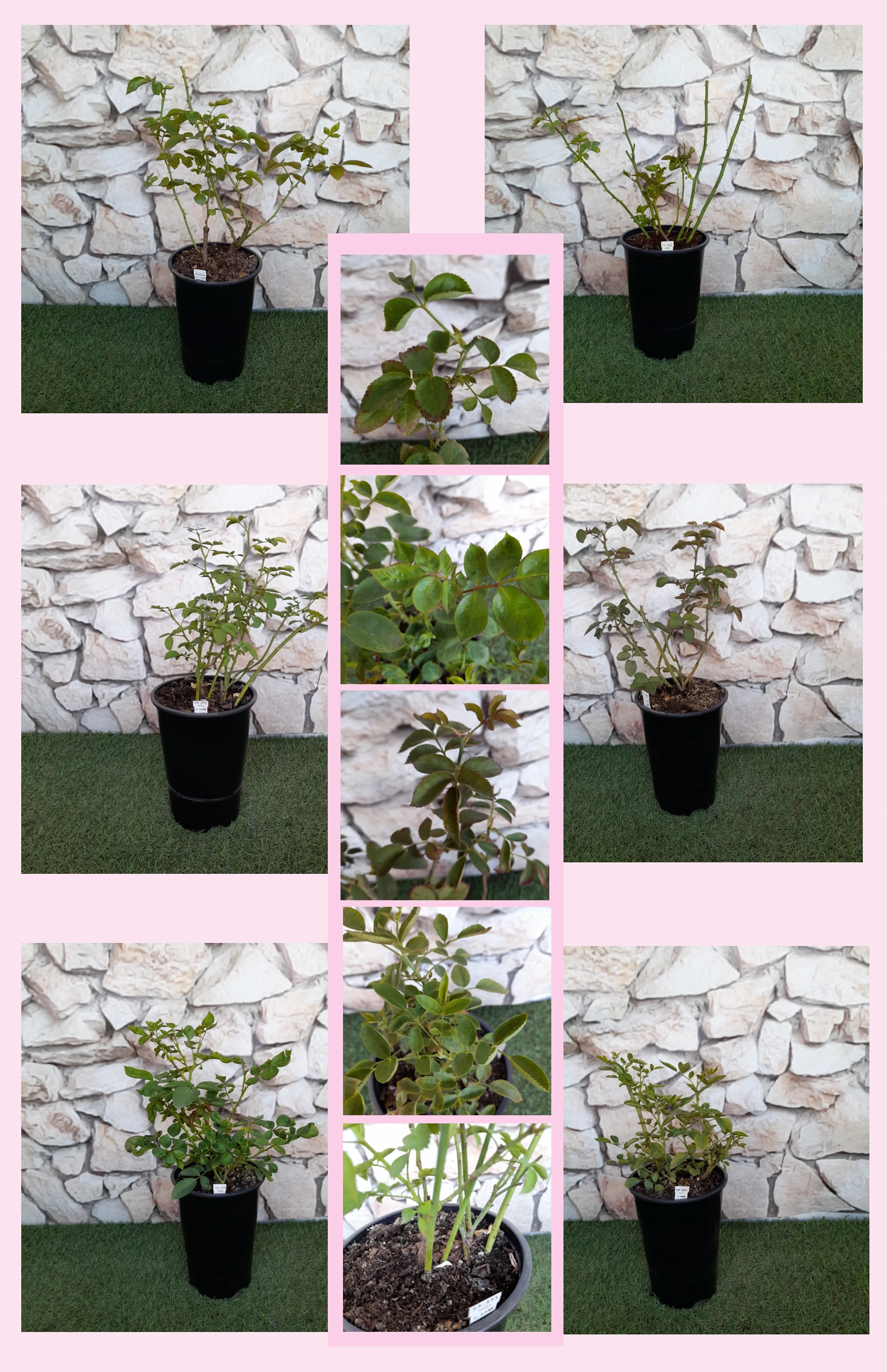
Evoking the mood of an afternoon tea in a storybook cottage garden, EDITH PIAF® brings velvety ruby-red blooms and a strong, lingering perfume to small and medium family gardens. This hybrid tea rose flowers reliably in flushes from summer onwards, offering elegant, long-stemmed roses that suit both borders and cutting. Its upright habit stays compact enough for narrower beds or large containers, while dense, dark green foliage provides a glossy backdrop. Grown on its own roots, it develops a stable, long-lived framework that regenerates well after harder pruning and supports dependable flowering through changing seasons. Over a few years it matures steadily, with roots establishing first, then stronger shoots, and finally a full, romantic display. It fits beautifully into clay or chalky cottage-style plantings when given raised beds or lighter soil pockets that gently improve drainage against prolonged wet weather and brisk coastal winds, making it a practical, easy-to-enjoy choice for busy gardeners who value rich colour, enduring fragrance and classic hybrid-tea form.
Usage options
| Target area | Reasoning |
|---|
| Main cottage-style flower bed by the terrace |
The upright, medium-height habit and dense, glossy foliage create a structured backbone for a mixed cottage border, while the ruby-red, velvety flowers add classic hybrid-tea form and drama through repeat flowering. Own-root growth builds a stable, long-lived shrub that copes well with straightforward annual pruning and minimal fuss, ideal where you want enduring impact close to the house for busy beginners |
| Feature rose near seating or “afternoon tea” corner |
The strong, long-lasting perfume with sweet, fruity old-rose notes is perfect beside a bench, arbour or small patio, where blooms can be appreciated up close. Long-stemmed single flowers invite occasional cutting for indoor vases without spoiling the overall display outside, and the remontant habit refills gaps steadily through summer for scent lovers |
| Large container on balcony, deck or small terrace |
The compact spread and upright structure adapt well to a substantial pot of at least 40–50 litres, giving vertical accent and repeated colour where bed space is limited. Container culture also lets you refine soil mix for heavy clay or chalk, improving drainage and root comfort, while own-root resilience supports recovery if watering or feeding is not always perfect for urban homeowners |
| Cutting and exhibition-style row in kitchen or side garden |
Hybrid tea flower form, XL blooms and strong stems make this variety highly suitable for cutting, whether for household arrangements or amateur exhibiting. Consistent ruby-red colouring with velvety texture and excellent colour hold give reliable show quality, while repeat flushes mean stems can be taken regularly through the season for home arrangers |
| Romantic focal point in a small front garden |
A single specimen planted with restrained companions creates instant kerb appeal without demanding large borders. Its moderate height works well beneath windows, and glossy foliage looks tidy for most of the year. As an own-root plant it forms a durable, well-anchored base that keeps its shape over time, fitting long-term, low-fuss front gardens for family buyers |
| Partially shaded side border or courtyard |
This cultivar tolerates partial shade, so it will still flower reliably where walls, fences or taller shrubs limit direct sun for part of the day. The strong fragrance and deep colour remain effective even in cooler light, helping underused side plots feel inviting and coherent without intensive border redesign for time-poor gardeners |
| Formal pair flanking a path, gate or garden arbour |
The upright, uniform outline and single-flower presentation lend themselves to symmetrical planting, framing entrances or arches with clear lines and saturated colour. Over the years, roots strengthen first, then top growth follows, and finally the shrub reaches full ornamental presence, creating a composed, long-lived welcome for traditionalists |
| Raised bed in heavier clay or exposed family garden |
Positioned in a slightly raised bed with improved soil, this rose handles typical British conditions, from persistent moisture to brisk winds, without losing its decorative value or flowering rhythm. Medium disease resistance and own-root robustness keep maintenance practical, especially when regular deadheading is done during family garden routines for practical gardeners |
Styling ideas
- Tea-corner focus – Place EDITH PIAF® by a bistro table, underplanted with low thyme and lavender, to enjoy scent at seating height – ideal for scent-focused terrace users
- Ruby-and-cream border – Combine with cream foxgloves and pale pink roses to soften the rich ruby colour into a romantic cottage palette – suited to lovers of gentle contrast
- Kitchen-garden cutting row – Line a vegetable plot edge with EDITH PIAF® and interplant with dill and cosmos for easy picking of stems and herbs – perfect for home cooks and arrangers
- Container statement – Grow one plant in a 50‑litre terracotta pot with trailing ivy and dwarf honeysuckle for year-round structure and seasonal flower drama – for small-plot balcony owners
- Evening fragrance walk – Repeat-plant along a short path with red bee balm and dark-leaved penstemon to create a scented stroll glowing with deep reds – appealing to romantic cottage stylists
Technical cultivar profile
| Attribute | Data |
|---|
| Name and registration |
Hybrid tea rose from the PERFUMELLA® collection; registered as MEIramboys, marketed as Edith Piaf® PERFUMELLA® MEIramboys, with ARS exhibition name Edith Piaf for show purposes. |
| Origin and breeding |
Bred by Meilland International in France from unknown parentage, breeding completed in 1999 in the United States; introduced and registered internationally in 2007 by Meilland Richardier. |
| Awards and recognition |
Highly regarded perfume rose, holding major fragrance awards including Grand Prix International du Parfum Nantes 2005, Monza fragrance special prize 2004, plus medals in Australia 2008 and Alterarosa 2016. |
| Growth and structural characteristics |
Upright, compact hybrid tea with dense, dark green, glossy foliage; height around 70–100 cm and spread 45–60 cm, with moderate prickliness and weak self-cleaning requiring regular deadheading. |
| Flower morphology |
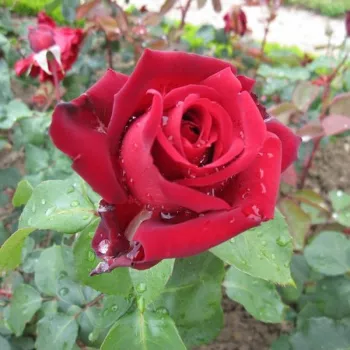
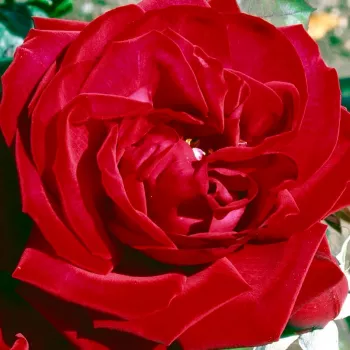
Very double, cup-shaped hybrid tea blooms with pronounced central elevation; usually solitary per stem, XL-sized flowers (around 3.5 inches or more), repeating in generous flushes over the season. |
| Colour data and phenology |
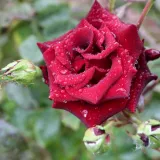
Deep ruby-red petals with velvety texture and strawberry-red edging; colour holds well, lightening only moderately in strong sun, sometimes taking a purplish cast as blooms age towards the end of opening. |
| Fragrance and aroma |
Strong, long-lasting fragrance combining sweet fruity tones with classic old-rose character; primarily ornamental, as very double flowers conceal stamens and offer low value for pollinator foraging. |
| Hip characteristics |
Hip set is usually sparse because of very double flowers and regular deadheading; when present, small spherical orange-red hips 10–14 mm wide can appear late in the season. |
| Resistance and winter hardiness |
Winter hardy to about −21 to −18 °C (RHS H7, USDA 6b); disease resistance is medium to powdery mildew, black spot and rust, requiring occasional protection and good air circulation for best health. |
| Horticultural recommendations |
Suited to beds, solitary planting, hedged rows and large containers; prefers full sun to partial shade, regular watering in dry spells, spacing from 40–80 cm depending on use, and 4–4.6 plants per m² in mass plantings. |
EDITH PIAF® offers richly perfumed ruby-red hybrid-tea blooms, reliable repeat flowering and the stable longevity of an own-root rose, making it a thoughtful choice for those planning a romantic, enduring garden feature.