ECHO – salmon-pink bedding shrub rose - Lens
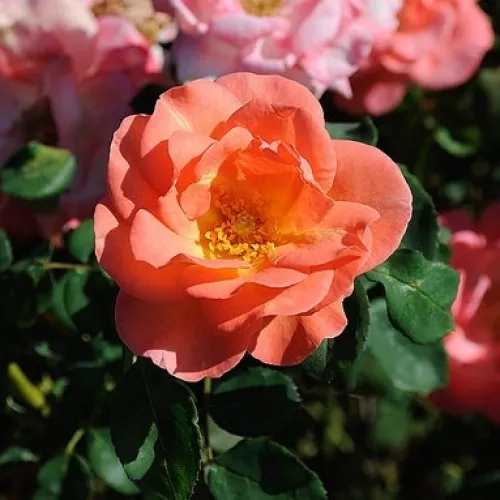
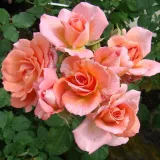
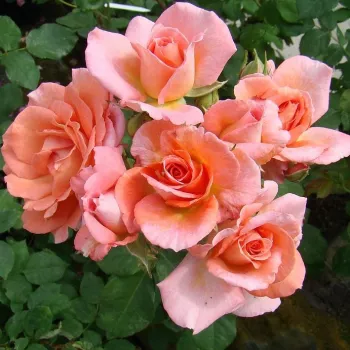
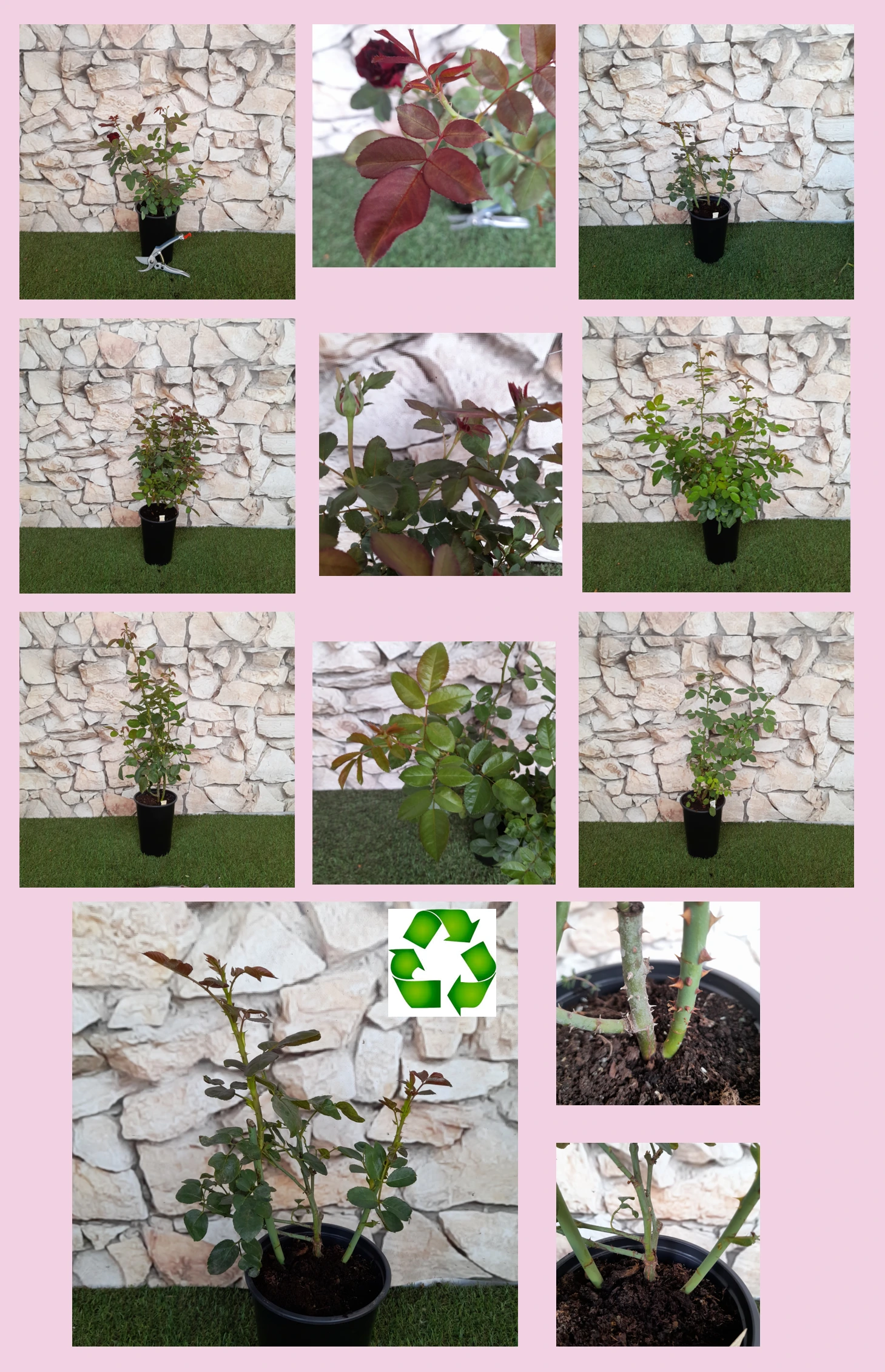
With its medium-height, bushy habit and clouds of salmon-pink blooms, Echo settles comfortably into a traditional family garden, forming a relaxed, romantic backdrop for cottage-style borders. This container-grown, own-root plant is designed for uncomplicated planting straight from its 2-litre pot, and will reward you with repeated flowering through the season once established. The dense foliage frames each wave of cup-shaped flowers, while its remontant habit ensures reliable flowering rather than one brief flush. Own-root growth supports long-term longevity, helping the shrub regenerate from the base after harsher winters or pruning. In coastal or breezier areas it copes steadily with the weather, responding well where drainage has been thought through. Medium disease tolerance, especially to powdery mildew, suits busy gardeners who still prefer a healthy look with modest care. Over time its upright, fan-shaped structure makes it easy to weave into narrow beds, low hedges or mixed cottage plantings, creating a soft, storybook ambience around sitting areas and kitchen gardens.
Usage options
| Target area | Reasoning |
|---|
| Front-of-border flowerbed in a family garden |
Echo’s medium height and bushy, fan-shaped habit create a gentle, low screen that fits easily into average front or back garden borders without overwhelming nearby plants, ideal where you want defined structure but still need room for play or access for children and pets; its stable form is forgiving if your pruning is light one year and harder the next, which reassures the time-pressed homeowner |
| Cottage-style mixed bed with perennials |
The warm, even salmon-pink flowers repeat through the summer, weaving comfortable colour between cottage favourites such as lamb’s ear, aubrieta or daylilies, so the bed never looks bare between perennial peaks; this colour consistency simplifies planning for those who prefer harmonious, “girly” English-country tones rather than experimental schemes, supporting the romantic tastes of the cottage-gardener |
| Small hedge or informal boundary line |
Planted at around 50 cm, Echo forms a soft, upright hedge with dense foliage and clustered blooms that gently define paths, drive edges or vegetable plot boundaries without the severity of clipped evergreen hedging; own-root plants regenerate well from the base if you ever need to cut them back harder, making this a patient, long-lived living border for the practical-minded planner |
| Mass planting in larger beds or shared spaces |
Its repeat flowering and reliable bushy habit mean that groups of Echo quickly read as a single, coherent salmon-pink drift, especially when you follow the recommended planting distances; this helps public-facing or shared spaces, such as front communal beds, stay appealing between maintenance visits, providing steady impact for the busy neighbourhood-gardener |
| Feature rose for a modest urban garden |
Echo is well suited to being used as a single specimen at around 90 cm spacing, giving you a compact focal point that does not demand advanced pruning skills; the own-root form supports a long life in the same spot, so you can build the rest of your planting around it with confidence that it will mature steadily rather than outgrow its welcome, which suits the long-term plans of the urban beginner |
| Large container on terrace, balcony or small patio |
In a 40–50 litre or larger container Echo’s upright, fan-shaped shrub form is easy to manage: you can keep it to a comfortable size with simple annual pruning while still enjoying repeated flushes of classic, double blooms and light fragrance at seating height; the own-root plant copes better with minor container setbacks, giving a reassuring margin of error for the container-focused city-dweller |
| Coastal or more exposed garden corner |
Echo’s medium height and dense framework give it enough weight to anchor itself where winds are stronger, provided the soil drains reasonably well; it copes better than fussier roses with brisk breezes and regular showers typical of many UK coastal settings, supporting those who need planting that stands up quietly to changeable conditions in the hands of the weather-aware coast-gardener |
| Low-maintenance romantic seating area |
Planted near a bench or small arbour, Echo offers gentle waves of bloom and a mild, classic scent without demanding intensive care; as its root system strengthens and the shrub fills out, your first year brings establishment, the second noticeably better growth, and by the third a fully convincing ornamental presence that rewards the patient, atmosphere-loving tea-drinker |
Styling ideas
- Cottage-Drift – Plant Echo in loose groups with lamb’s ear and aubrieta at the front for a soft salmon-pink ribbon through a border – perfect for romantic traditionalists.
- Kitchen-Edge – Use Echo as a low hedge edging a kitchen garden path, its dense structure giving gentle enclosure without shade – ideal for practical family growers.
- Patio-Focus – Grow one Echo in a 50-litre terracotta pot beside your seating area, underplanting with herbs for fragrance – suited to small-space terrace owners.
- Parklet-Row – In shared front beds or communal greens, repeat Echo at regular intervals to form a coherent salmon-pink line – useful for residents managing joint spaces.
- Storybook-Nook – Combine a pair of Echo shrubs with a simple wooden bench and airy perennials to frame a quiet reading corner – appealing to quieter garden dreamers.
Technical cultivar profile
| Property | Data |
|---|
| Name and registration |
Echo is a shrub / bed rose known commercially as Echo Flowerbed rose Lens, classified as a shrub rose for exhibitions and used mainly as a flowerbed cultivar in gardens. |
| Origin and breeding |
Bred by Louis Lens in Belgium and introduced in 1970, this cultivar has unknown parentage and was created within the Lens Roses programme focused on floriferous, robust garden varieties. |
| Awards and recognition |
Echo received a Gold Medal in Kortrijk in 1970, recognising its garden performance and ornamental appeal among contemporary rose introductions of that period. |
| Growth and structural characteristics |
Forms a bushy, upright to fan-shaped shrub 85–115 cm tall and 70–95 cm wide, with medium green, slightly glossy foliage and moderate prickliness, giving a substantial yet manageable presence. |
| Flower morphology |
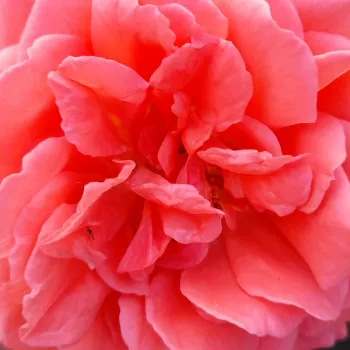
Produces medium-sized, double, cup-shaped flowers with 26–39 petals in clustered inflorescences; it is remontant, with particularly abundant second flushes contributing to a long flowering season. |
| Colour data and phenology |
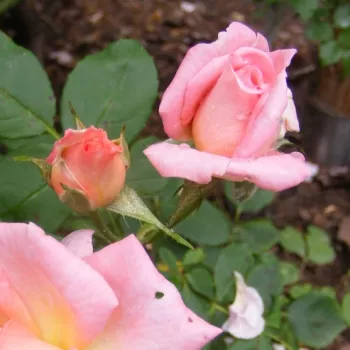
Shows a warm, even salmon-pink tone (RHS 36B–36C) that opens deeper, then lightens to pale salmon and pinkish-white before fading, with colour retention moderate under typical garden conditions. |
| Fragrance and aroma |
Offers a mild but distinct, classic rose fragrance, most noticeable at close range around seating areas or paths, adding gentle sensory interest without dominating nearby scented plants. |
| Hip characteristics |
Forms small, ellipsoidal red hips, about 6–9 mm across, appearing in moderate numbers and giving additional ornamental value and seasonal interest towards the end of the flowering period. |
| Resistance and winter hardiness |
Hardy to around –21 to –18 °C (RHS H7, Swedish zone 3, USDA 6b) with medium overall disease resistance, showing good resistance to powdery mildew and moderate response to black spot and rust. |
| Horticultural recommendations |
Best in full sun with reasonable drainage; plant 55 cm apart for mass displays, 50 cm for hedges or 90 cm as specimens, and maintain with moderate feeding and regular pruning for steady performance. |
Echo Flowerbed rose Lens combines repeat salmon-pink flowering, a compact, bushy shrub form and dependable hardiness in an own-root plant that matures gracefully, making it a thoughtful choice for long-term cottage-style gardens.