DUCHESSE DE MONTEBELLO – pink historic China rose - Laffay
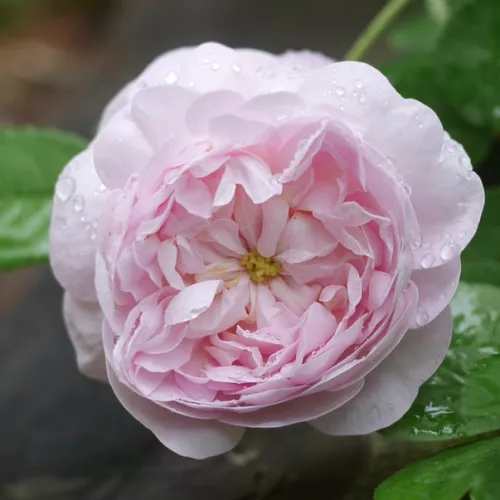
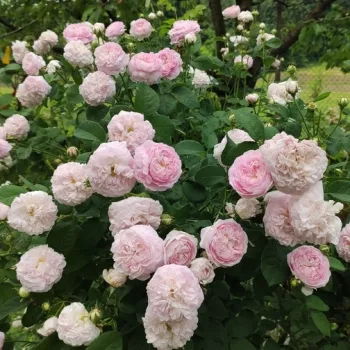
This graceful heritage rose brings a sense of period romance to small and medium family gardens, creating a soft backdrop for afternoon tea beneath an arbour. Its once-a-year flush of powder-pink, very full blooms is richly fragrant, with a classic, sweet rose scent that lingers in the air. Bushy, upright and naturally elegant, it forms a mid-height shrub that works as a solitary feature or as part of a traditional cottage border. Grown on its own roots for long-lived stability, it regenerates well from the base and settles securely even where breezes are brisk and soils benefit from improved drainage after heavy rain. Medium maintenance and tolerant of partial shade, it suits homeowners who prefer low-key, seasonal tasks rather than constant fuss. Over time, this historical variety develops strong roots, then fuller shoots, and by its third year reaches its full storybook character and ornamental impact. Ideal for gardeners who value enduring heritage as much as beauty, it also offers reliable winter hardiness for most UK regions.
Usage options
| Target area | Reasoning |
|---|
| Cottage-style flower border in a family garden |
The shrub’s bushy, upright habit and medium height make it easy to place towards the middle or back of a mixed border, giving soft structure without overwhelming smaller spaces. Once-flowering but highly floriferous, it creates a concentrated wave of powder-pink blossom just when cottage borders are at their peak. Own-root growth ensures steady regeneration from the base, so the border keeps its shape for many seasons with modest care, well suited to the rhythms of a busy household and hobby gardeners. |
| Romantic solitary feature near a seating area |
Planted as a single specimen by a bench, pergola or terrace, the strong classic fragrance and pastel, cupped blooms turn a small corner into a quiet retreat. The once-a-year main flush encourages anticipation rather than constant deadheading, ideal if you would like seasonal spectacle without weekly maintenance. Its historical charm and story-linked name lend a cultured, conversational touch beside patios or garden paths, particularly appreciated by heritage-rose lovers. |
| Traditional flowering hedge or boundary line |
At 120–180 cm tall with dense foliage, this variety can be planted at hedge spacing to form a loose, flowering screen along paths or garden boundaries. Own-root plants anchor well over time and recover reliably from harder pruning, so gaps are less likely to appear than with budded roses. Flowering is once but striking, giving a billow of soft pink that reads beautifully from a distance and suits period or cottage-style properties, especially for family homeowners. |
| Period-style rose collection or historical garden corner |
As an early 19th-century French rose by Jean Laffay, this cultivar is an authentic choice for small heritage collections or a “little museum” corner in a private garden. Its place among historical Hybrid China and Hybrid Gallica roses, plus its exhibition standing as an old garden rose, adds depth for enthusiasts who enjoy provenance. The cultivar’s characterful once-flowering display fits well with peonies, irises and other traditional perennials favoured by romantic gardeners. |
| Cut flowers for special occasions |
The medium-sized, very full, cupped blooms with over 40 petals are excellent for short-stemmed arrangements, table posies and nostalgic bouquets. Strong, classic rose scent adds an extra dimension indoors, particularly welcome for afternoon teas or family celebrations. Although flowering is limited to one main period, the abundance in that window allows generous cutting while still leaving plenty of display outside, a balance appreciated by home arrangers. |
| Mixed shrub border with partial shade |
This rose tolerates partial shade, allowing flexible placement where sun is filtered by trees or buildings, common in suburban plots. In such positions the soft pink colour holds well, and the shrub contributes steady green structure outside its blooming period. Own-root vigour supports long-term performance even where light levels are not perfect, so it can share space with shrubs and perennials in side gardens frequently used by busy households. |
| Long-lived planting in colder UK regions |
With hardiness down to around -29 °C and an RHS H7 rating, this cultivar is well adapted to colder inland or northern gardens where winter resilience is a priority. Own-root plants cope better with occasional die-back, reshooting cleanly from the base and maintaining shape over the years. This resilience, combined with its historical status, makes it a reassuring, once-planted, long-term feature for practical gardeners. |
| Structural rose in gardens with improving heavy soils |
Its upright, well-branched framework and dense foliage help stabilise the visual structure of borders that may sit on heavier or previously compacted soils, especially when planted into raised or well-prepared beds. Over several seasons the own-root system thickens and anchors the shrub, offering reliable performance even where conditions fluctuate and drainage has needed attention after winter wet, a comfort for clay-soil owners. |
Styling ideas
- Tea-terrace – Position near a small seating area with pale cushions and a bistro table, underplanted with lavender and catmint for a scented retreat – ideal for homeowners who savour slow weekend afternoons.
- Cottage-border – Weave through a mixed border with foxgloves, cranesbills and campanulas to echo classic English cottage gardens – perfect for lovers of soft, “girly” pastel schemes.
- Heritage-walk – Line a short path with spaced shrubs, interplanted with low box or clipped lavender, to create a gentle, historical promenade – suited to gardeners drawn to period detail and story-rich plants.
- Kitchen-garden – Place at the edge of a productive area with herbs, rhubarb and old-fashioned perennials for a walled-garden feel – appealing to those who blend vegetables with romantic ornamentals.
- Parkland-corner – Combine with ornamental grasses and white obedient plant in a looser shrub group to echo traditional estate plantings – fitting for larger plots or village gardens with open lawns.
Technical cultivar profile
| Parameter | Data |
|---|
| Name and registration |
Duchesse de Montebello is a historical Hybrid China / Hybrid Gallica rose, traded as a heritage China rose; an unregistered old garden rose cultivar with verified authenticity for garden use. |
| Origin and breeding |
Bred in France by Jean Laffay and introduced around 1824, this cultivar represents early 19th-century breeding, maintained today as a heritage rose within specialist and enthusiast collections. |
| Awards and recognition |
Holds the RHS Award of Garden Merit and multiple Dowager Queen titles from American rose shows, confirming reliable garden performance and continued esteem among heritage rose exhibitors. |
| Growth and structural characteristics |
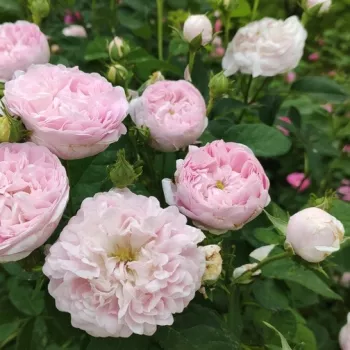
Forms a bushy, upright shrub 120–180 cm high and 70–120 cm wide with dense, mid-green, matt foliage and moderate prickles, giving a well-furnished, vertical presence in mixed borders or hedging. |
| Flower morphology |
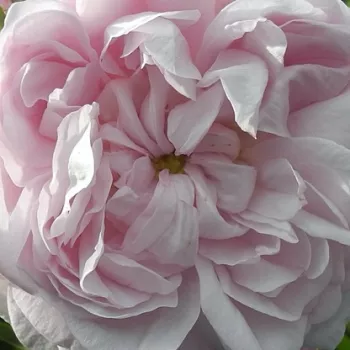
Produces medium-sized, very full, cupped blooms in clusters, each with over 40 petals; once-flowering rather than remontant, offering one rich, concentrated flush instead of repeat cycles through the season. |
| Colour data and phenology |
Soft pastel pink with powdery effect (RHS 62C, 65D), buds medium pink with coral tinge; flowers may pale towards white in strong sun but retain a gentle pink tone in cooler conditions. |
| Fragrance and aroma |
Strong, classic rose scent with a slightly sweet character, noticeable in the garden and suitable for cutting; highly double blooms reduce pollen access, so it functions mainly as an ornamental variety. |
| Hip characteristics |
Rosehips form sparsely due to very double flowers; when present they are small, spherical, orange-red hips around 9–15 mm in diameter, adding occasional late-season interest among the foliage. |
| Resistance and winter hardiness |
Shows medium resistance to common fungal issues such as powdery mildew, black spot and rust; hardy to approximately -29 to -32 °C (RHS H7, USDA 4b), suitable for most exposed UK garden sites. |
| Horticultural recommendations |
Best in borders, as solitary or informal hedge; accepts partial shade and medium maintenance with regular watering in prolonged heat; allow enough spacing and plant in large containers from 40–50 litres if pot grown. |
DUCHESSE DE MONTEBELLO offers richly fragrant, romantically pastel blooms on a hardy, long-lived shrub whose own-root form supports dependable structure for years; an excellent choice if you prefer enduring, characterful roses.