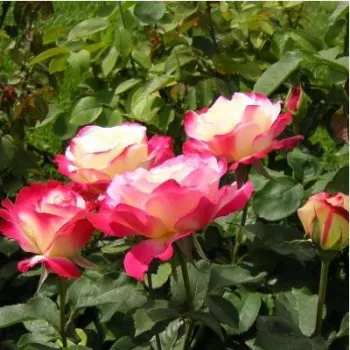
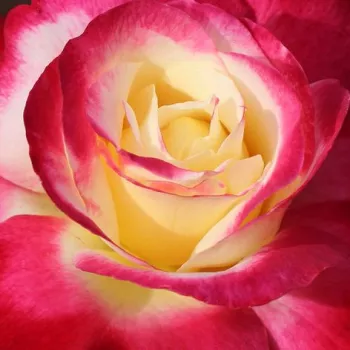
DOUBLE DELIGHT – red-and-white hybrid tea rose
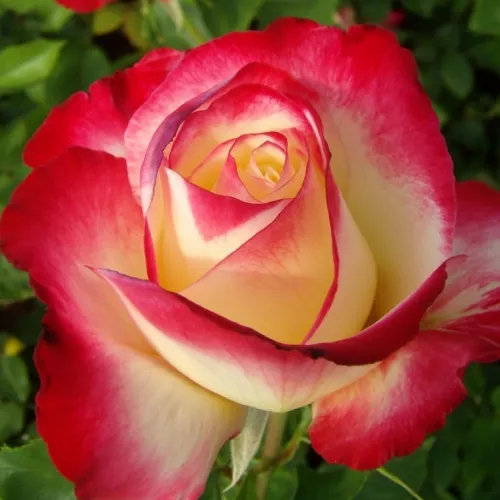
Choose DOUBLE DELIGHT if you dream of romantic summer afternoons and storybook borders: a hybrid tea rose with bicolour blooms that swirl cream and carmine into one striking, ever-changing centrepiece. Its very strong, sweet‑spicy fragrance is famous worldwide, ideal beside a seating area or path where you can enjoy the scent on warm evenings. On its own roots it builds a stable, long‑lived framework that copes well with breezy, damp British weather and slowly improving heavy soil in raised beds or borders, giving dependable flowering with minimal fuss and long‑term value.
Usage options
| Target area |
Reasoning |
| Feature rose by a seating area or terrace |
The very strong, sweet‑spicy fragrance carries on still evenings, so one or two bushes near your favourite chair can give the feel of afternoon tea in a scented arbour. Simple deadheading keeps flowers coming for those who love romance |
| Cutting bed for home-arranged bouquets |
High‑centred, long‑stemmed flowers are classic hybrid tea “exhibition” form, ideal for vases. The bicolour petals keep their shape and colour well indoors, so even a small cutting row can supply regular display stems for those who value elegance |
| Standalone specimen in a lawn or gravel circle |
Its bushy, upright habit and dramatic red‑and‑white blooms create a clear focal point without needing complex companions. Give it a sunny spot and moderate feeding and it will anchor the garden view for many years for householders seeking impact |
| Mixed cottage border with perennials |
Reliable remontant flowering means waves of blooms from early summer onwards, weaving between perennials and herbs. With basic seasonal pruning it keeps a tidy, glossy framework that fits a relaxed cottage style for busy gardeners wanting continuity |
| Low‑input family garden rose bed |
Good resistance to powdery mildew and black spot reduces the need for spraying, even in damper, disease‑prone parts of the country, supporting a more environmentally considerate approach for families who appreciate simplicity |
| Long-term structural planting in front gardens |
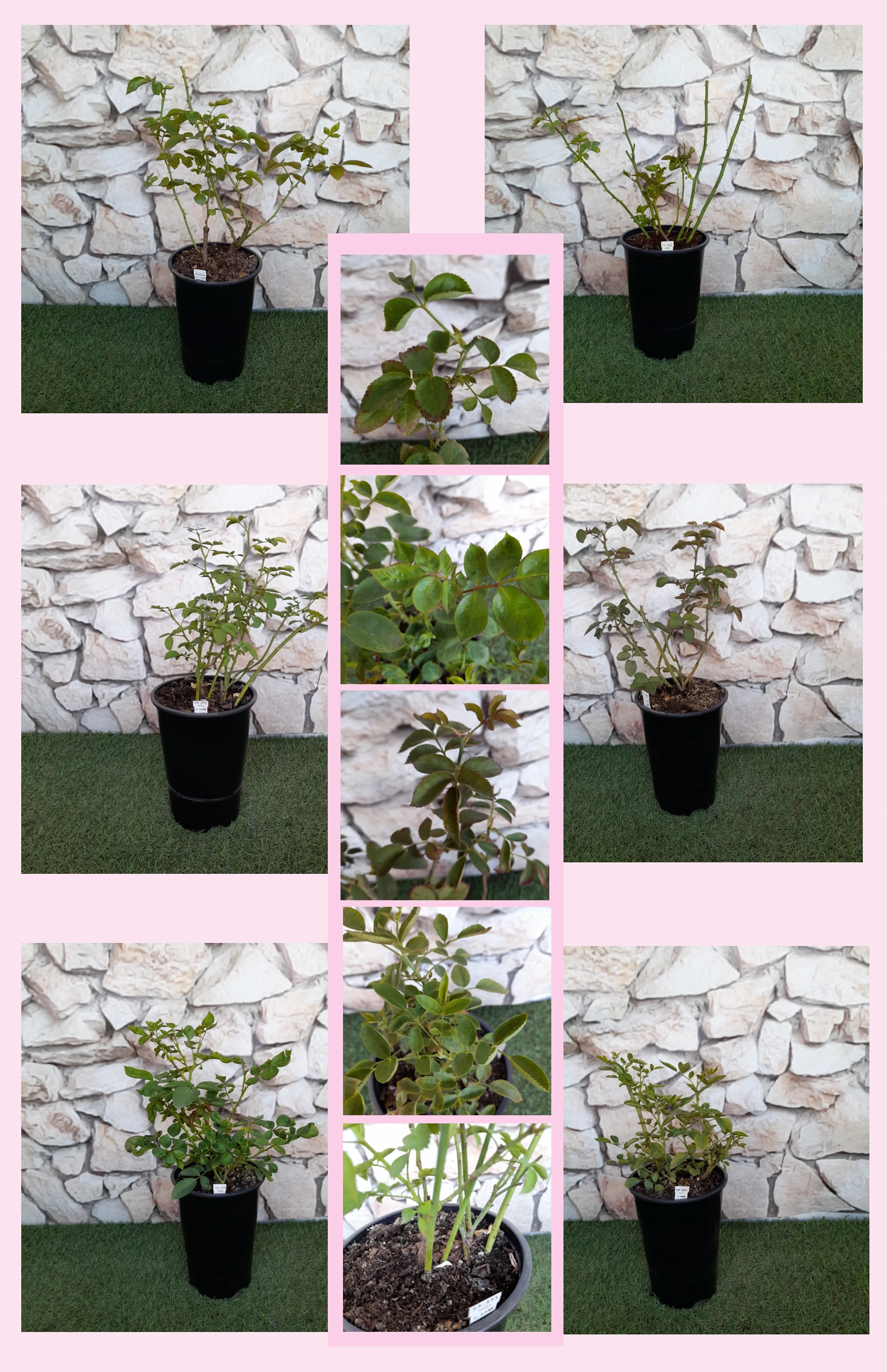
The own‑root form helps the plant recover from winter damage or accidental hard pruning, so it thickens into a durable bush with consistent flowering year after year, especially once it has passed its first three seasons, suiting planners favouring longevity |
| Large container on a patio (40–50 L or more) |
In a generous pot with good drainage it forms a compact, bushy shrub whose flowers and scent sit at nose height. The strong colour and form read well even in small spaces and windy, exposed spots near the house for urban owners prioritising practicality |
| Rose border in areas with heavy, slowly draining soil |
Once planted into improved soil or a raised bed and given time to root, its own‑root nature provides secure anchoring and steady top growth, moving from root establishment to stronger shoots to full display over about three seasons for home gardeners seeking reassurance |
Styling ideas
- Cottage-Focus – Plant DOUBLE DELIGHT as the central bush, underplant with catmint and pink verbena for a soft, “girly” cottage feel – ideal for lovers of traditional English charm.
- Kitchen-Path – Line the path to your vegetable beds with spaced specimens, interplanted with chives and lavender to echo the fragrance – suited to home cooks who cut flowers and herbs together.
- Evening-Nook – Place one rose each side of a small bench, with Crocosmia ‘Lucifer’ behind to pick up the red tones – for those who unwind outdoors after work.
- Front-Show – Use as a single specimen in a gravel circle, edged with low box or thyme, to greet visitors with scent and colour – perfect for homeowners wanting neat, low-effort kerb appeal.
- Patio-Romance – Grow in a 40–50 litre terracotta pot with trailing thyme or lobelia at the rim, bringing the perfume right up to your seating area – best for balcony and courtyard gardeners.
Technical cultivar profile
| Parameter |
Data |
| Name and registration |
Hybrid tea rose, registered as ANDeli, marketed as DOUBLE DELIGHT – red-and-white hybrid tea rose – Swim & Ellis & Ellis; ARS exhibition name Double Delight. |
| Origin and breeding |
Bred by Herbert C. Swim with A. E. and A. W. Ellis, Armstrong Nurseries, USA; cross of ‘Granada’ × ‘Garden Party’, introduced and registered in 1977. |
| Awards and recognition |
Multiple international awards including Baden-Baden and Rome Gold Medals, AARS Winner 1977, World’s Favourite Rose 1985, and the James Alexander Gamble Fragrance Award. |
| Growth and structural characteristics |
Bushy hybrid tea shrub, around 110–150 cm tall and 75–105 cm wide, moderately thorny, with moderately dense, glossy medium green foliage forming a balanced, upright framework. |
| Flower morphology |
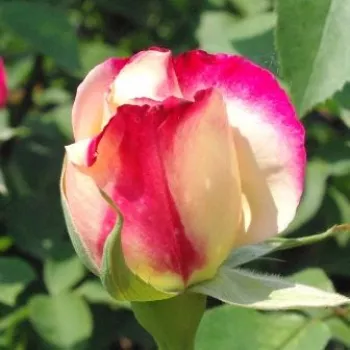
Large, high‑centred, double flowers with 26–39 petals on mainly solitary stems, classic pointed-bud hybrid tea form, remontant with notably abundant second flush flowering in season. |
| Colour data and phenology |
Cream-white petals edged carmine red, deepening in strong sun; colour holds well before fading slightly to salmon-pink and soft yellowish cream, giving a changing bicolour effect through the bloom’s life. |
| Fragrance and aroma |
Very strong, rich sweet‑spicy perfume, noticeable from a distance in warm, still conditions; ideal for planting near paths, doors and seating where scent can be appreciated regularly. |
| Hip characteristics |
Hip set is generally sparse due to the full double form; occasionally produces small spherical red hips around 10–14 mm, which add modest late-season ornamental interest. |
| Resistance and winter hardiness |
Hardy to approximately −26 to −23 °C (RHS H7, Swedish zone 4, USDA 5b); good resistance to powdery mildew and black spot, moderate susceptibility to rust in some seasons. |
| Horticultural recommendations |
Suited to flower beds, specimen planting and cutting; low maintenance with basic pruning and deadheading, tolerates partial shade and prefers regular watering in extended dry spells. |
DOUBLE DELIGHT Hybrid tea rose ANDeli offers famous bicolour beauty, powerful fragrance and durable, own‑root growth for years of easy enjoyment in a family garden, and is well worth considering for your next planting.