Bedding rose

04-013-1
04-013-2

Dopey

Bedding rose

- – Gerrit de Ruiter

Medium red, rich and uniform shade. - bedding polyantha rose - very weak, barely noticeable scented rose - classic, rose-scented character

– Compact, low bedding habit for neat borders
– Masses of small, cup-shaped red blooms
– Reliable repeat flowering with generous second flush
– Glossy, dark green foliage for strong contrast
– Good hardiness down to around –20 °C
Special feature: Creates a vivid, uniform red carpet effect in beds and park plantings.
Future-proof garden concept – Neat composition
Dopey
darinaROSE® ORIGINAL 2-litre own-root potted rose
17,60 £
Unfortunately, we are currently unable to ship to the United Kingdom; we only deliver to countries within the European Union. For more information, please contact us!
3.5 (5194)
facebook   twitter

DOPEY – red bedding polyantha rose – de Ruiter

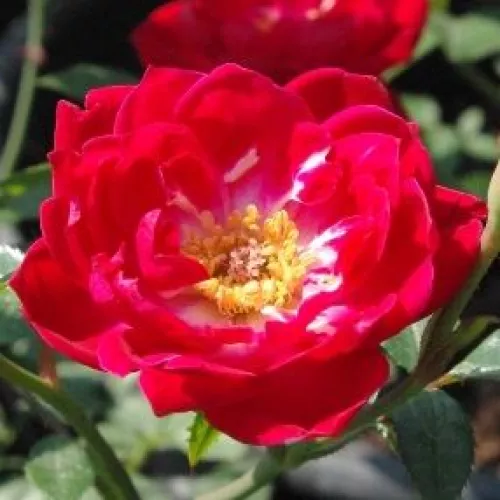
Neat, low and generously flowering, Dopey is a compact polyantha bedding rose that slips easily into a romantic family garden, bringing a cosy, almost storybook feel without demanding complicated care. Its clusters of small, cup-shaped blooms open a vivid ruby red and soften through mid-red to raspberry, keeping borders lively for months on end with regular, reliable repeat flowering. The bushy, compact habit and dense, glossy foliage create a tidy cushion of green that works beautifully at the front of a cottage border or around a kitchen garden path. Because this rose is supplied in a practical 2-litre own-root container, it settles quickly and builds strength year by year, supporting long, steady garden value with minimal intervention. Well-suited to typical UK conditions, it copes well with exposed spots where salt-laden winds and driving rain demand sturdy, low plantings, and is just as at home in a decorative pot on a patio, provided you choose a generous 40–50 litre container for lasting effect. Over time, this steady structure makes Dopey a reliable choice for edging, informal low hedges and mass planting that gives a soft, “girly” English-countryside mood with very little fuss. You can expect a gentle development arc – first stronger roots, then more generous shoots, and by the third year a full, glowing display of colour that knits your borders together. Its moderate maintenance needs are straightforward: a light annual trim, some feeding and basic disease checks are usually enough to keep the plant healthy and attractive long term, supported by the natural resilience and regeneration that come with own-root growth. This makes Dopey an inviting option for beginners, busy families and cottage-garden lovers who want easy, reliable roses for everyday enjoyment.


Usage options

Target areaReasoning
Front of mixed cottage border Its low, compact habit and dense foliage form a neat, continuous edging that softens paving and lawn edges without overwhelming nearby perennials. Continuous clusters of red blooms add structure and colour from early summer onwards, ideal for framing paths and seating areas for lovers of romantic cottage style.
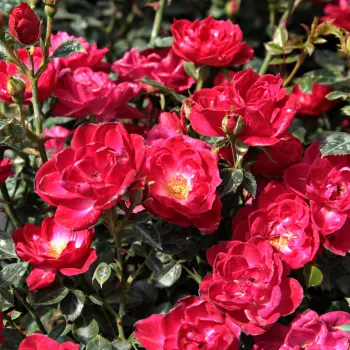
Mass bedding and drifts Planted in groups at the recommended spacing, Dopey creates cohesive red carpets that read clearly from a distance and hold their shape over time. Regular repeat flowering and a tidy outline make it especially suitable for simple, high-impact schemes that stay attractive with modest maintenance for homeowners seeking easy showpiece borders.
Low informal hedge around kitchen garden The rounded growth and close planting distance allow you to form low hedging that defines beds without casting heavy shade. Own-root plants thicken gradually, filling gaps and recovering well after pruning, so the hedge remains even and serviceable over many seasons for family gardeners who like traditional structure.
Containers and large patio planters Its compact size and repeat flowering suit large pots of 40–50 litres or more, where roots have room to establish and support steady top growth. This allows you to move romantic colour to terraces, steps or balconies with straightforward watering and feeding routines for busy urban gardeners wanting easy colour.
Exposed and coastal-front family gardens The low profile and dense framework help it stand firm in blustery, open sites where taller roses may rock or break, offering dependable colour where salt-laden winds and driving rain demand sturdy, low plantings. Over time, own-root strength gives good anchorage and recovery for coastal homeowners seeking resilient planting.
Mixed perennial schemes with light shade Dopey tolerates partial shade, so it can brighten east-facing beds or positions filtered by light tree cover. Its compact frame and small flowers complement cottage perennials without competing heavily for space, giving flexible options where sun is limited for gardeners working with small, shaded plots.
Low-maintenance family front garden Once established, routine care is limited to seasonal feeding, occasional disease checks and flexible pruning, which can be light or more rejuvenating as needed. The own-root base supports regrowth after harder trims, helping maintain an orderly, welcoming frontage for families wanting reliable, unfussy planting.
Long-term, enduring garden frameworks Supplied as an own-root plant, Dopey gradually builds a stable framework without graft union issues, supporting a long lifespan and consistent flowering. With simple annual care and patient establishment, it becomes a dependable, enduring element in small to medium gardens for hobby gardeners planning for the long term.

Styling ideas

  • Cottage-Front Border – Line a front path with repeat-flowering Dopey, interplanted with pink verbena and white bellflowers for a soft, storybook look – ideal for lovers of traditional cottage entrances.
  • Kitchen-Garden Edge – Use Dopey as a low hedge around vegetable beds, its neat red cushions contrasting with herbs and salad greens – suited to home cooks who enjoy a productive yet pretty plot.
  • Patio Romance – Plant several Dopey in a 40–50 litre terracotta container with trailing campanulas to frame a seating area for afternoon tea – perfect for busy urban owners wanting easy charm.
  • Colour-Drift Bed – Mass plant Dopey in gentle curves, then thread taller perennials behind for depth and seasonal texture – for gardeners seeking simple layouts with strong, reliable colour.
  • Family-Friendly Corner – Combine Dopey with pale perennials and low grasses near a lawn, keeping heights child-friendly and maintenance light – appealing to families who want safe, tidy play-adjacent planting.

Technical cultivar profile
PropertyData
Name and registration Polyantha bedding rose, registered as Dopey, also traded as Dopey Bedding rose Dopey; exhibition category exhibition polyantha; commercial bed rose for garden and landscape use.
Origin and breeding Bred by Gerrit de Ruiter, De Ruiter Innovations B.V., Netherlands, from ‘Robin Hood’ × unknown seedling; introduced in 1954 via distributors in Germany and the United Kingdom.
Growth and structural characteristics Compact, bushy, lightly thorned plants 30–45 cm high and 30–50 cm wide, with dense, glossy dark green foliage forming low, formal cushions suitable for edging, bedding and low hedging.
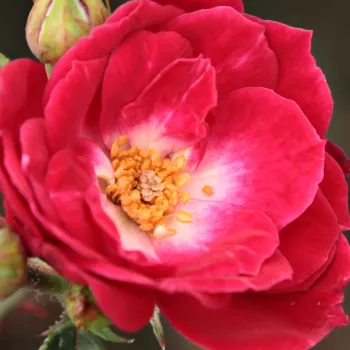
Flower morphology Semi-double, cup-shaped clusters of small flowers (about 0.5–1.5 in), with 13–25 petals, produced repeatedly through the season, the second flush generally plentiful after light deadheading.
Colour data and phenology Medium red blooms (ARS MR; RHS 46B–46A) open dark ruby, shift to clear mid-red, then raspberry red as they age, with even colour fade and a slightly glossy surface at full opening.
Fragrance and aroma Displays a classic rose character but with very weak intensity; scent is barely noticeable in normal garden conditions, so the variety is chosen primarily for colour and structure.
Hip characteristics Forms moderately abundant, small spherical hips, 5–8 mm in diameter, coloured red; decorative in close view and potentially useful for subtle late-season interest in informal plantings.
Resistance and winter hardiness Hardy to approximately −21 to −18 °C (RHS H7, USDA 6b), with moderate resistance to black spot, powdery mildew and rust; performs best with balanced watering and routine monitoring.
Horticultural recommendations Suited to beds, borders, hedging and containers; plant 25–45 cm apart depending on use; prefers well-drained soil, regular feeding and occasional pruning to renew flowering shoots.

DOPEY offers compact habit, reliable repeat flowering and long-lived own-root robustness in an easy, container-grown form, making it a thoughtful choice for relaxed, romantic family gardens.

Detailed product attributes

Product Identification Data

Product Name: DOPEY – red bedding polyantha rose - de Ruiter
Product Type: darinaROSE® ORIGINAL - 2-litre own-root potted rose
Cultivar Authenticity: Verified:24.03.2025
Item Number: [65] 04-013 (14.02.2026) darinarose.co.uk

Name and Registration

Meaning of Cultivar Name: The name refers to Dopey, one of the characters in Snow White and the Seven Dwarfs.

Cultivar Synonym: Eberwein
Current Trade Name: Dopey Bedding rose Dopey
Rose Group: Polyantha
Commercial Type: bedding polyantha rose
Commercial Group: Bed rose
Exhibition Category: exhibition polyantha; bedding rose
Collection: Bedding rose

Origin and Breeding

Initial Distributor: Willicher Baumschulen (Germany); C. Gregory & Son Ltd. (United Kingdom)
Registration Year: unregistered cultivar
Breeder: Gerrit de Ruiter
Breeding Company / Institution: De Ruiter Innovations B.V. (Netherlands)
Breeding Year: Netherlands, 1954
Parentage: 'Robin Hood' × unknown seedling

Growth and Structural Characteristics

Height: 1-1.5ft (30-45 cm)
Spread: 1-1.6ft (30-50 cm)
Growth Habit: compact
Foliage: This variety has dense foliage with glossy, dark green leaves.
Prickliness: lightly thorned
Self-Cleaning Description: No data available on self-cleaning.
Self-Cleaning Intensity: No data on self-cleaning effectiveness.

Flower Morphology

Petal Count: 13-25
Flower Fullness: semi-double
Flower Shape: cup-shaped
Flower Size: S (0,5-1,5 in)
Inflorescence Type: cluster-flowered
Colour Code: ARS code: MR RHS code: 46B, 46A
Repeat Flowering: It is remontant, with a plentiful second flowering.

Colour Data and Phenology

Colour: red
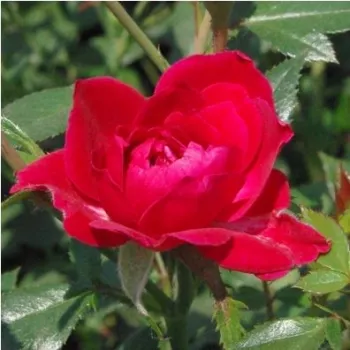
Flower Colour Description: Medium red, rich and uniform shade.
Closed Bud: Dark ruby red on the outside, deep burgundy on the inside.
Newly Opened Flower: The outer surfaces are vivid scarlet red, with a slightly darker tone on the inner petals.
Full Bloom: The surface is a clear mid-red and slightly glossy.
Before Fading: Fades to raspberry red with a uniform loss of colour.
Colour Fading Description: As the bloom opens it fades from a deep ruby red to a clear mid‑red, then to a raspberry red before the flower fades, with an even colour fade.

Fragrance and Aroma

Fragrance Strength: very weak, barely noticeable scented rose
Fragrance Character: classic, rose-scented character
Pollinator Attraction: Semi-double (13–25 petals) flowers moderately attract pollinators; the semi-double bloom form and limited accessibility of the stamens reduce their attractiveness.
Pollinator-Friendly Rating: The descriptions do not explicitly state that they are pollinator-friendly.

Hip Characteristics

Hip Shape: spherical
Hip Colour: red
Hip Comment: Moderately abundant, 5–8 mm in diameter, red, spherical rose hip.

Resistance and Hardiness

Hardiness (°C): -21–-18 °C
Heat and Drought Tolerance Description: Performs well in heat with appropriate watering; does not tolerate prolonged drought.
Disease Resistance: moderate
  • powdery mildew – moderate
  • black spot – moderate
  • rust – moderate

Horticultural Recommendations

Recommended Planting Distance: for mass planting 30 cm, for hedging 25 cm, as a solitary specimen 45 cm
Planting Density: square planting 6,3 plants/m², hexagonal arrangement 7,2 plants/m²
Partial Shade Tolerance: suitable for partial shade
Maintenance Requirement: Maintenance requirement medium; occasionally requires pest and disease control.
Primary Uses: flower bed, border, container, park

Comments

Strengths: Future-proof garden concept – Neat composition
Companion Plants: Verbena hastata ‘Pink Spires’ - dense-flowered verbena pink
Campanula glomerata - clustered bellflower
Lychnis viscaria 'Alba' - Balkan catchfly
Comment: -
DOPEY – red bedding polyantha rose - de Ruiter
Medium red, rich and uniform shade. - bedding polyantha rose - very weak, barely noticeable scented rose - classic, rose-scented character
The rose webshop. - bedding polyantha rose - Dopey - red - (1-1.5ft (30-45 cm))
Inflorescence: cluster-flowered Height: 1-1.5ft (30-45 cm) Flower shape: cup-shaped Winter hardiness: - red - Willicher Baumschulen (Germany); C. Gregory & Son Ltd. (United Kingdom) bedding polyantha rose - Flower size: S (0,5-1,5 in) Flower size: S (0,5-1,5 in) - Height: 1-1.5ft (30-45 cm) Height: 1-1.5ft (30-45 cm) - Flower fullness: semi-double Dopey - Roses in the garden | darinaROSE® Original - standard Gerrit de Ruiter

We showcase the external appearance of the roses available for online purchase from our webshop.


Which product type is right for you?


Information

In what condition do we send the rose from our online webshop?

Let us ask ourselves the question: What do I want to use the rose for?
Flower? - Location? - Cover? - Fragrance? - Height? - Breeder? - Rose hips?

Rose purchase information
Methods of payment - Delivery charges - Delivery - Complaints handling

Care guide

Our product is a rose grown using the unique PharmaRosa® cultivation technology!

2-litre, own-root, potted rose.
With a shoot system appropriate to the season.
With a root system that permeates the growing medium.
Quality in line with the requirements of the E.N.A. (European Nurserystock Association).
In unique packaging designed to prevent damage.
Can be planted at any time during frost-free periods.
True-to-variety rose plant with a unique identifier.

The own-root, potted PharmaRosa® rose is a fully rooted plant that guarantees reliable establishment for you, so it can be planted at any time of the year during frost-free periods.


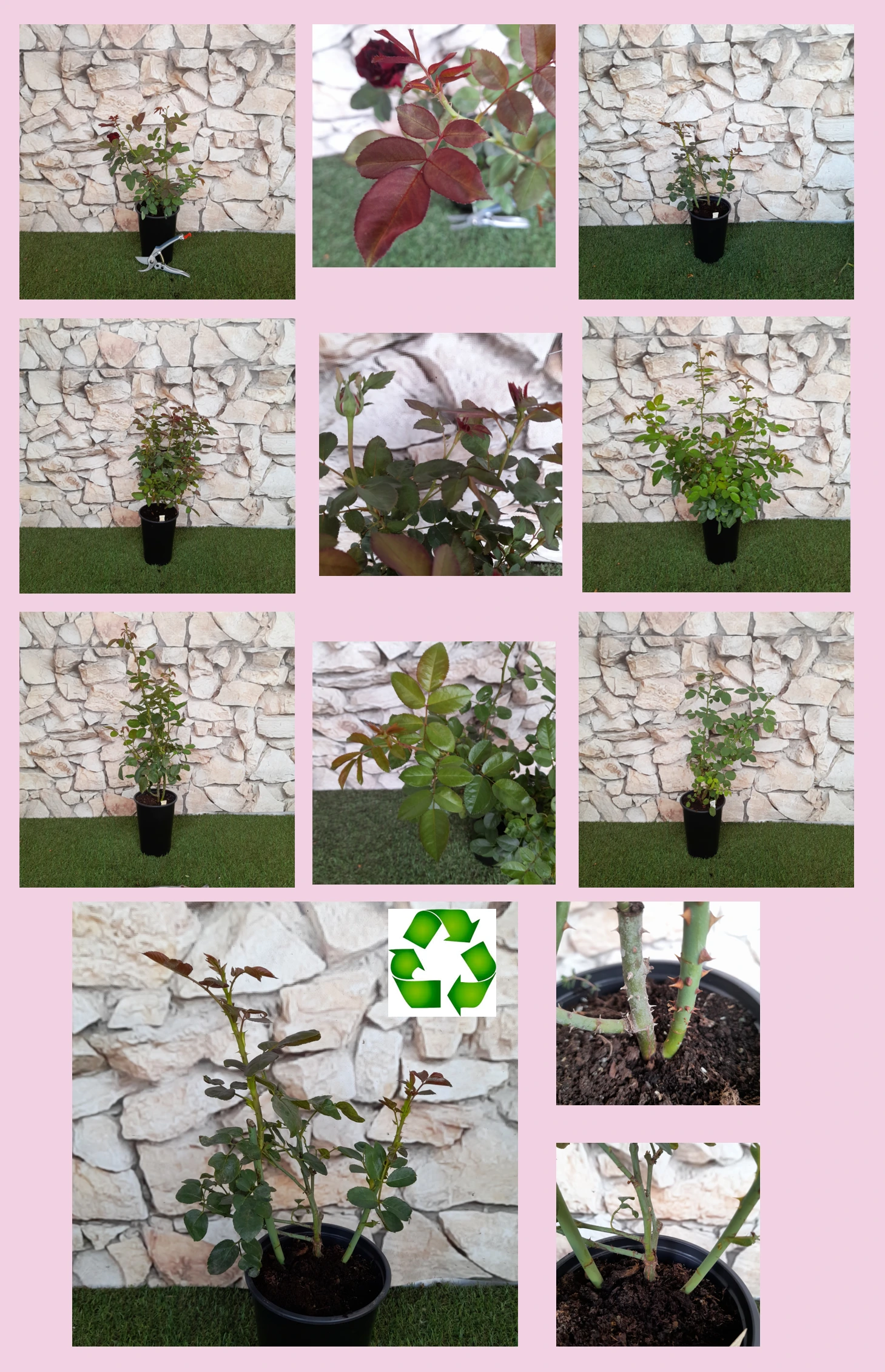
Crop: several varieties and several stages of development in a short crop section.
Shoot system: intensive growth of fresh basal shoots on a young plant.
Root system: presentation of the strong root system permeating the growing medium, with the pot removed.
Balance: mature plant where the development of the root system and the shoot system is in harmony.

Information about the videos
This video series is not a “seasonal showcase”, but a way of making the essence of own-root PharmaRosa® cultivation tangible: how the plant is structured, what the root system is like, and how the shoot system renews itself. The footage was therefore recorded at different times, showing plants at various stages of development, so mixed leaf cover or differing levels of development may appear in the videos. This is not a “sample” of the consignment delivered, but an illustration of how the technology works. The current condition of the rose You are purchasing, characteristic of the given period (the state in which You can expect to receive it in the parcel), is shown in the upper part of the product page.

pharmarosa.compharmarosa.skpharmarosa.ropharmarosa.co.ukpharmarosa.depharmarosa.sipharmarosa.czpharmarosa.atpharmarosa.hrpharmarosa.frpharmarosa.itpharmarosa.plpharmarosa.espharmarosa.nlpharmarosa.bepharmarosa.ptpharmarosa.lupharmarosa.dkpharmarosa.iepharmarosa.grpharmarosa.bgpharmarosa.lvpharmarosa.sepharmarosa.fipharmarosa.ltpharmarosa.eepharmarosa.ru

Product types

Pages for private customers
Garden roses for the family garden, with minimal care  → ORIGINAL®
Premium garden roses – instant impact, a truly showpiece garden  → EXTRA®
Pages for professionals and private customers
Roses for public spaces – large areas, sustainable maintenance  → NATURAL®
Roses for projects – hedge and row planting, fast implementation  → RAPID®
For professional partners only
Production – propagation material for garden roses, wholesale  → NEONATAL®

Company details

PharmaRosa Ltd.
Company registration number: 01-09-717479
VAT number: 13075314-2-43
Plant health registration no.: HU130721
Bank account (IBAN):
HU85117631891388688400000000
BIC (SWIFT): OTPVHUHB
Bank name: OTP Bank Nyrt.